Alfred Nobel's lost ideal
The idea of two types of Nobel Peace Prize is also indirectly evoked by the official website of the Nobel Foundation, which describes its brief history. The first type of prize corresponds to the words of the dynamite inventor's will: "Who has done the most or best work for fraternity between nations, for the abolition or reduction of standing armies, and for the organization and promotion of peace congresses."
The Nobel Peace Prize, first awarded in 1901, was intended primarily to promote peace movements around the world.
We can agree with Stefan Zweig, who writes in his memoirs The World of Yesterday. Memoirs of a European, writes that Bertha von Suttner influenced the establishment of this prize by convincing Alfred Nobel to make amends for "the evil he had caused with his dynamite."
However, it was not easy to redeem his conscience for the evil of dynamite. The 20th century saw two world wars, and the prize failed to change this awareness.
The first type of prize should focus on efforts to reduce the number of weapons and build bridges between nations and civilizations. Even in recent decades, we find laureates who continue to fulfill this noble idea of peace.
In 2024, the Japanese movement Nihon Hidankyō, which brings together survivors of the atomic bombings of Hiroshima and Nagasaki, received the award. It was awarded "for its efforts to create a world without nuclear weapons and for proving through testimony that nuclear weapons must never be used again." .
Similarly, in 2017, the International Campaign to Abolish Nuclear Weapons (ICAN) received the award. However, this case also highlights the paradox of today. Nuclear weapons have not disappeared; on the contrary, they have become a key element of the current geopolitical balance. Russia and France are trying to define new doctrines for their use to correspond to the "reality of the 21st century," while Iran's nuclear program has become a trigger for open conflict with Israel.
When peace means Western values
The same source suggests a second definition of the Nobel Peace Prize. After World War II, the prize began to be awarded not only to those who strive for disarmament, but also to those who fight for democracy and human rights—especially in their Western conception.
However, this ideology of human rights also excludes other traditions, such as the concept of natural law. It is difficult to imagine today that a person who openly opposes abortion would win the prize. Although there is no formal restriction on opinions, the Nobel Committee, despite its "independence," is firmly rooted in the cultural and political values of liberal democracy. Mother Teresa would probably not receive the award today for her conservative views.
The cultural level is only one facet of soft power. The Nobel Peace Prize goes further. It has become part of diplomatic symbolism, a tool with which the West sends signals to the world about who is on the "right side of history."
When Barack Obama won the prize in 2009, a few months after taking office, it was not in recognition of his actions, but an investment in hope that has not been fulfilled. When the European Union received it in 2012, it was an affirmation of the meaning of the European project at a time of debt crisis.
When Ethiopian Prime Minister Abiy Ahmed received it in 2019, the committee miscalculated badly. The reformer soon became a "war commander." In 2020, he unleashed a bloody conflict in Tigray, resulting in thousands of casualties and a humanitarian catastrophe. He still has the prize, as the Nobel Prize is awarded for life.
This may explain why Donald Trump covets it so much.
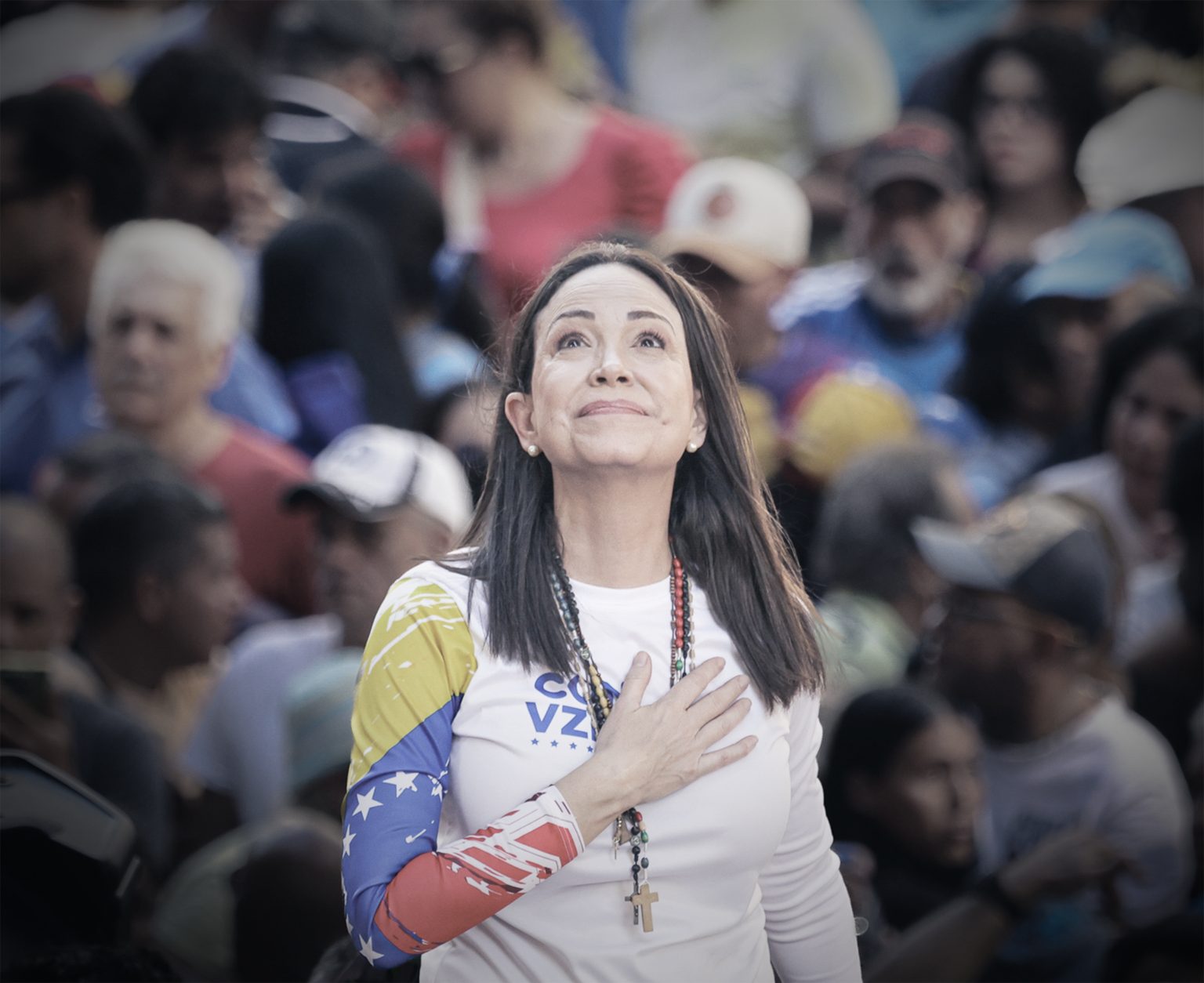
The name of this year's laureate, Venezuelan opposition politician María Corina Machado, also fits into the current logic of the prize. A long-time opponent of Nicolás Maduro's regime, she has become a symbol of the democratic opposition, which the West openly supports.
Her award comes at a time when Venezuela is once again in the crosshairs of American politics. This year, the Nobel Prize once again confirms its role as a diplomatic signal, a moral award that reads like a geopolitical statement.
A return to conscience
Perhaps it would be worthwhile for the Norwegian Nobel Committee to return to the original meaning of the prize, as Alfred Nobel understood it. To reward those who truly strive for disarmament, reconciliation, and human dignity.
The idea that controversy enhances the prestige or soft power of the prize has long since ceased to be convincing. Peace is not maintained by marketing or geopolitical signals, but by actions that transcend the boundaries of power blocs.
The Nobel Prize could regain its weight if it returned to that first, forgotten definition, to an ideal that seeks not influence but conscience.