There are two different kinds of blindness. The first stems from an inability to see a mistake, and thus from a simple loss of cognitive capacity. The second stems from a desire not to see a mistake. In Europe's case, unfortunately, it is the latter.
In recent years, the continent has built a comfortable myth about how today's world works. European politicians have succumbed to the illusion that it is enough to believe in their own moral superiority, impose sanctions, send resolutions and money, and hope that geopolitical reality will eventually adapt.
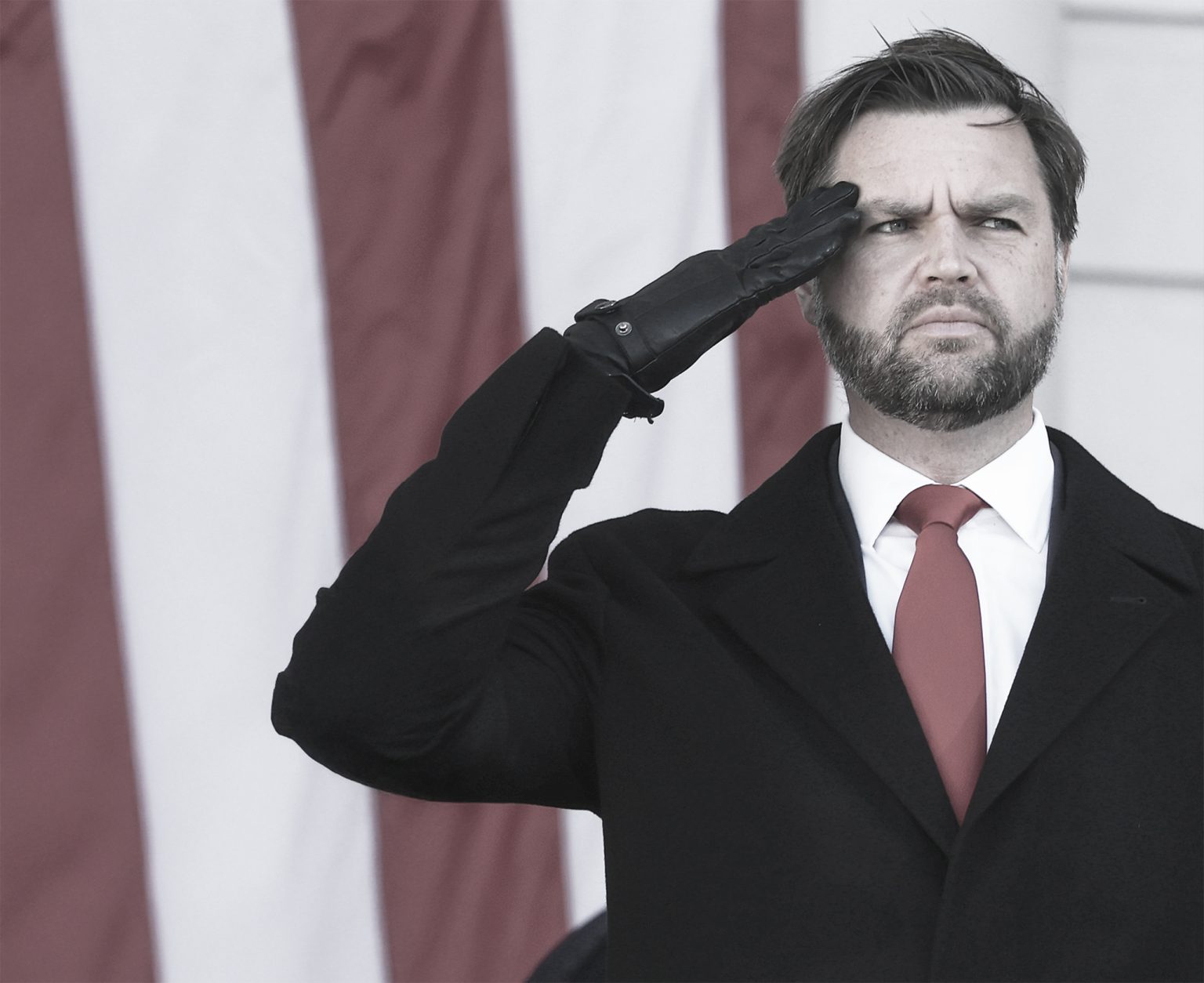
JD Vance shattered this myth with a single sentence. Bluntly, perhaps unnecessarily directly, but uncomfortably accurately for Europe. The US Vice President posted a message on social media that most European leaders should reflect on.
"There is an illusion that if we give (Kyiv) more money, more weapons, or impose more sanctions (on Russia), victory (for Ukraine) will be within reach. Peace cannot be achieved by failed diplomats or politicians who live in a fantasy world. Only wise people living in the real world can do that."
Unfortunately, judging by the reactions of European leaders, these words did not fall on fertile ground. However, that will not prevent us from looking at what the numbers and facts say. It is precisely rational analysis that will enable us to free ourselves from the captivity of our own false ideas. The main cause of European blindness can be succinctly summarized as follows: Europeans see the world as they imagine it to be, not as it really is.
Money that isn't there
Let's start with money. In less than four years since the start of the open conflict, the European Union has provided an estimated total of approximately €187 billion in aid. In itself, this amount seems astronomical. It is more than Slovakia's annual GDP [nominal GDP at current prices reached just under €130 billion in 2024, editor's note] and almost a third of the Marshall Plan in today's prices.
On the other hand, it is much less than Russia is spending. For 2025, the Russian budget has approved expenditures of between €119 and €137 billion. In reality, Europe is not even contributing the same amount as Russia. Vance's statement was therefore still merciful to the old continent. Europe is not sending enough money to expect a significant change on the front. Even if it increased its spending, it would only match what Russia is giving. Europe would have to send much more.
And here another problem arises: the old continent does not have this money. No country can politically afford to raise taxes or cut its own budgets. The only option is to borrow. At a time when rating agencies are downgrading France's debt, this is not a good idea.
Weapons without a strategy
The second illusion concerns weapons. When we look at the situation in more detail, we find that it is not just one illusion, but a whole set of false ideas. The first can be described as a constant search for a "game changer" for the entire war.
At first, it was Turkish Bayraktar drones that were supposed to win the war. They were followed by Abrams tanks and German Leopard tanks. The hesitation of some countries to deliver them was explained by the fact that these are such powerful weapons that they will automatically reverse the course of the war, and that some countries are hesitant about whether they can bear this historic responsibility.
However, the truth turned out to be much more prosaic. Deliveries of Leopards and Abrams tanks proved to be a bad idea because these heavy tanks are too expensive, too complicated to maintain, and too vulnerable to deliver a return on investment in a battlefield dominated by drones and precision munitions.
The request for Tomahawk missiles, which will ultimately not be used in Ukraine at all, ended up the same way. All these media "game changers" show that Europe used them more as domestic political PR. It was a way to justify aid and maintain the appearance of a meaningful continuation of the fight. But the most important thing was missing: a well-thought-out military strategy.
There was no time left to ask how these technological advances fit into the overall concept of waging war. Europe confuses volume with strategy: more statements, more condemnations, more sanctions, but little change in the balance of power that would actually make a difference on the front lines.
Moreover, the old continent underestimated the importance of weapons and ammunition production. At the beginning of the war, this problem was hidden by the emptying of its own military warehouses. Over time, however, it became clear that the military capabilities of Russia and Europe are on completely different levels.
Russia taught Europe not only about the importance of industrial production, but above all about how to use this advantage in strategy. Since 2023, it has openly prioritized the destruction of Ukrainian manpower over territorial gains: its "meat grinder" strategy is designed to grind down the Ukrainian army, not to push back borders. However, European politicians refuse to acknowledge this fact and like to claim that Russia's actions are "minimal."
As if this were proof of Russia's weakness, rather than its intent. To further confuse their audience, they add that we must feverishly arm ourselves, otherwise the Russian army will invade Central Europe. They do not seem to mind that, at the current pace of Russian advances, such an invasion would not happen even in Putin's lifetime.
Sanctions that hurt us the most
The final fatal mistake is the issue of sanctions. Since the invasion began in 2022, the EU has adopted at least 19 packages of sanctions. The French finance minister at the time, Bruno Le Maire, commented that the first package would be so strong that it would "bring the Russian economy to its knees." This did not happen.
The original idea was that the economic shock would force Russian citizens to turn against the Kremlin due to a sharp decline in their standard of living. This plan also failed. This does not mean that European sanctions do not hurt, but the shock was not strong enough to bring about regime change.
This revealed the true nature of European blindness: when the desired effect did not materialize, instead of looking for other forms of pressure, the Union simply expanded its sanctions lists.
According to statistics from "EU trade with Russia – latest developments," EU exports to Russia fell by 61 percent between the first quarter of 2022 and the second quarter of 2025, while imports from Russia fell by 89 percent. However, the European Union has not found an adequate replacement for the loss of Russian markets. Exports to other countries grew only minimally.
Russia, on the other hand, was able to quickly redirect its export shortfall to India and China. Since this mainly concerns oil, gas, and other raw materials, such redirection is much easier than conquering new markets for complex European products.
Europe blindly hoped that sanctions would break Russia and ignored its own loss of access to cheap energy. The Old Continent may dismiss Vance's words as cynicism or legendary American pragmatism, but it would do much better to accept them as an accurate diagnosis of its mental state. Dreamers are not those who point out reality, but those who believe that the world will change simply because Brussels wants it to.