
The good news for the Czech Republic is that Prime Minister Andrej Babiš will be inaugurated on 9 December at 9am. The Czech Republic can thus look forward to a new cabinet surprisingly quickly.
Until a few days ago, it seemed that the newly emerging government and Prague Castle were preparing for a long trench war. The prime minister in resignation, Petr Fiala, could thus represent the Czech government for even longer than he had imagined. Soon, however, he will be able to devote himself fully to his work as an opposition MP.
It has long been speculated that the Castle is tactically delaying the appointment of the Prime Minister, primarily so that Fiala can attend the crucial European Council meeting on 18 and 19 December. This speculation proved to be unfounded.
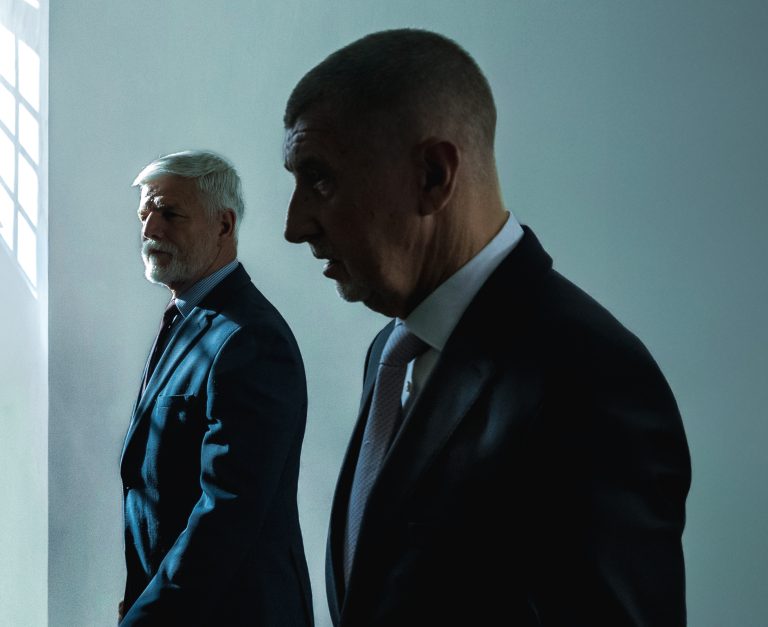
These and other speculations have a common basis in the ideological enmity between the incoming new government and the previous one, together with the deep conviction of both camps that President Petr Pavel is ideologically on the right side. However, preliminary negotiations between Babiš and Pavel show that political pragmatism is winning out above all.
This fact, meanwhile, is much more surprising to the progressive camp. For Babiš, on the contrary, political pragmatism and the ability to change opinions or make surprising decisions are his main political traits. And it showed this time as well.
A key gesture
On 4 December, at seven o'clock in the evening, Andrej Babiš solemnly announced on social media that he had decided to fulfil the president's condition and give up the leadership of Agrofert, which he had spent his whole life building up, for good.
The solution to the clash of interests should be the transfer of the entire company into a so-called blind trust. Babiš would thus have no influence on its functioning. It has long been speculated that one option could be to sign the company over to the politician's children. In his video, Babiš announced that his descendants would get the company only after his death.
The quick reaction of President Peter Paul, which came less than two hours after this surprising decision (probably especially for supporters of both camps), suggests that it was not such a big surprise for the two main players. On the Czech political scene, this may be a gesture that may reveal a new pragmatic relationship between the prime minister and the president.
Practical questions and doubts surrounding the blind trust
Before we get into the political dimension of the case, there remain some important practical questions. The first is that the structure of the blind trust has no support in Czech law. This opens up the legal dimension of the whole case and the question of whether Andrej Babiš will transfer his entire corporate empire abroad.
The second big question is whether the transfer to the blind trust will concern only Agrofert or its entire business. In his video, Babiš explicitly spoke only about Agrofert. He also owns the SynBiol holding company, which controls assets worth tens of billions of Czech crowns. It includes, for example, the Hartenberg clinics, which received CZK 1.1 billion from health insurers last year alone.
The last of the several question marks is purely practical. Even though Babiš will legally give up his business, in thirty years at the helm of his empire he already knows exactly how this well-oiled machine works. He certainly knows what financial flows from the state are vital to the business, and so he can use his influence as prime minister to ensure that fundamental changes do not happen.
Given his long political career and his simultaneous management of the company "remotely", it is quite obvious that Agrofert operates largely independently of Andrej Babiš. However, he has certainly been making the big strategic decisions all along.
Nothing prevents him from continuing to make them, it just won't be official anymore. Andrej Babiš's real influence on Agrofert will thus be weakened, but it will certainly not disappear completely. The bottom line is that this was above all a strong political gesture.
The political significance of the move and the reactions of both camps
It is the political dimension of Andrej Babiš's gesture that should not remain obscured by the technical details of how he will eventually resolve his clash of interests. Babiš has made it clear that he is now closer to politics than to business. That is understandable given his age - 71. Making the country's history is a much bigger challenge than adding one more billion crowns to the company's revenues.
The reactions to the decision were essentially the same in both camps: surprise and then explaining and defending the move. Both camps celebrated the genius of "their" protagonists. By deciding to divest himself of his assets, Babiš has disabled his opponents' most potent weapon. They can no longer accuse him of a conflict of interest.
The camp of his opponents has thus lost the biggest reason why Babiš should not be in public life. But his voters never cared about the conflict of interest anyway. They voted for him despite the fact that he owns one of the biggest companies in the Czech Republic.
The flip side of the decision is that Babiš actually backed down in the face of the conflict of interest. Showing weakness in politics is never a good strategy. There will now be a second battle for Filip Turk as environment minister.
Here, too, Babiš can come to the president's rescue and put enough pressure on the Motorist Party not to insist on Turk as minister in order to form a new government.