
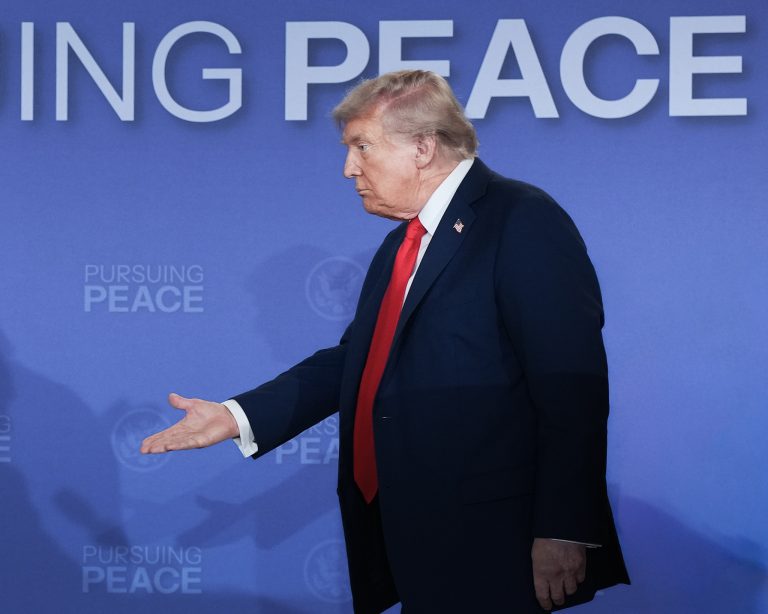
Donald Trump's administration has reportedly handed over several annexes to European allies as part of the peace plan, outlining its vision for both Ukraine's post-war reconstruction and Russia's reintegration into the global economy.
These are non-public materials, the contents of which were described to the Wall Street Journal by U.S. and European officials.
It has caused tensions between Washington and European allies. According to diplomats, the implementation of the American proposals would fundamentally change the economic map of the old continent.
One diplomat likened it to the post-war division of Europe at Yalta in 1945.
Trump acknowledged that he had a "sharp exchange" with the leaders of Britain, France and Germany on Wednesday over the peace proposal, but did not specify what it was about. He added that US officials would attend the weekend talks in Europe only if it meant some progress.
Russian assets
The White House proposal envisages using around $200 billion of frozen Russian assets to fund major projects in Ukraine.
Among them is the construction of a large-scale data centre powered by the Zaporizhzhya nuclear power plant, which is currently controlled by Russian troops.
Europe, however, wants to use frozen Russian assets to lend to Ukraine. The latter would use it to run the state and buy weapons.
Washington argues that the European model would quickly deplete the frozen Russian assets. By contrast, the US plan envisages that the funds would be managed by investment firms and private funds, which could allow their volume to quadruple in value.
According to the WSJ, the U.S. team wants to promote a postwar vision in which joint economic projects and energy interconnectivity will form the basis for lasting peace.
Investment
Another annex to the document reportedly outlines the US idea of a "comeback" for the Russian economy. US companies would invest in Russia's strategic sectors, such as the extraction of rare materials or oil drilling in the Arctic. The restoration of Russian energy flows to Europe and the world is also mentioned.
European officials fear that this would give Moscow room to recover economically and thus strengthen its military potential. This was one of the reasons why Brussels recently gave final approval to cut off piped Russian gas from autumn 2027.
Moreover, Germany counters that, as a result of the anti-Russian sanctions, the Nord Stream pipeline, through which Russian gas used to flow to the old continent and which was disrupted by Ukrainian operatives in 2022, cannot be repaired or restarted.
Russia is open but reticent
Asked about the information, Kremlin spokesman Dmitry Peskov retorted on Thursday that Russia has always been open to foreign investment and remains open, but Moscow will not engage in "megaphone diplomacy."
"We are interested in the inflow of foreign investment," Peskov told reporters. "As for any plans, we will not discuss them publicly," he added.
He declined to comment on proposals regarding the use of 200 billion in Russian assets.
Deteriorating relations
The transatlantic alliance has taken a beating over the past week. It was triggered by a $140 million EU fine for Elon Musk's Platform X.
Senior US officials were quick to defend Musk. Secretary of State Marco Rubio, for example, called the fine "an attack on all American technology platforms and the American people," while Vice President JD Vance called it "nonsense" and the result of X's refusal to accept the EU's "censorship."
Similar accusations were made in the new US National Security Strategy, which uses phrases such as "regulatory strangulation" and "disruption of democratic processes" in reference to the EU. Central to these claims is mass migration, which, according to the US government, is one of the factors that could change the continent "beyond recognition in 20 years or less".
Trump's strategy also calls into question whether some EU allies can remain reliable NATO members in the face of demographic changes.
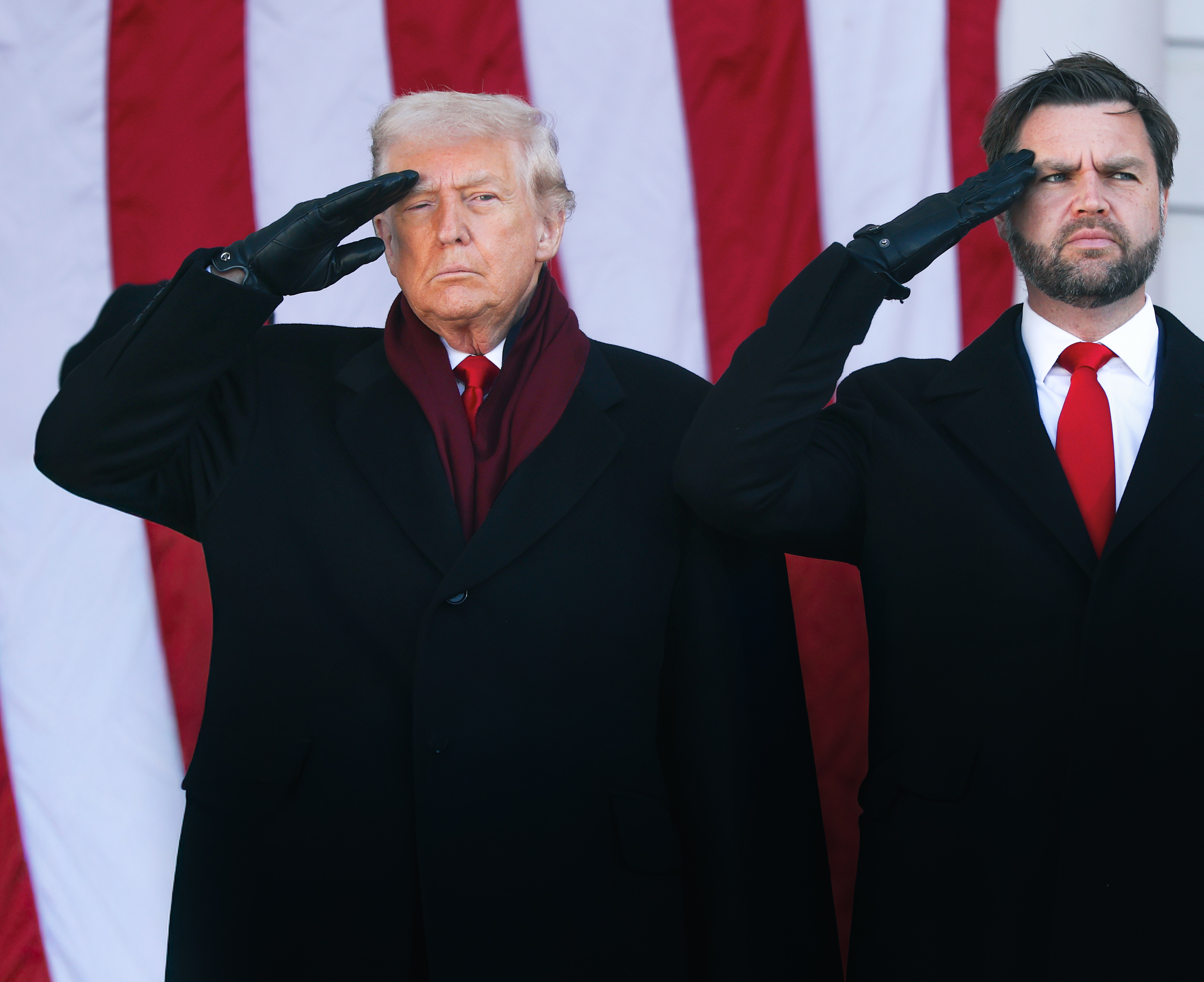
The US president added more fuel to the fire on Tuesday this week when, in a wide-ranging interview with Politico, he called Europe a "declining group of states" led by "weak people."
(reuters, est)