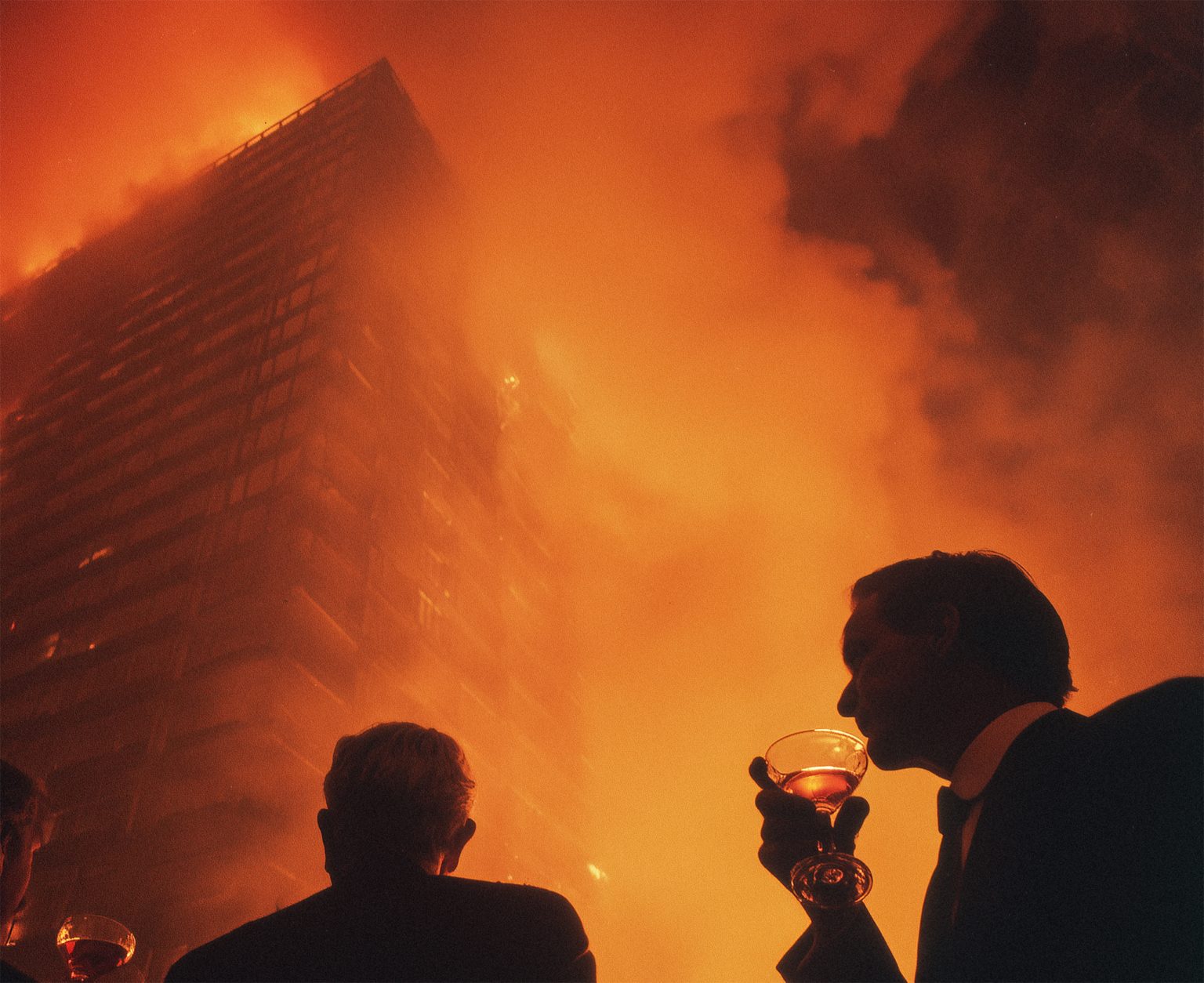
According to the Wall Street Journal, the American middle class—that is, households with an annual income of roughly $66,000 to $200,000, depending on where they live—is finding it increasingly difficult to make ends meet. What was once a comfort zone is turning into a zone of permanent financial uncertainty: too rich for government assistance, too poor to afford peace of mind.
A similar shift is also visible in Europe, where the very meaning of the word "rich" has quietly changed. In France today, people with a monthly income of around €5,000 fall into the top 10 percent of the income distribution. This is the typical salary of an engineer, not a rentier. If such an engineer has two or three children and lives in a big city, he is hardly considered rich, but rather someone who constantly balances between the paper status of wealth and everyday financial reality. The disappearance of the middle class thus creates a breeding ground for the division of society.
And that is a huge challenge for the coming year 2026. Will society be more divided in the future, or will a miracle happen and a new social glue be found?
A divided society as the new normal
The term "middle class" will always exist in statistics. By juggling various criteria, it is even possible to deny the disappearance of the middle class on paper. However, the problem of the middle class is not only related to salary levels. It is more about social attitudes. The middle class is not disappearing completely, but functionally. Its ability to save, plan for the future, invest in housing, children's education, and health is declining. The middle class was based on the assumption that wealth comes mainly from work and the ability to save. These values structured political life.
However, this model has recently been called into question. This is due to the strengthening of a social class often referred to as the hyperclass. This is a narrow, often highly globalized class whose status is defined by the ownership of financial assets, not income from work. Moreover, these assets are often separate from normal economic cycles, for example in the form of technology startups.
As a result, this hyperclass no longer needs a strong economy based on sustained demand from the middle class. Add to this the fact that this class often owns the media or even entire social networks, and its interests do not intersect with those of the majority of people. Moreover, its everyday reality is increasingly separated from the reality of the majority of society.
Thirty years ago, even very wealthy people depended on the same roads, schools, and hospitals as the rest of the population.
Today, they can address their needs selectively: through private transportation, private healthcare, and private education, often across borders. Public infrastructure is thus no longer a key concern for them; it is enough for it to function in a few strategic hubs.
The latest new social fracture is artificial intelligence. For most of the middle class, it represents a specter that could cost them their jobs in the coming months or years. The hyperclass, on the other hand, sees it as a great investment opportunity, which already brought in a huge amount of new capital last year.
A divided society is thus ceasing to appear as a transitional state and is beginning to function as the new normal. The year 2026 may therefore not bring another crisis, but rather a confirmation of the trend in which the common interests of society continue to disintegrate.
A society that is relearning how to organize communal life
The pessimistic scenario is based on the assumption that nothing fundamental will change. The optimistic scenario, on the other hand, assumes that most people will recognize the problems outlined above. After years of culture wars, value conflicts, and identity clashes, people will begin to look around them more.
Instead of ideological divisions, a practical view of real problems will prevail. Unaffordable housing, a dysfunctional healthcare system, and a collapsing education system can be solved without dividing people over their views on the conflict in Ukraine or the meaning of the European Union.
Faith in institutions does not come from a perfect PR campaign, but from the ability to solve specific problems. A path focused on pragmatism can bridge a divide that has been deepening for years. Society will abandon its futile efforts to find a utopian consensus and begin to relearn how to coexist despite differences in opinion and politics.
The path to change may lie in transforming the electoral system and the way it works. The model of going to the polls once every four years corresponded to the technical possibilities of the twentieth century. Today's technical advances make it possible to obtain the opinions of citizens almost immediately. The availability of information thanks to the internet and live broadcasts of meetings is on a different level than it was twenty years ago.
Participatory budgets, digital deliberation, and citizens' assemblies should be ways to restore social unity. It is important to find ways to involve citizens more in the entire process of decision-making in society, not just in passive electoral participation. It is precisely participation in decision-making that will enable the acceptance of unfavorable outcomes.
The problem of artificial intelligence in the public sphere will accelerate the process of regulation, which will strengthen the transparency of content creation and political debate itself. The flooding of the public sphere with artificially generated content will gradually weaken its effectiveness.
Persuasion will give way to fatigue, and manipulation to a loss of attention. It is precisely this saturation that can create pressure for clear rules, source labeling, and a return to verifiable information. Regulation will thus contribute to the deflation of the investment bubble surrounding artificial intelligence.
The optimistic scenario for 2026 is therefore not based on a return to harmony or the victory of a single idea. Social unity will not arise from a consensus of opinions, but from the need to work together on problems that cannot be solved separately.