
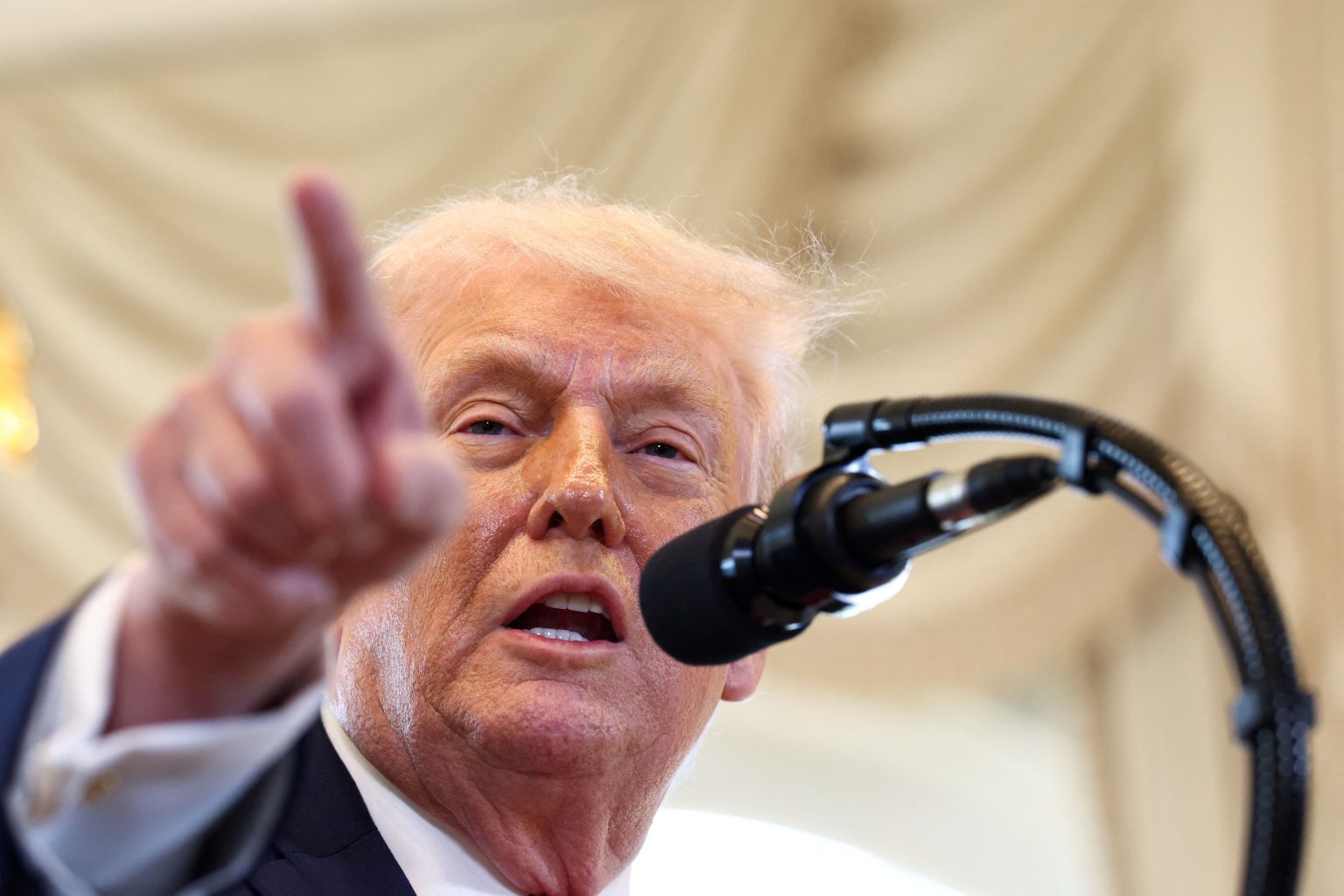
The measure will take effect on February 1 and appears to be a response to ongoing trade tensions between the US and the EU. At the same time, however, the president surprised everyone with another move—he plans to increase tariffs on imports from Greenland to 25 percent starting in June.
He made this move conditional on the conclusion of an agreement to purchase Greenland, reviving a topic that has already caused controversy in the past.
Trump stressed that the measures will remain in place until the United States reaches an agreement with Greenland and Denmark.
The reactions of the countries concerned were not long in coming
On Saturday, European leaders unequivocally rejected the threats made by US President Donald Trump, who announced the introduction of new tariffs on some European allies if they continued to reject his efforts to take over Greenland.
They warned of serious damage to transatlantic relations and stressed the need for a unified, coordinated, and objective response from Europe.
British Prime Minister Keir Starmer described the linking of trade measures with security issues as unacceptable. He characterized the threat of tariffs as "completely wrong" and stressed that such actions are contrary to the principles of allied cooperation.
"Imposing tariffs on allies in the interests of the collective security of NATO allies is completely wrong. Of course, we will address this directly with the US administration," he said in a statement. At the same time, he reiterated London's position that only Denmark and Greenland itself can decide on the future of Greenland.
French President Emmanuel Macron was even more emphatic. He described Trump's threats as unacceptable and assured that Europe would not be intimidated. "No intimidation or threats will influence us in Ukraine, Greenland, or anywhere else in the world when we are confronted with such situations," he said.
According to Macron, "tariff threats are unacceptable and have no place in this context," and if they are confirmed, "Europeans will respond in a unified and coordinated manner."
The European Union leadership expressed a similar view
European Commission President Ursula von der Leyen and European Council President António Costa warned that "tariffs would undermine transatlantic relations and risk a dangerous downward spiral."
At the same time, they emphasized that "Europe will remain united, coordinated, and determined to uphold its sovereignty."
Germany also offered a more critical reflection on Europe's own position. Marcel Fratzscher, president of the German economic institute DIW, described Trump's threats as a consequence of the long-term weakness of the European approach.
"Europe is gradually backing down and letting Trump do what he wants, instead of defending its own interests and promoting multilateralism at the global level," he said. "This mistake is now coming back to haunt us," he added, saying that Trump will "continue to blackmail Europe until Europe... shows some backbone and acts more wisely."
Concerns about the economic consequences have also been voiced by industry
Hildegard Müller, president of the German Association of the Automotive Industry (VDA), warned that "the costs of these additional tariffs would be enormous for German and European industry, especially in these already difficult times." She therefore called for "an intelligent, strategic response from Brussels, coordinated with the countries affected."
The US side has so far signaled that it considers further developments to be Europe's responsibility. US Trade Representative Jamieson Greer said, "If they want to make this an issue in the trade agreement, that's really their business, not ours."
However, President Trump has reiterated that he will impose tariffs if Europe continues to block his ambitions regarding Greenland.
At Denmark's request, European countries sent military personnel to the island this week.
"These countries, which are playing this very dangerous game, have brought a level of risk into play that is neither sustainable nor acceptable," Trump responded.
"The United States is immediately open to negotiations with Denmark and any of these countries that have exposed themselves to such risk, despite everything we have done for them over so many decades, including maximum protection," he said.
On Saturday, protesters in Denmark and Greenland demonstrated against Trump's demands and called for the territory to be given the opportunity to decide its own future.
The countries named by Trump on the same day expressed their support for Denmark and warned that a military occupation of a NATO member state could threaten the stability of the Washington-led alliance.
"The president's announcement is surprising," Danish Foreign Minister Lars Løkke Rasmussen said in a statement.
On Saturday, representatives from Norway, Sweden, France, and Germany reiterated their support for Denmark and emphasized that tariffs should not be part of negotiations on Greenland. "We will not be blackmailed. Matters concerning Denmark and Greenland are decided solely by Denmark and Greenland," Swedish Prime Minister Ulf Kristersson said on X.
The ambassadors of the 27 European Union countries will meet on Sunday for an extraordinary meeting.
(reuters, pmi)