
The Iranian economy is often described today as an economy in collapse, on the verge of collapse. The media repeatedly use terms such as high inflation, weak currency, and a country with a massive brain drain. This is certainly true.
When we look at the development of inflation in Iran over the last five years, readers in Central Europe are horrified. The years with "low" inflation are those when price increases reached "only" 30 percent. However, this high inflation, which at first glance looks like economic weakness, is in fact the result of adaptation to harsh sanctions. It is a tool for survival in an environment where standard monetary transmission channels do not work.
Countries considered geopolitical adversaries of the United States, such as Venezuela, North Korea, and, in the past, Syria, operate under long-term and targeted trade sanctions that systematically restrict their trade, finances, and access to capital. Sanctions are highly effective and have a profound impact, fundamentally distorting the economic environment in which these countries operate.
This must be borne in mind when assessing their economic performance. What is interpreted with contempt by the general public as evidence of failure is in fact often a sign of resilience, i.e., the ability of the local economy to function in conditions that most open economies would not be able to withstand in the long term.
This is precisely why common comparisons with Western economies are meaningless. European countries are entering a period of slowing growth with high debt and structural deficits, even without any pressure from sanctions. Comparing their performance with economies that have been operating under severe restrictions for a long time means ignoring fundamentally different starting conditions.
A fragile respite
In recent years, the Iranian economy has shown remarkable resilience to international sanctions. According to the World Bank, GDP growth for the entire country accelerated to nearly five percent between 2023 and 2024.
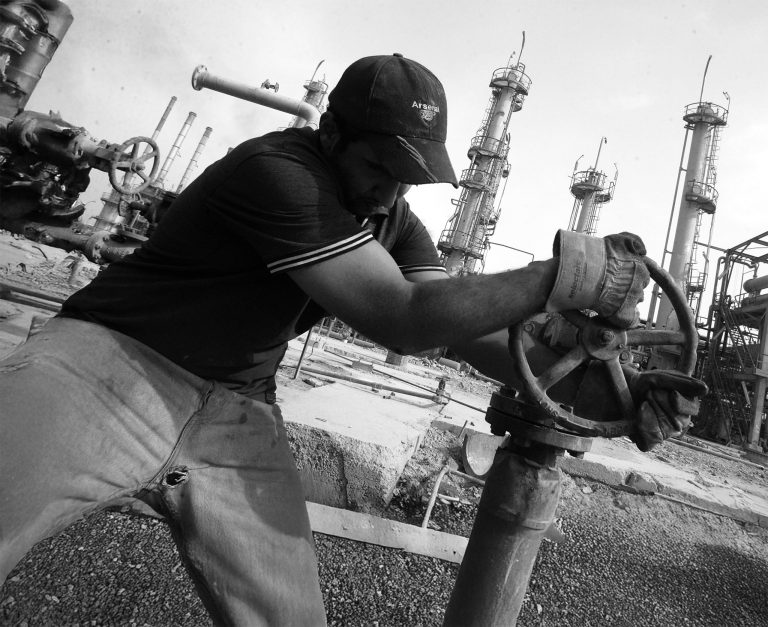
The oil sector, which grew at a rate of 14.7 percent per year, contributed significantly to this economic upturn. Growth in the rest of the non-oil economy reached 3.6 percent, driven primarily by the dynamically developing service sector.
Last year's twelve-day war with Israel effectively ended this economic respite for Iran. The International Monetary Fund estimates that in 2025, the Asian country's economy will stagnate with growth of around 0.3 percent. The outlook for the next three years is similarly skeptical. Iran will not achieve even two percent growth.
Given the current situation and ongoing unrest, which is further worsening the economic situation, it will come as no surprise if the country falls into recession. This comes just as stable growth was beginning to strengthen confidence in the regime.
Another very interesting macroeconomic indicator is the unemployment rate. At first glance, everything seems fine. The Iranian labor market appears relatively stable, with unemployment below eight percent. However, this picture is significantly distorted. The economically active population is only 40 percent. In European Union countries, the labor market participation rate is around 70 to 75 percent, and in the United States it exceeds 60 percent.
For religious reasons, only 14 percent of women of working age are in the Iranian labor market. In addition, more than a third of the population is made up of young people under the age of 25, many of whom are students. Unemployment among people aged 15 to 24 is over 20 percent.
Iranian society is not as conservative as it might seem. Long gone are the days when Iranian women had an average of four children. With such a high fertility rate, it was quite common for women not to participate in the labor market. However, in Iran, the fertility rate fell below two children per woman in 2001.
In 2012, the government attempted to massively boost the birth rate. This effort had only a limited effect. Although the birth rate rose slightly above two children per woman between 2015 and 2017, it later returned to the current level of 1.7. In a situation where families are no longer large, Iran is losing the demographic explanation for the extremely low economic participation of women and is thus losing a significant part of its human capital of working age.
An educational superpower under sanctions
The Iranian economy has one fundamental difference from Venezuela and North Korea, with which it shares a sanctions regime. Iran has significantly greater human capital and a more robust industrial base.
When we add to this the Persian culture, which has long been oriented towards the development of mathematical and technical sciences, the following data comes as no surprise. More than 230,000 engineers graduate in Iran every year. The country can thus rightly be ranked among the engineering superpowers and holds fifth place in the world ranking of new engineering graduates, behind China, India, Russia, and the United States.
The number of engineers can be viewed technocratically as a promise of future technical innovations. This is certainly possible, but it is too narrow a view. The growth in the number of engineers can also be interpreted as an indicator of profound social change.
The high number of technical graduates shows that education has penetrated broad sections of society and is not the preserve of a narrow elite. More accessible education increases social equality and at the same time strengthens the cognitive potential of society as a whole.
A major problem that even the Iranian regime has been unable to solve is the brain drain. More than 110,000 researchers of Iranian origin now work outside their homeland at foreign universities and research institutes.
The Iranian economy cannot therefore be reduced to a simple story of collapse or proof of the failure of modernization. Rather, it is an economy with high human and cognitive potential that is forced to operate under long-term restrictions. Despite these limitations, a new social class of young, educated people with technical training is emerging in Iran.
Iran's future trajectory will therefore depend not only on sanctions, macroeconomic indicators, or possible military intervention from outside, but above all on the attitude of this new educated generation.
The key question remains whether it will be willing to accept the current institutional framework, which isolates it from foreign capital and limits its economic opportunities, or whether it will begin to openly demand its transformation into a more open and transparent system. In this sense, the Iranian regime stands not only against the West, but above all against its own modernized society.