
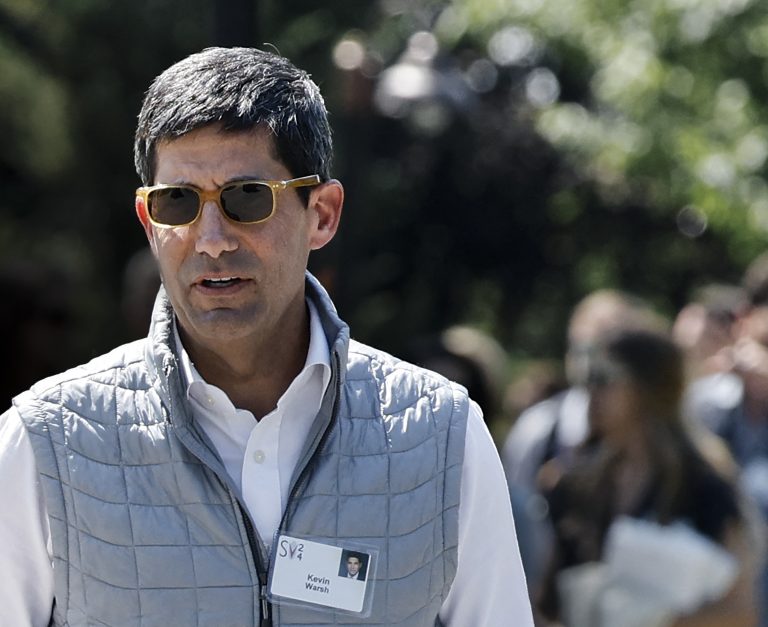
US President Donald Trump has remained true to himself. The official announcement of Kevin Warsh's nomination as governor of the US Federal Reserve is primarily an illustration of how Trump understands power. He sees it as a series of roles that need to be filled correctly.
His text is not a defense of monetary policy or a debate about the independence of the central bank. It is a casting call. Trump is not talking about an institution, but about a role that someone has to "play." And that someone is Kevin Warsh.
If we resist the temptation to get carried away by Kevin Warsh's brilliantly constructed career CV, which Trump presents to us in his post, and take a closer look at his actual views, a legitimate question arises. Was there a mistake in the casting this time?
Warsh was clearly the most hawkish candidate [preferring to fight inflation over supporting economic growth, ed. note] of the entire proposed quartet. His nomination therefore surprised the markets.
Will he adapt?
Did Trump make a mistake, or is this a deliberate move based on the assumption that Warsh will adapt after his appointment and start acting in line with the president's intentions? If the latter is true, it is an extremely bold gamble. The Fed is not like the Senate or Congress. These are institutions that Trump often circumvents rhetorically and practically in his second term, as if they did not actually exist.
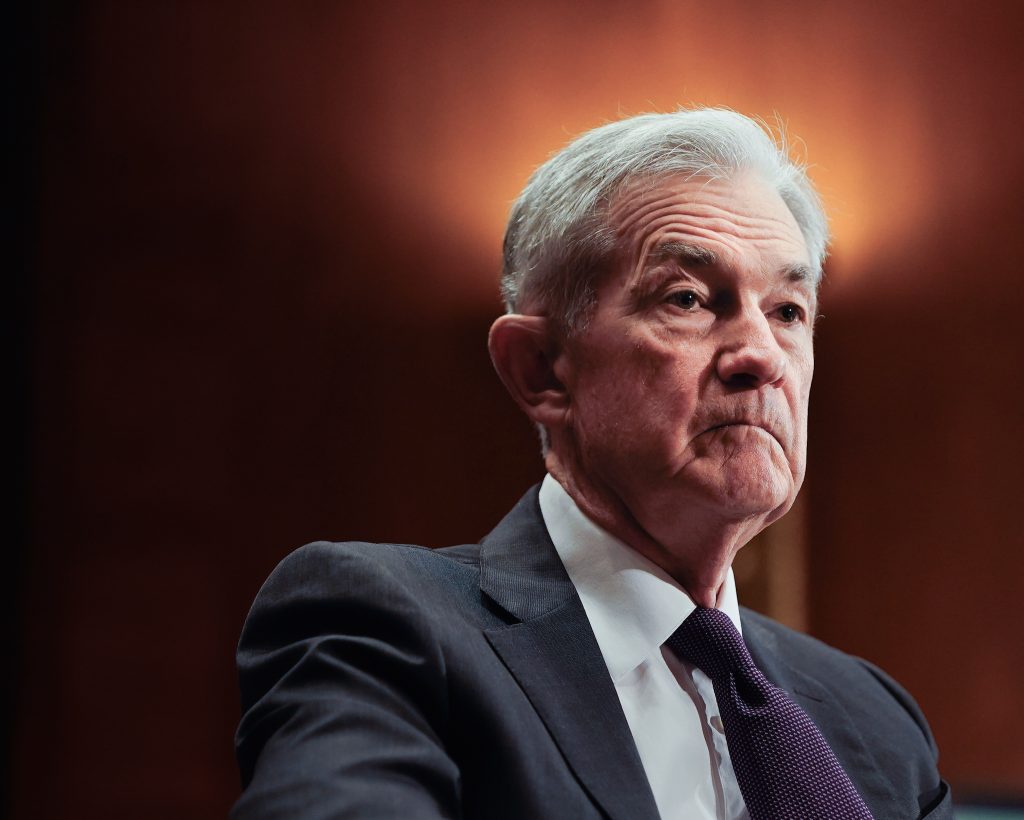
The situation at the central bank is much more complicated. Once the Fed governor is officially appointed, it is extremely difficult to remove him. A telling example is the relationship between outgoing Governor Jerome Powell and Trump himself.
Today, the president blames Powell for almost the very existence of the US national debt, even though it was he who originally appointed him to the position. Will Warsh end up the same way? Or will he become Trump's wolf in sheep's clothing?
Reassurance for Wall Street above all
Warsh's election is primarily a reassurance for the system. From a political point of view, it was the most sensible choice for Trump. His recent actions, from Venezuela to Greenland to the difficult situation at home in Minneapolis, have not added to his popularity. Uncertainty is also gnawing at Trump's hard core.
Nominating a candidate who would be most loyal to Trump, i.e., in the current situation, would lower interest rates to the president's desired one percent, would be an unprecedented move. It lacks any logic and would cause panic in the financial markets. The Trump administration does not need any new battlegrounds. Scott Bessent certainly guided Trump's hand in this selection and breathed a huge sigh of relief.
The main challenge for the US Treasury will be to manage the US debt and, above all, yields on US bonds. A bond market crash would shake US banks, which would then bring uncertainty to US stock markets. The situation in the US is serious. The Fed governor's mission will be extremely difficult. It is therefore reasonable to entrust the reins to the candidate who appears to be the most moderate.
Warsh is a good choice for Wall Street for two reasons. His career at Morgan Stanley and close ties to investor and billionaire Stanley Druckenmiller are not just items on his resume. Warsh is also married to Jane Lauder, heiress to the Estée Lauder empire, one of the wealthiest business families in the United States.
In his case, his ties to the world of big capital are not only professional but also personal. The future Fed governor will certainly not be keen to become the person under whom the US stock markets collapse due to crazy monetary policy.
And one more reason
The second significant advantage of Kevin Warsh is the fact that he already worked at the Fed from 2006 to 2011. He is not an outsider, but a person who knows the central bank from the inside. It is this experience that will allow him to take up his position without a long adaptation period and to act quickly.
At the same time, this is where the first ambiguities of his possible mandate begin. Knowledge of the institution does not only mean the ability to manage it, but also to redirect it relatively easily. Warsh will have the tools and know-how to quickly adapt the Fed to his own vision of monetary policy. The question remains as to what his vision will actually be.
Before we try to predict his next steps, one thing must be emphasized. All considerations are based on his past positions, not certainties. Warsh may change his views. He may turn out to be more of a pragmatist, whose decisions will be shaped by the current balance of power in the Board of Governors and hard data from economic indicators. It would therefore be a mistake for investors to take any scenario for granted.
Moreover, the situation is extremely complex. The US national debt has reached levels that rule out standard solutions. Whatever Warsh decides to do, he will have to look for ways that go beyond established monetary policy schemes.
Warsh wants to remain primarily dependent on macroeconomic data. This is absolutely central, as it guarantees the Fed's independence above all else. But this is where the problems begin. Current macroeconomic data do not provide much room for rate cuts. So if Warsh relies on the data, he risks immediate conflict with Trump, who currently considers him the best "actor" for the role of governor.
A possible solution to the dilemma
Is there a way to avoid this immediate risk? Yes, hypothetically, certainly. In his criticism of the central bank's functioning, Warsh primarily targets quantitative easing and the Fed's large balance sheet. In his view, the US central bank should not buy US bonds to help politicians.
American politicians have become accustomed to not having to solve their problems because the central bank has solved them by buying US debt. This strategy is now over. Warsh will try to keep the central bank "on a diet."
Here is one possible solution to the dilemma. Warsh could easily lower rates while reducing the central bank's balance sheet. In theory, this would have the following impact on the bond market. Yields on short-term bonds should fall and those on long-term bonds should rise. This would pull the thorn out of the Trump administration's side, as it has to deal with the current debt problem.
A large part of the US debt is borrowed for short periods. Warsh would save Trump money. On the other hand, yields on long-term bonds would rise, which would hurt everyone who has purchased old bonds, mainly US allies such as Japan and the UK, and enemy China.
Trump would probably not mind if these three countries suffered losses. We will see if this hypothesis is confirmed.
Only time will tell whether this is a well-thought-out strategy that solves the US debt problem at the expense of the rest of the world, or just another case of a well-cast role regardless of the institutional consequences. However, it cannot be ruled out that Trump was primarily looking for a "pretty face" to head the Fed, someone who could discreetly weaken the dollar and let others foot the bill.