
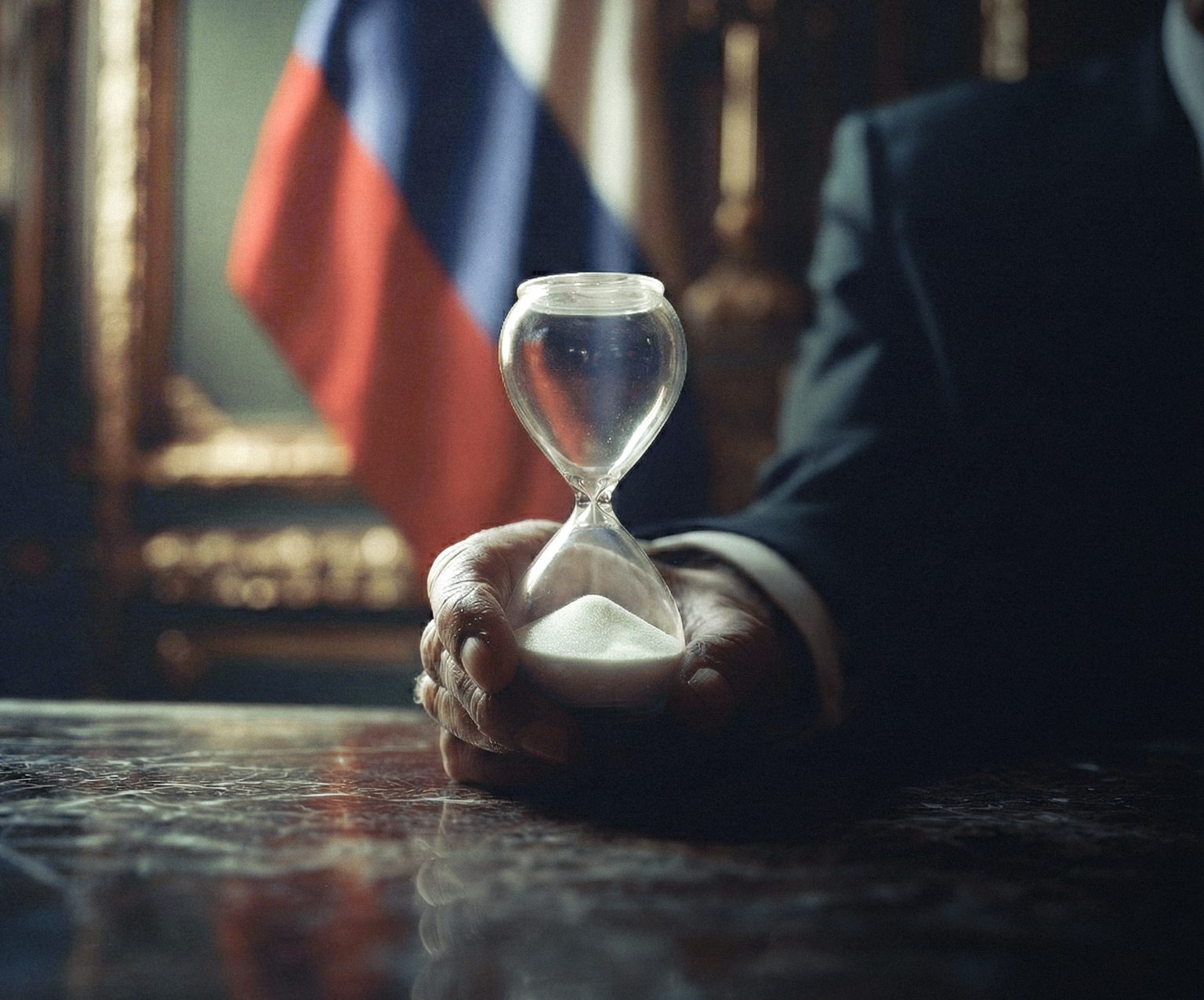
Since Thursday, Russia and the United States are no longer bound by the New START treaty, which has limited the nuclear arsenals of both superpowers since 2011. This has opened a new chapter in history, which may include a renewed arms race.
The Cold War-era agreement limited the nuclear arsenals of both countries, including the number of warheads, launchers, and carriers—missiles and aircraft capable of carrying nuclear warheads.
Security analysts are now warning that the end of the treaty could lead to another arms race, typical of the Cold War period (1947 to 1991). Unlike the post-war stalemate, China could now join in.
Historical treaties
The original agreement was concluded by Presidents Barack Obama and Dmitry Medvedev at a meeting in Prague and was to be valid for ten years. In 2020, Joe Biden and Vladimir Putin agreed to extend its validity for another five years, with the Kremlin leader seeking to gain time for further negotiations.
The new Strategic Arms Reduction Treaty (START) limited the number of nuclear warheads to 1,550 and reduced the maximum number of "delivery vehicles" – i.e., launchers and bombers – to 800.
The treaty, called START I, was originally signed by George Bush Sr. and Mikhail Gorbachev in 1991 and entered into force three years later. Another treaty with Bush was signed by Boris Yeltsin in 1993, but it was not ratified by both parties and therefore did not enter into force.
The START format replaced the Strategic Arms Limitation Talks (SALT), which began shortly after the Cuban Missile Crisis in October 1962. The US and the Soviet Union agreed that the threat of mutually assured destruction (MAD) was too great for the world, which led to the first talks in Helsinki in November 1969.
The result was the Anti-Ballistic Missile Treaty (ABM), which since 1972 has limited the number of missiles capable of shooting down nuclear carriers – intercontinental ballistic missiles (ICBMs). In 2002, George W. Bush unilaterally withdrew from the treaty, citing "nuclear blackmail."
Future treaties?
Putin recently proposed that Moscow and Washington adhere to the key commitments of the now-defunct agreement for another year. His current counterpart, Donald Trump, has not formally responded to this call, as he expects a "better" agreement that will also be ratified by Beijing.
China's response was not long in coming, but the communist government rejected the negotiations because it has only a "fraction" of the number of nuclear warheads – approximately 600 compared to 4,000 in Russia and the US.
Putin is apparently counting on the former parties to the treaty to rely on so-called verification mechanisms despite the agreement's expiration. These are a set of mutual controls and double verification of the numbers of nuclear arsenals published by the states.
As three diplomatic sources told Axios, the Americans and Russians are already close to a new agreement on maintaining key nuclear weapons controls even after the treaty expires.
On Wednesday evening, the Kremlin issued an official statement criticizing the "incorrect and regrettable" approach of the United States, whose president allowed the treaty to expire without replacement. According to the communiqué, Russia assumes that the treaty "is no longer valid" and that the two superpowers "are free to decide on further steps."
According to a White House statement, Trump will decide on the next steps in the area of nuclear arms control, which he will "clarify according to his own schedule."
The weekly Politico noted that just as Trump wanted to bring China into the new framework, Putin turned to Britain and France, which also have nuclear warheads. Meanwhile, "discussions are ongoing" at the Department of Defense about potential scenarios for the US, according to Pentagon sources.
Daryl Kimball, executive director of the Arms Control Association, noted that "we face a very uncertain future." "If Trump and Putin do not reach an agreement soon, it is likely that Russia and the US will begin installing more warheads on their missiles," explained the head of the non-profit organization.
Kimball warned that if Trump is unwilling to limit the US nuclear arsenal—despite previous statements about denuclearization—and instead increases the number of warheads, this will motivate China to also increase its nuclear capabilities.
Russia has significantly expanded its medium-range nuclear forces over the past decade, for example with the Oreshnik ballistic missile, which it used in the war with Ukraine. China has more than doubled the size of its nuclear arsenal as the US has reduced some of its nuclear platforms.
President Donald Trump has indicated that he would welcome a new agreement, but has said that he would like China to be involved. Russian President Vladimir Putin's offer in September would extend the new START treaty for another year, although it would prevent weapons inspections.
Putin also demanded that Britain and France participate in the follow-up treaty. Both countries can launch nuclear missiles from submarines or use fighter jets to drop nuclear weapons, but they do not have land-based intercontinental ballistic missiles in their arsenals.
"Now is the time when some form of communication channels and measures to ensure transparency would be particularly valuable," said Heather Williams, director of the nuclear project at the Center for Strategic and International Studies (CSIS). "Russia has suspended this type of activity, and China consistently refuses to participate in arms control," she added.
Communication channels between Russia and the West have also been blocked by the other side as a result of the war in Ukraine.
Global challenges
Analysts interviewed by Reuters warned that without a contractual framework to ensure stability and predictability, each side would assume the worst-case scenarios of its strategic adversary, leading to a "vicious circle."
"Transparency and predictability are among the less tangible benefits of arms control and promote deterrence and strategic stability," said Karim Haggag, director of the Stockholm International Peace Research Institute (SIPRI).
"Without them, relations between nuclear-armed states are likely to be more prone to crises—especially with artificial intelligence and other new technologies increasing the complexity and unpredictability of escalation, and with a worrying lack of diplomatic and military communication channels between the US, China, and Russia," he added.
UN Secretary-General António Guterres said that the reversal of decades of progress in arms control "could not come at a worse time—the risk of nuclear weapons being used is at its highest in decades."
He called on Russia and the US to resume negotiations without delay to agree on "a successor framework that will restore verifiable limits, reduce risks, and strengthen our collective security."
Pope Leo XIV also joined in the calls at Wednesday's general audience. According to him, the current international situation requires "all possible means" to prevent a new arms race.
(sab, reuters)