
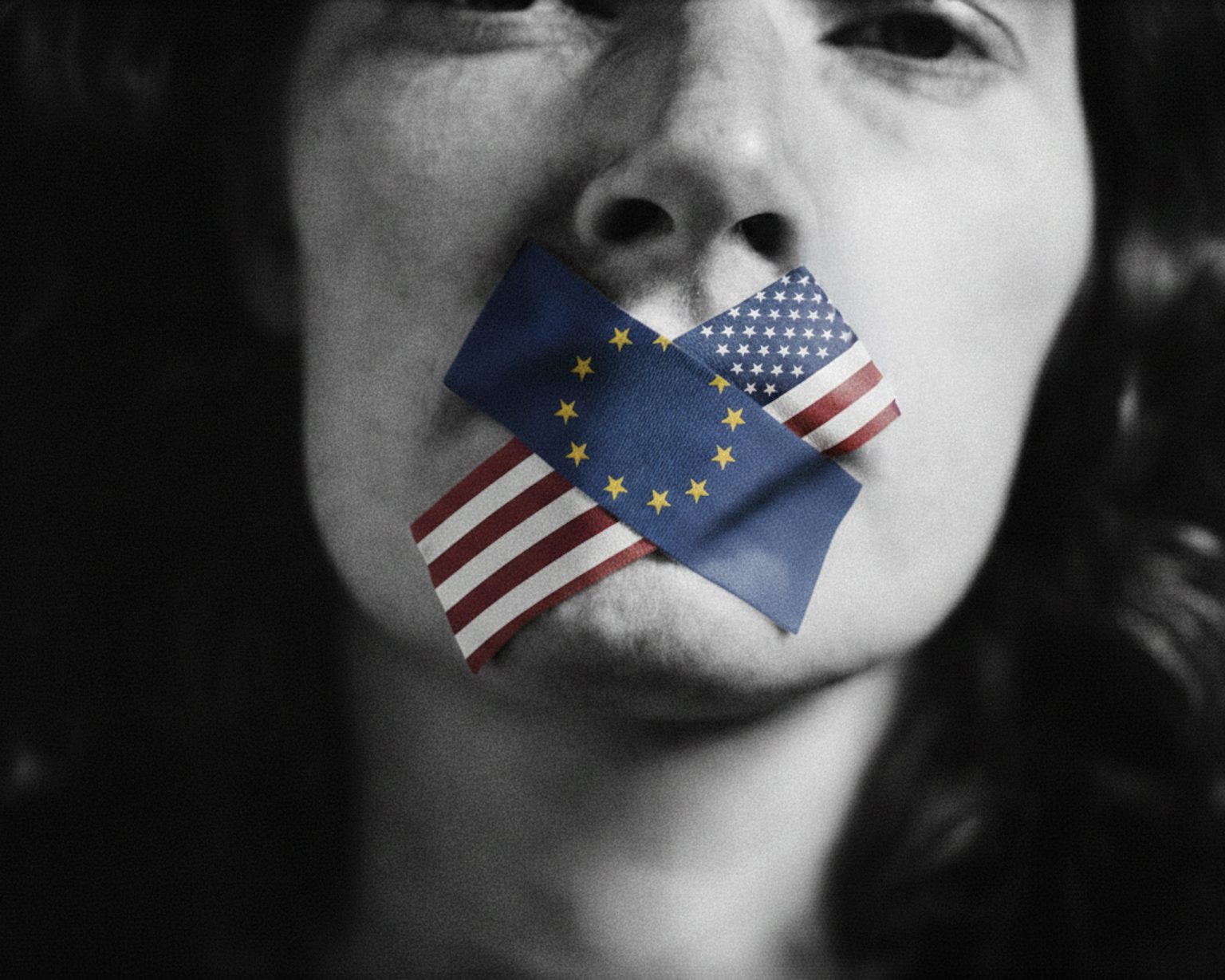
The European Union's Digital Services Act (DSA) is a tool for censoring inconvenient information, even if that information is true. This is according toa reporton threats to freedom of speech and foreign censorship by the US House of Representatives Judiciary Committee.
The committee, led by Republican Jim Jordan, accused the European Commission and its agencies of using digital legislation to censor content on social networks such as Facebook, X, and TikTok that it deemed "hateful" or "misinformation undermining trust in public institutions." The platforms complied with the Commission's orders even when the users were Americans.
The nearly 160-page report refers to the EU Internet Forum (EUIF), which has been scanning social networks since 2015 and flagging content considered "violent right-wing extremism." This term mainly covers criticism of migration, "populist rhetoric," and political satire.
The committee published the report on Tuesday, February 3—the same day that French police searched the offices of X in Paris. The social network, which was bought by billionaire Elon Musk in October 2022, is at the center of an investigation for allegedly not blocking child pornography, but a separate European investigation is also focusing on "potentially harmful content."
A hand in a glove
Of course, the Commission and the Council of the EU did not do this blocking on their own. The US Justice Committee revealed a high degree of coordination with technology platforms as well as with non-governmental organizations that acted as so-called fact-checkers.
One of these organizations is the well-known NewsGuard, which Štandard covered before the 2024 US elections. A regular contributor collaborated with the Global Alliance for Responsible Media (GARM), resulting in the almost blanket blocking of content on the right side of the political spectrum.
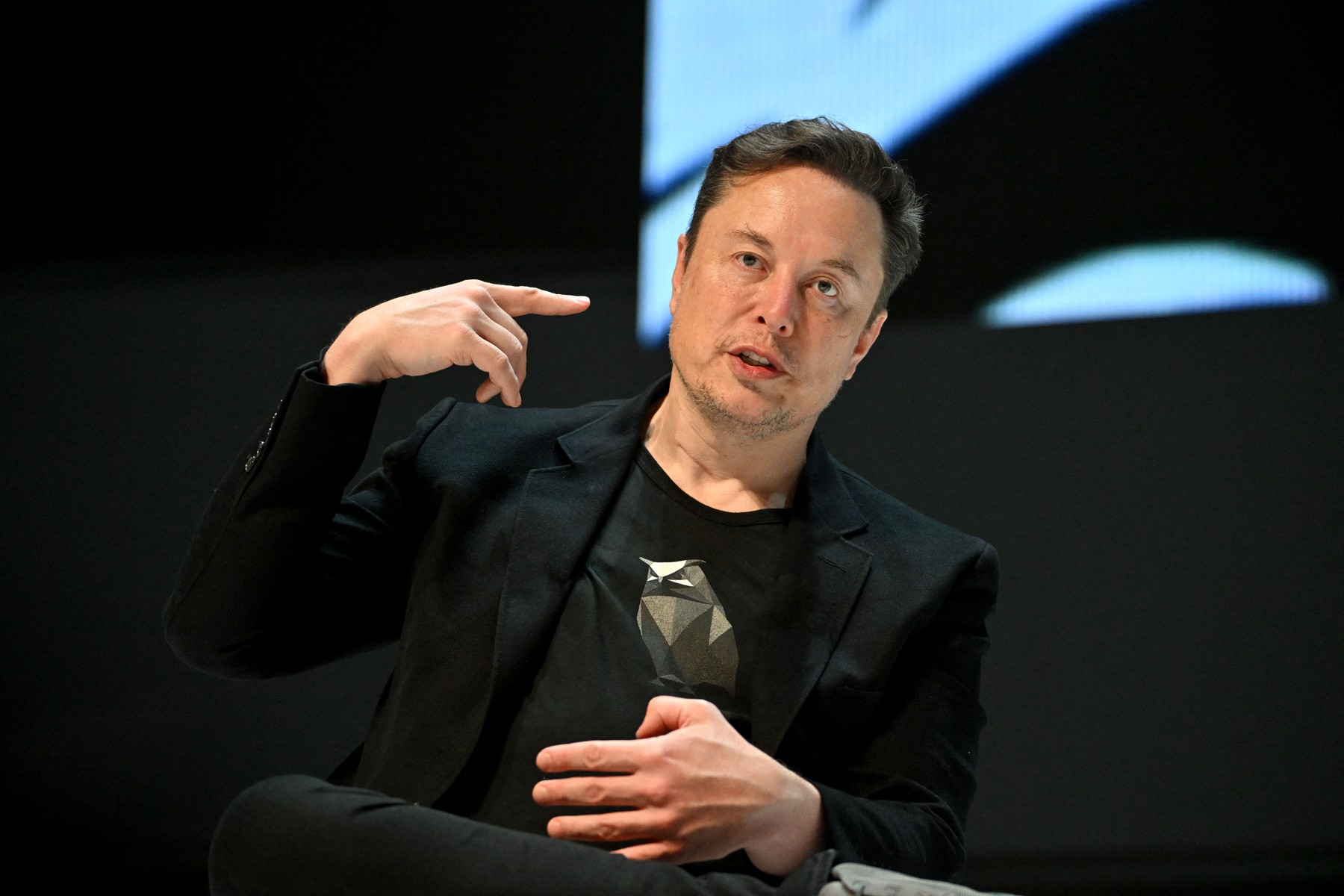
Musk filed a lawsuit against GARM in August 2024, and the alliance ceased operations a few days later. However, technology companies in Germany took a similar stance, with then-Economy Minister Robert Habeck (Greens) filing a total of more than 700 criminal complaints for "insulting a public figure" – for jokes spread about him by ordinary Germans.
But while German green censorship focused on its own citizens, according to the congressional committee, pan-European censorship reached across the Atlantic.
"In July 2025, the committee published a report detailing how the European Commission is abusing the DSA to impose global requirements for censorship of political speech, humor, and satire," the congressmen noted in the introduction to the report.
"Since then, technology companies have submitted thousands of internal documents and communications with the Commission to the committee in response to subpoenas. These documents show the scope—and success—of the Commission's global censorship campaign, which, in a comprehensive decade-long effort, has successfully pressured social media platforms to change their global content moderation rules, directly violating Americans' right to online speech in the United States."
According to published email communications, platforms such as Google and TikTok considered the behavior of representatives of the Commission's Directorate-General for Migration and Home Affairs to be "coercion" aimed at modifying their own terms and conditions (de facto social network code) in accordance with the requirements of the EU's executive arm.
The approach whereby private companies bow to pressure from government authorities is known in the United States as "hand-in-glove," and although the "glove" is private, it moves according to the "hand."
Russia did not need to interfere in the EU elections
This pressure came to the fore particularly before several elections in member states. As Jordan's committee pointed out, the Commission, through its technological "glove," directly interfered with the dissemination of information on social networks in eight elections, including the parliamentary elections in Slovakia.
It turns out interfering with elections is standard fare for the European Commission.
House Judiciary GOP 🇺🇸🇺🇸🇺🇸 (@JudiciaryGOP) February 3, 2026
Ahead of at least EIGHT elections across six European countries since 2023, the Commission met with platforms to pressure them to censor political speech in the days before the vote. pic.twitter.com/e4Aqxc0hGA—
"Ahead of at least eight elections in six European countries since 2023, the Commission met with platforms to pressure them to censor political speech in the days before the vote," the Judiciary Committee said.
In addition to the Slovak National Council elections, the committee also mentioned the presidential elections in Romania – which were influenced by the National Liberal Party, hiding behind "Russian influence" , in Moldova, the parliamentary elections in France (where the National Rally was "threatening" to win), and in Ireland.
Two genders as hateful content
Based on this "meeting," TikTok updated its terms and conditions to consider the phrase "there are only two genders" as hateful content. Similarly, other platforms took action against phrases such as "children cannot be trans" and targeted misgendering – the use of biologically correct pronouns and forms of address.
"TikTok itself noted that some of these political views were 'common in Slovak political discussions'. However, under pressure from the European Commission, TikTok censored these statements ahead of the Slovak parliamentary elections," the congressional committee noted.
The Commission had been preparing for the Slovak parliamentary elections since July 2023, presenting the Media Services Council's presentation to cooperating platforms.
"The Slovak regulator set the tone for the upcoming censorship campaign by disparaging its own citizens and telling platforms that 'the population is prone to conspiracy theories and false narratives,'" the committee explained.
The presentation mentioned by the committee is not public. It is therefore questionable how US congressmen obtained it. However, it was probably part of a collection of emails and other documents sent to the committee by TikTok.
"Four days before the election, the Commission sent TikTok a file with lists of 'problematic accounts on Slovak TikTok,' suggesting that they should be censored," the report continues. There were 63 accounts with between 1,000 and 120,000 followers.
The accounts to be blocked were those whose content "reinforces distrust in institutions," which are "aggressive," but within the rules, which "share conspiracy theories and political videos, but also humor that is often political and implicitly conveys a message" that "seeks to discredit representatives of the previous government, which in itself would not be a problem, but often work with conspiracy narratives such as the invasion of immigrants, or seek to discredit institutions," which "link vaccination to the deaths of celebrities," and finally, accounts that "support the Communist Party of Slovakia."
According to the US committee, the Commission, together with TikTok, was "preparing for the EU and US elections" in 2024, with the then Vice-President of the Commission, Věra Jourová, in charge of coordination between Brussels and the tech giant.
In addition to the European elections and the subsequent French elections—in which the Commission interfered, according to Jordan's committee—congressmen also focused their attention on the Romanian presidential elections. In the first round in November 2024, the "far-right" candidate Călin Georgescu won, after which the local constitutional court annulled the results.
The court referred to a report by the Romanian secret service, which had assessed the massive increase in Georgescu's supporters before the elections as organized and attributed the origin of this coordination to Russia. A subsequent investigation showed that the pro-European National Liberal Party was behind the politician's rise in popularity.

Similarly, the label "far-right" was also applied to committee chairman Jordan, directly on his Wikipedia page. A two-time US wrestling champion and congressman since 1995 (with a break in the Senate from 2001 to 2006), he is one of the strongest advocates of freedom of speech under the First Amendment to the United States Constitution. He also founded the Freedom Caucus faction within the party.
Nevertheless, his committee's report cannot be easily dismissed. It is based on internal emails exchanged between technology platforms and the European Commission. The only interference with the integrity of the text was the censorship of names and personal data.
Jordan highlighted Network X as a positive example, which has been facing a €120 million fine since December last year for violating the DSA and "refused to comply with foreign censorship orders, including global orders to remove content in Brazil and Australia."
He also recalled the threatening letter from former European Commissioner for Internal Market Thierry Breton and the subsequent €45 million fine for "misusing the historical significance of verification marks," the well-known blue checkmarks. Since Musk's arrival, these can be subscribed to for $8 per month.
The EU claimed that this was a "deceptive" move on the part of X that "limits [users'] ability to make free and informed decisions." "The Commission's claim of fraud simply assumes that the average citizen is ignorant and stupid. The Commission's own example confirms this. The decision uses an X account with a blue checkmark called 'Donald Duck' — a fictional Disney character — as an example of alleged deceptive practices," the committee noted.