
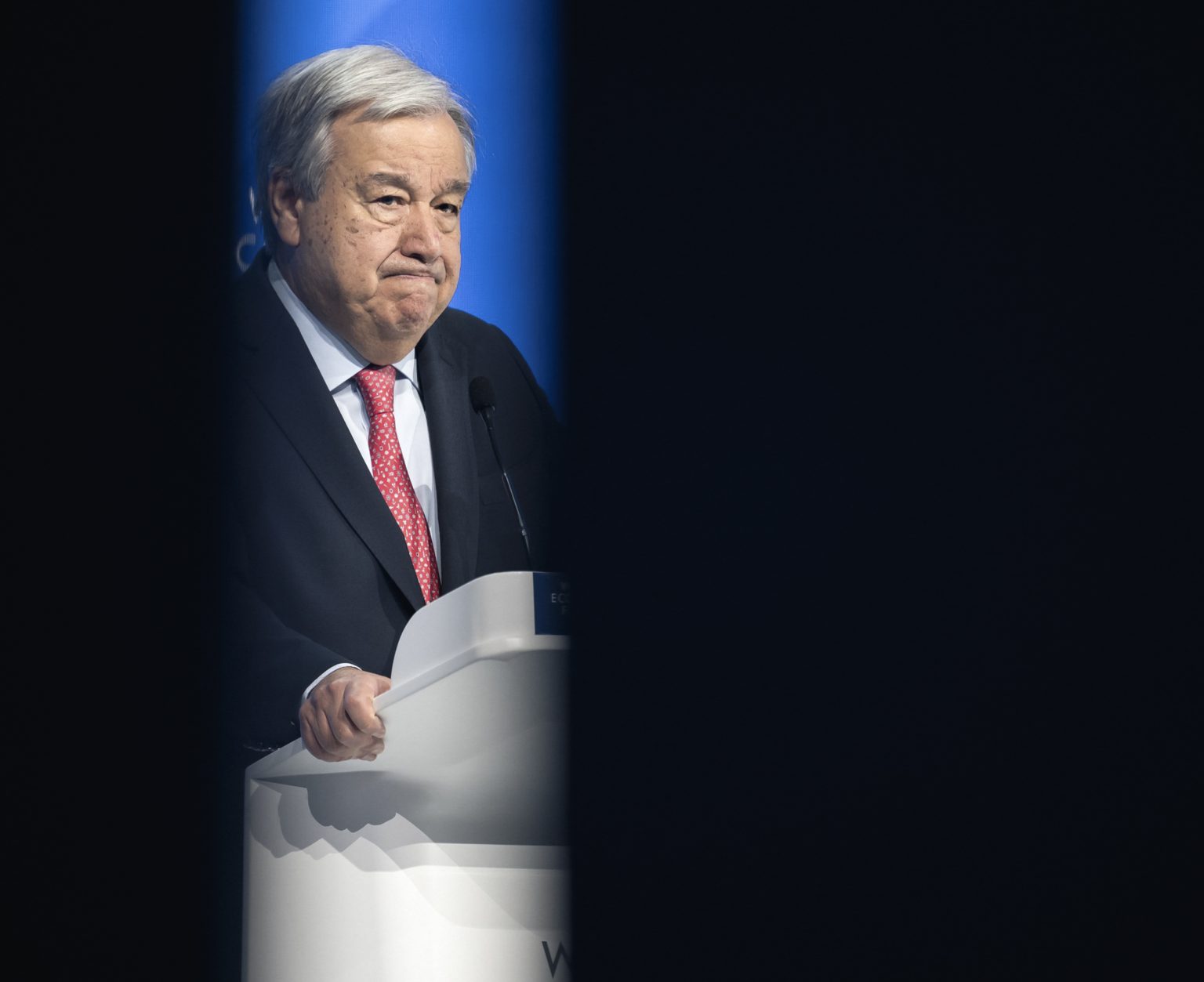
The United Nations (UN) is facing a dramatic financial crisis, as pointed out in a letter by UN Secretary-General António Guterres. According to Reuters, he spoke of an "imminent financial collapse."
Guterres has repeatedly warned of a worsening liquidity crisis. Added to this is the fact that the US is increasingly withdrawing from financing international projects. "The crisis is deepening, threatening the implementation of programs and posing a risk of financial collapse," Guterres wrote in a letter to UN ambassadors on January 28. According to him, the situation will continue to deteriorate in the near future.
A total of 70 countries are in arrears. The UN's financial situation is problematic for various reasons, as only one-fifth of its budget is covered by mandatory contributions. The rest comes from voluntary payments by member states. The timing of this crisis also coincides with the US's fundamental decision to refrain from funding international projects.
The United States has withdrawn
The United States recently reduced its voluntary contributions to UN organizations and also refused to make mandatory payments to the United Nations. US President Donald Trump has repeatedly acknowledged the "great potential" of the UN, but added that the organization is not living up to its potential. In addition, he established the Peace Council, raising concerns within the global institution that he might want to undermine it.
The UN was founded in 1945 after World War II and includes 193 member states. Its role is to maintain international peace and security. Another key element is the promotion of human rights.
According to UN rules, contributions depend on the size of the economies of individual member states. The US contributes approximately 22 percent to the UN's core budget, followed by China with 20 percent. At the end of 2025, unpaid receivables from member states amounted to $1.57 billion. Guterres did not disclose the names of the states that had not paid.
The Secretary-General left no doubt about the seriousness of the situation: "Either all member states meet their obligations in full and on time, or we will have to fundamentally revise our financial rules to prevent an imminent financial collapse," he warned.
UN officials explained that the US currently owes $2.19 billion to the UN's regular budget for several years. In addition, it owes $1.88 billion for active peacekeeping missions and $528 million for previous peacekeeping missions. The US State Department did not respond to a request for comment from Reuters.
Cost reduction
The fact that the UN's finances are in urgent need of restructuring is also evidenced by the fact that Guterres established a working group on reform last year. The UN80 initiative aims to reduce costs and improve the efficiency of the UN. To this end, members have agreed to reduce the 2026 budget by approximately 7% to $3.45 billion. However, Guterres warned that the UN could run out of money in July.
One of the problems in the organization's financial cycle is the rule that the UN must return unused funds to member states each year. Guterres described this accounting practice as a Kafkaesque cycle because funds that were never disbursed must be returned.
The United Nations has already taken specific austerity measures, including a freeze on new hires, cuts in infrastructure maintenance spending, and cuts in humanitarian aid. In addition to the basic structure of the UN, this measure will also affect specific missions, such as those in Sudan and Yemen.
UN finances remain a hot topic. Back in 2024, then-UN Emergency Relief Coordinator Martin Griffiths announced that aid programs were only funded by a fraction of the funds, specifically about 18 percent. At that time, this affected programs for Syria, Sudan, Yemen, Gaza, Ukraine, and other crisis and war zones around the world.