

Markets are experiencing a period of increased volatility, but there is no clear direction. This is a very dangerous environment for investors, not because they don't know whether to sell or buy, but because investment algorithms take over trading in such an environment.
With surgical precision, they flood the stock markets with sell and buy orders as soon as support is broken or resistance is overcome. For the average investor, such trading does not make much sense. There is no rational reason for the curves on the charts to constantly change direction without any important news, yet that is exactly what is happening.
The year 2026 has already taught us a big lesson in investing. You cannot repeat the same strategy in the stock market in the long term. What worked in the past may not work in the future.
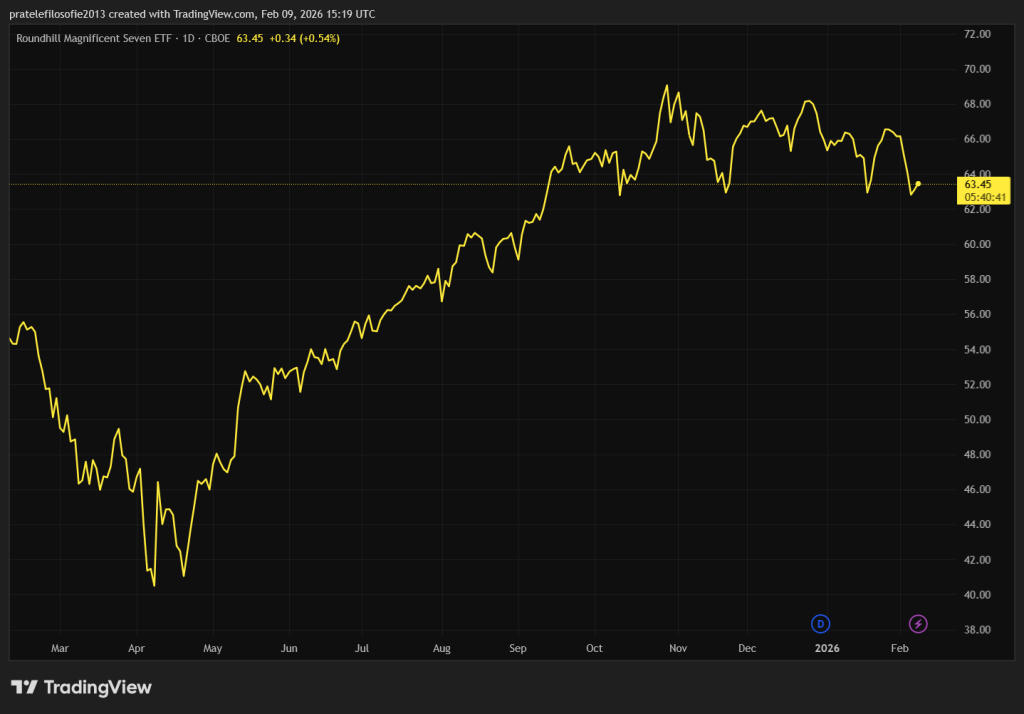
While one of the simplest and safest strategies in 2025 was to buy an ETF that invested in the seven Magnificent Seven stocks, which brought you a return of approximately 27.5 percent for the year (almost 10 percent more than the annual performance of the S&P 500 index in 2025), relying on this strategy this year was a mistake.
The Magnificent Seven stocks are one of the worst investments in 2026. The group has weakened by more than 4 percent since the beginning of the year and was the worst investment you could have made. Why?
The changing narrative around artificial intelligence
The reason, of course, is the changing narrative around artificial intelligence. Markets are no longer looking at who will win and how much artificial intelligence will help increase profits and streamline work, but at who will survive its advent.
The danger of AI is not only that it will eliminate certain professions, but also that high expectations will not be met and the return on investment will be very long.
This is reflected in Google's results. The figures were absolutely outstanding. Quarterly earnings per share were $2.82 and revenue was over $113.8 billion. Revenue for the Google Cloud division, which includes artificial intelligence, grew 48 percent to $17.7 billion.
The operating margin of this division also changed significantly, increasing from 17.5 percent to 30.1 percent. This is a truly remarkable acceleration. In the case of Alphabet, it is not at all true that artificial intelligence will only improve economic results in the future.
On the contrary, it is already significantly boosting Alphabet's figures. Similarly, it seems that automatically generated reports by artificial intelligence in the search engine were the solution that maintained high search engine traffic and thus advertising revenue.
The dire predictions that people would start searching for information based solely on language models have not come true. If we add to this the success of Gemini 3, which is catching up with Claude and ChatGPT, we would expect Google's stock to rise sharply. This did not happen, and the stock price stagnated.
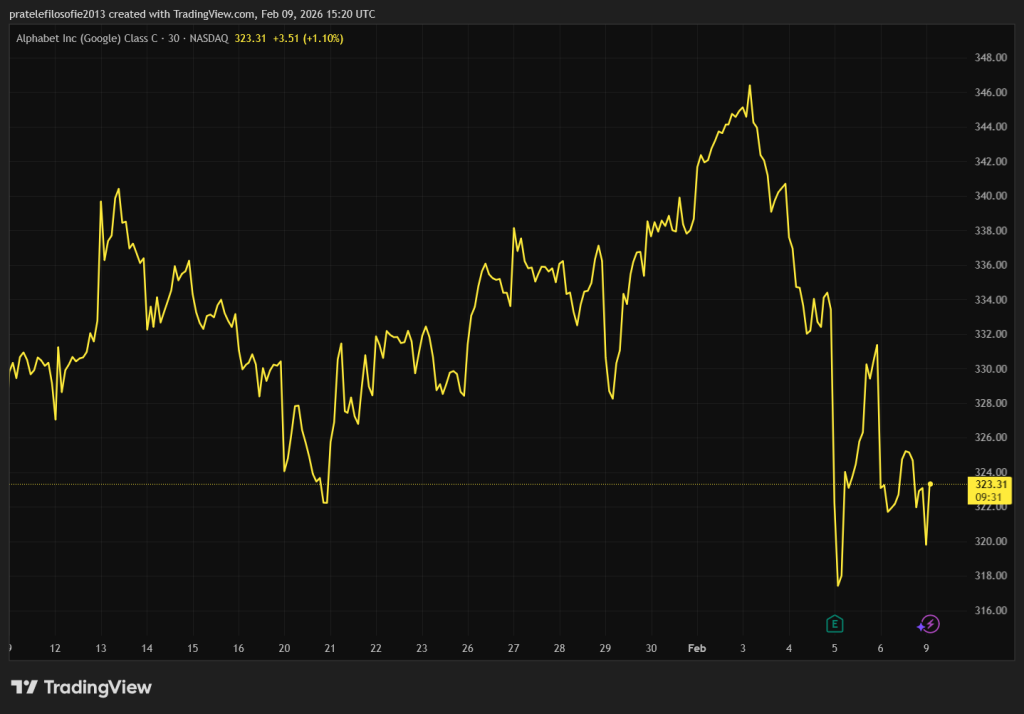
The reason was precisely the high investment costs for artificial intelligence. Market expectations were for costs of approximately $115 billion in 2026. However, the company's management expects costs of $175 to $185 billion for 2026 alone.
Of course, the question is how much the company can accelerate its revenue growth through artificial intelligence and whether this year will really be the last year in which investments in data center construction will peak, followed by further investments in their maintenance. So even with a conservative estimate, the return on investment will be more like five years.
Optimistic models are already talking about 2028, but that is really very optimistic. More skeptical estimates, which are still very likely, are talking more about eight to ten years. And that is an absolutely unimaginable time horizon for today's investors. So the questions about artificial intelligence will continue.
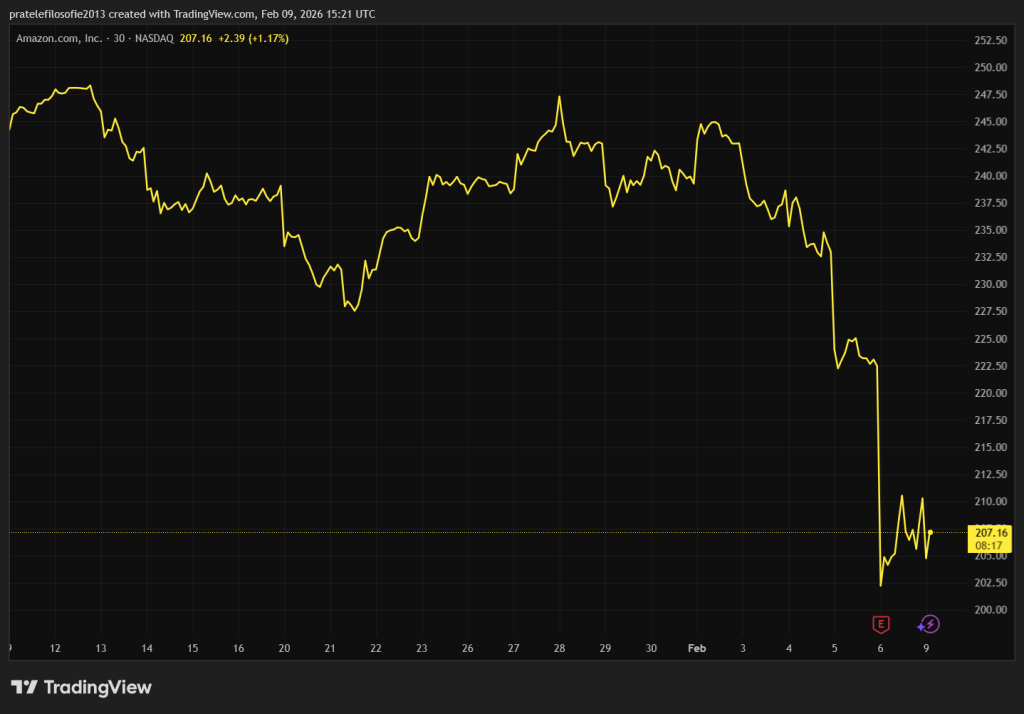
We saw a similar scenario with Amazon, but with the difference that Amazon's shares paid a high price. At certain points, they even lost more than 10 percent. The reason was identical to that of Alphabet.
The company's management increased its capital investments for 2026. Until now, it was estimated that Amazon would invest $146.6 billion, but now it is estimated that the company will invest $200 billion. The increase in investment forced investors to sell Amazon shares.
However, this did not change the fact that the actual results were good, even if they were slightly below analysts' estimates in terms of profit. Earnings per share were $1.95 compared to the expected $1.97. On the other hand, sales exceeded estimates, with Amazon achieving sales of $213.4 billion for the fourth quarter, compared to the expected $211.4 billion.
Amazon is also working on a strict employment policy. The company has already announced that it will lay off a total of more than 30,000 employees by October 2025, representing more than 10 percent of its entire workforce. The reason for this is to focus on profitable business areas, particularly everything related to the development of cloud services.
Overall, large US companies plan to invest more than $700 billion in data centers in 2026 alone. This is more than, for example, the entire German state budget for 2026, which is expected to reach a record €630 billion, of which €127 billion is to be spent on investments.
The investment potential of US technology companies thus far exceeds the capabilities of the state.
The year 2026 shows that artificial intelligence is not a short-term investment story, but a long-term and extremely capital-intensive process. Nevertheless, companies continue to increase their investments even in an environment of complex economic and geopolitical uncertainty, forcing the market to reassess the speed and realism of the return on these projects.
Has Bitcoin hit rock bottom?
The good news for all cryptocurrency investors was that Bitcoin's decline has stopped. Bitcoin has so far formed a local bottom at $65,000. This support could be very strong. However, there is great uncertainty about further developments.
The only consensus is that Bitcoin and other cryptocurrencies have entered a bearish trend. However, where the consensus ends is the question of how long this trend will last. The first optimistic version says that we may have already hit bottom.
A Bitcoin price of around $65,000 will be very attractive to most investors. Every bear market is unique, and this one could be unique mainly because of its short duration. It is possible.
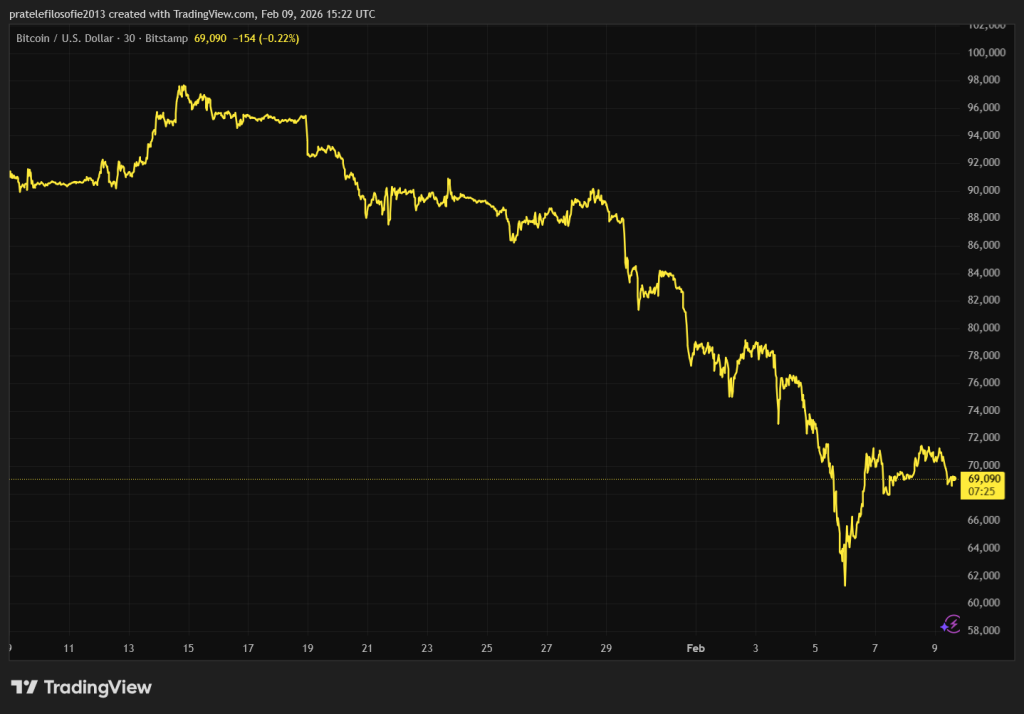
Then there is a much more pessimistic forecast, according to which the end of the bearish trend will not come until the fall of 2026. If this trend continues for several more months, the probability of a further decline in Bitcoin is relatively high.
The price could fall to $38,000, which corresponds to the average percentage drop from the all-time high (ATH) to the bottom in previous cycles.
Similar to stocks, with Bitcoin today, it is not so much about where exactly the bottom lies, but rather whether investors are prepared to cope with the long period of uncertainty that bear markets naturally bring.