
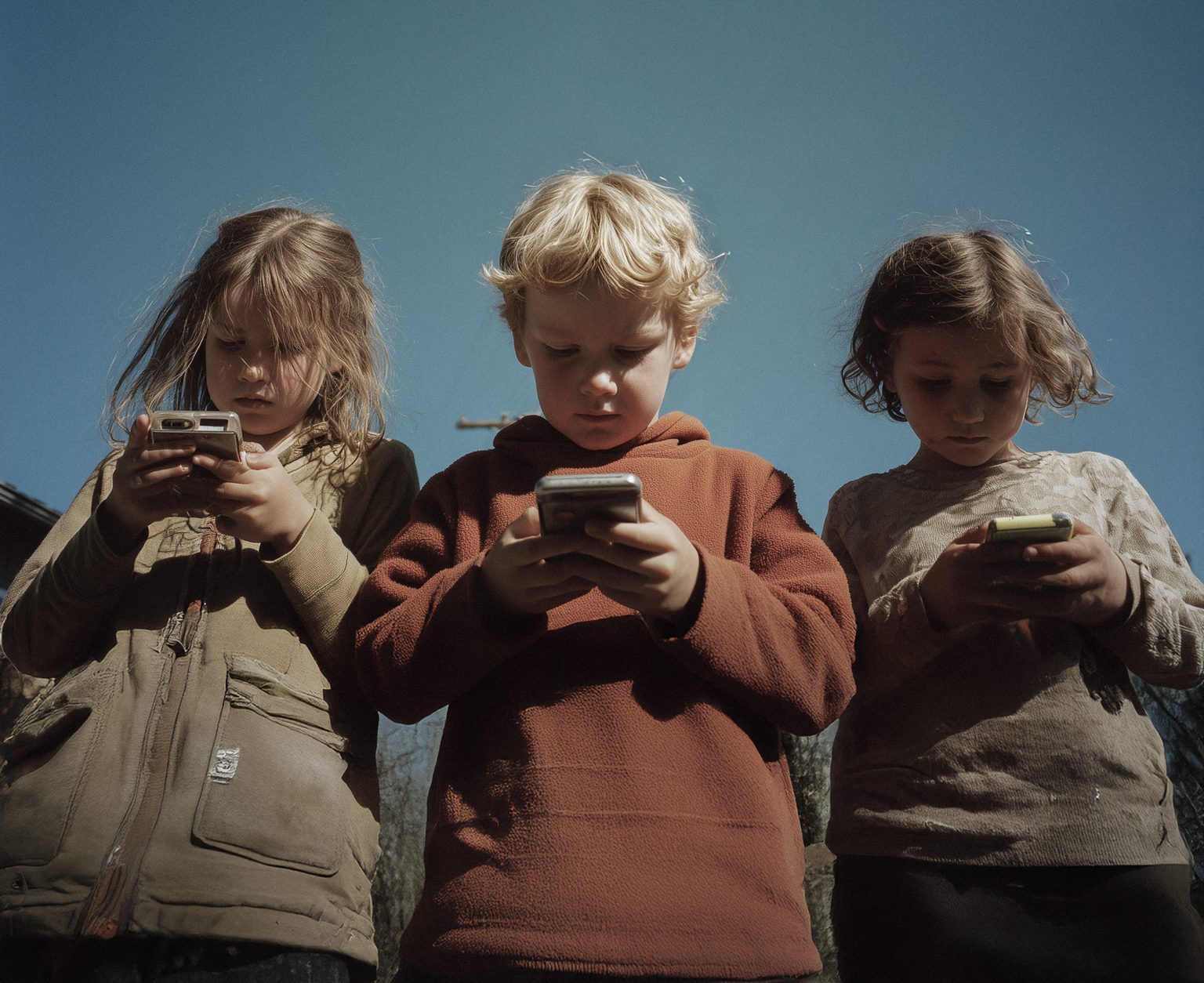
There are political and social issues that are almost impossible to oppose. For example, banning gambling establishments near schools or strict drug regulation. Anyone who defends unregulated gambling is immediately suspected of being paid by casinos.
The same is true today of the debate on banning children's access to social networks. Few people today doubt the negative impact of these platforms on children's psyche. Anyone who would deny this would voluntarily exclude themselves from the camp of reasonable-minded people.
Caution is warranted
It is precisely at such times that the attentive observer should be cautious. When a topic arises on which everyone seems to agree, it often overshadows issues that would normally be the subject of much more heated debate.
A bill restricting children's access to social networks passed through the French parliament like a knife through butter. This happened at a time when the French parliament is going through a crisis in which it can agree on practically nothing.
Similarly, in the Czech Republic, where the opposition automatically rejects anything the government proposes, nothing like that happened this time. Babiš's announcement of a ban on minors' access to social networks was widely praised. Except for one curious detail: Babiš chose social media to announce this fundamental change. What is particularly strange, even conspiratorial, is that such a major silent revolution does not require any extensive public debate, despite all the existing prejudices.
Child protection and digital identity
Child protection is a legitimate goal. However, the way we want to achieve it is not a technical detail, but a fundamental political choice. Banning access to social networks is not just a ban. Above all, it is a requirement for widespread age verification. And that means building a digital identity infrastructure that could fundamentally change the nature of anonymity on the internet.
The question is therefore not whether children should be protected. The question is whether we are prepared to create a system in which access to information and communication is conditional on digital proof of identity. The infrastructure that is created today for the sake of children will not disappear tomorrow. The technology will not be abolished, only its purposes will expand.
This is not about hysteria or distrust of a particular government. It is about institutional logic. Any system that allows for the central identification of users increases the potential power of both the state and large technology companies. And laws can be changed more quickly than the architecture of a system.
A society that addresses the vulnerability of children by strengthening control tools should be sure that it is not setting a precedent that will one day restrict everyone. Protecting children is a duty. But building a universal identification infrastructure is a decision about the nature of freedom in the digital space. And the issue of freedom in the digital space should be one of the main political topics today. Not at the level of various platitudes about how important freedom is, but in terms of concrete solutions and the back doors of the system. About who will oversee the technologies and about solutions for digital sovereignty.
If a new digital identity system is to be created, it must be designed to minimize data collection, be transparent, controllable, and truly voluntary. Otherwise, the protection of children will become a precedent for the standardized identification of everyone.
Freedom is not usually lost with one dramatic decision. It is weakened gradually, under the pressure of good intentions and urgent arguments. And that is precisely why we should be cautious when everyone agrees that "this time it is necessary."
The problem of the role of family and state
However, the problem has another dimension beyond the technical debate about solutions, supervision, and transparency of digital identity. It is a deeper and more sensitive dimension.
It is primarily the family that should prohibit certain things for children. And in the classic concept of the family, it is primarily the father who sets the boundaries. The father should be the one who says "no," who sets the limits and is responsible for enforcing them. The crisis of fatherhood, which is so much talked about today, is in fact a crisis of setting boundaries. A society that loses its authority in the family will sooner or later start looking for authority elsewhere.
Perhaps if the family functioned as it should, this debate would not have arisen at all. However, this is a reflection on an ideal world. The reality is different. In many cases, families have given up on regulating their children's digital space. And when the family fails, the state steps in.
The state will thus reinforce its paternalistic role. And that is a fundamental problem. Not only because it shifts responsibility from parents to the authorities, but also because it is the same state that is unable to cope with chronic deficits, a dysfunctional education system, and an overburdened healthcare system.
The state, which is struggling with issues of values, as illustrated by the state of civic education, now wants to take on the role of chief educator of the digital generation.
It is an illusion to think that a ban will solve the root of the problem. Let's imagine the moment: a fifteen-year-old youth solemnly receives his "digital license" and at that very moment throws himself into the world of social media without restriction. It is reminiscent of an eighteenth birthday celebration, which is supposed to symbolize adulthood, but in practice often boils down to recklessly crossing all boundaries.
A stupid ban cannot replace education. And the state cannot replace the role of the father.
If society loses the ability to set limits within the family, no central regulation will save it. On the contrary, it will only further weaken natural authorities and strengthen official ones. And that is the path on which responsibility dissolves and freedom narrows.
Good intentions are not enough.