
On Monday, US markets were closed for Presidents' Day. In China and across Asia, the arrival of the new year is being celebrated, so markets are either closed or trading at a slower pace.
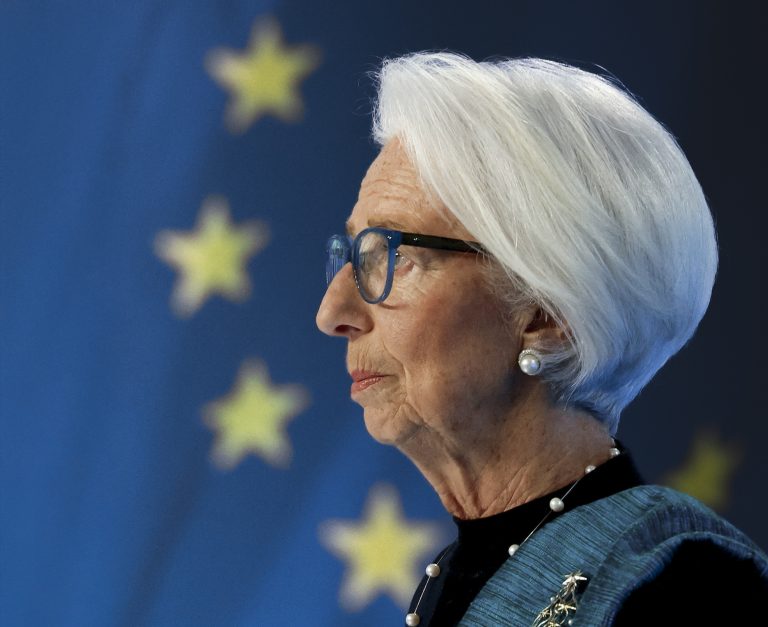
The European economy does not have the strength to set any major agenda on its own. And even when something did come up, it had virtually no impact on stock market trading. The topic was speculation about the early departure of Christine Lagarde (70) from her position as head of the European Central Bank (ECB).
The Financial Times was the first to report on her possible early departure. This would allow Emmanuel Macron to influence the selection of her successor before the French presidential election.
The bank's management did not confirm this information in the first few hours, but neither did it deny it. In this context, there were already signs of behind-the-scenes lobbying for her possible successor.
The information from the renowned British newspaper was surprising also because Lagarde responded to a journalist's question on June 5, 2025, saying, "But I can tell you with complete certainty that I have always been and remain fully committed to fulfilling my role and completing my term. So I'm sorry, but I have to tell you that you won't get rid of me."
For the sake of completeness, let us add that the journalist was already very well informed at the time, as he asked about the possible replacement of Klaus Schwab at the helm of the World Economic Forum by Lagarde.
The whole puzzle has now been solved by the ECB chief herself, who said in a private message to her colleagues that she is currently fully focused on her work and that if she decided to resign, they would hear it directly from her and not from the newspapers.
However, some ECB officials admit that this statement does not completely close the door, but an immediate departure is reportedly not on the table. In addition, ECB Executive Board member Piero Cipollone emphasized that there are currently no signs of her packing her bags, and Vice President Luis de Guindos assured that Lagarde remains fully committed to her position.
Whether she will ultimately end up at the helm of the World Economic Forum or not will likely be seen later. Perhaps after her term at the ECB ends, which is scheduled for October 31, 2027. It should be added that the Financial Times is a reputable newspaper whose sources are usually very well informed, so there may be some truth to the original report after all.
Macron's legacy in institutions
Moreover, this possible departure began to be discussed in connection with a similar situation involving the head of the French central bank. François Villeroy de Galhau, who has been in office since November 2015, announced that he will step down early in June 2026, with his term ending in October 2027.
This is also to allow President Emmanuel Macron to appoint his successor. Since the governor of the French central bank is elected for six years, whoever is in the Élysée Palace will have to deal with Macron's legacy. The French president is thus continuing to fill important positions with people who will remain in them after he leaves office.
Another example is the appointment of his long-time colleague Amélie de Montchalin to head the French Cour des comptes (Court of Auditors), which oversees the French budget. Until now, she has served as Minister of Public Finance.
In other words, Amélie de Montchalin will now be supervising her own work. Macronism will certainly not win the next election, but that does not mean that its spirit will not be present in state institutions.
We can see the same model at the European Union level. After all, Lagarde, who is staying on, and Ursula von der Leyen, for example, are increasingly losing support. In this context, it is not just a matter of individual personnel changes, but of the systematic extension of the influence of one political generation far beyond the horizon of the electoral cycle. Voters may decide to change direction, but key institutions remain staffed in such a way that the continuity of power survives even a possible discontinuity in election results.
Oil as a geopolitical indicator
However, the report of a possible change in the ECB's leadership left the markets relatively unmoved. The biggest event of the week was the sharp rise in oil prices. According to Polymarket, the probability of an attack on Iran has risen again to 60 percent.
The price of oil reacts in advance, and it is precisely this that is the biggest weakness of the White House's plan. The problem with the whole intervention is that it must be carried out very quickly and in such a way that it does not interrupt the transport of oil and gas in the Strait of Hormuz. However, absolute control will not be possible without a ground operation, which could drag on for a very long time.
In that case, oil prices would skyrocket in the long term, which would be a big problem for Donald Trump. At first, high oil and natural gas prices would help Trump balance the foreign trade balance, which is the goal of his policy, but if prices remained high for a long time, they would translate into inflation and subsequently complicate the easing of monetary policy.
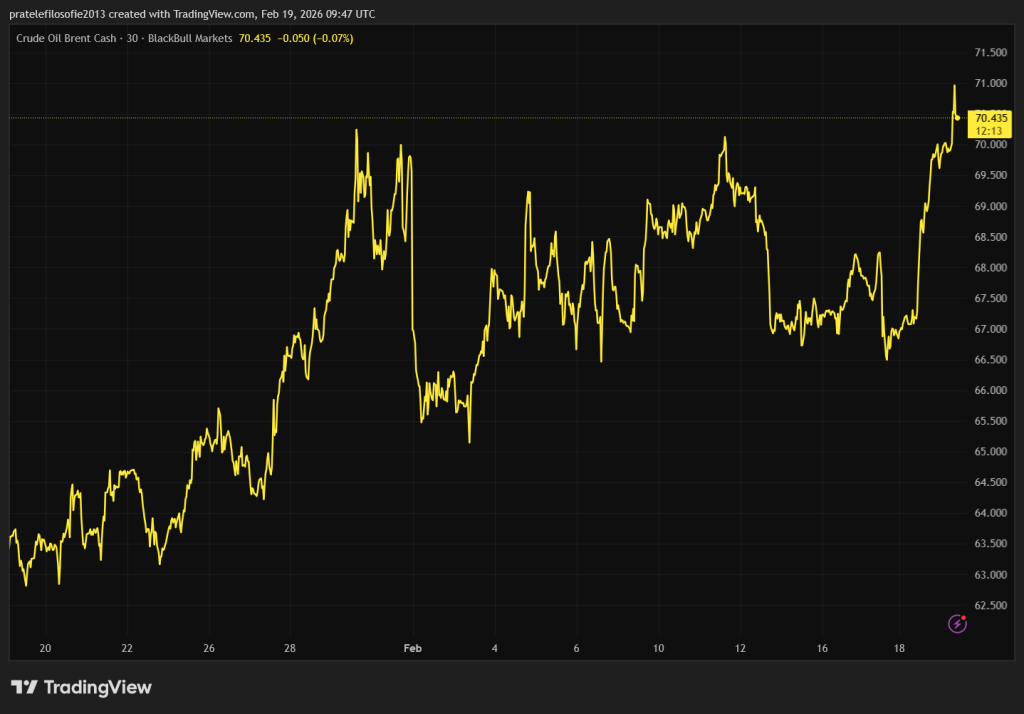
If oil prices remain high in the fall of 2026, it will cost Republicans a lot of votes in the midterm elections. Washington is therefore under pressure. It must carry out the operation as soon as possible and as quickly as possible so as not to damage the midterm results. At the same time, the attack must be carried out in such a way that the Americans can take advantage of the element of surprise. In any case, buying shares in oil companies is a good insurance policy against high fuel prices at our gas stations.
Buffett remains skeptical
This week, we also learned about changes in Berkshire Hathaway's most closely watched portfolio. Warren Buffett may be heading for a well-deserved retirement, but that doesn't mean this fund will cease to be watched. Conservative and value investors will always be interested in the decisions of the management of this investment machine. Nothing has changed in the fund's overall philosophy. For thirteen consecutive quarters, the fund has sold more than it has bought, so it was no surprise that the list of sales was longer than the list of purchases.
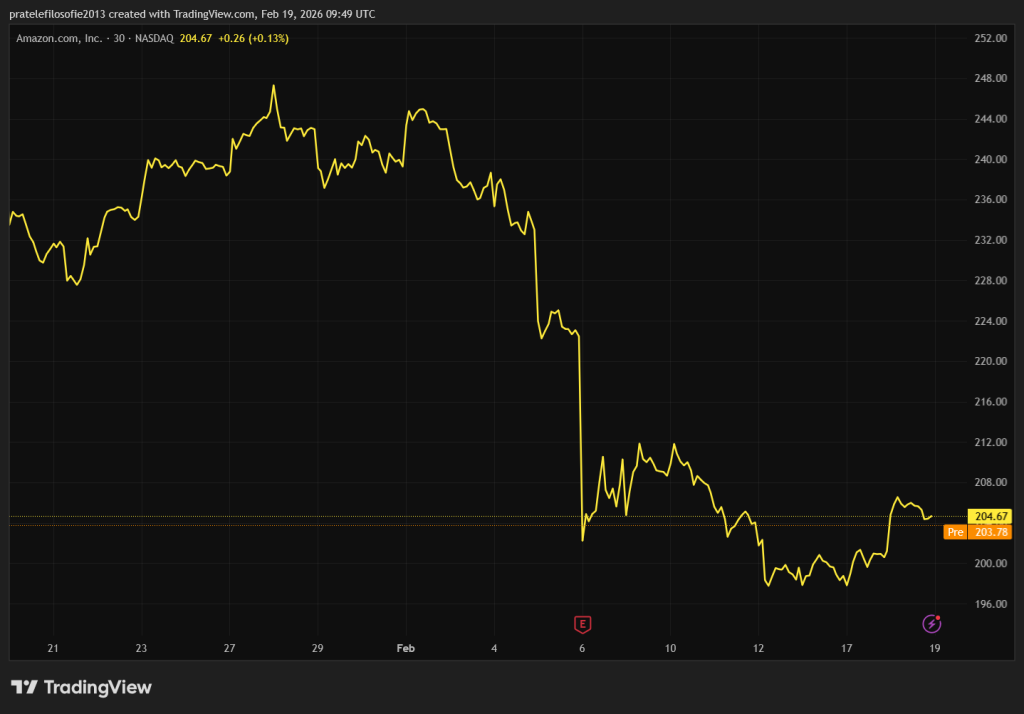
Commentators were surprised by the massive sell-off of Amazon shares. Buffett disposed of more than 77 percent of his shares. This is an unusual move for him, as he usually disposes of securities gradually.
He did this with Apple shares, for example, selling more than 10.3 million shares of the tech company in the fourth quarter. Despite this, Apple remains the largest position in the entire portfolio. However, if the sales continue, the tech giant will not maintain its position.
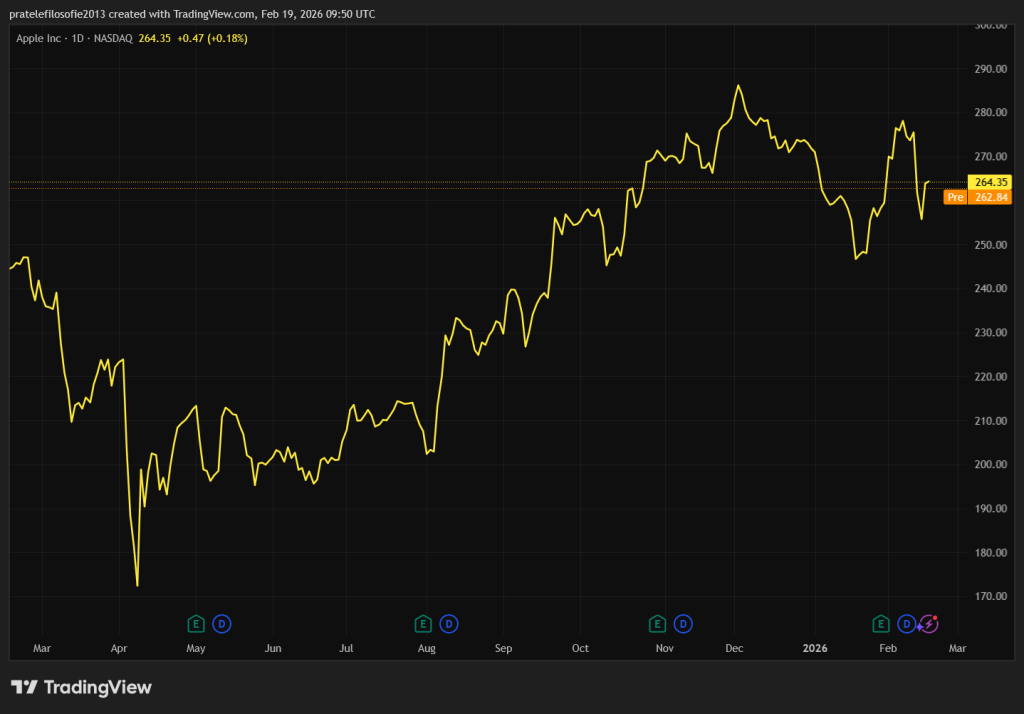
Buffett is known for his ostentatious disinterest in recent technological innovations. The legendary investor pretends not to understand technology, but what he does understand very well is the interpretation of economic results and figures. Investing in Apple and Amazon was not a bet on technological trends, but on exceptionally strong cash flow and disciplined management. That is why it is now paradoxical that Buffett has begun to sell some of these positions, indicating his growing skepticism about the sector's valuation, even though the fundamentals of the companies themselves have not disappeared.
From a purchasing perspective, we were in for a big surprise when Buffett opened a position in The New York Times. By purchasing $350 million worth of shares, he invested in a sector that is said to be a victim of artificial intelligence. Buffett has shown that a value investor must often be contrarian, i.e., going against the mainstream.
On the other hand, a $350 million investment is a very small position for Berkshire Hathaway. If this investment does not work out, it will in no way jeopardize the performance or profits of the entire colossus. So perhaps we are seeing a subtle realignment of forces rather than a change of course, but it is often in these subtle moves that we can best read how Buffett sees the next chapter of the American economy.