
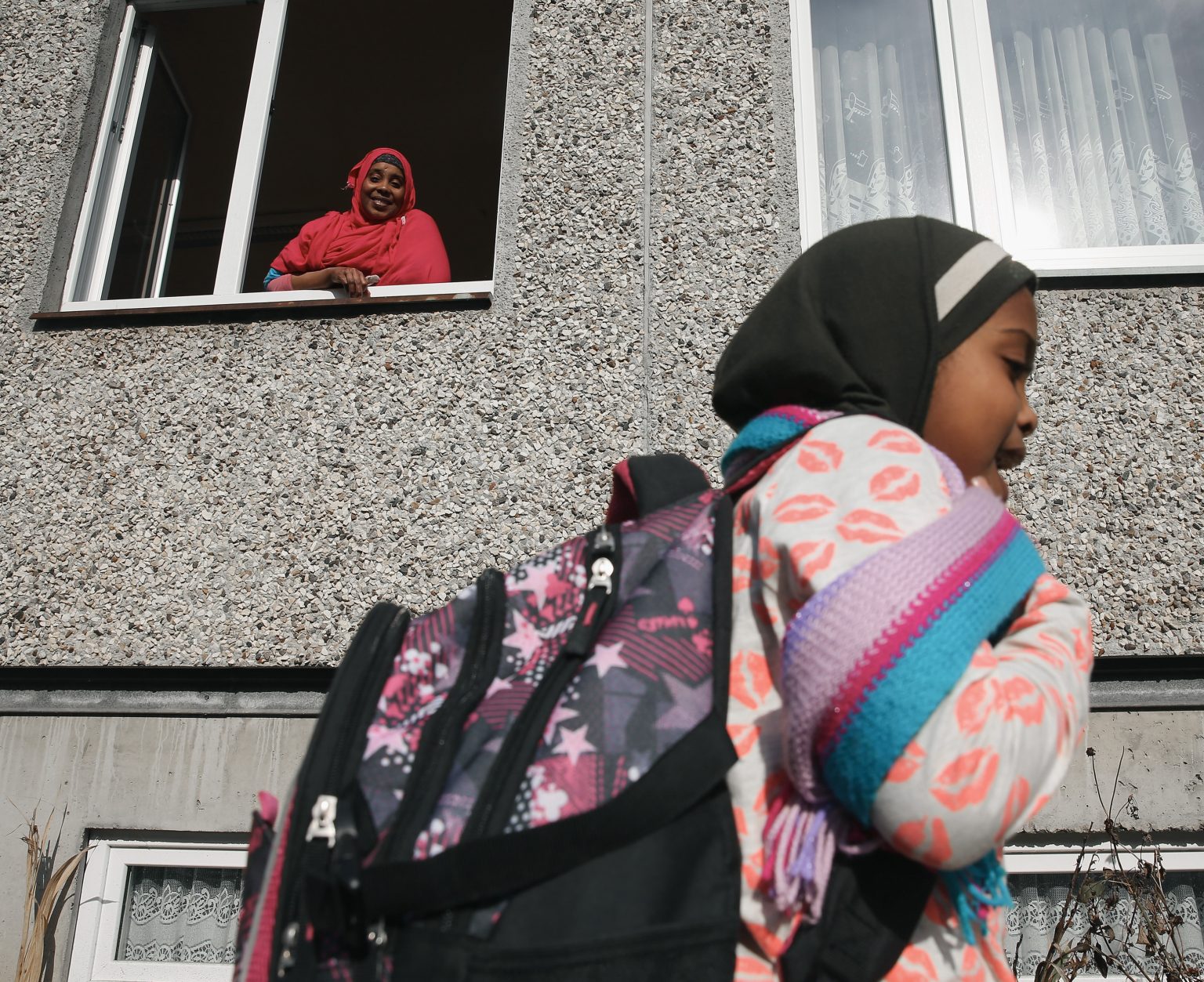
Berlin. Confident language skills are essential for everyday life in any country. One feels at home in the language spoken within one’s own four walls. The figures for Germany give cause for concern: German is no longer spoken in everyday life in 20 per cent of households, a development that affects schoolchildren’s language skills and their command of German.
In Germany, German is still predominantly spoken in private settings. This was announced by the Federal Statistical Office (Destatis) on the occasion of International Mother Language Day on 21 February 2026, based on the results of the microcensus. Around 77 per cent of the population in private households spoke exclusively German at home in 2024. A further 17 per cent were multilingual and used at least one other language in addition to German.
Among these multilingual speakers, German was the main language used at home for a good quarter (26 per cent). Just under three quarters of multilingual speakers – 74 per cent – communicated mainly in another language. This leaves six per cent of the population who did not use German at home in 2024, but exclusively one or more other languages.
Turkish most common
In absolute terms, this means that 15.5 million people in Germany communicate primarily or exclusively in a language other than German at home. Turkish was the most commonly spoken of these, accounting for 14 per cent. Russian followed with 12 per cent, and Arabic with 9 per cent – languages that are also spoken comparatively frequently in German households.
Some migrants speak German
The majority of residents with a migration background also communicate in German at home, but many use it in conjunction with one or more other languages. Of the 21.4 million people with a migration background, only 22 per cent communicated exclusively in German.
At 55 per cent, more than half used at least one other language in addition to German. Of these multilingual speakers, a good fifth (22 per cent) conversed primarily in German, while 78 per cent spoke primarily in another language. At 23 per cent, just under a quarter of people with a migration background did not speak German at home at all. According to Destatis, a person has a migration background if they themselves or both of their parents immigrated to Germany after 1950.
The microcensus method on which these data are based is a sample survey in which around 1 per cent of the population in Germany is surveyed annually. All information is based on self-reported data from respondents and is therefore reliable only to a limited extent. Furthermore, the microcensus does not provide any information about how well respondents speak a language. Another limitation is that the results do not refer to residents in shared accommodation. In such cases, the language spoken is not recorded in accordance with the Microcensus Act (MZG).
Not enough for school
The data collected by Destatis should be considered alongside another figure. Of the 128,000 children starting school this year, 23,800 did not have a sufficient command of German last year to be able to follow lessons. This means that almost one in five children in Germany has inadequate German language skills when starting school. The problem persists throughout their school years. Reports of classes in which only four or five children are native German speakers, while the others ave only a rudimentary command of the language, are becoming increasingly common in Germany.
The key findings of the IQB Education Trend – IQB stands for the Institute for Quality Development in Education – on German reading show that it is not only migrants who struggle with the language: 32.5 per cent of pupils do not achieve the minimum standard for the intermediate school leaving certificate. In spelling, 22.3 per cent fall below the minimum standard for that certificate.
A good command of the local language is important not only for vocational training, but also for everyday life. German is the official language used by public authorities and in court.