
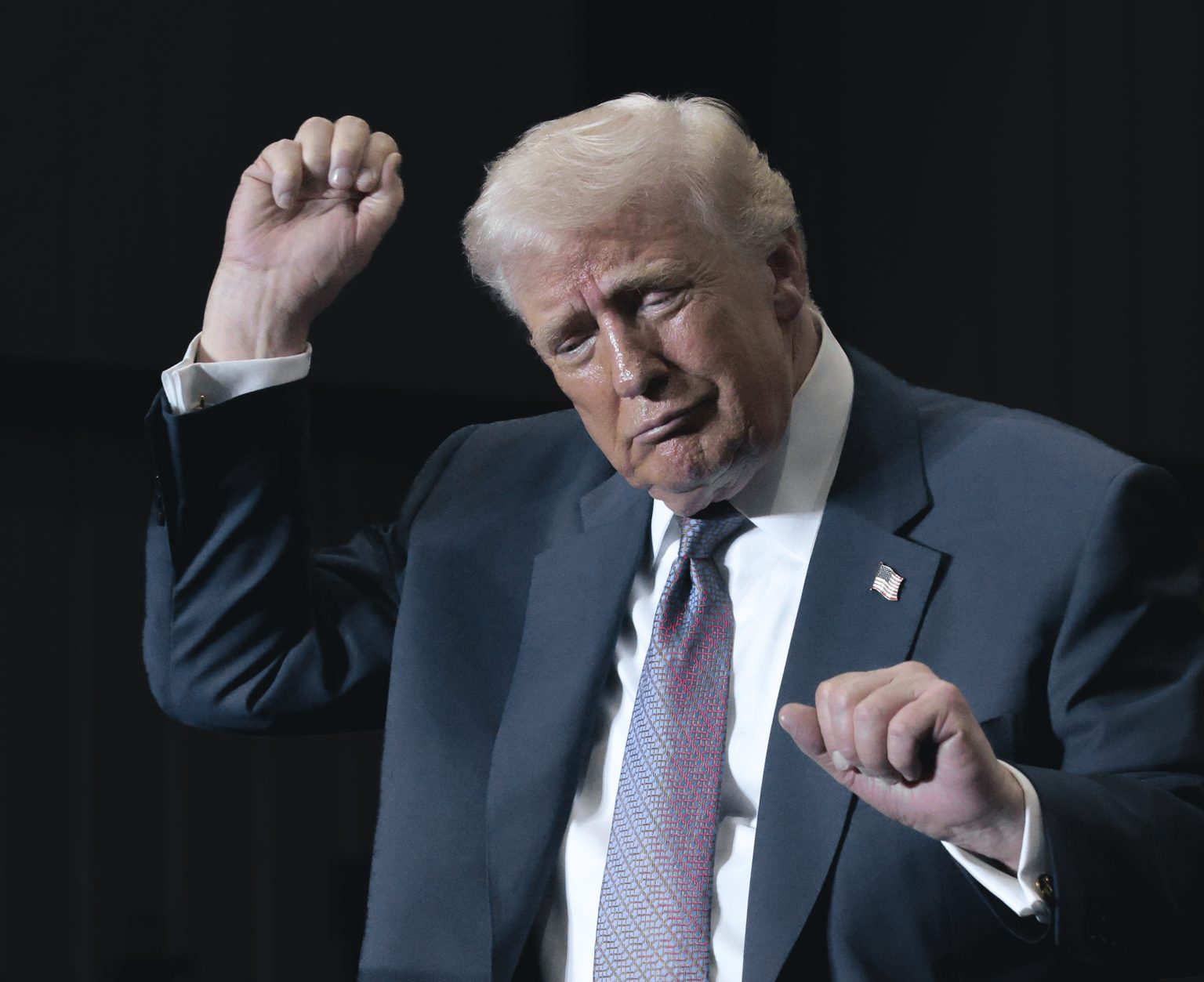
Washington. US President Donald Trump announced on Friday that he would impose a 10 per cent global tariff for a period of 150 days. The measure, introduced under Section 122 of the Trade Act of 1974, will be applied in addition to tariffs already in force.
Trump was responding to a ruling by the US Supreme Court, which overturned his broad tariff regime imposed under the International Emergency Economic Powers Act (IEEPA). In a 6–3 decision, the court held that the president had exceeded his authority.
"We have alternatives, great alternatives", Trump said. "It could be more money. We will take more money and we will be much stronger because of it."
Section 122 allows the president to impose tariffs of up to 15 per cent for 150 days in the event of "extensive and serious" balance-of-payments problems. It does not require prior procedural steps.
Trump added that the administration would also launch new investigations under Section 301 of the Trade Act to examine unfair trade practices by other countries.
Legal dispute over jurisdiction and foreign clamour
His decision came just hours after the US Supreme Court ruled that the 1977 IEEPA, on which Trump had relied to impose global "reciprocal" tariffs, does not grant him such authority. The author of the opinion, Chief Justice John Roberts, wrote: "Our task today was to decide only whether the power to 'regulate imports' includes the power to impose tariffs. It does not."
Roberts added that the president must "point to clear authorization from Congress" in order to exercise extraordinary powers in the area of tariffs. "He cannot", he concluded.
The US Constitution grants Congress – not the White House – the power to levy taxes and tariffs.
Trump called the decision "terrible" and sharply criticised the six justices who voted against him. "I am ashamed of some members of the court. I am absolutely ashamed that they don't have the courage to do what is right for our country", he said at the White House.
However, Justice Brett Kavanaugh received praise for noting in his dissenting opinion that the ruling does not prevent the president from "imposing most, if not all, of the same types of tariffs under other statutory authorities". He argued that the court had concluded that Trump "checked the wrong legal option". The president responded by saying, "I am so proud of him".
The White House chief did not fail to note that foreign countries were pleased with the decision. "They are so happy and dancing in the streets, but I can assure you that they will not be dancing for long", he said before announcing new tariffs under the above-mentioned legal provision.
In response to the court rulings, European Union spokesman Olof Gill said the bloc was in close contact with the US government and stressed the need for stability and predictability in trade relations. Last year, both sides agreed on a 15 per cent tariff on most goods exported from the EU to the US.
Canadian Minister Dominic LeBlanc stressed that sectoral tariffs remain in force and continue to affect the steel, metallurgical and automotive industries. In a brief statement, the British government said it expected the United Kingdom's "favourable trading position" with the US to continue.
Impact on the economy and markets
Tariffs have been, and remain, a key instrument of Trump's economic and foreign policy. Since the start of his second term, they have become a defining feature of the global trade war, affecting financial markets and fuelling uncertainty in international commerce.
The court's decision triggered volatility on Wall Street as investors weighed the potential easing of inflationary pressures against the risk of further legal disputes and new tariffs.
Democrats and several industry groups welcomed the ruling, but trade associations warned of continued uncertainty, as the administration may seek to impose tariffs under other statutes — which the president subsequently did.
Trump declared a national emergency, citing the US trade deficit, which reached $1.24 trillion in 2025. According to government data, the deficit widened despite the introduction of tariffs.
The new 10 per cent tariff under Section 122 can remain in effect for a maximum of 150 days. Investigations under Section 301 typically take months, meaning that further action by the administration may follow later rather than within a few weeks.
White House signals possible military action against Iran
Trump also sent a warning to Iran. When asked at the White House whether he was considering a limited strike to force Tehran into a nuclear deal, he replied: "I think I can say that I am considering it." He later added that Iran should "negotiate a fair deal".
Two US officials told Reuters that US military planning against Iran is at an advanced stage and that the options under consideration include targeted strikes on individuals or a change of leadership in Tehran if the president orders it.
Abbas Arakchi, Iran's foreign minister, said after indirect talks in Geneva with US special envoys Steve Witkoff and Jared Kushner that the parties had agreed on the main "principles", but that an agreement was not imminent.
According to him, military action would complicate diplomatic efforts. "I believe that a diplomatic agreement is within reach and can be achieved in a very short time", Arakchi said.
On Thursday, Trump gave Iran 10 to 15 days to reach an agreement; otherwise it would face "really bad things". The increased US military presence in the Middle East has heightened fears of a wider conflict.
Iran's foreign minister stressed that the US did not demand zero uranium enrichment and that Iran did not offer to suspend it. "Now we are talking about how to ensure that Iran's nuclear programme, including enrichment, is peaceful and remains peaceful forever", he said.
However, the White House reiterated that Iran cannot have nuclear weapons or the capacity to produce them.
(reuters, max)