
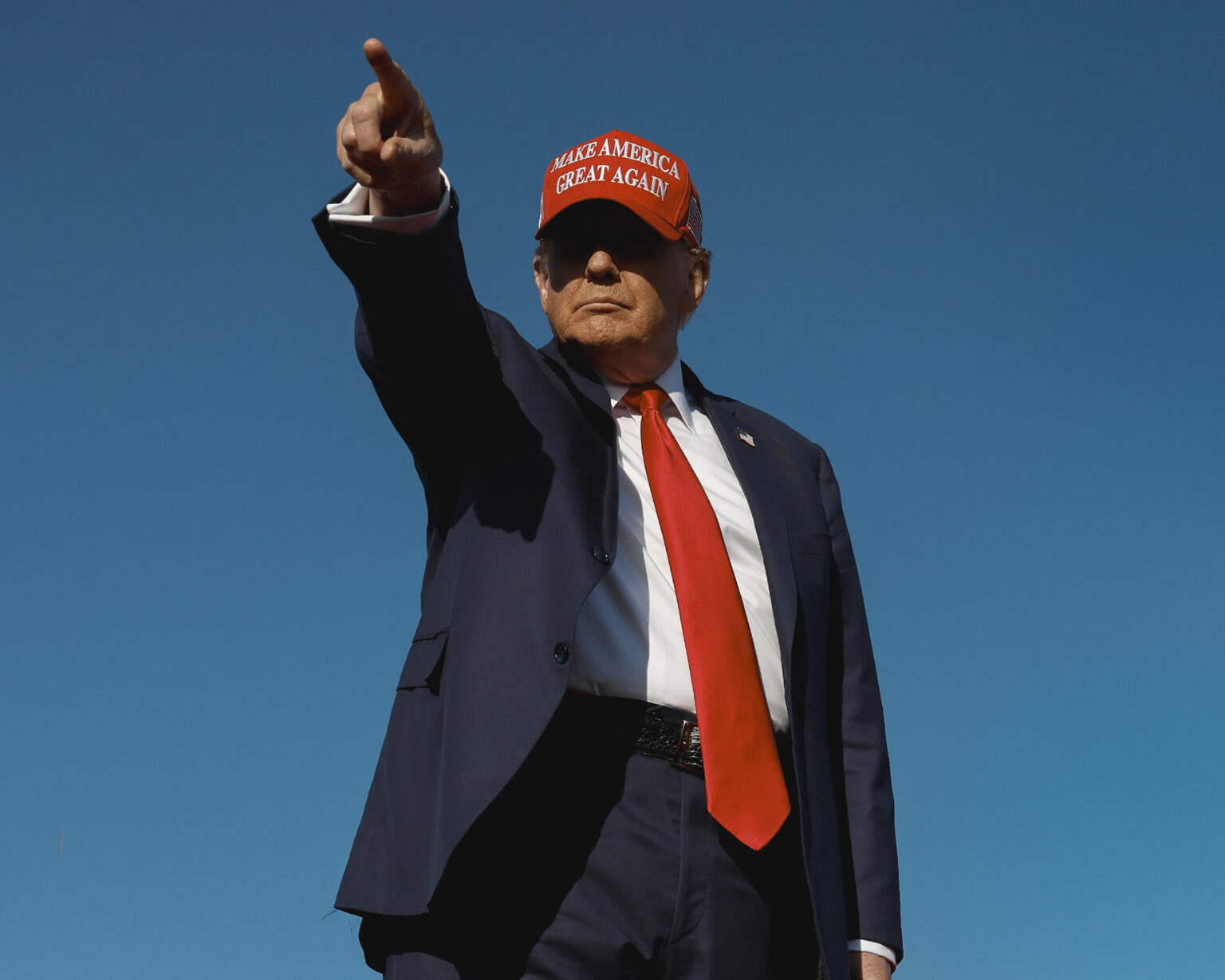
On Saturday, US President Donald Trump announced that he would increase temporary tariffs on imports to the United States from all countries from the originally declared 10 percent to 15 percent.
"Effective immediately, I am raising the 10 percent global tariff on countries, many of which have been 'robbing' the US for decades without any retaliation (until I came along!), to the fully authorized and legally verified level of 15 percent," the White House chief said on the social network Truth Social.
Immediately after Friday's (February 20) decision by the US Supreme Court to block his key tariff program, Trump ordered a 10 percent tariff on all imports, in addition to existing tariffs. In his latest status update, he called the court's decision "ridiculous, poorly written, and extremely anti-American."
The Supreme Court overturned his sweeping tariffs imposed under the International Emergency Economic Powers Act (IEEPA). The court ruled 6-3 that the US president had exceeded his authority. The author of the decision, Chief Justice John Roberts, wrote: "Our task today was to decide only whether the power to 'regulate imports' includes the power to impose tariffs. It does not."
Roberts added that the president must "point to a clear authorization from Congress" in order to exercise extraordinary powers in the area of tariffs. "He cannot," he concluded.
The US Constitution grants the power to levy taxes and tariffs to Congress, not the White House.
According to Reuters, current legislation allows the US president to impose tariffs of up to 15 percent for a period of 150 days, although this measure could be challenged in court.
Over the coming months, his administration wants to prepare new tariffs that, according to him, will be in accordance with the law and "will be a continuation of our extremely successful MAGA process."
French minister: Brussels has the tools to respond
Brussels has the tools to respond to the latest wave of US tariffs, French Trade Minister Nicolas Forissier told the Financial Times in response to the 10 percent tariffs.
According to him, Paris is negotiating with its EU partners and the European Commission on the US president's decision to impose blanket tariffs on imports from around the world. "If necessary, the European Union has the appropriate tools at its disposal," Forissier told the FT.
According to the newspaper, the EU's response could also include the so-called "trade bazooka" – an Anti-Coercion Instrument (ACI) that could affect US technology companies. The information was provided by French officials.
The ACI allows for a wide range of measures, from export restrictions and tariffs on services to the exclusion of US companies from public procurement in the EU.
The EU also reportedly has a package of retaliatory tariffs on US goods worth more than €90 billion ready to be implemented, although this has been suspended for the time being.
Merz: Uncertainty over tariffs is poison for both Europe and the US
German Chancellor Friedrich Merz expected the Supreme Court's decision to ease the burden on German companies.
In interviews with several German media outlets, Merz said that ahead of his upcoming trip to the United States, he would closely coordinate a joint approach with other European Union countries, emphasizing that tariffs also harm the United States itself.
He stressed that "we will have a very clear European position on this issue, because customs policy is the responsibility of the European Union, not individual member states, and I will go to Washington with a coordinated European position."
"The greatest poison for the economies of Europe and the United States is this constant uncertainty surrounding tariffs. And this uncertainty must end," Merz said in an interview with RTL television.
(reuters, luc)