
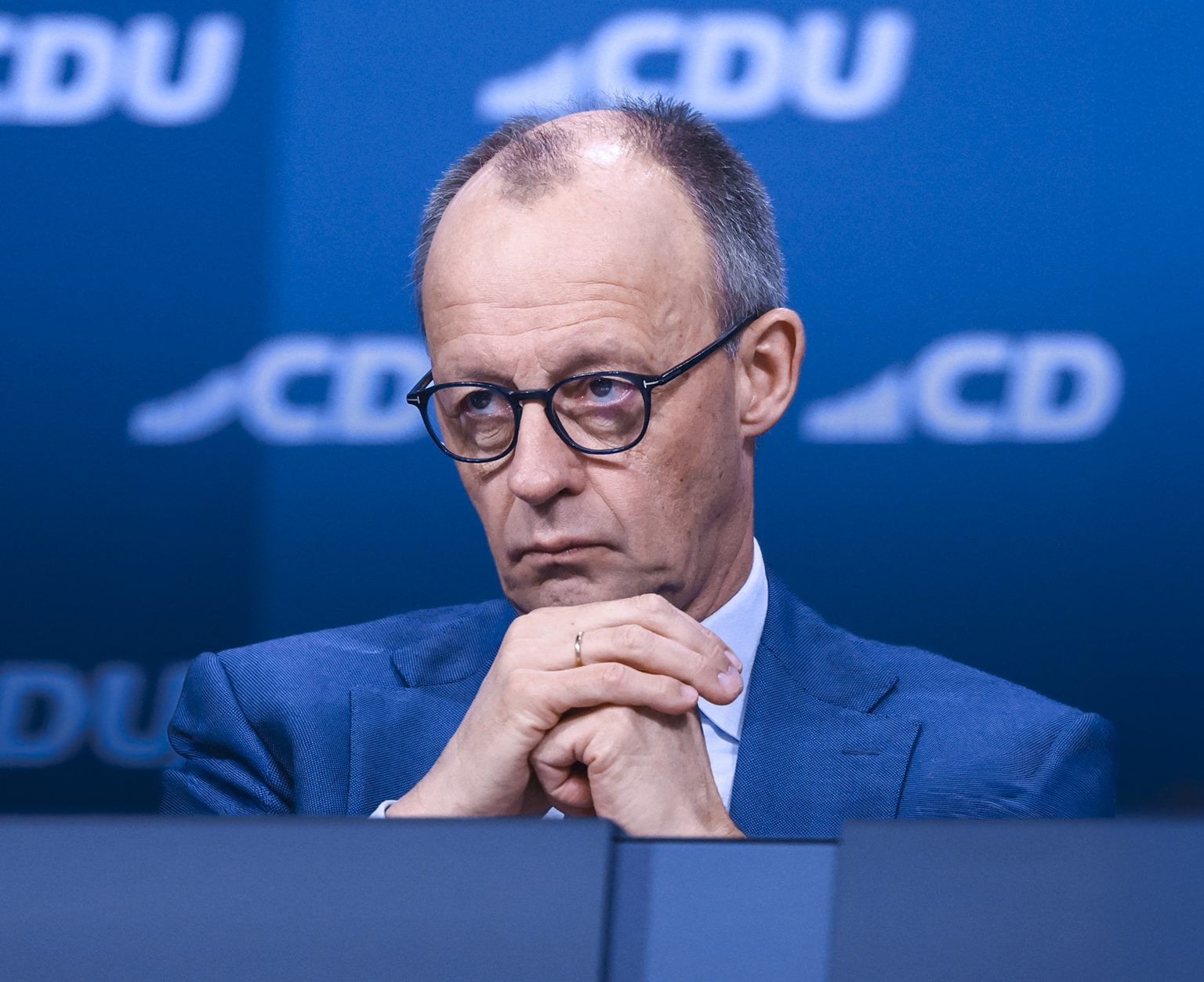
Stuttgart. Party conferences of the Christian Democratic Union of Germany were once displays of power. They served as carefully staged performances by a party that regarded itself as the natural party of government in the Federal Republic and as the guardian of West German identity and stability. Even in the few years when the Union found itself in opposition, its gatherings projected confidence and presented a self-assured organisation that was proud, formidable and certain of victory.
Many within the CDU remain convinced, even in 2026, that it is the Federal Republic’s true governing party. Yet the sense of statecraft is almost all that remains of former decades’ splendour. Among the Christian Democrats there is scepticism, uncertainty and disagreement about the right course. The party conference held last weekend in Stuttgart made that unmistakably clear.
The AfD as the central dilemma
The elephant in the room at the Stuttgart exhibition hall was the Alternative für Deutschland. Since the AfD was founded in 2013 in response to European policy, particularly that of the CDU, it has represented an open flank for the Christian Democrats. In 1987, Franz Josef Strauß, the legendary chairman of the Union’s Bavarian sister party, the CSU, declared that ‘there must be no democratically legitimate party to the right of the CDU/CSU’. Yet that is precisely what has existed since the AfD entered the Bundestag in 2017 with 12.6 per cent of the vote.
From the outset, the CDU sought to combat the AfD through exclusion. Partly because such a strategy had proved successful against right-wing competitors in the 1960s and 1980s, notably the NPD and the Republikaner. Partly, too, because under its then chairwoman and chancellor Angela Merkel the CDU had shifted markedly to the left and saw its future more in cooperation with moderate forces among the Greens or the SPD. A partnership with the AfD would also have exposed the Union to fierce criticism from large sections of the predominantly left-liberal media, the cultural sector and non-governmental organisations. At party headquarters – the Konrad-Adenauer-Haus – there was neither the will nor the appetite for such confrontation.
The Union therefore adopted the language of the political left, which portrayed the AfD as anti-democratic, racist and proto-fascist, a party with which no democrat should cooperate. In doing so, however, it manoeuvred itself into a strategic cul-de-sac. On the one hand, it contributed to strengthening radical forces within the AfD, making cooperation ever more difficult. Above all, it bound itself in the long term to parties of the left. Since the Union commands no absolute majority at federal or state level, it depends on the Greens or the SPD. In coalition negotiations, that dependence translates into considerable leverage for its partners. The result: the Union increasingly struggles to implement its own ideas – which damages its credibility and further fuels support for the AfD.
A self-inflicted cul-de-sac
The CDU thus finds itself in a self-inflicted strategic dilemma from which, by ordinary reckoning, there is no easy escape. Political cooperation with the AfD has been ruled out so often and so emphatically that any reversal would risk tearing the party apart. Moreover, there remain many supporters of former chancellor Angela Merkel within the CDU who would never endorse such a course and might even leave the party.
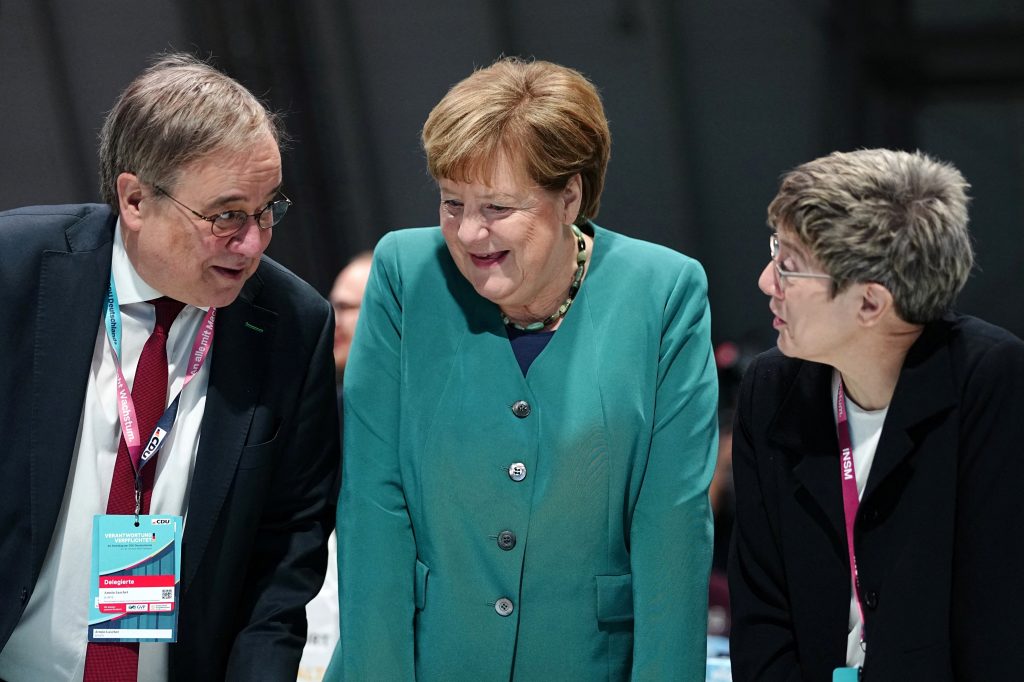
Chancellor and party chairman Friedrich Merz aptly summarised the situation in Stuttgart when he spoke of the Union’s ‘restricted’ room for manoeuvre. And since the Union remains at heart the same political machine it has long been admired and criticised for, the delegates followed their leader on this point. In practice, that meant refraining from programmatic demands that could not be implemented – or only with the AfD. Grand designs were absent. Stuttgart was chiefly about closing ranks and bolstering those regional associations facing election campaigns this year – or at least avoiding placing obstacles in their path.
A super election year marked by caution
Germany is experiencing what many media outlets call a super election year. Five federal states – Baden-Württemberg, Rhineland-Palatinate, Saxony-Anhalt, Mecklenburg-Western Pomerania and Berlin – are heading to the polls. Baden-Württemberg and Rhineland-Palatinate, both in the former West Germany, were once strongholds of the Union. In the 1970s, Rhineland-Palatinate was led by a minister-president named Helmut Kohl. Regaining power there is regarded by many in the CDU as a matter close to the heart. The prospects are not unfavourable.
No one wished to stumble on the way. In Stuttgart, anything that might have been construed as controversial and unsettled the party was carefully avoided. Yet the balancing act required of the leadership around Friedrich Merz was considerable. Germany remains in a state of genuine crisis: the economy is faltering, infrastructure is ageing, migration over the past decade has brought higher crime and cultural unease, rents continue to rise, and the long-neglected Bundeswehr must be restored to operational readiness. And that is only part of the picture.
Rhetoric without substance
Politicians across the world respond to such crises with rhetoric about decisive action. Merz did the same. In his speech he once again stressed the need for reform, insisting that Germany must return ‘to peak form’, that courage was required, and that the CDU was the ‘party of doers’ that would move the country forward.
Nothing else had been expected. Yet tellingly, it all remained vague. Concrete proposals? Bold ideas? Determined initiatives? None. Compromises with partners from the political left were already implicit. The entire conference appeared correspondingly colourless and uninspired. Avoid mistakes, avoid discord within the coalition, avoid promises that cannot be kept with the Greens or the SPD. Thus a once great party curtails itself.
Delegates even rejected motions that merely demanded what had been campaign pledges a year earlier: scaling back climate targets, securing solid pension financing, pursuing bold tax reform. Instead, they approved a social media ban for minors – likely because their coalition partner in Berlin also supports it.
A second chance – but for what?
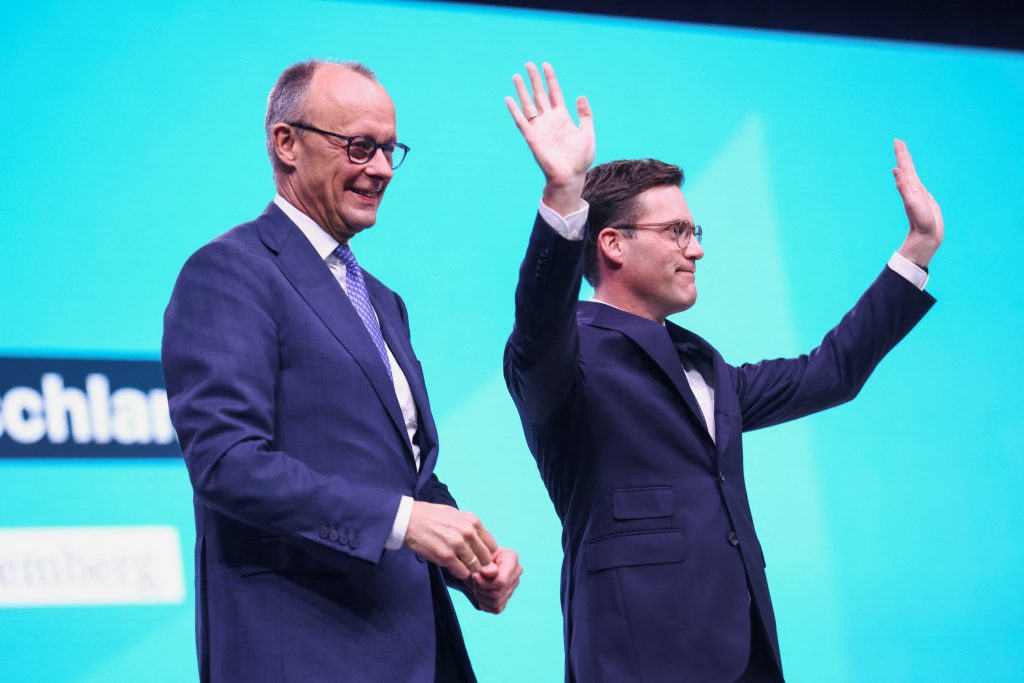
The Stuttgart conference was a gathering of conflicts swept beneath the carpet. State elections loom, and genuine alternatives lack political viability. That Merz was re-elected party chairman with 91.2 per cent of the vote despite broken campaign promises and an uninspiring speech is less a sign of contentment than of internal discipline. One might say he has been granted a second chance.
But to what end? Through a mixture of fear, short-term calculation and tactical necessity, the CDU has deprived itself of much of its creative force. To the right, any cooperation with the AfD is taboo; to the left, the SPD and Greens blunt reform proposals at the outset. The ‘CDU pur’ once demanded by the party’s general secretary Carsten Linnemann towards the end of the previous federal government will not materialise any time soon. That is also because many within the Union no longer know what the term truly signifies. It is entirely possible that we shall never find out – and that the era of ‘CDU pur’ has definitively passed.