European Parliament recognises anti-Christian hostility in the EU

Persecution of Christians in Europe has largely been ignored. The European Parliament is now, for the first time, acknowledging ‘Christophobia’. Data from a NGO underline the extent of anti-Christian hostility across the continent.

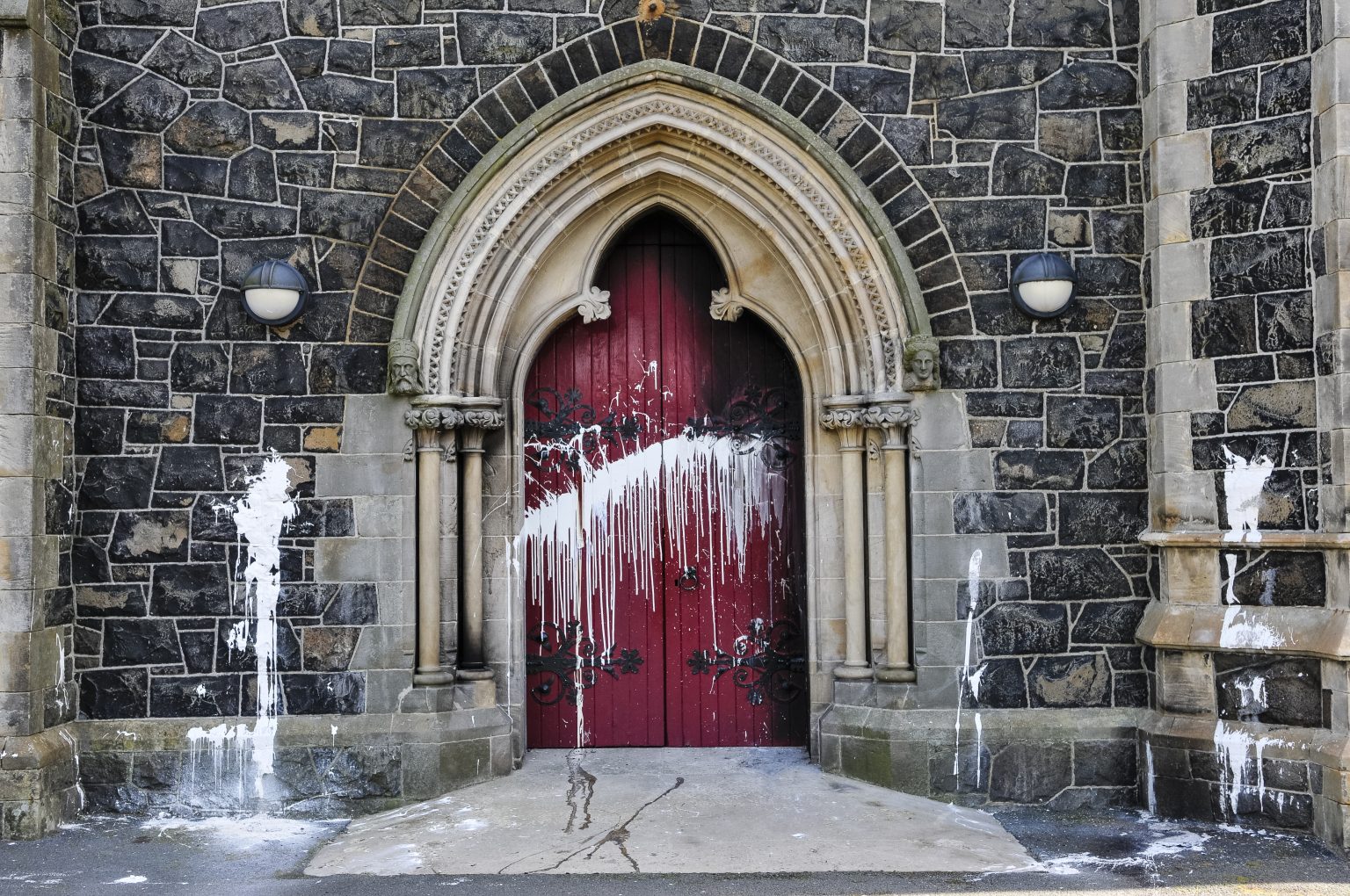
Vandalism against churches and violence against Christians are on the rise. Photo: iStock/Getty Images Plus

Vandalism against churches and violence against Christians are on the rise. Photo: iStock/Getty Images Plus

Strasbourg. For the first time, the European Parliament has explicitly acknowledged the issue of ‘anti-Christian hostility’ within the European Union in a resolution and condemned the persecution of Christians worldwide. Until now, the subject had largely been avoided at EU level, although it has long been acute in a number of member states. The German Bishops’ Conference, for example, has reported a steadily rising number of acts of vandalism against churches. In 2024, more than 700 offences were recorded, including property damage and theft, resulting in substantial losses running into six figures. There has been open talk of hostility towards Christians.

In its resolution on the 2025 annual human rights report, Parliament described Christianity as the most persecuted religion in the world. The scale of that persecution is documented globally by the aid organisation Open Doors in its World Watch List. The annual report on ‘Human rights and democracy in the world’, now adopted by the European Parliament, thus marks a notable shift in the EU’s human rights language. The term ‘Christophobia’ is used explicitly for the first time in a formal parliamentary text. This amounts to formal recognition of hate crimes against Christians.

Call for a coordinator

In paragraph 84, Parliament also expresses regret that there is no European coordinator responsible for combating Christophobia. With more than 380 million affected worldwide, Parliament states, Christianity is currently the most persecuted religion. Despite far lower figures, a coordinator to combat Islamophobia had previously been appointed. By addressing the issue not merely in abstract terms but in this specific terminology, Parliament both acknowledges the global scale of anti-Christian persecution and highlights an institutional asymmetry within the European Union’s existing anti-discrimination framework.

Anti-Christian hate crimes in Europe

Concrete evidence for what the EU has now recognised can be found in the report of the Observatory on Intolerance and Discrimination against Christians. OIDAC is a non-governmental organisation that advocates the rights of Christians to freedom of religion, conscience, expression and assembly. Its reports document cases of intolerance, discrimination and persecution directed at Christians.

In January 2026 alone, OIDAC recorded a total of 39 anti-Christian hate crimes targeting places of worship, religious symbols and, in one instance, a Christian individual. The incidents listed in the organisation’s report include 18 cases of vandalism, five acts of desecration, ten arson attacks and four thefts specifically directed at religious symbols. In addition, three cases of violence against Christian persons or activities were documented. The highest number of incidents was recorded in Italy, with ten cases in January 2026, followed by Germany with eight and France with seven.

Does infant baptism violate human rights?

You might be interested Does infant baptism violate human rights?

The report also points to a rising number of arson attacks on churches. Ten were registered during the reporting period. Four involved the deliberate burning of sacred objects, including liturgical books, nativity scenes and two altars. In Rome, according to the report, a church had to be evacuated following an arson attack.

The explicitly anti-Christian character of some incidents is, at times, unmistakable. In Le Passage, a small commune in southwest France, a nativity scene inside a church was vandalised. The figure of the infant Jesus was beheaded and dismembered. Such acts leave little doubt that the perpetrators were fully aware of what they were targeting and destroying.

Conclusions from individual cases

Across five pages, the report lists specific cases in detail. The incidents recorded in January 2026 demonstrate, according to OIDAC’s conclusion, that attacks on Christian places of worship in Europe continue to take varied forms. They range from vandalism and desecration to arson and violence against individuals. The report describes the high number of arson attacks and the repeated targeting of particular churches within short periods as a cause for concern.

Although the cases documented by OIDAC may not capture the full extent of the problem, the observed patterns point to the need for continuous monitoring, effective preventive measures and an appropriate response by law enforcement authorities.

Although OIDAC’s report does not explicitly address the matter, the European Parliament’s call for the appointment of a European coordinator to combat Christophobia represents a step in the right direction. Ensuring the protection of places of worship and the free and safe exercise of religion remains, OIDAC stresses, a core obligation of states under European human rights standards and an essential component of social cohesion and pluralism.