

Berlin. Now the CDU in Germany as well. After countries such as Australia, France and England have already enacted bans, and Denmark, Spain, Italy, the Netherlands and Greece are preparing similar measures, the governing Christian Democratic Union cleared the way at its party conference in Stuttgart to make social platforms inaccessible to under-14s. Its coalition partner, the SPD, has long supported the move.
‘When all experts agree, caution is advised’, observed the British philosopher Bertrand Russell. Child protection has suddenly been rediscovered across the globe and, at remarkable speed, political camps that otherwise struggle to agree on anything find themselves aligned. That alone is reason enough for scepticism.
The argument, of course, sounds compelling when education specialists, politicians, academics and parents complain in unison that children spend too much time on their mobile phones, immerse themselves in digital worlds and chatrooms and squander hours each day on social media, clicking through endless videos while their brain cells supposedly wither. Added to that are the dangers of being politically radicalised by ‘hate speech’ and ‘fake news’ before one has even learnt to read and write.
Pornography and violence, meanwhile, remain just a mouse click away and freely accessible to children online, largely without restriction, despite politicians having refrained since the dawn of the internet from enforcing effective access controls with age verification. Yet it is YouTube, TikTok, Facebook, Instagram, Snapchat and X that are now said to spell the ruin of the younger generation. The implication is that there is imminent peril.
Criminally responsible - but unfit for the internet?
In a party conference resolution adopted by a majority, the CDU is now quite literally calling on the federal government – in other words, itself – to ‘introduce a statutory minimum age of 14 for the use of social networks and to define enhanced protection in the digital sphere up to the age of 16’.
It is, incidentally, the same party that is currently examining whether the age of criminal responsibility should be lowered from 14 to 12, arguing that the number of serious offences committed by minors in Germany has risen sharply while the age of the perpetrators has fallen markedly. ‘If ever more young people commit crimes, we must adapt our system of sanctions. Taboos on debate have no place here’, said Herbert Reul, the CDU interior minister of North Rhine–Westphalia.
The CDU’s secretary-general, Carsten Linnemann, has likewise argued that it is ‘difficult to explain why acts of violence committed by twelve- or thirteen-year-olds should carry no consequences’.
In the view of the same politicians, children are therefore considered mature enough at the age of twelve to be judged under German criminal law – with no room for taboos in the debate – yet not sufficiently responsible at fourteen to watch a TikTok video without the supervision of a parent. The logic is, at the very least, open to question.
Child protection was of little concern during the Covid measures
If one recalls the far-reaching consequences of the lockdown policy on children – when the safeguarding of healthy development, as well as their physical and mental condition, was largely disregarded in countries such as Germany for two years – the question inevitably arises as to why child protection was not invoked then, yet is now placed centre stage.
At the time, health insurers, hospitals and police authorities documented alarming trends: in some age groups, an increase of almost 40 per cent in mental illness and depression, as well as in self-harming behaviour; a rise in eye disorders, obesity and motor impairments across all age brackets; and a shocking surge of more than 400 per cent in suicide attempts among children and adolescents. Back then, child protection was not the guiding principle. Now it is carried across the country like a monstrance. That invites scepticism – and not without reason.
Only a small step towards access controls
For months, the issue of child protection has been increasingly intertwined with the catchwords of combating ‘disinformation’, as well as ‘hate speech’ and ‘extremism’ online. Is the aim now to shield children from inappropriate content, from excessive use of digital media – or from both?
In Germany, Article 6 of the Basic Law explicitly safeguards parents’ right to raise their children. What a child consumes online, and in what quantity, falls within parental responsibility. Since when has it become the state’s task to supervise the digital programme in a child’s bedroom?
‘Parents bear responsibility, but they must not be left alone with this challenge’, writes Hendrik Streeck, the federal government’s commissioner on addiction, together with North Rhine–Westphalia’s media minister Nathanael Liminski, both of the CDU, in a guest contribution for T-Online. A clear ban, they argue, would protect children – and relieve families.
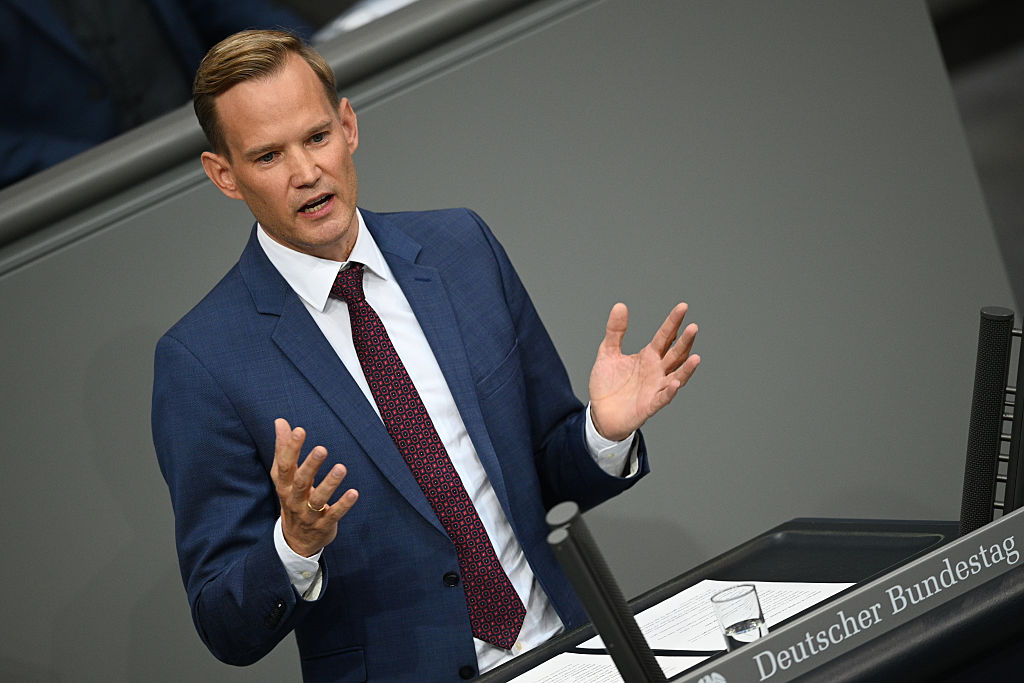
It is, in essence, a more palatable way of saying that the state intends to assume that responsibility in place of parents. Streeck points to the addictive potential of algorithms that captivate children and draw them into dependency. Social media is thus framed as a public health issue, irrespective of the content being consumed. At the same time, both men criticise opaque algorithms and argue that users must be protected from manipulation through bots or purchased reach. Media literacy, they write, is ‘not only a question of individual health, but also of democratic resilience’. The aim is to make children less susceptible to ‘manipulation and radicalisation’. In that sense, social media bans are presented as serving the preservation of democracy – and, plainly, not only in relation to minors.
In the same contribution, they caution that the ‘debate must not be instrumentalised for party-political purposes’, as it concerns the health and development of children and is therefore ‘not a campaign issue’.
In other words, there should be no debate – and certainly no contentious one in Germany’s 2026 election year – because any dissent can be dismissed as ‘instrumentalisation’ and as hostility to child protection. The intention is evident, and it provokes irritation: under the banner of safeguarding children, far-reaching encroachments on citizens’ right to information – likewise a constitutional right without a minimum age – are being prepared, yet are not to be questioned.
Mandatory real names and the disciplining of citizens
In the run-up to the CDU party conference, Chancellor Friedrich Merz went a step further. At an event in Trier, he called for a ‘real-name requirement’ on the internet, saying he wanted ‘to know who is speaking out there’. Politicians, he argued, also enter public debate ‘under their real names and with open visors’, and he expected the same of those who criticise the country and society. He added that the ‘advocates of anonymity on the internet are often enough people who, from the shadows of anonymity, demand the greatest possible transparency from others’.
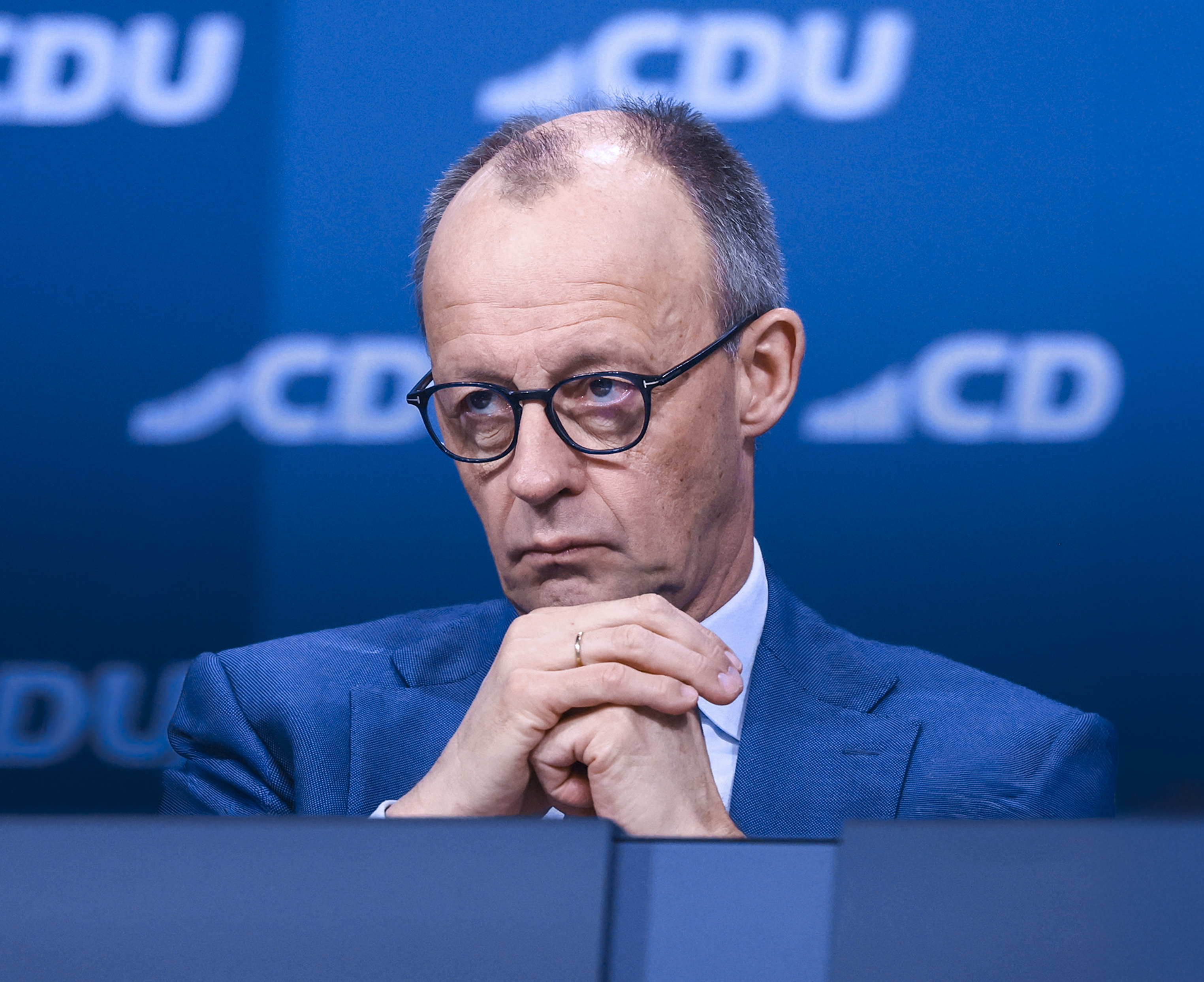
Perhaps unintentionally, he thus widened the scope of the proposed social media ban for children, but in doing so also laid bare the underlying motivation of an initiative that began under the banner of child protection. In the name of combating ‘hate speech’, disinformation, radicalisation and fake news, it culminates in identity checks for all citizens.
While the Chancellor was speaking about the planned restrictions, reports emerged on the very social media platforms set to be restricted for young people that police in Heilbronn had opened an investigation into a pensioner who had described Merz on Facebook as ‘Pinocchio’.
Criticism of government representatives in Germany is by now frequently met with criminal investigations. Germany even retains what critics describe as a ‘lèse-majesté provision’ in Section 188 of the Criminal Code, which grants ‘persons in public life’ special protection against insult, defamation and slander.
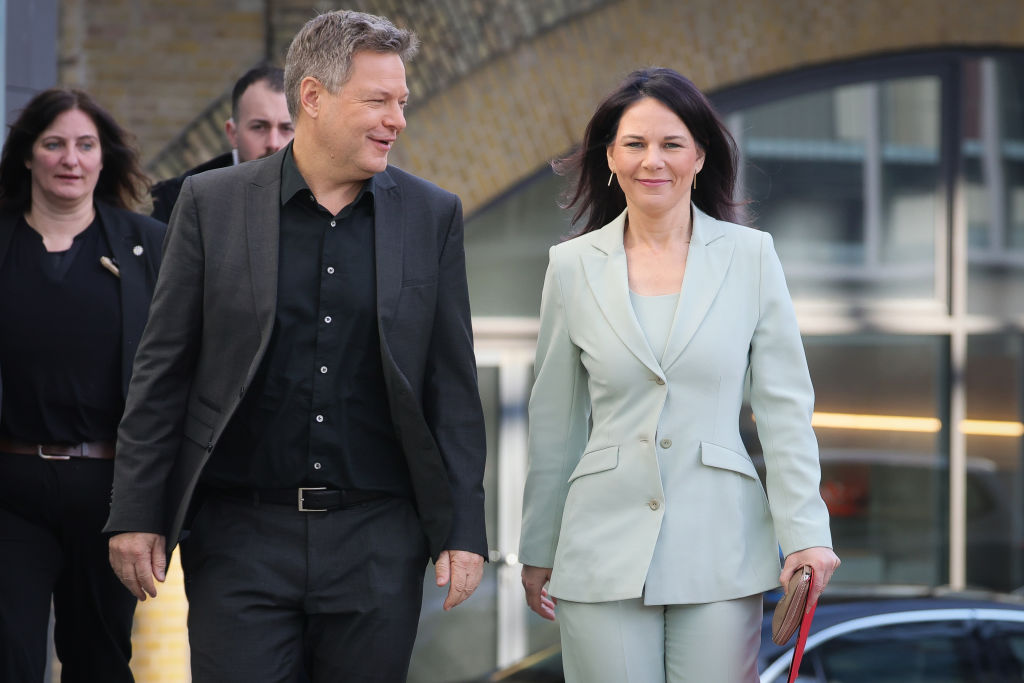
Chancellor Merz himself has demonstrably filed hundreds of personal complaints against citizens who expressed negative views about him online or mocked him. The former Vice-Chancellor Robert Habeck lodged more than 800 such complaints, while the current President of the UN General Assembly, Annalena Baerbock, filed over 500. The German Chancellor now calls for a real-name requirement because he wishes to see whom he is dealing with – and the police authorities then take care of the rest.
Citizens and politicians no longer confront one another on equal footing. The state intervenes on behalf of its office-holders, while the individual is left largely powerless and, at the very least, intimidated. The so-called ‘chilling effect’ is already considerable when even innocuous or plainly satirical remarks and memes can lead to house searches and the confiscation of laptops and mobile phones.
Identity checks for all
A closer look at how age verification is to be implemented suggests that the proposal ultimately reaches far beyond child protection and amounts to what the FDP politician Wolfgang Kubicki has called ‘maximum control of all citizens’.
In order to verify the age and identity of a social media user, it would not only be minors who must undergo the process, but everyone. An anonymous internet would cease to exist. Registration requirements would automatically become an obligation to disclose one’s real name.
Criticism of the government, employers, social conditions or scandals would, under a real-name requirement, become a risk for those who disseminate it. Such a requirement makes it far easier for authoritarian regimes to suppress opposition and renders it almost impossible for ordinary citizens to profess their political convictions, particularly if they sympathise with currents outside the mainstream. In the end, people would fall silent and the internet would lose both freedom and possibility. Censorship would take place in the mind and, in effect, become self-censorship.
What begins with children can, without difficulty, be extended to adults. To understand how it might be implemented, one need only listen carefully.
The CDU’s minister for family affairs, Karin Prien, told the newspaper Bild that an ‘ID wallet’ could in future be used for verification – meaning every single user. The federal government’s commissioner on addiction, Hendrik Streeck, likewise spoke of a technical solution for age verification ‘at operating-system level’, designed to prevent protective mechanisms at app level from being circumvented. In practice, everyone would therefore have to set up an ID wallet on their computer or mobile phone in order to continue using social media accounts – a central access authorisation, akin to a digital identity card for the internet.
Final stop: the transparent citizen
Have we not already experienced a centralised digital form of identification with the government’s Covid certificate, which was intended to regulate access to social life on the basis of vaccination status – and which the state could withdraw just as swiftly?
The ID wallet would thus become a precursor to the EU Digital Identity Wallet, which the European Commission plans to introduce by the end of 2026. All EU member states have undertaken to offer their citizens this option on a voluntary basis. In theory, it would allow users to identify themselves throughout the Union for purchases and access to services. The aim is that by the end of 2030 at least 80 per cent of the EU population should possess such a digital identity.
In principle, the system could centrally store access credentials of all kinds – from bank accounts to social media profiles – while also creating a comprehensive digital trace of purchases, movements, travel or even illnesses. Everything could disappear at the push of a button if the ID wallet were deactivated because a person failed to conform. The transparent citizen would move within reach of the state – creating an individual who can be controlled and sanctioned through the deactivation of that identity.
For now, the EU’s ID wallet is conceived as a voluntary offer. It would take only a small step to make it compulsory, once access to broad areas of life depends upon it.
The German Chancellor would then achieve his real-name requirement across almost every sphere of life in the country – though not, it would seem, at Germany’s borders, where entry remains possible without presenting identification.