
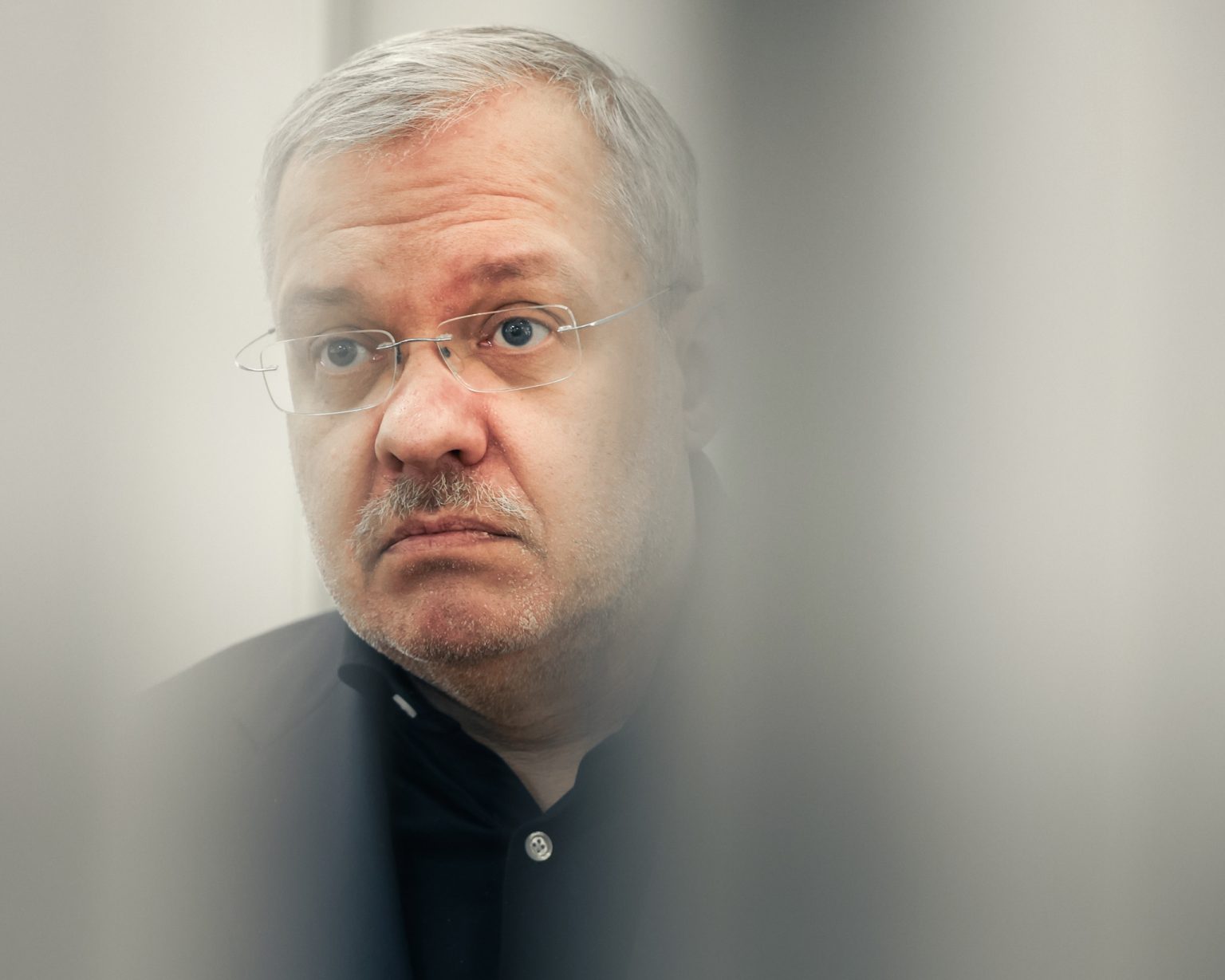
Kyiv. In the second half of February, Ukrainian security forces detained former justice minister Herman Halushchenko as he attempted to leave the country. He was charged with money laundering and participation in a criminal group. Ukraine’s High Anti-Corruption Court ordered that he be held in custody until at least 15 April.
‘During the suspect’s tenure, the criminal organisation obtained more than $112 million in cash from illegal activities in the energy sector,’ the Special Anti-Corruption Prosecutor’s Office (SAP) said in a statement.
Big fish
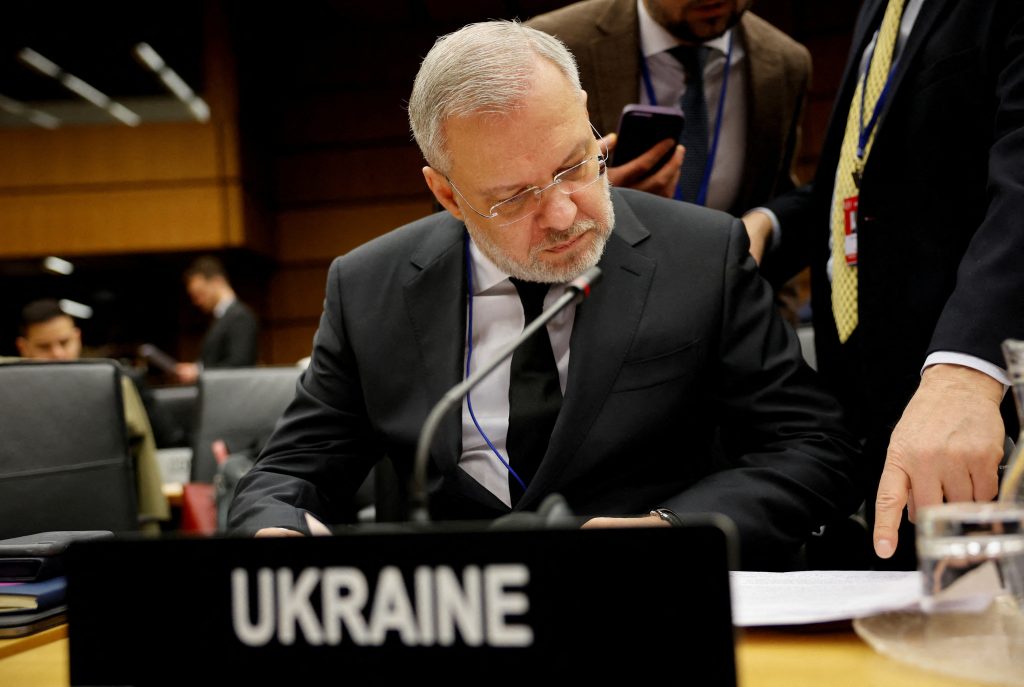
According to investigators, in early 2021 a fund was registered on the island of Anguilla at the instigation of members of a criminal organisation linked to the Midas case. The fund allegedly received around $100 million derived from various bribes.
A non-Ukrainian citizen was invited to launder the dirty money. According to police, the family of Herman Halushchenko was among the fund’s ‘investors’.
‘In fact, a system was created in which a strategic enterprise with revenues of more than 200 billion hryvnia [more than $4.5 billion, ed. note] was not managed by senior management, the supervisory board, or the state as the owner, but by an outside person who, without the necessary powers, assumed the role of shadow manager,’ according to a report by the National Anti-Corruption Bureau of Ukraine (NABU).
Links to the president
In November, the National Anti-Corruption Bureau of Ukraine (NABU), in cooperation with the Special Anti-Corruption Prosecutor’s Office, raided the state-owned company Energoatom, which investigators say stood at the centre of the corruption network. The company operates Ukraine’s nuclear power plants. The findings led to the resignation of former energy minister Herman Halushchenko and to the departure for Israel of Timur Mindich and Oleksandr Zukerman.
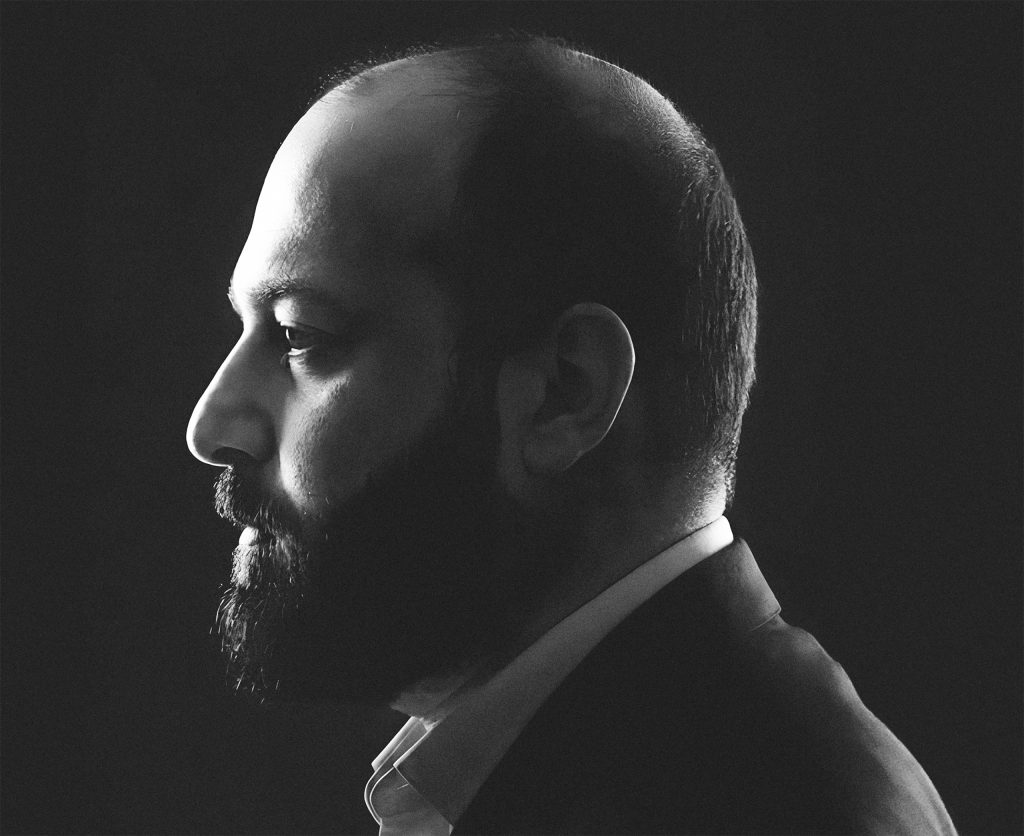
The case, known as Midas, reaches into circles close to President Volodymyr Zelenskyy. His chief of staff, Andriy Yermak, has faced calls to resign, though he denies any wrongdoing. Mindich, who left the country a few hours before investigators arrived at his home, is also described as a close business associate of the Ukrainian president. According to police, he is the head and one of the main ‘beneficiaries’ of the entire corruption scheme.
About six months ago, the SBU carried out a series of large-scale searches and investigative measures involving NABU officials and premises. NABU had been established in 2015, at the urging of Western partners, as an independent anti-corruption agency tasked with pursuing high-level corruption. The operation marked a rare and highly sensitive confrontation between two of Ukraine’s principal law enforcement bodies. Its mandate was to investigate senior officials without relying on other agencies, which were widely regarded as vulnerable to political influence.
‘The fight against corruption will continue, but without Russian influence,’ Zelenskyy said at the time, accusing NABU investigators of cooperating with pro-Kremlin Ukrainian politicians and thus indirectly with Moscow. The Ukrainian parliament swiftly voted to restrict the powers of NABU and SAP.
The European Union’s reaction was sharply critical. Despite the ongoing invasion, the largest street protests since the start of Zelenskyy’s presidency took place in Kyiv and other major cities, with the backing of several local mayors. Intense international pressure and widespread demonstrations ultimately led Zelenskyy to withhold his signature from the bill.
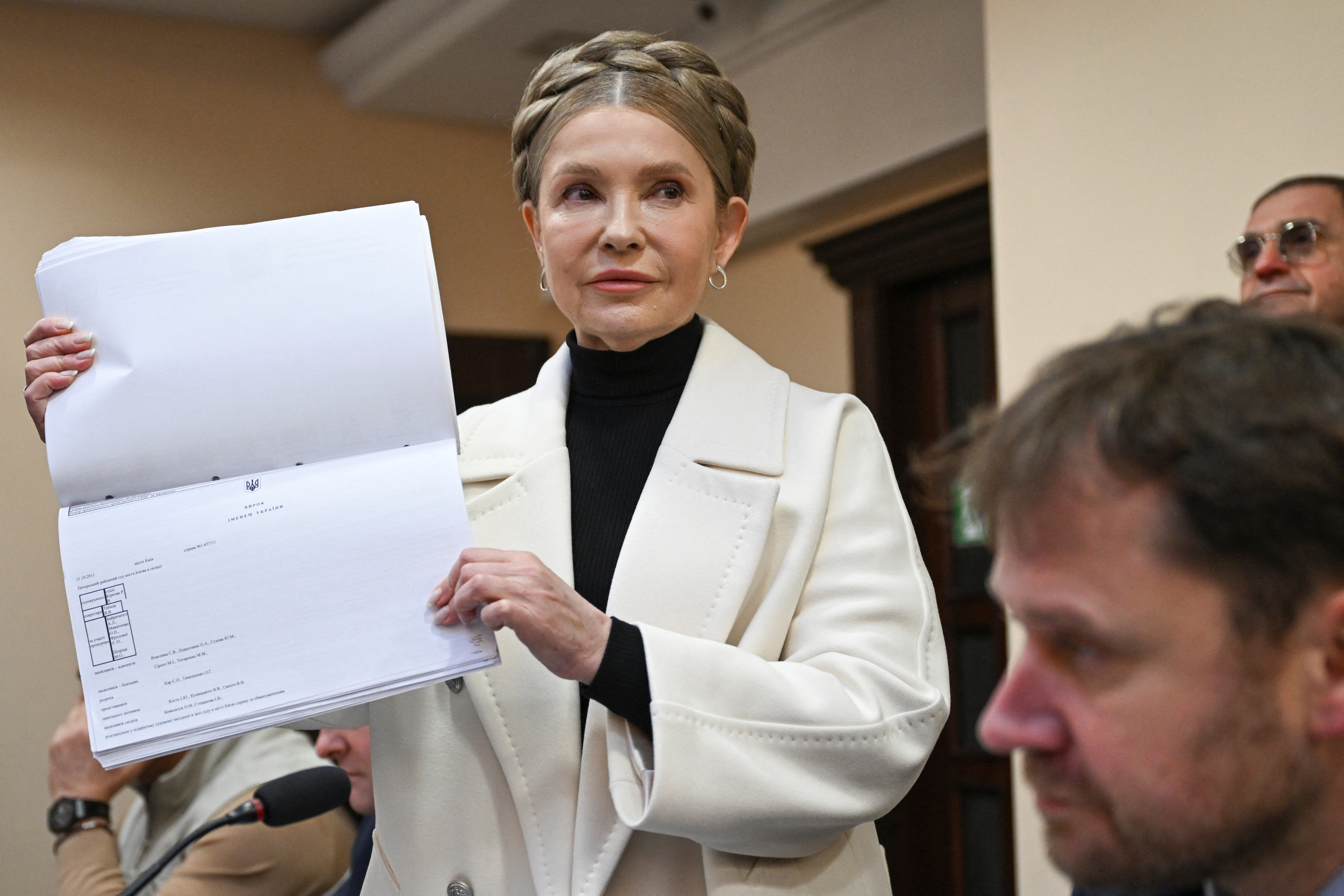
One of the most vocal supporters of the controversial legislation – which would have led to the dissolution of two key anti-corruption institutions – was former prime minister and opposition leader Yulia Tymoshenko. She was charged with large-scale corruption in January this year.
A story in progress
At the end of November 2025, the Ukrainian parliament approved the dismissal of justice minister Herman Halushchenko and energy minister Svitlana Hrynchuk, whose names had surfaced in a NABU investigation into corruption in the energy sector. Halushchenko headed the energy ministry from 2021 to 2025.
A total of 323 MPs voted in favour of Halushchenko’s dismissal and 315 backed Hrynchuk’s removal. Zelenskyy had called for their departure. Neither the two ministers nor Prime Minister Yulia Svyrydenko attended the parliamentary session, a decision that drew direct criticism from several MPs.
The parliament began debating the dismissal of ministers implicated in the large-scale corruption scandal the day before the vote. The session was postponed until the following day after MPs from the opposition European Solidarity faction, led by former president Petro Poroshenko, blocked the speaker’s podium and demanded that the resignation of the entire government be put on the agenda.
The investigation concerns bribes allegedly paid during the construction of protective facilities around energy infrastructure in Ukraine. Such structures are intended to shield installations from drone and missile attacks by the Russian army. According to investigators, corrupt officials laundered approximately $100 million through a so-called back office in central Kyiv.
So far, eight people have been charged in the case, five of whom have been detained. Ukraine has long struggled with corruption, and efforts to curb bribery are widely regarded as a key condition for its bid to join the European Union.
(tasr, hal)