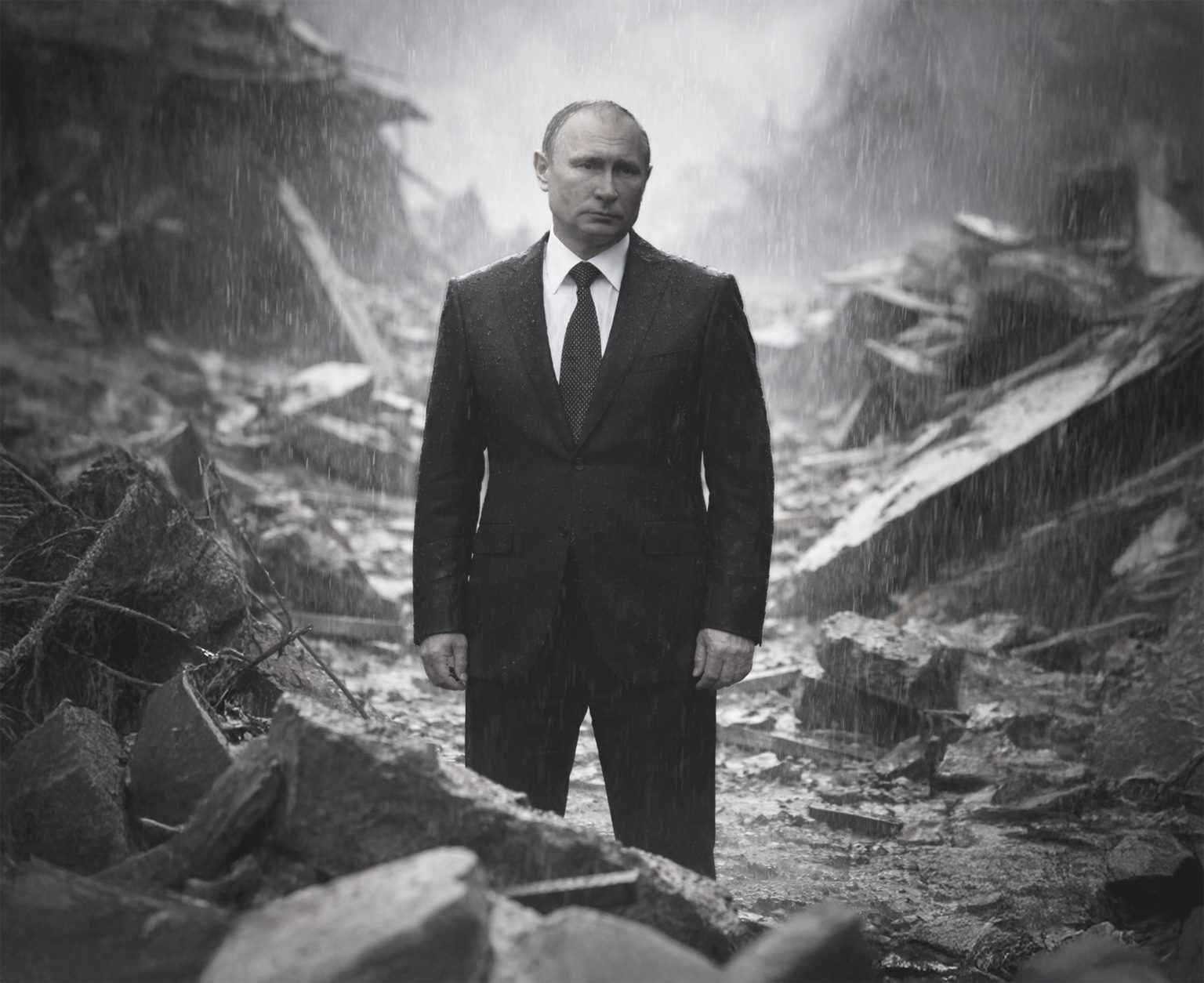
The problem with the entire information war between Russia and Europe is that on one side of the chessboard sits an experienced master, and on the other, a very naive student in the form of the old continent. The European approach relied on overwhelming the other side with the sheer number of its own mistakes, effectively paralysing it.
Where did it go wrong? The fundamental issue lay in the contradictory narrative of the European side. The goal of any propaganda is to create a substitute, yet coherent, view of reality. The key word is coherence. The power of propaganda lies in its consistency.
In Europe’s case, coherence was missing. On one hand, Russian secret services were portrayed as omnipotent and capable of manipulating public opinion better than anyone else. On the other hand, Western media were flooded with stories about Russian dilettantism and backwardness. This approach was symbolized by memorable stories of stolen washing machine chips allegedly used in Russian military technology. Such narratives are counterproductive. How can one justify spending huge amounts of taxpayers’ money on a war against an enemy whose cars’ door handles fall off during military parades?
A different approach to the domestic audience
Russia, by contrast, has taken a very different stance. From the start of what they call a special military operation, the focus of Russian information services has been primarily on the domestic population. It was important to maintain morale and explain the goals and intentions to their own public.
There was a clear difference in Russia’s approach to the West. Before the invasion, particularly during the annexation of Crimea, Russia made many efforts to influence Western perceptions. The start of the invasion of Ukraine ended these efforts. In war, nothing is explained to the other side with arguments. Brute force comes into play.
Russian propaganda, aimed primarily at Russian-speaking audiences, repeatedly emphasizes two objectives of the special operation: denazification and demilitarization of Ukraine. These terms were chosen deliberately because their meaning is vague. The goals can thus be interpreted flexibly.
The interpretation of these two objectives will form the pillar of Russia’s victorious narrative about the war. According to this story line, denazification has been achieved by weakening and decimating radical Ukrainian forces such as the Azov Regiment and the Right Sector. Demilitarization is presented as Ukraine not joining NATO and its population being exhausted, both humanly and materially, for years to come. Territorial gains will further reinforce the perception of success.
Although the new borders are far from clear, it is evident that Ukraine will significantly lose its defensive capabilities. Ukraine will have suffered significant casualties and economic damage. In addition, Vladimir Putin has achieved this narrative of success despite Western politicians having labeled him a dictator with whom it was impossible to negotiate. The Kremlin chief knew, however, that every war ends at the negotiating table. Now that he has sat down with Donald Trump, and talks are expected with other Western leaders in the future, the narrative is complete. Vague goals have been ‘fulfilled’, seized territories have been ‘legitimized’, and a man previously shunned has become a necessary partner. Russia can thus celebrate the end of a ‘victorious’ war, and Putin emerges as a peacemaker.
The real price for the illusion of infallibility
This is, of course, only the propagandistic view. The real balance sheet is far less favorable for Russia and for Putin himself. The special military operation was a huge mistake, motivated in part by his pride.
Putin had been very successful on the geopolitical chessboard until then. Despite playing with weaker cards, he managed a successful military intervention in Syria and the subsequent annexation of Crimea. Today, even Russia cautiously admits that its fundamental assumption that the Ukrainian regime would collapse after the occupation of strategic points was incorrect.
With the invasion, Russia crossed a red line from which there was no turning back. Yet it subsequently adapted and pursued a better strategy than the Ukrainian army, relying in recent years on a war of attrition. Russian strategists, however, have lost their reputation for infallibility.
Although the Russian economy did not collapse as predicted, the country dramatically depleted its reserves. The local economy has been entirely transformed into a war economy. Reverting to peacetime will be an enormous challenge, requiring massive financial resources.
Perhaps the most painful loss is human. The young men who have fallen in this conflict cannot be replaced. Russia’s demographic situation was already fragile before the invasion. The latest data from 2023 show a total fertility rate of 1.4 children per woman, well below the replacement level of 2.1. Russia last achieved this level when it was still the Soviet Union.
The result is a country which will have been able to stand up to the West for several long years, but which now finds itself diminished. It’s Cold War stocks of armoured vehicles have been run down, it has become reliant on China, and there remains no obvious successor to Putin. The failed coup attempt by Yevgeny Prigozhin in 2023, the leader of the Wagner Group of Russian mercenaries, shows that weakness breeds opportunity. Russia’s future remains uncertain.