

Anyone seeking to understand Germany must understand the Greens. And anyone who understands the Greens has grasped how the country ticks. No other party embodies German anxieties, German neuroses and German sensibilities quite as much as the environmentalists. Even aesthetically, the typical Green supporter – clad in an all-weather jacket, sensible shoes, cycle helmet and cargo bike – offers a fair reflection of the average German and his tastes. In a certain sense, there may be no party more German than the environmentalists, even if they have never secured more than 15 per cent of the vote in federal elections.
Precisely because the Greens mirror German sensibilities, the internal conflicts currently unfolding within the party matter so greatly. They reflect broader tensions within society. The party is experiencing fierce struggles between factions whose visions of social policy scarcely align – even if, in opposition, it has so far managed to contain the discord.
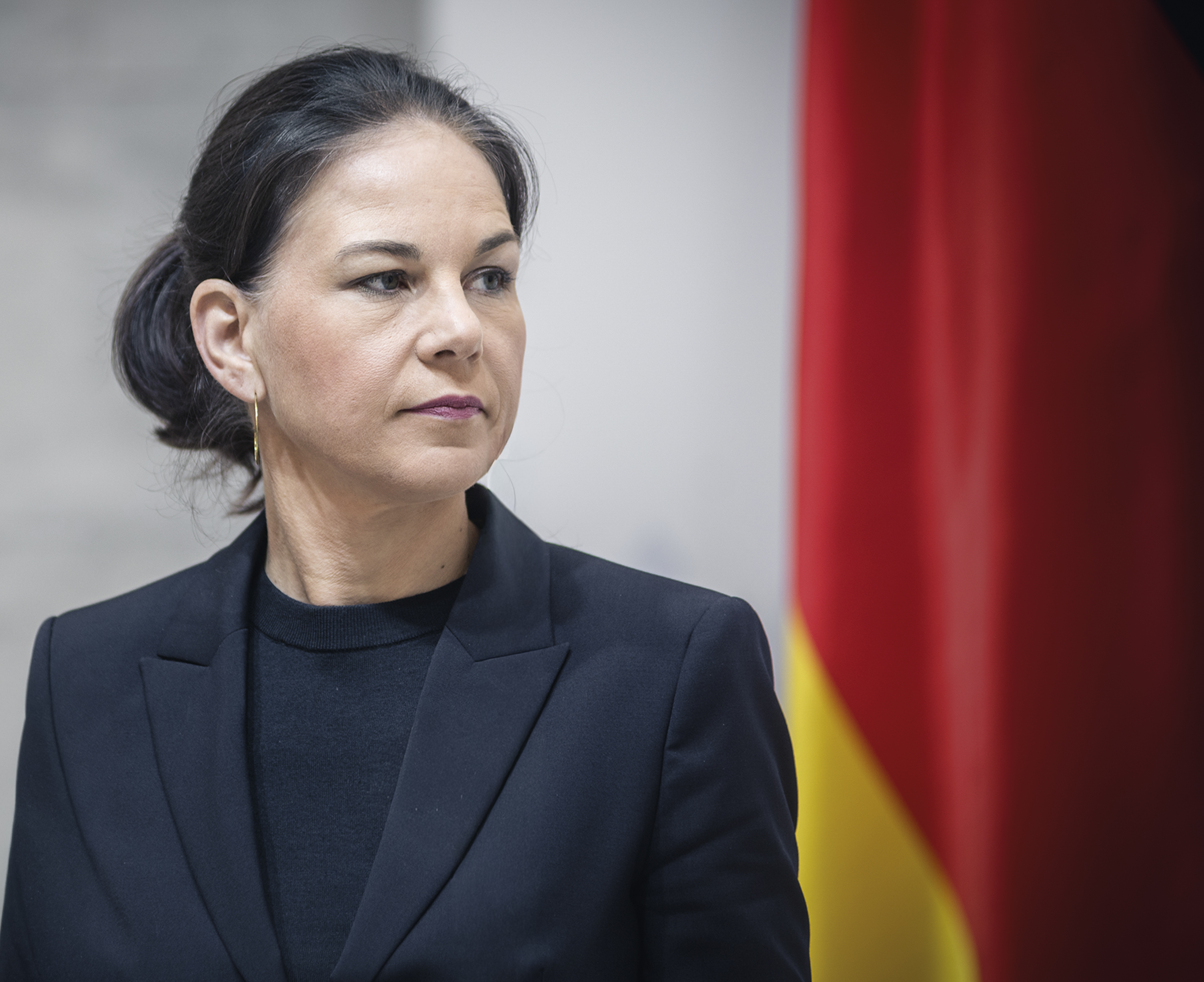
The Palmer Rupture
Only once in recent years did the carefully maintained façade crack. That moment came with the party’s expulsion proceedings against the Mayor of Tübingen, Boris Palmer. Head of administration in a picturesque university town in southern Germany, he repeatedly achieved nationwide prominence through eloquent and idiosyncratic interventions in public debate. On questions of internal security and immigration in particular, he advanced positions that diverged markedly from the party line. His criticism of his own party’s migration policy provoked a storm of outrage. During the coronavirus crisis, he remarked that the exceptionally strict and burdensome protective measures might be saving people who would in any case die within a few months. Later, when he responded somewhat aggressively to accusations of racism at an Islam-critical conference, the row escalated. He eventually left the party after 27 years of membership.
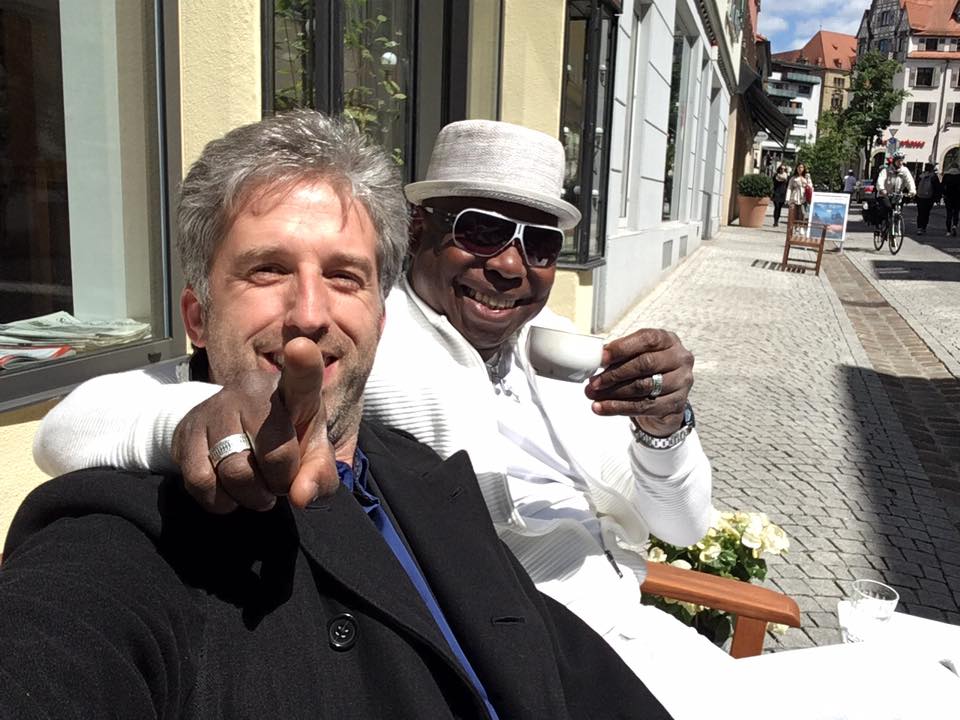
Palmer represented a strand of Green politics that combined environmental protection, climate policy and alternative transport concepts with liberal economic thinking, crime prevention and an emphasis on cleanliness, law and order. For many Greens, such positions are branded racist, authoritarian, neoliberal or even fascist.
Green Conservatism in the Industrial Heartland
Tübingen lies in south-west Germany, in the state of Baden-Württemberg. The region is the heartland of the country’s automotive industry, mechanical engineering and small and medium-sized enterprises. After the war, Baden-Württemberg – alongside Bavaria – became a motor of Germany’s economic strength. Names such as Porsche, Bosch and Mercedes-Benz symbolise that success.
Yet it was here, in Germany’s industrial heartland, that the Greens have since 2011 provided their first and, to date, only Minister-President: Winfried Kretschmann. As a student in the early 1970s, he was active in communist student groups. By the 1980s, however, he was regarded as a representative of the party’s ordoliberal wing and is now seen as an advocate of eco-conservatism.
Kretschmann will step down this year. His preferred successor is Cem Özdemir, the son of a Circassian immigrant from Turkey. With his demeanour and distinctly Swabian accent, he too represents a more bourgeois, liberal-ecological line – and stands in opposition to the party’s left wing. Over the course of his career, he has repeatedly failed in bids for senior party posts. Although he also champions classic Green themes, he diverges markedly from the party’s orthodoxies on economic and migration policy. Whether he will succeed Kretschmann as Minister-President remains uncertain.
The Urban Leftward Turn
The counterweight to the more bourgeois Greens in the south-west is found among their colleagues in the northern metropolitan centres such as Bremen, Hamburg and above all Berlin. Looking ahead to the elections in September, they have adopted a programme that reads like the wish list of every radical climate activist and left-wing social engineer. It calls for a car-free city within Berlin’s S-Bahn ring – which has a diameter of roughly 11 to 12 kilometres – the unconditional admission of climate refugees, refugee housing in all districts, the shutdown of the gas network and a cap on rents. Added to that is the familiar repertoire of the woke left: free menstrual products in public lavatories, separate train compartments for women, lesbians, non-binary or transsexual persons and a commemorative day against anti-Muslim racism.
More radical still is the party’s youth organisation. Its former co-chair, Jette Nietzard, who stepped down last October, repeatedly and assertively channelled the aspirations of radical climate activists, feminists and critics of Israel. She posed with slogans such as ‘All cops are bastard’ and ‘Eat the rich’. She posted that men who had lost a hand while setting off fireworks would at least no longer have to perform military service. She described Hamas’s terror attack on Israel as a military operation, weighed the victims of migrant violence against those of domestic violence and referred to the chairman of the Christian Social Union (CSU), the Bavarian sister party of the Christian Democratic Union (CDU), as a ‘son of a bitch’ (Hundesohn).
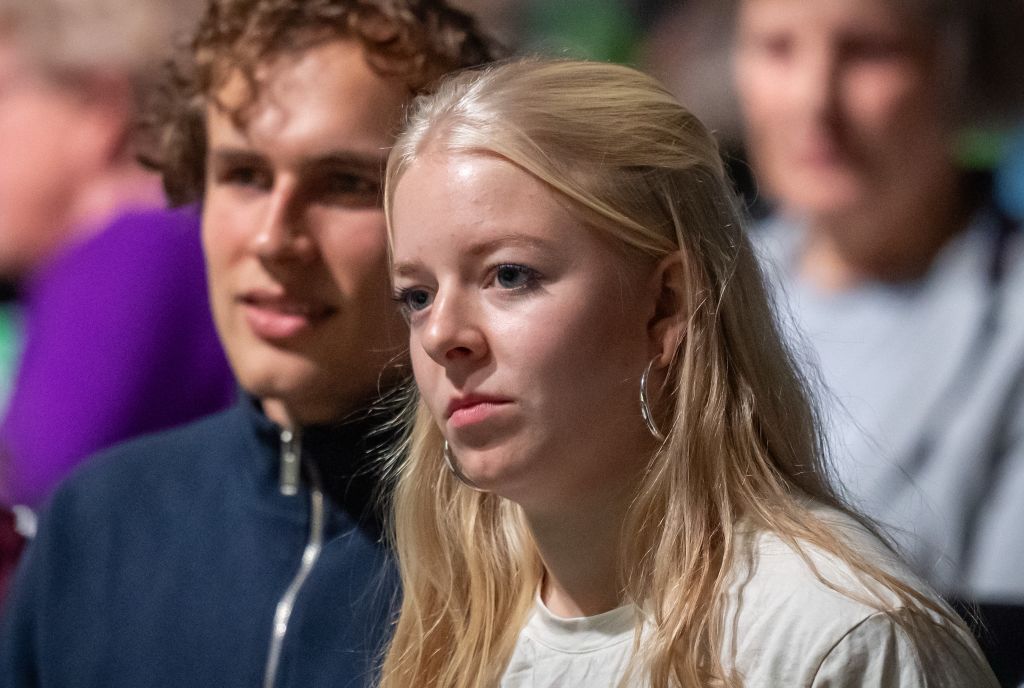
Nietzard is not an isolated case but the expression of a radicalised youth milieu in which climate alarmism, no-border ideology, gender radicalism and anti-capitalism form a combustible mix. In that environment, there are dreams of a deindustrialised Germany that opens its borders to all migrants and abolishes private property as well as the notion that there are two sexes.
The gulf between eco-liberal Greens such as Cem Özdemir and woke eco-socialists such as Jette Nietzard is vast. To understand how such polarisation emerged within the party, one must briefly consider its history.
From Hippie Utopia to Party of Government
At its core, the Greens were a late product of the hippie movement and alternative culture of the late 1960s. They were shaped by ideals of free love, experimental lifestyles and pronounced anti-authoritarianism. The intellectual mentors of that alternative left were not Marx or Lenin but Herbert Marcuse, Erich Fromm, Timothy Leary and Maharishi Mahesh Yogi. The focus lay on self-discovery, self-realisation and hedonism. Traditional virtues such as diligence and order were rejected. It was no coincidence that the more esoteric wing of the movement proclaimed the dawning of the Age of Aquarius – a fundamental shift in social values.
Little of that remains. While the Greens in their early years outwardly cultivated their roots in the alternative culture of the 1960s and 1970s, increasing institutionalisation and the acquisition of office brought a visible bourgeoisification. By 1998 at the latest, when the party entered the federal government for the first time and the former street activist Joschka Fischer became Foreign Minister – swapping trainers and leather jacket for a three-piece suit and reading glasses – the Greens had arrived not merely symbolically at the centre of German society. Left-alternative libertinism merged with bourgeois liberalism under the banner of self-realisation.
The Return of the Moral Overseer
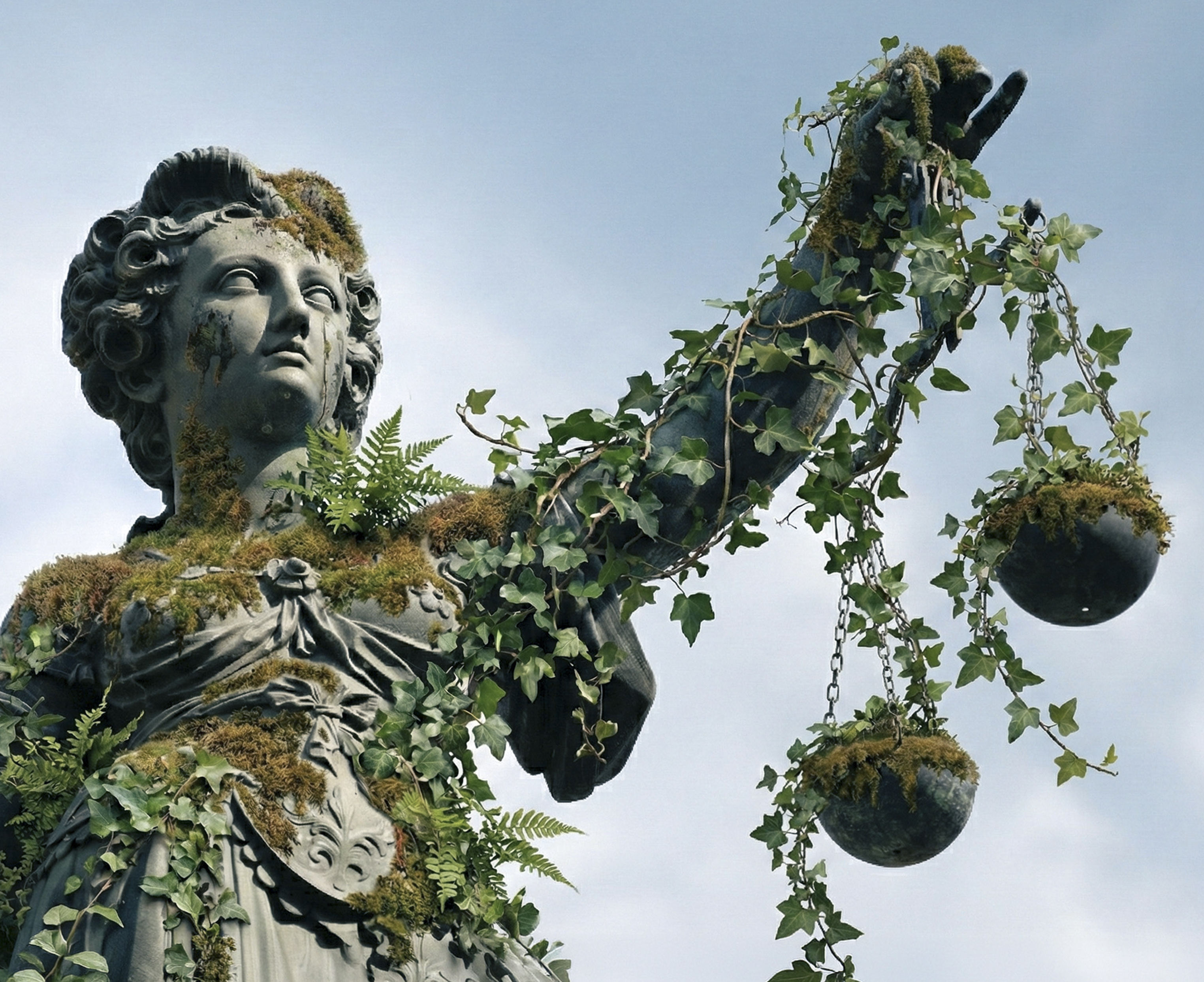
Yet such nonchalance sat uneasily both with the traditions of the left and with the German temperament. At heart, even the post-materialist German remains the authoritarian know-it-all he has always been in latent form. The political signs have changed, however. No longer does one spy on the neighbour to see whether he trims his hedge, observes the midday rest or maintains an unseemly private life. Instead, one checks whether he separates his rubbish properly, has installed the correct heating system and harbours sympathies for the wrong parties. The authoritarian petty bourgeois has re-emerged in the guise of the Green cycling ideologue.
There is, however, a note of hope. In broad terms, Germans today are far more liberal than the alternative culture ever was. In Germany, almost everything is permitted – sexually, stylistically, culturally and socially. The emancipation of minorities of all kinds has entered the mainstream. That may also explain why the Greens now appear old-fashioned and provincial. They have become a very German petty-bourgeois party of prohibition. Whether they will in the long term split into an established liberal wing and a woke, climate-radical wing remains to be seen. It would not be a surprise.