
One problem can be solved on the stock market. With a little luck, two can be resolved. But when difficulties begin to pour in from all sides, they create a highly dangerous environment in which panic can take hold and drag down the entire market.
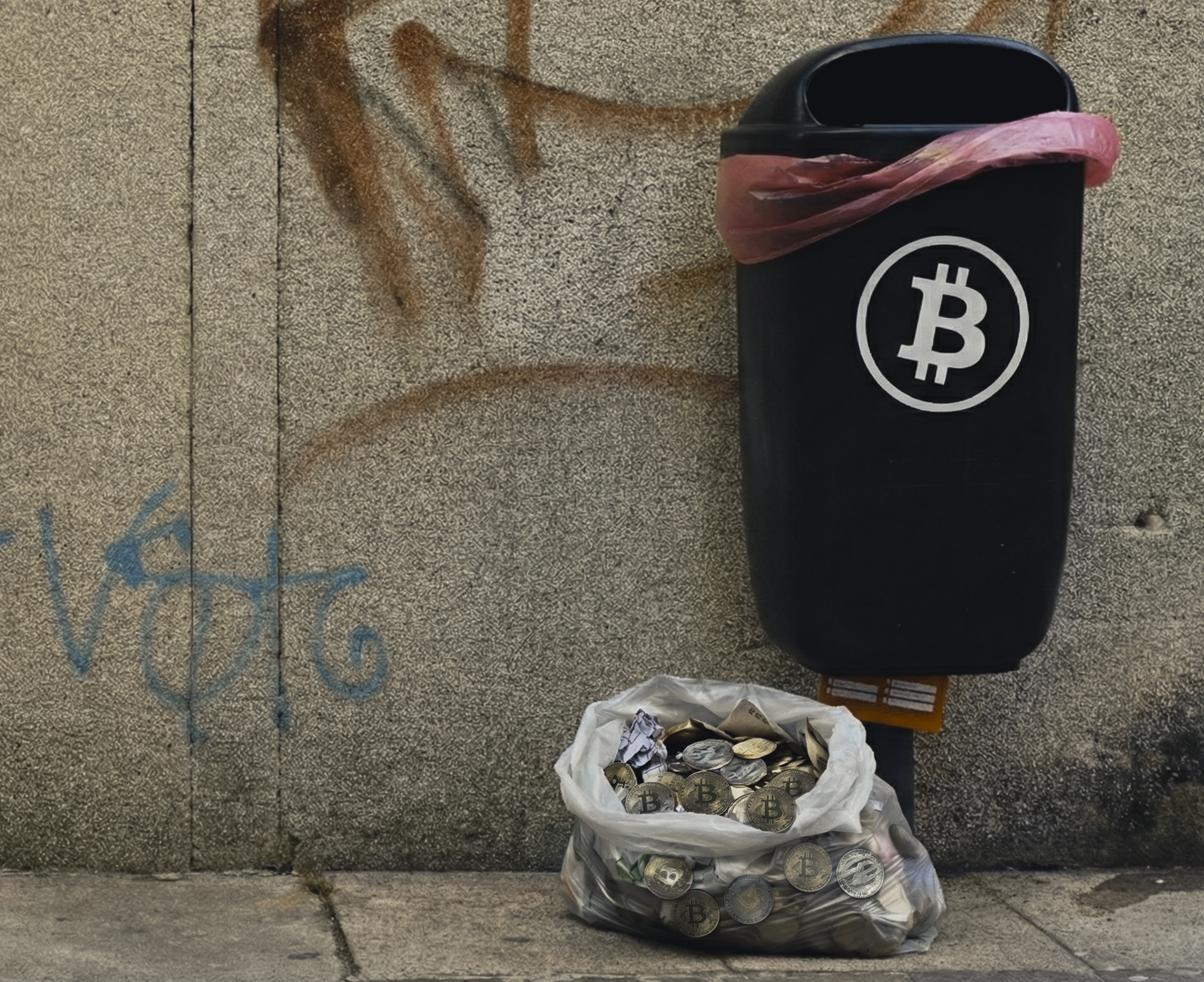
This is similar to what we have seen with Bitcoin and other cryptocurrencies. Falls can be rapid and steep, and this may not be the last. We are confronted with a wide range of issues that may or may not be connected. Readers can draw their own conclusions.
Confusion over tariffs and the threat of a deficit
The confusion surrounding tariffs continues and it remains unclear how much will ultimately be paid. After the US Supreme Court struck down the tariffs, Donald Trump threatened to impose 15 per cent duties. However, as of Tuesday, only 10 per cent tariffs are in force.
The US president still wants to raise them and return to previously concluded agreements, focusing on countries that might attempt to exploit the situation following the lifting of tariffs. This is where the second major uncertainty emerges.
It concerns complaints and potential refunds of duties already collected. Although the Supreme Court did not order a blanket reimbursement of all tariffs, it is reasonable to assume that large companies will pursue legal action with the help of leading law firms.
Once one company succeeds, an avalanche of claims is likely to follow. The price of potential claims has already risen from 20 cents to 40 cents per dollar of customs duty paid. Smaller players, however, will most likely come away empty-handed, as only claims exceeding $10 million are currently being purchased.
Overall, the balance sheet of the tariff policy remains mixed. It has not resolved the underlying foreign trade imbalance, and much of the cost in the form of higher tariffs has ultimately been borne by ordinary Americans.
In the medium term, there has been little sign of a revival in US industrial activity. For many countries, the United States is becoming an increasingly unpredictable trading partner, frequently altering the rules of the game, a scenario that rarely favours equity markets. Financial markets value stability, as it underpins predictability.
Donald Trump has not, at least for now, opted to use a potential strike on Iran to divert media attention from the Supreme Court’s decision. Oil price movements serve as a barometer of the likelihood of such a conflict, and so far, markets appear to be betting that the White House will refrain from military action. This, in turn, may be interpreted by some observers as a sign of weakness.
Although global stability is better served if the conflict does not materialise, the deployment of US forces and heightened combat readiness would still impose high costs on taxpayers. That money would ultimately be missing from the federal coffers, and it is only a matter of time before concerns about government debt return to the forefront of the markets.
A crack in the private debt market
In our previous market overview, we highlighted problems at Blue Owl Capital, a company providing non-bank lending to businesses as part of the so-called private credit market. The firm has restricted client withdrawals because it has been unable to sell the underlying loans owing to weak market liquidity.
To a degree, this is normal. Selling the debt of a specific company is not straightforward because such loans are not traded on traditional corporate bond markets where liquidity is deeper.
Some players in this segment have therefore sought to transform these debts into complex financial products that are already traded on exchanges. These structured packages can contain assets that are themselves illiquid – in other words, potentially toxic components.
The mechanism bears a strong resemblance to the 2008 financial crisis and the problems associated with subprime mortgages. US Treasury Secretary Scott Bessent commented that issues on the periphery do not currently require intervention; action would only be necessary if they threatened core markets and the broader system. Such assurances, however, offer limited comfort to investors.
Artificial intelligence as a margin destroyer
To make matters worse, artificial intelligence has returned to the forefront, with fresh reports of rapid progress appearing almost daily. Yet the market reaction has shifted. Whereas earlier advances in AI pushed markets higher, the opposite effect is now emerging. Each new announcement is triggering declines across sectors heavily exposed to the technology.
When Anthropic launched Claude Code Security, it was more than a routine product release – it amounted to a reassessment of the entire industry. An estimated $100 billion to $150 billion in market value evaporated from the cybersecurity sector within a short period.
Investors suddenly confronted an uncomfortable thesis: if AI can itself write robust code while simultaneously identifying and fixing vulnerabilities in real time during development, the business model based on additional system protection begins to erode. The guardians at the gates may lose their raison d’être in a world of self-protecting infrastructure.
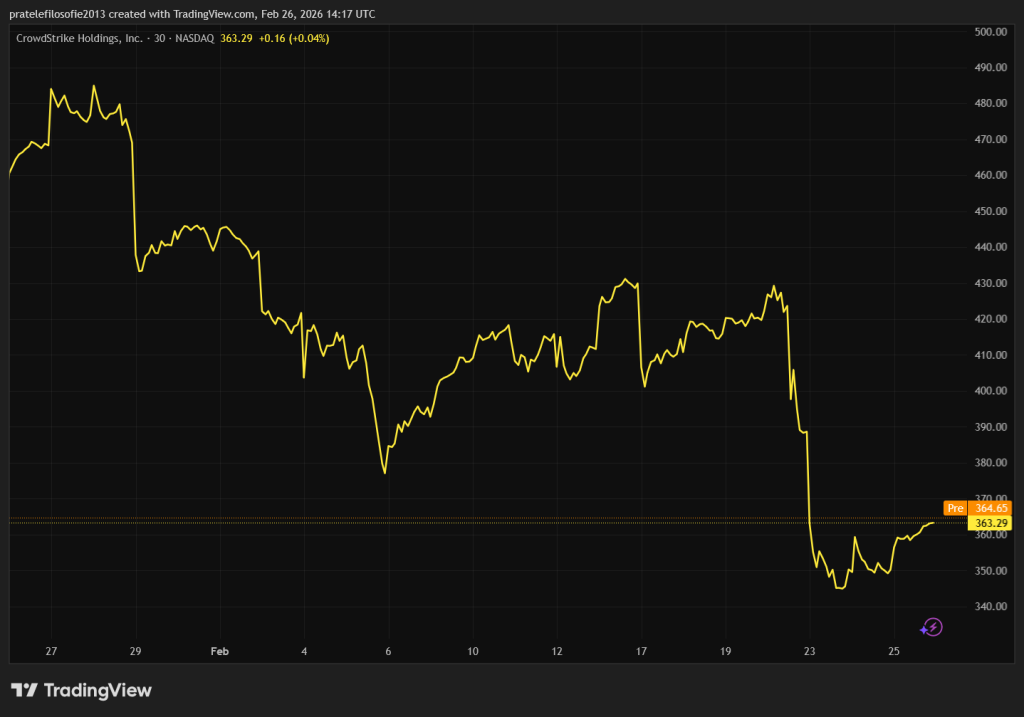
The blow was felt not only by CrowdStrike, Okta and Cloudflare, but also by Palo Alto Networks, Zscaler, SentinelOne and Fortinet. Investors began to price in a world in which security is embedded directly within AI infrastructure rather than purchased as a separate insurance layer.
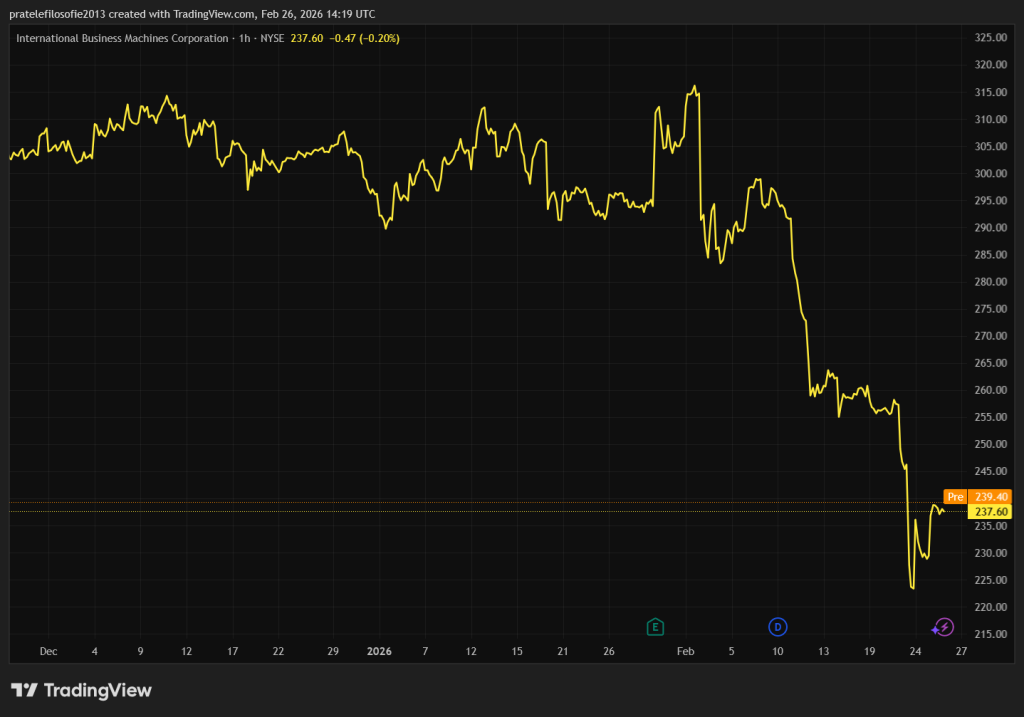
Anthropic’s Schumpeterian disruption may not stop at cybersecurity. The company stated bluntly that its model can also work with the legacy COBOL programming language, enough to send shockwaves through IBM.
The technology group, long viewed as a defensive play on the stability of enterprise IT, suffered one of the worst trading days in its modern history, with more than $30 billion wiped from its market capitalisation.
The reason is clear. Among other things, IBM provides extensive solutions for the banking sector, and more than 95 per cent of American ATMs run on software written in COBOL.
If artificial intelligence proves capable of maintaining, rewriting or migrating this language to more modern architectures, some of today’s elevated margins could come under pressure. The operative word, however, is ‘could’. For now, the evidence amounts largely to a company blog post stating that ‘Claude knows COBOL’. Markets may once again be running ahead of reality.
A more sober conclusion lies between the extremes of an AI-driven employment catastrophe and the opposite view that dismisses artificial intelligence as a passing bubble.

Software companies should prepare for the gradual end of exceptionally high margins. This does not mean they will vanish from the market, but profitability could decline significantly.
This is where the circle of potential risk closes. In recent years, many software companies have secured financing through the private credit sector, outside traditional banking supervision and often with less scepticism towards optimistic technology narratives.
Many of these loans were agreed at a time when AI was either not yet a central concern or was regarded largely as a curiosity posing, at most, a threat to translators. If margin pressure materialises over the coming quarters, a dangerous combination could emerge: falling profitability, elevated debt and creditors suddenly reassessing risk.
This mix could amplify financial stress beyond what markets currently anticipate. In such a scenario, the technological story of efficiency could quickly become the far more prosaic story of refinancing, reminding investors once again that innovation can disrupt existing business models, even while debt obligations persist.