
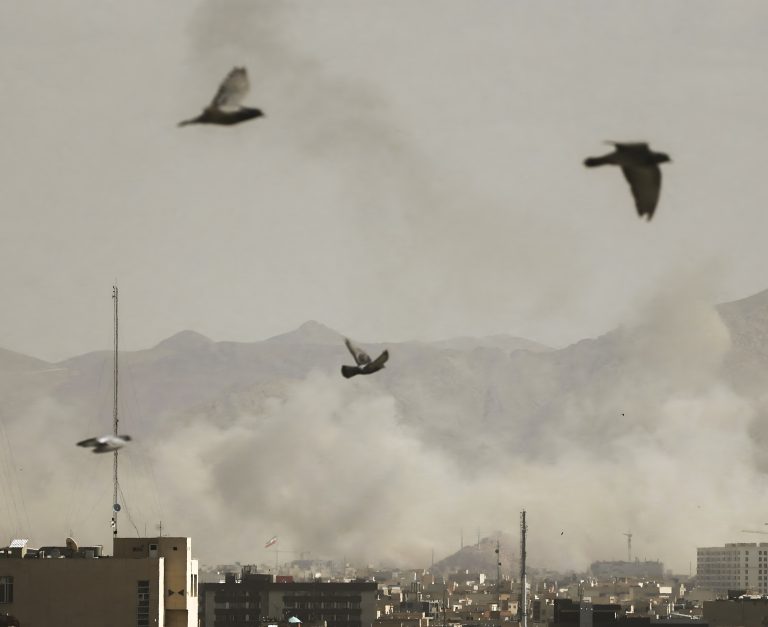
On Saturday 28 February 2026, Israel and the United States launched co-ordinated air strikes against targets in Iran in a joint military action dubbed ‘Operation Epic Fury’ by the Pentagon. Israeli officials later said the strikes had targeted senior members of the Iranian leadership, with reports suggesting that Supreme Leader Ayatollah Ali Khamenei may have been killed. US President Donald Trump wrote on Truth Social that ‘Khamenei, one of the most evil people in History, is dead,’ adding that the moment represented ‘the single greatest chance for the Iranian people to take back their Country’.
Shortly after 7 a.m. local time, Iranian media reported developments in central Tehran. ‘Explosions were heard in Tehran on Saturday,’ they said, adding that the cause was not immediately known.
Almost simultaneously, the Israeli military announced that it had activated protective sirens across the country to ‘prepare the public for the possibility of missiles being fired at Israel’. The move suggested that Israel was expecting an immediate retaliatory response from Iran or its regional allies.
Shortly afterwards, Defence Minister Yisrael Katz confirmed that the incident was part of a co-ordinated operation. ‘The State of Israel has launched a preemptive strike against Iran to eliminate threats to the State of Israel,’ he said.
A representative of the Israeli Ministry of Defence added that the operation had been planned for months in co-ordination with Washington and that the date had been set several weeks earlier. The New York Times, citing a US official, reported that American strikes on Iran were under way.
A Reuters source also said that Iran’s Supreme Leader, Ayatollah Ali Khamenei, was not in Tehran and had been taken to a secure location.
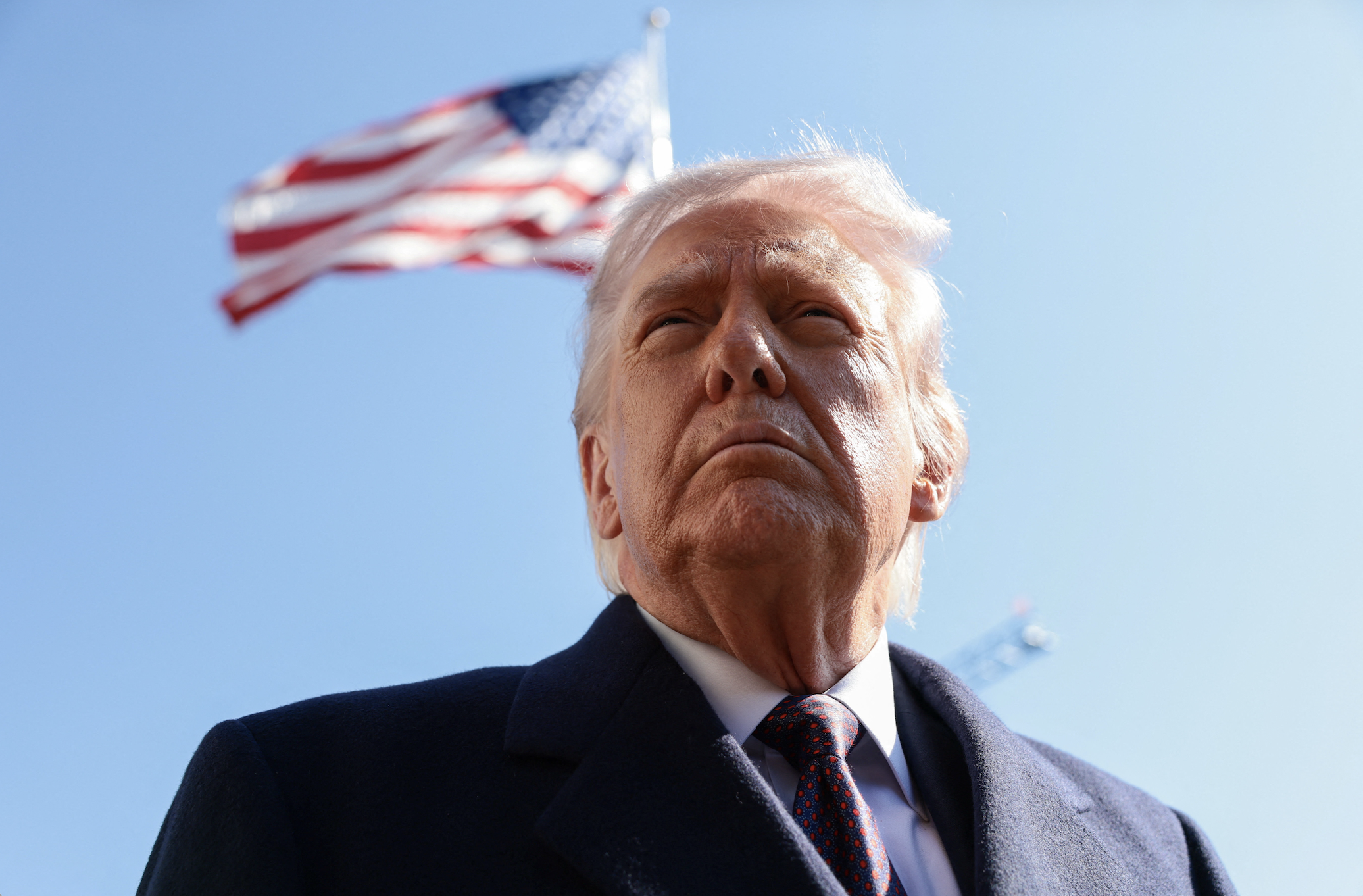
Trump: ‘bombs will be dropping everywhere’
US President Donald Trump addressed the strikes in a video posted on his platform Truth Social, stating that American armed forces had begun ‘combat operations’ in Iran.
Trump spoke directly to ‘members of the Revolutionary Guard, the armed forces and all of the police’: ‘You must lay down your weapons and have complete immunity or in the alternative face certain death.’ He then turned to what he called the ‘great proud people of Iran’: ‘The hour of your freedom is at hand. Stay sheltered, don’t leave your home, it’s very dangerous outside, bombs will be dropping everywhere. When we are finished take over your government. It will be yours to take. This will be probably your only chance for generations.’
Israeli Prime Minister Benjamin Netanyahu said the joint operation ‘will create conditions for the brave Iranian people to take their destiny into their own hands’.
‘The time has come for all segments of the Iranian people … to remove the yoke of tyranny from the regime and bring about a free and peaceful Iran,’ he added in a statement.
Immediate security measures in Israel
Israel responded not only offensively but also with preventive measures at home. The military announced a ‘ban on educational activities, gatherings, and workplaces’, with the exception of ‘essential sectors’. Such steps indicate that the security forces are anticipating the possibility of wider retaliation, including rocket fire targeting civilian areas.
The authorities also closed Israeli airspace to civilian flights. Taken together, the measures suggest that the government is treating the risk of immediate escalation with the utmost seriousness.
The security repercussions were also felt beyond Israel. Following the Israeli strikes, the US Embassy in Qatar imposed movement restrictions on all employees and advised US citizens to do the same until further notice. Qatar hosts the strategic Al Udeid Air Base, which plays a central role in American operations in the region.
Continuation of the cycle of escalation
Saturday’s strike follows the 12-day air war between Israel and Iran in June last year. The United States was directly involved, carrying out attacks on Iranian nuclear facilities – the most direct American military action against the Islamic Republic of Iran to date. Tehran responded by firing missiles at the Al Udeid base.
The latest developments therefore fit a broader pattern of repeated strikes and reprisals. With each new episode, however, the risk grows that the conflict could spiral out of control and draw in additional actors.
The core of the dispute: the nuclear programme and missiles
The confrontation has deep roots in the long-running dispute over Iran’s nuclear programme and its ballistic missile development. In February, the US and Iran resumed negotiations in an effort to resolve the decades-long conflict through diplomatic means. The aim was to avert another military confrontation that could destabilise the entire region.
Israel has repeatedly stressed that any agreement must include the complete dismantling of Iran’s nuclear infrastructure, rather than merely the suspension of uranium enrichment. At the same time, it has pressed for restrictions on Iran’s missile programme to form part of the talks.
Iran says it is prepared to negotiate limits on its nuclear programme in exchange for the lifting of sanctions, but refuses to link the issue to its missile capabilities. It has also declared that it will defend itself against any attack and has warned neighbouring countries hosting US troops of retaliatory measures should Washington become involved.
Western powers argue that Iran’s ballistic missile project threatens regional stability and could serve as a delivery system for nuclear weapons if further developed. Tehran, however, has long denied seeking to acquire an atomic bomb.
Diplomacy in the shadow of military logic
According to analysts, Israel’s move on Saturday can be seen as an attempt to restore deterrence and to signal that it will not wait for the outcome of diplomatic efforts if it judges them inadequate. The preventive nature of the strike is intended to underline that Israel is prepared to act even without broad international backing.
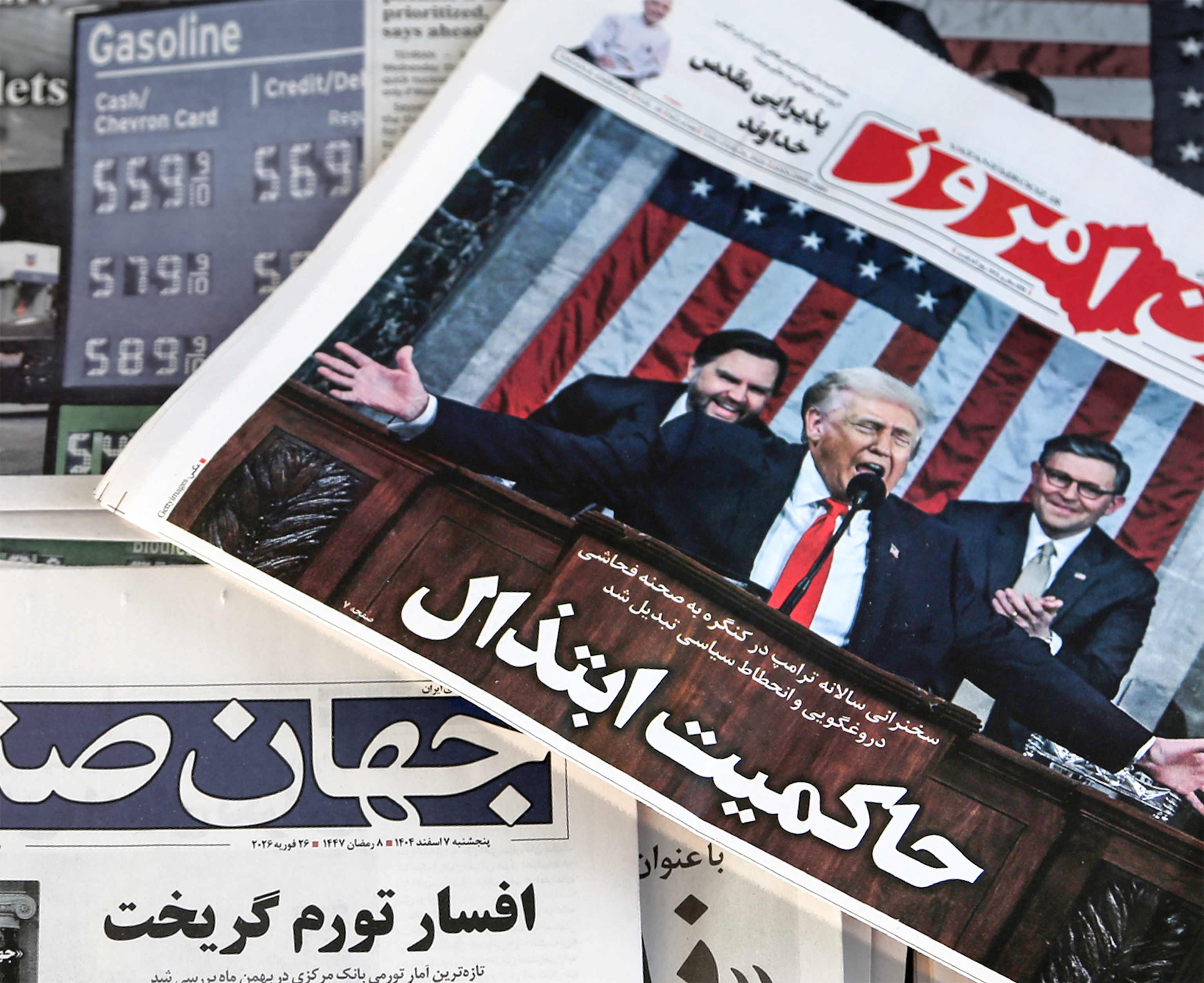
At the same time, the approach significantly undermines the prospects for success in the renewed negotiations between the US and Iran. Omani Foreign Minister Badr al-Busaidi announced on Friday that he had met US Vice President JD Vance and briefed him on the ongoing talks and the progress achieved so far.
‘Peace is within reach. Today, I met Vice President JD Vance and shared details about the ongoing negotiations between the United States and Iran and the progress made so far. I am grateful for their commitment and look forward to further progress in the coming days,’ he wrote on social media on Friday.
However, US President Donald Trump said on Friday that he was not satisfied with Iran’s approach to the negotiations and stressed that Tehran ‘cannot have nuclear weapons’. Another round of mediated bilateral talks between the US and Iran took place in Geneva on Thursday. While Oman has spoken of ‘good progress’, several international media outlets report a far less optimistic picture.
Each further military intervention strengthens hardliners on both sides and narrows the space for compromise. Saturday’s events suggest that the region may be entering a new phase of instability in which diplomatic channels increasingly give way to military logic and the risk of a wider regional escalation once again rises.
Khamenei dead, says Israel
A senior Israeli official, speaking on condition of anonymity, told domestic media that Iran’s Supreme Leader, Ayatollah Ali Khamenei, had been killed in Saturday’s joint US–Israeli strikes. Another unnamed official conveyed the same information to Reuters, saying that ‘his body has been found’.
A Fox News reporter, citing a US official, said Washington believes Khamenei and between five and ten senior Iranian officials were killed in the initial strike. The claim has not been independently confirmed.
According to Israeli sources, Ali Shamkhani, a long-time adviser to Khamenei and former secretary of Iran’s Supreme National Security Council, was among the senior figures reportedly killed.
The reports contradict an earlier statement by Foreign Minister Abbas Araghchi, who said Khamenei and the entire leadership of the Islamic Republic were alive. A source in Khamenei’s office told Iranian state media that the ‘Leader of the Islamic Revolution’ remains ‘firmly in control of the situation on the ground’. The Supreme Leader, who also serves as head of state, had been expected to address the nation following the attacks.
Trump declares Khamenei dead
US President Donald Trump wrote on his Truth Social platform that ‘Khamenei, one of the most evil people in History, is dead,’ calling the reported killing ‘not only Justice for the people of Iran, but for all Great Americans … who have been killed or mutilated by Khamenei and his gang of bloodthirsty THUGS.’ He said the Iranian leader had been unable to evade ‘our Intelligence and Highly Sophisticated Tracking Systems’ and claimed that other senior figures had been killed alongside him. Trump described the moment as ‘the single greatest chance for the Iranian people to take back their Country’, adding that heavy and ‘pinpoint bombing’ would continue ‘as long as necessary to achieve our objective of PEACE THROUGHOUT THE MIDDLE EAST AND, INDEED, THE WORLD’. The claims have not been independently confirmed.
(reuters)