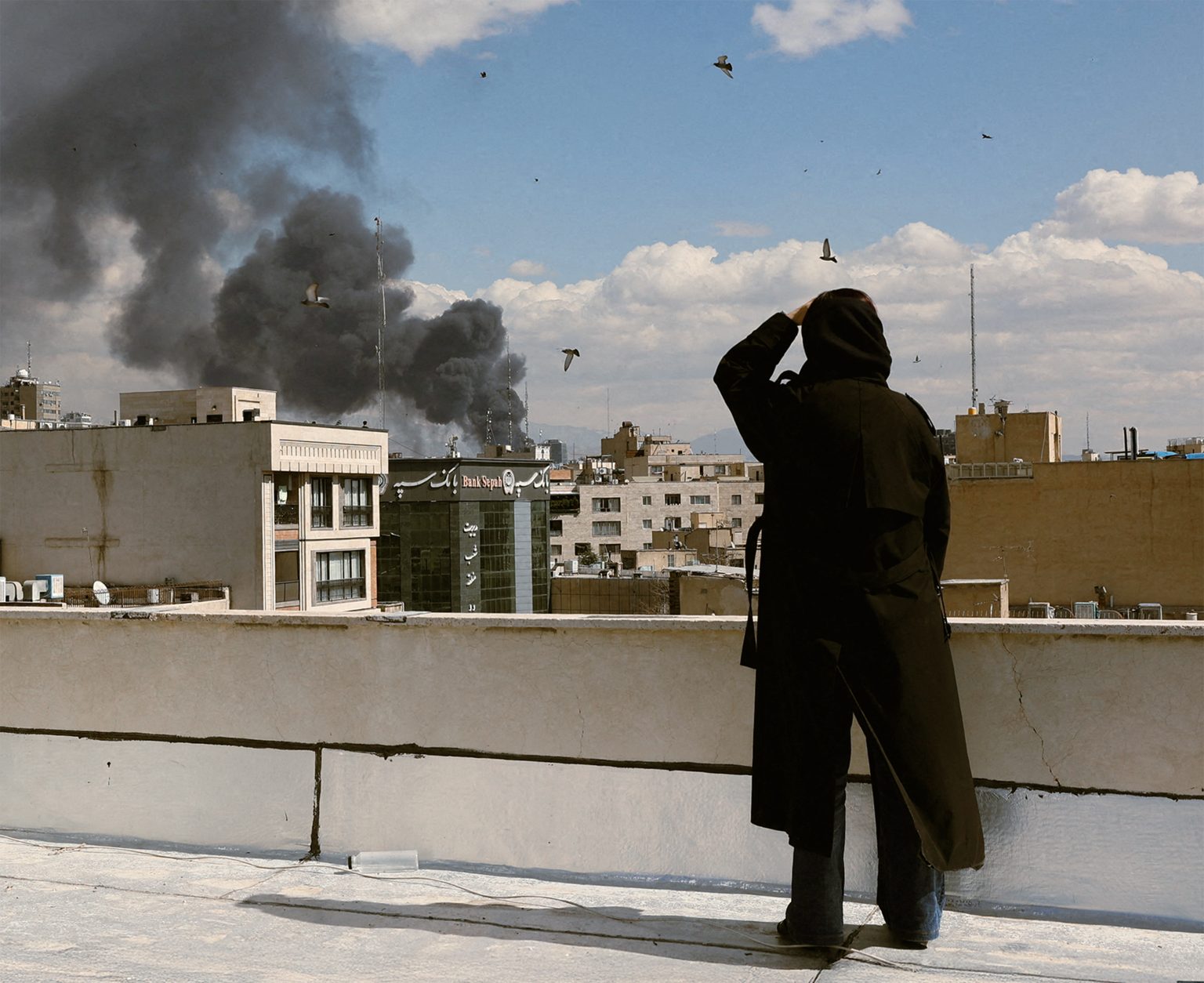
The American and Israeli attacks – and Iran’s retaliation – have sent shock waves through sectors ranging from shipping and aviation to oil, amid warnings of rising energy prices and disruption to business in the Persian Gulf, a strategic waterway and global trade hub.
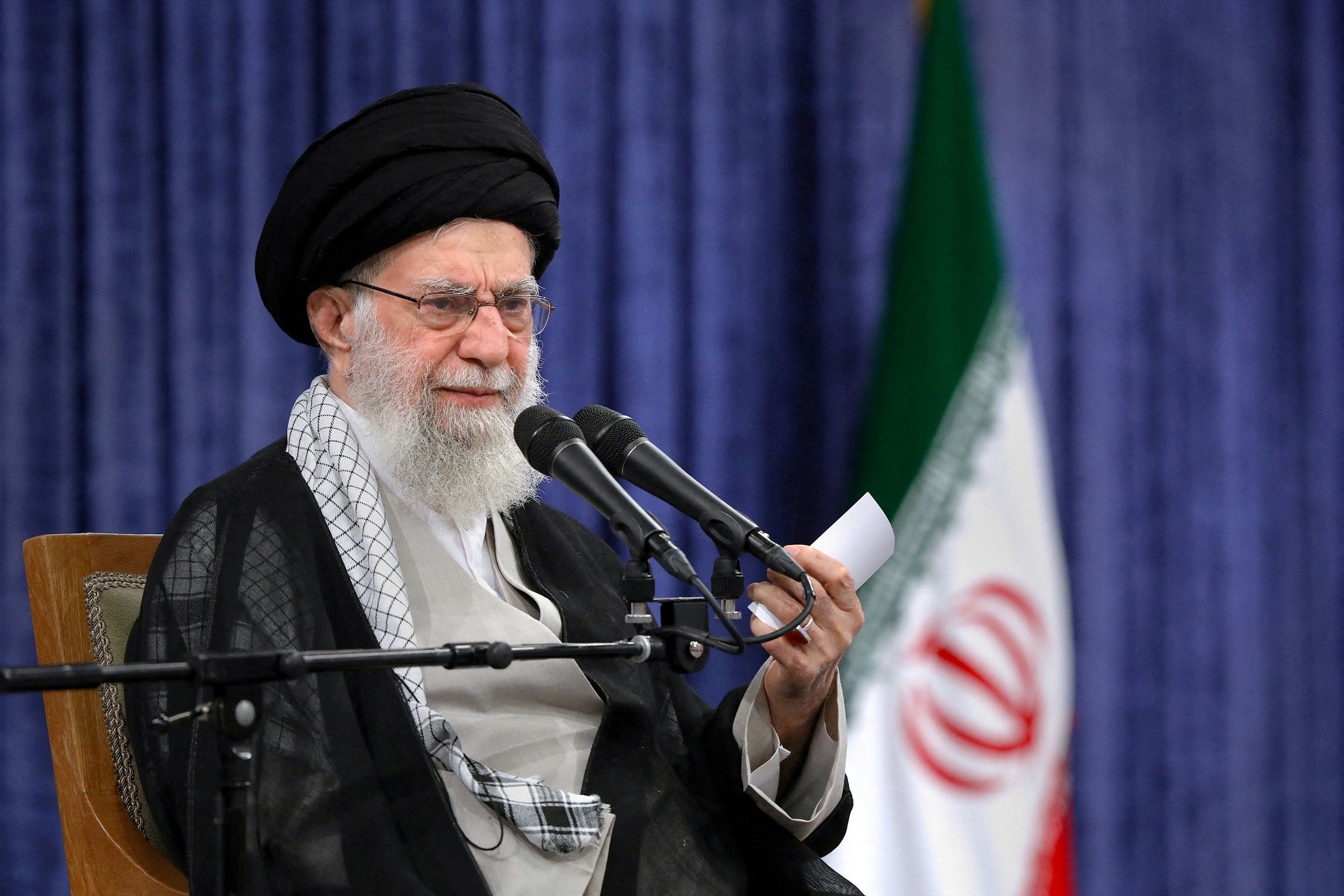
Iranian President Masoud Pezeshkian said that, following the death of Ayatollah Ali Khamenei, a leadership council composed of himself, the head of the judiciary and a member of the influential Guardian Council had temporarily assumed the duties of supreme leader.
The US military said it had sunk an Iranian vessel, while Iran’s Islamic Revolutionary Guard Corps claimed it had launched an attack on the US aircraft carrier Abraham Lincoln with four ballistic missiles, according to state media. The United States later denied the claim.
Israeli emergency services reported that nine people were killed in a rocket attack in the city of Beit Shemesh. The United Arab Emirates said three people were killed in Iranian attacks, and Kuwait reported one death in Iranian air strikes, signalling deepening instability in the region.
What the Israeli army is planning
The Israeli military said its aircraft had carried out strikes aimed at opening ‘the road to Tehran’ and that most air defence systems in western and central Iran had been disabled.
Its representatives added that ‘Ali Khamenei was attacked as part of a precise and extensive operation by the Israeli Air Force based on accurate intelligence information from the Israeli Defense Forces while he was at his central complex in the heart of Tehran, where he was with other senior officials.’
Israeli army spokesman Lt Col Nadav Shoshani said many targets remained, including military-industrial production sites. ‘We have the capacity and the targets to continue this for as long as necessary,’ he said.
Asked whether Israel was considering deploying ground forces, Shoshani replied that such a step was not under consideration, even though US President Donald Trump and Israeli Prime Minister Benjamin Netanyahu had urged Iranians to seize what they described as a rare opportunity to overthrow their leaders.
Sadness and joy over Khamenei’s death
Hours after the US and Israel announced that Khamenei had been killed in an air strike, Iranian state media confirmed the death of the 86-year-old leader.
In Iran, some mourned him while others celebrated, exposing a deep divide in a country stunned by the sudden demise of a man who had ruled for nearly four decades.
Videos circulating on social media showed scenes of jubilation elsewhere, with people cheering as a statue was toppled in Dehloran in Ilam province, dancing in the streets of Karaj near Tehran in Alborz province and celebrating in Izeh in Khuzestan province. Reuters said it had verified the locations.
Khamenei, who during his 36-year rule built Iran into a powerful anti-American force and expanded its influence across the Middle East, was working in his office at the time of Saturday’s attack, state media reported. His daughter, granddaughter, daughter-in-law and son-in-law were also killed, according to those reports.
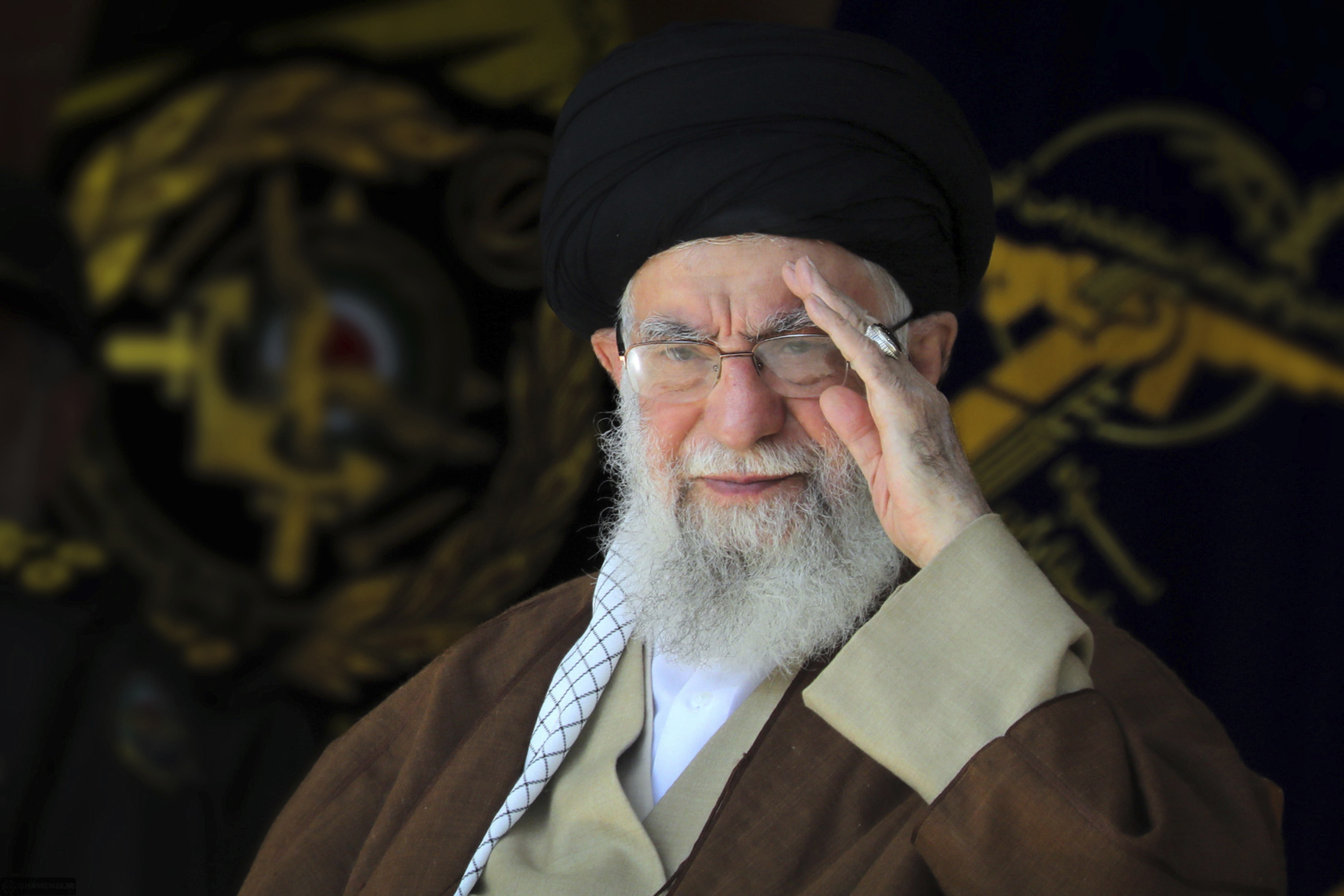
Two American sources and a US official familiar with the matter said Israel and the United States had timed the attack to coincide with a meeting between Khamenei and his top aides.
Analysts said that while his death and that of other senior figures would deal a heavy blow to Tehran, it would not necessarily spell the end of Iran’s entrenched clerical rule or the influence of the elite Islamic Revolutionary Guard Corps.
As supreme leader, Khamenei held ultimate authority in Iran, served as commander-in-chief of the armed forces and set the direction of foreign policy, much of which was defined by confrontation with the United States and Israel.
Both Trump and Iran threaten further strikes
Russian President Vladimir Putin condemned Khamenei’s death as a cynical murder, and Chinese Foreign Minister Wang Yi called it a ‘blatant killing’, while the European Union’s foreign policy chief Kaja Kallas described it as ‘a decisive moment in Iran’s history’.
After Iran responded with air strikes in the Persian Gulf, Anwar Mohammed Gargash, foreign policy adviser to the president of the United Arab Emirates, urged Tehran to ‘come to its senses’ and said it was not fighting Iran’s Arab neighbours in the Gulf. The United Arab Emirates has so far borne the brunt of Iranian retaliation.
On Sunday, following further retaliatory attacks, Ali Larijani, secretary of Iran’s Supreme National Security Council, wrote on social media that Iran was not attacking Middle Eastern countries but only US bases located there.
‘To the countries of the region: We do not want to attack you. But when bases located in your countries are used against us, and when the United States carries out operations in the region that rely on these forces, we will target these bases. These bases are not the territory of these countries, they are American territory,’ Larijani wrote on X.
On Sunday, Trump warned that the United States would attack Iran with ‘force like they’ve never seen before’ if Tehran struck back at Israel in retaliation.
Iran in turn threatened harsh retaliation against the United States and Israel after the weekend attacks, which also killed Supreme Leader Ali Khamenei. Larijani said Tehran would strike ‘with a force they have never seen before’.
He added that Iran had already fired missiles at Israeli targets and US bases in the region and was preparing further action.
Shipping at a standstill
Shipping data released on Sunday indicated that at least 150 tankers, including vessels carrying oil and liquefied natural gas, had anchored in open waters in the Persian Gulf beyond the Strait of Hormuz, while dozens more remained on the other side of the narrow waterway.
According to Reuters estimates based on ship-tracking data from MarineTraffic, the tankers were located off the coasts of major producers including Iraq and Saudi Arabia, as well as gas exporter Qatar.
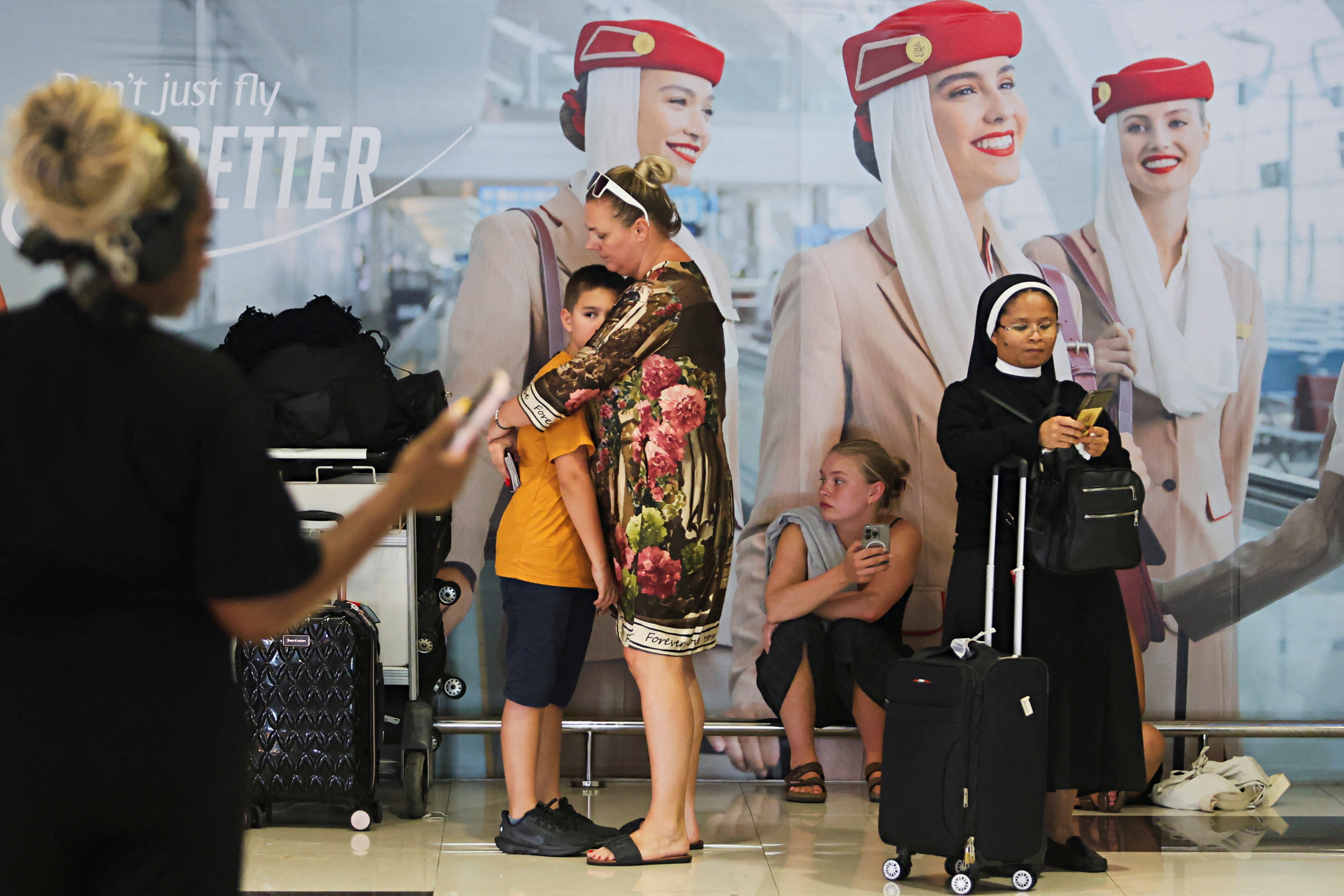
Global air travel remained severely disrupted as continuing air strikes led to the closure of major airports in the Middle East, including Dubai, the world’s busiest international hub, in one of the most significant disruptions to air traffic in recent years.
Witnesses reported hearing several explosions for a second consecutive day in Dubai and over the Qatari capital, Doha. Dark smoke billowed over Dubai’s Jebel Ali port, one of the busiest in the region.
Unrest in Pakistan and Iraq
Khamenei had followers among Shiite communities outside Iran, including in Iraq and Pakistan, which have large Shiite populations.
In Pakistan, clashes broke out between police and demonstrators who, following reports of his death, breached the outer wall of the US consulate in Karachi. Nine people were killed in a subsequent shootout.
In Iraq, police used tear gas and stun grenades to disperse hundreds of pro-Iranian demonstrators gathered outside the Green Zone in Baghdad, where the US embassy is located.
Iran, which has declared it will target US bases in the event of an attack, has also struck other targets, keeping tensions in the Persian Gulf high.
Trump said the air strikes were intended to end decades of threats from Iran and to ensure the country could not develop nuclear weapons. He also sought to justify the move, which appeared to contradict his previously stated opposition to US involvement in complex foreign conflicts.
(reuters, im)