Trump’s key ally in Europe
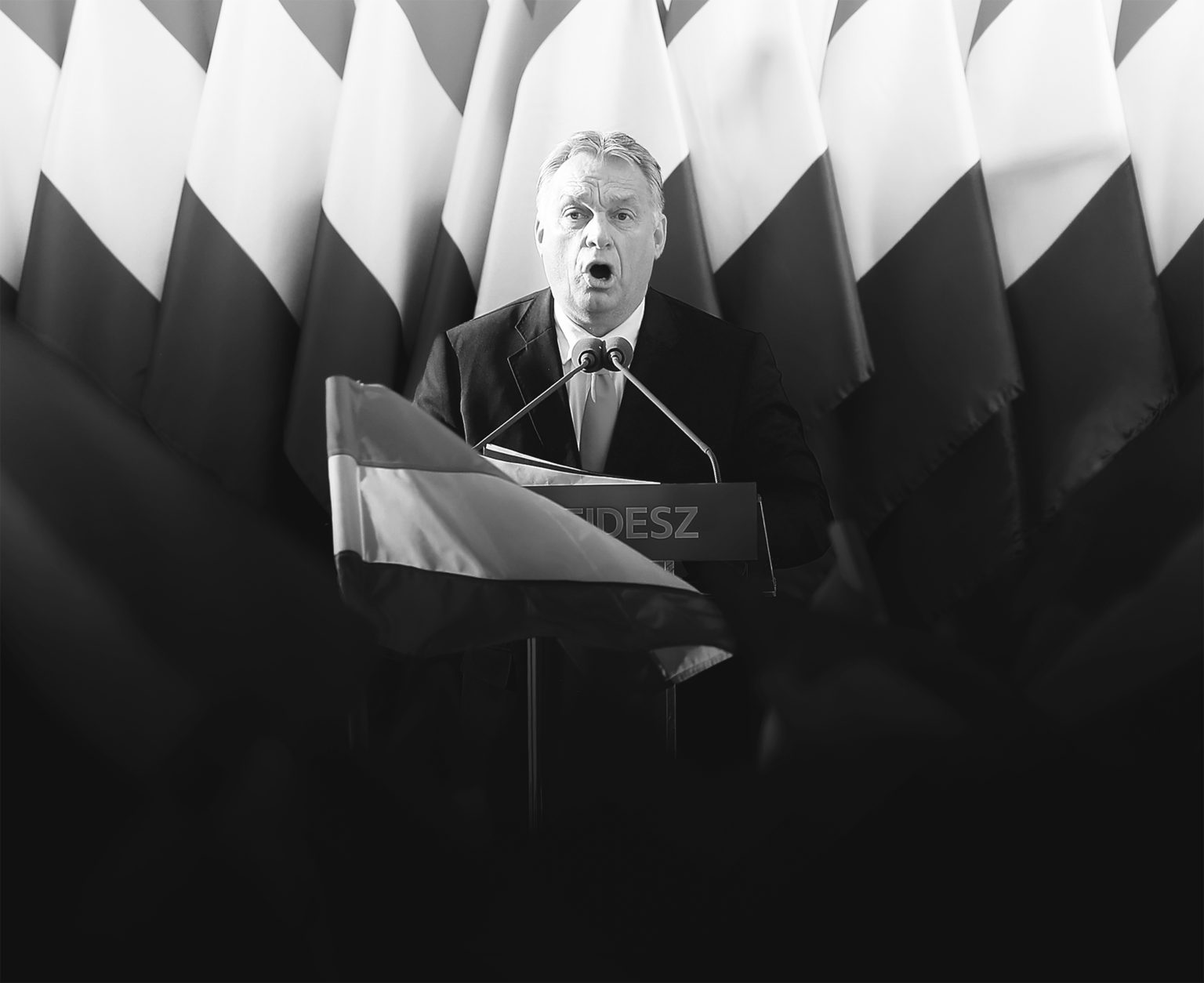
The enfant terrible of European politics managed to endure a period of relative isolation while Joe Biden occupied the Oval Office in Washington. Donald Trump’s return to the presidency, however, dramatically altered Orbán’s international position.
He was no longer treated as a politically toxic figure in Washington and instead became one of Trump’s closest partners in Europe. During his visit to the White House in November 2025, the American president praised Orbán openly, saying: ‘So he’s respected by everybody. He’s liked by some. And I can tell you I like and respect him.’
While Trump admires Orbán as a strong leader, US Vice-President JD Vance has suggested that Hungary could serve as an ideological reference point for the United States in areas such as demographic policy or the political orientation of universities. The importance of the Hungarian prime minister for the Trump administration’s European strategy was underlined during the visit of US Secretary of State Marco Rubio to Budapest in February.
Rubio expressed unusually explicit support ahead of Hungary’s parliamentary elections in April, declaring: ‘I can say to you with confidence that President Trump is deeply committed to your success, because your success is our success.’ He added: ‘We want this country to do well. It’s in our national interest, especially as long as you’re the prime minister and the leader of this country.’
There can be little doubt that Orbán is one of the Trump administration’s preferred partners in Europe. If he wins the April election, he will likely try to work with Washington on reshaping parts of the European political landscape, a project Trump has long hinted at. The question is how such a transformation of Europe – often framed through the lens of the MAGA movement – might actually look.
The end of illusions and a harsh message from the US
Even during his first presidency, Trump made little effort to conceal his scepticism towards the European project. He said he did not understand the concept and argued that Europe consisted not of a single political entity but of individual nation states. At first he attempted to build a personal relationship with French President Emmanuel Macron, whom he reportedly regarded as an ‘alpha male’, but the initial enthusiasm soon faded.
Eight years later, Trump’s rhetoric towards the European Union has become even sharper. When announcing tariffs on European goods, he described the EU as ‘a little China’. He summarised his view of the European project even more bluntly, saying: ‘The European Union was formed in order to screw the United States.’
Members of the current US administration – along with figures such as Elon Musk – have also expressed open sympathy for Eurosceptic parties across Europe, including Germany’s Alternative für Deutschland (AfD), France’s National Rally and the British Reform UK party. From Washington’s perspective, such movements often appear to be more natural partners than the current leadership of the European Union.
If one sets aside the rhetorical clashes and the battles on social media and looks instead at the core of the American criticism, the argument is less about specific parties or personalities than about the institutional structure of Europe itself.
Recent Munich Security Conferences offer a clear illustration. JD Vance addressed the conference twice, while Marco Rubio spoke there most recently. The message from Washington was unmistakable: the United States cannot indefinitely provide Europe with the security guarantees it has relied on for decades. European political elites were criticised for being detached from strategic realities, and Europe was urged to take far greater responsibility for its own defence.
Project E6: the end of equality for smaller states?
The bitter truth, Orbán and other politicians have long argued, is that the European Union as a whole cannot be reformed. Now the same argument is increasingly heard in Washington.
At the same time, European governments themselves appear to recognise that institutional change may be unavoidable. As a result, the idea of a ‘two-speed Europe’ has returned to the political debate with renewed intensity. Whereas earlier discussions centred on a broader core of highly integrated states, the concept has recently been presented in a more concrete form.
German Finance Minister Lars Klingbeil has emerged as one of the most visible advocates of reform. In letters to colleagues and in speeches at international meetings, he has argued that ‘it is no longer possible to continue as before’ and that the European Union has reached a turning point where individual states cannot simply hide behind national interests.
The E6 project would bring together six countries: Germany, France, Italy, Spain, Poland and the Netherlands.
Such a grouping would concentrate enormous economic and political weight. Together the six countries account for more than 70 per cent of the European Union’s total GDP and represent roughly 300 million people.
Orbán and Fico have long said that political dynamics inside the EU are moving in that direction. From their perspective, smaller or dissenting states risk finding themselves outside the central decision-making circle.
How such a development would reshape the European Union remains uncertain. Much would depend on how countries outside a potential core group react, what long-term future the euro might have and how stable the United States proves to be as a strategic partner under Donald Trump.
One point, however, is becoming increasingly clear. By raising the question of national sovereignty, leaders such as Orbán and Fico are forcing a debate the European Union has often tried to postpone. The international environment is changing quickly, and European institutions frequently struggle to respond with the same speed. States that fail to prepare for that possibility may eventually discover that they have little influence over the direction Europe takes.