War in Iran: strong dollar, weak Europe and nervous Asian markets
Investors appear increasingly accustomed to geopolitical shocks. US markets respond with brief sell-offs and a stronger dollar, Europe weakens, and Asian markets show how quickly euphoria can turn into panic.
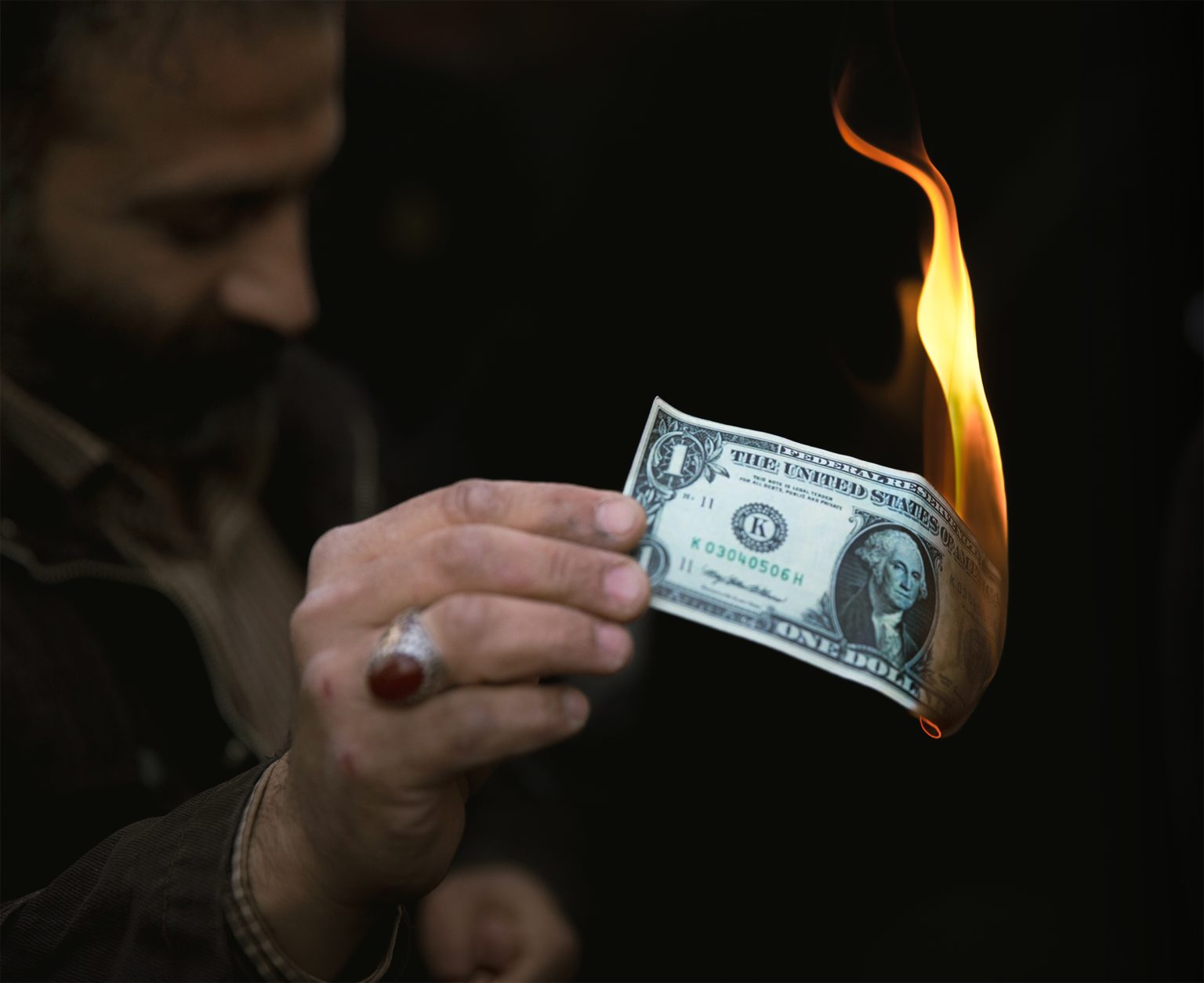
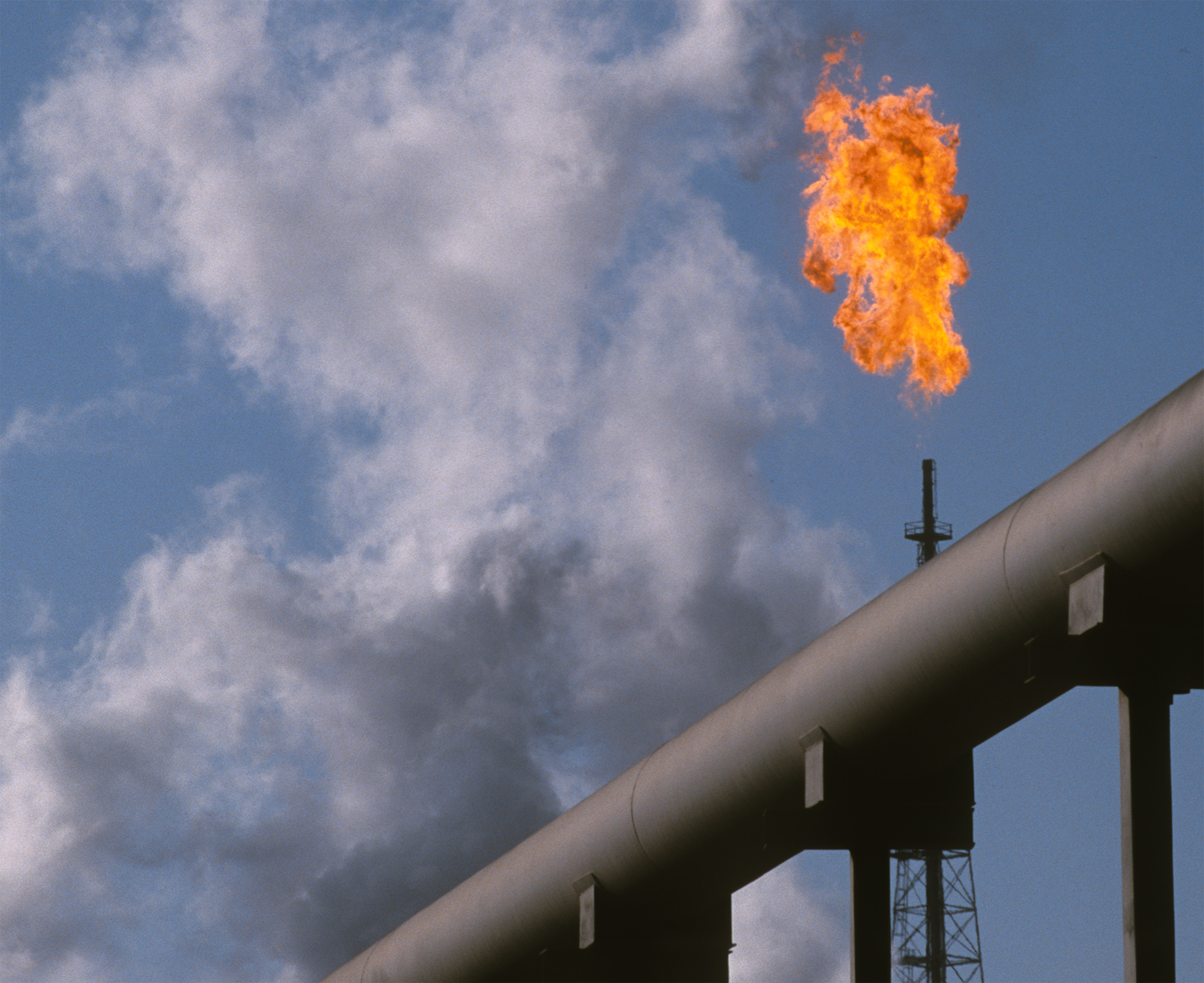
The burning conflict in the Middle East has so far strengthened the US dollar’s reputation as a global safe haven while exposing the vulnerability of other markets. Photo: Majid Saeedi/Getty Images
|
Geopolitics no longer frightens Wall Street and panic is giving way to growth. The Old Continent remains a mere spectator, while Asia is being crushed by volatility.
Specifically, Hamas's attack on Israel left investors on edge for only a day or two. During the subsequent twelve-day war between Israel and Iran, it took only a few hours for investors to take advantage of market hesitation. The kidnapping of Venezuelan President Nicolás Maduro, deliberately carried out by the Americans on Saturday, had virtually no impact on US market charts.
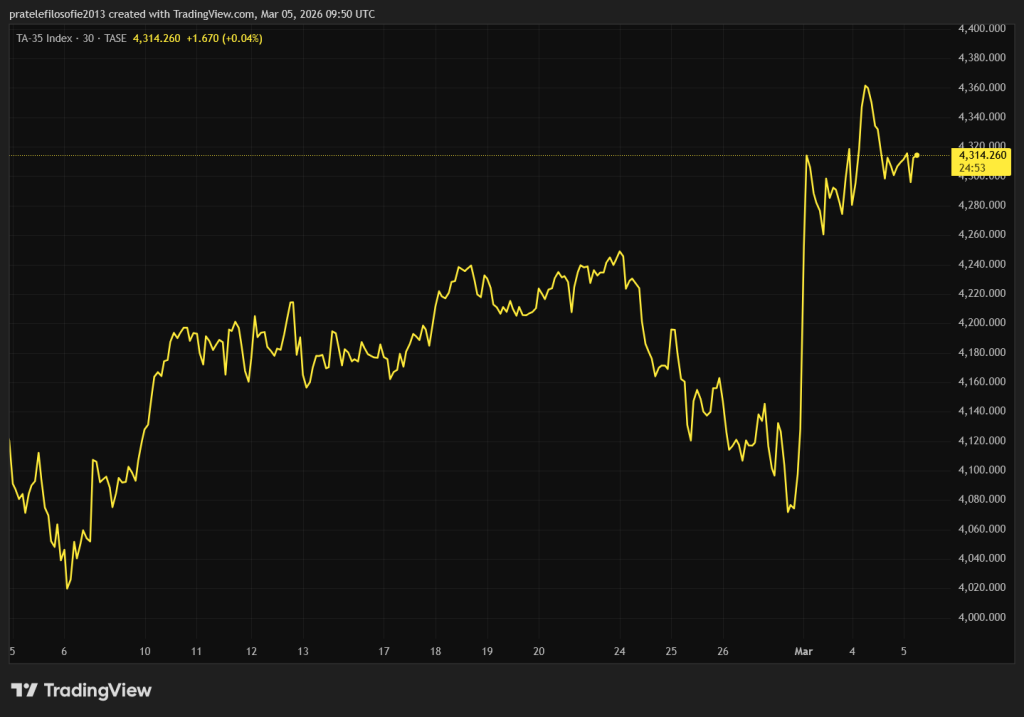
Development of the Israeli TA-35 index over the last month. Source: TradingView
Saturday’s Israeli–American attack on Iran and the subsequent prolongation of the conflict further underscored this paradox, as the Israeli stock market opened with strong gains on Monday. Betting that markets will react sharply to geopolitical events has become a difficult strategy and one that may not pay off at all. Those who sold Israeli stocks in recent days are now counting their losses.
This does not mean that investors are ignoring the conflict or that it has no impact. Rather, it suggests that awareness of stock market psychology has become so widespread that relatively few investors succumbed to the initial wave of fear.
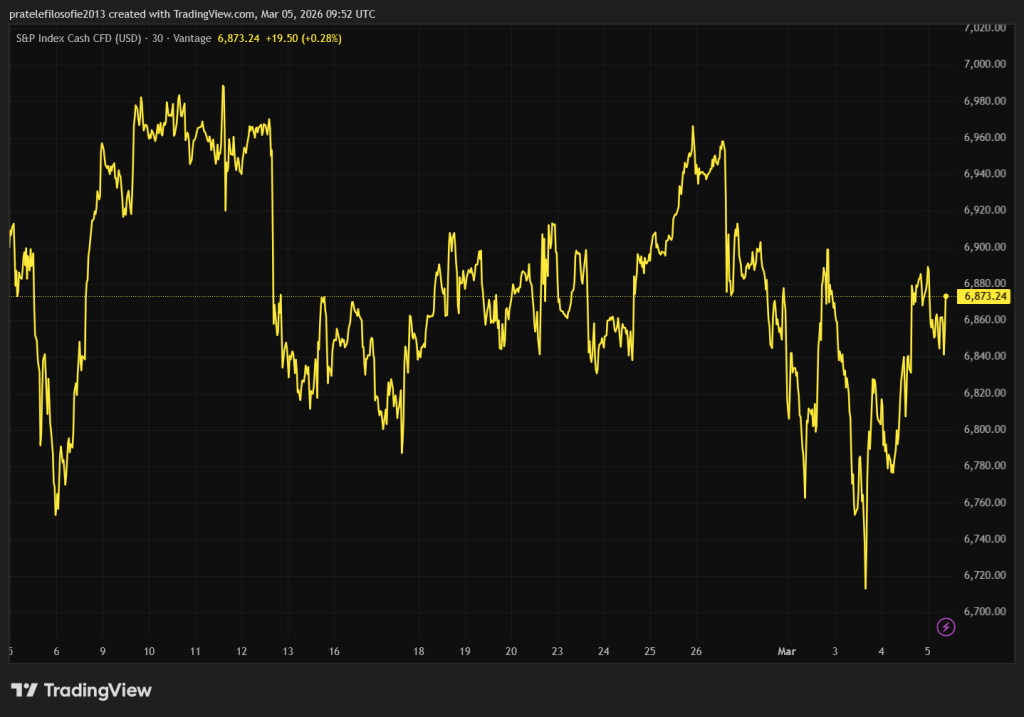
US markets showed the greatest psychological resilience. Trading on the S&P 500 followed a familiar pattern: although the index opened lower on Monday, it reversed the negative trend during the session. And although there was a sell-off on Tuesday, the index recovered again later in the day.
Instead of panic selling, the movements largely reflected profit-taking. The cash raised may be used for further investments, particularly in European and Asian stocks, which were more exposed to the conflict. On Wednesday, the US stock market rose again.
Performance of the S&P 500 index over the last month. Source: TradingView
American resilience and the success trap
There are several reasons why US stocks remain relatively calm. The first is that the United States thinks the military campaign will be swift and decisive. The Trump administration's presentation of the entire conflict is in the typical spirit of enormous success. America likes to believe in success stories.
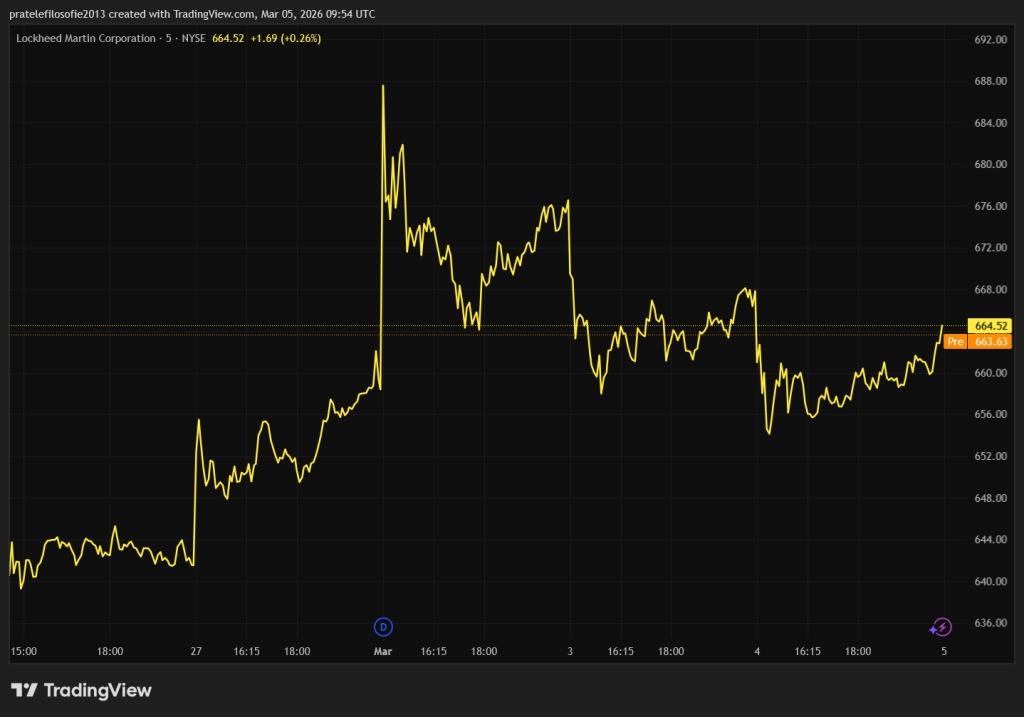
At the same time, however, this represents a trap, because as soon as it becomes apparent that things are not going according to plan and the whole operation is dragging on, we can expect a significant correction in the markets. Although here we can point to a certain schizophrenia in the American markets, as betting on a quick end to the conflict is in direct contradiction to the massive growth in the share prices of American arms manufacturers.
Share price development of US arms manufacturer Lockheed Martin over the last five days. Source: TradingView
The second reason is the relatively low exposure of US markets to the energy sector.
Today’s dominant US stocks come mainly from the technology and healthcare sectors, which are not directly affected by oil or natural gas prices. In addition, the United States is a net exporter of oil and natural gas, meaning higher commodity prices may even work in its favour.
More precisely, they mainly benefit shareholders in the oil and energy industries. They may also benefit the Trump administration, as higher energy prices can improve the foreign trade balance. Trump will likely present this as a success of his economic policy.
There is a risk here as well. Petrol prices at US filling stations have begun to rise slowly but steadily. Because US fuel taxes are lower, changes in global oil prices are reflected more directly at the pump than in Europe.
Few people know exactly where the threshold lies that American consumers are willing to accept when paying for fuel. For many Americans, the rising cost of living has been a central concern since the COVID-19 pandemic.
The winning dollar and European enlightenment
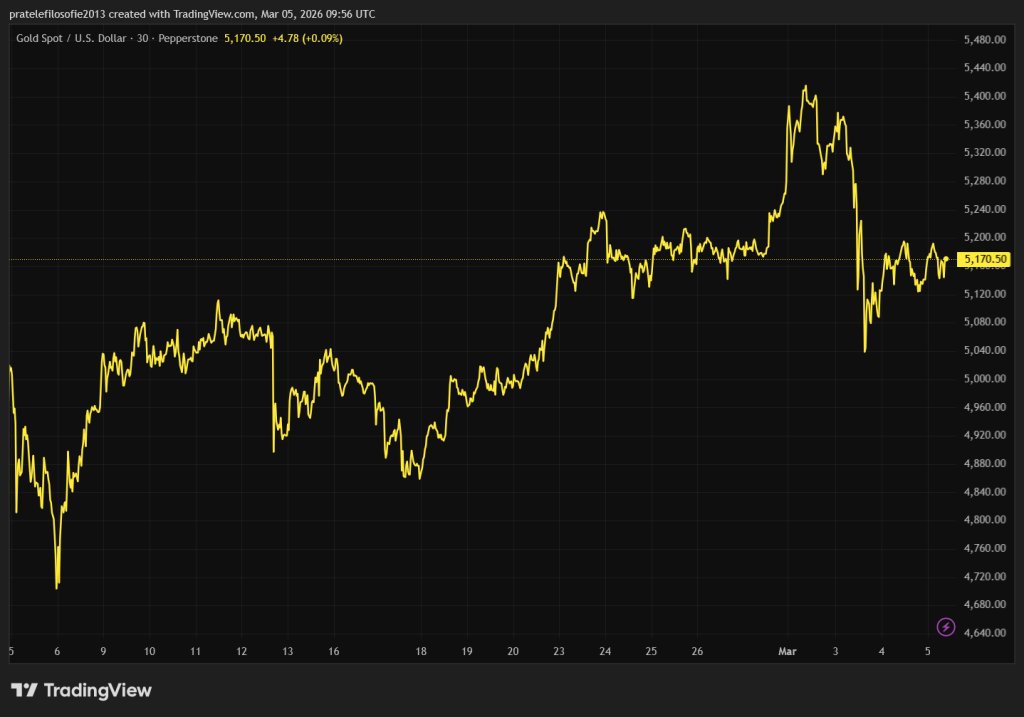
There were no panic reactions on the American markets, partly because the price of gold did not rise. The often mentioned threshold of $6,000 per troy ounce, which might have been exceeded if more countries had become involved in the conflict in Iran, has, for the time being, remained out of reach. On the contrary, the price of gold has surprisingly fallen.
Gold price development over the last month. Source: TradingView
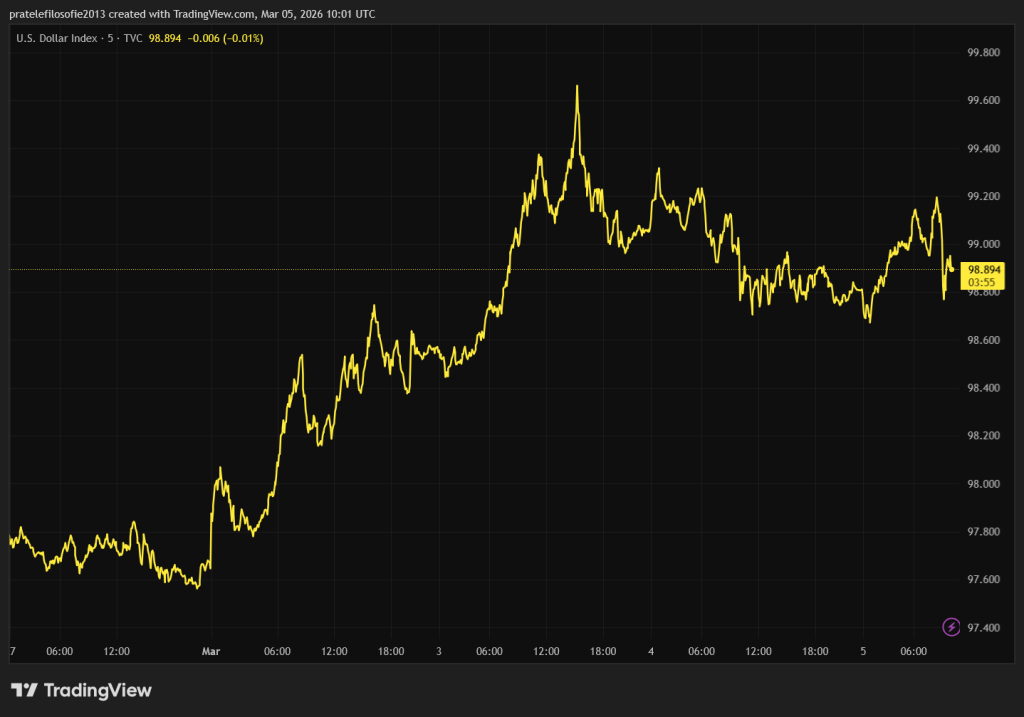
The main reason for this decline was the steady strengthening of the US dollar since the beginning of the conflict. For many investors, this was a clear reminder that the US currency continues to be a safe haven in times of crisis.
The de-dollarisation of the global economy is therefore unlikely to be on the agenda in the near future. If there is a clear winner from the war in Iran, it is undoubtedly the US dollar.
Development of the DXY dollar index over the last five days. Source: TradingView
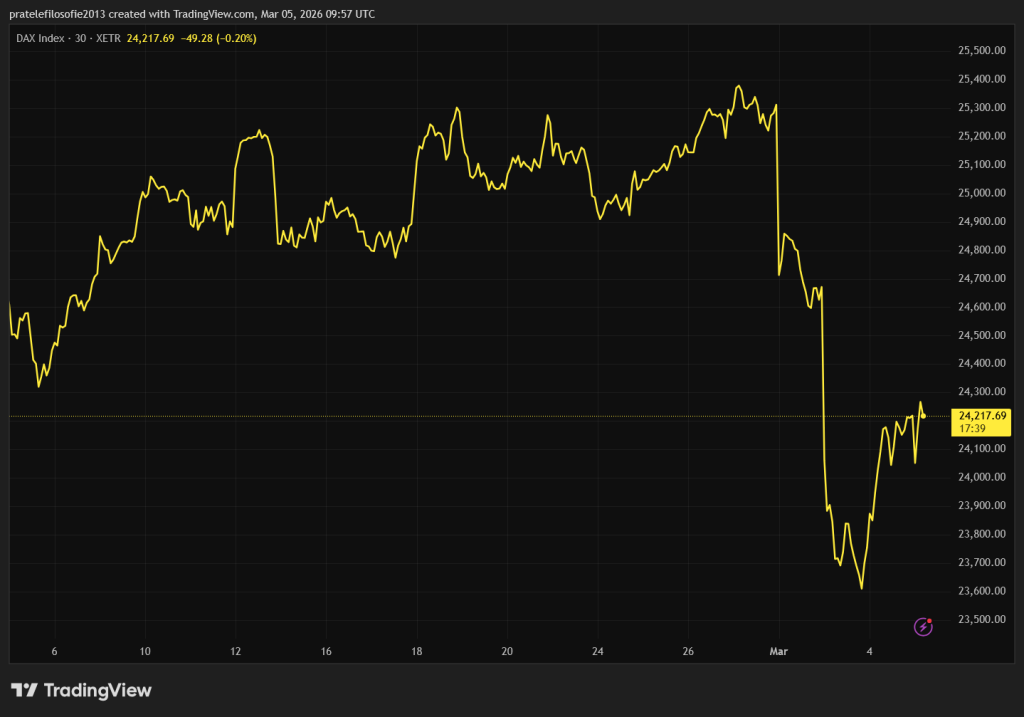
In contrast, Germany’s DAX index has lost more than 7 per cent since the start of the conflict, and France’s CAC 40 more than 6 per cent. Although the situation improved slightly towards the end of the week, it was uncomfortable for investors to realise that Europe is more a passive observer than an active player in this crisis.
Emmanuel Macron’s statement that the US and Israeli attack violated international law, but that Iran bears full responsibility, sounded more like diplomatic incantation than assertive realpolitik.
European governments were not informed of the military operation in advance, let alone consulted. The markets thus offered a reminder of an uncomfortable reality for Europe: if it does not play a meaningful role in security decisions, it will struggle to influence issues that are existential to it, such as energy security.
Development of the German DAX index over the last month. Source: TradingView
Volatility and vulnerability of Asian markets
By contrast, we have seen extreme volatility in Asia, as the region is most affected by the blockade of the Strait of Hormuz.
Although China is widely known to have built up strategic reserves over many years and can compensate for shortages by increasing purchases of Russian gas and oil, the situation is far more complicated for South Korea and Japan for geopolitical reasons.
This is particularly bad news for Japan, whose economy is already struggling with domestic inflation. The country’s central bank cannot influence global oil prices, but it can attempt to strengthen the yen to limit the impact of higher commodity prices. Yet a stronger yen would complicate the Japanese prime minister’s ambitious economic programme.
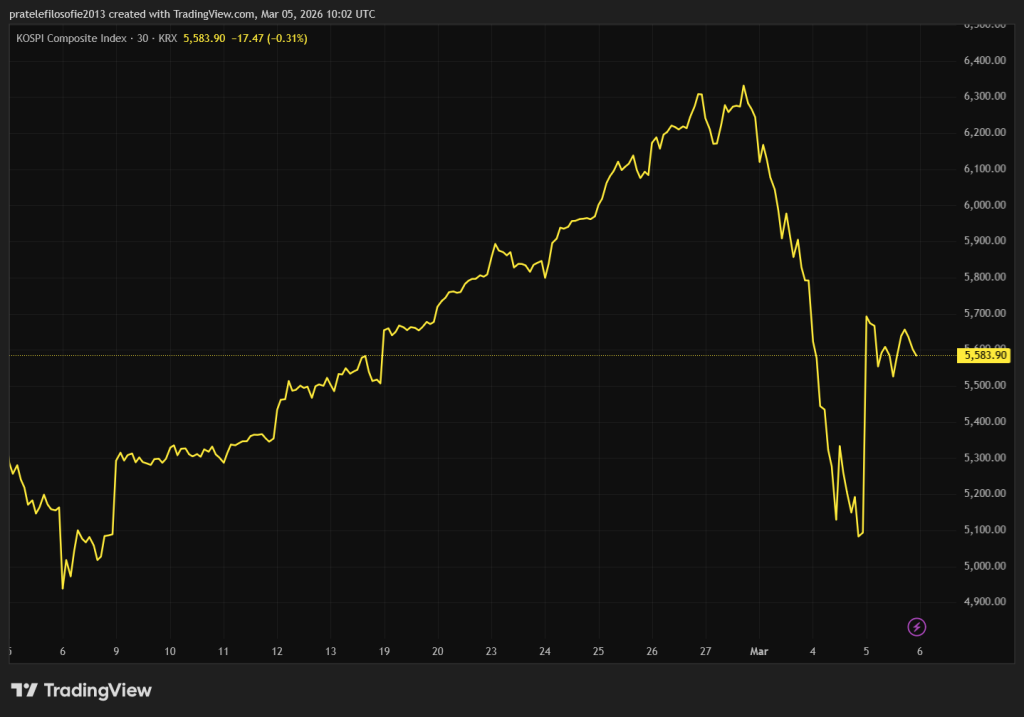
The performance of South Korea's Kospi index over the last month. Source: TradingView
In South Korea, markets have seen similarly sharp swings. The Kospi index showed daily volatility that would not be out of place in a speculative memecoin.
The initial reaction to the war in Iran was a one-day drop of more than 19 per cent. The following day, however, the South Korean stock market rebounded sharply, rising by about a tenth.
Last year, South Korea’s stock market was among the best performers in the world. The main drivers were two technology companies that manufacture memory chips, components which are currently in short supply for the construction of large data centres.
These companies are Samsung Electronics and SK Hynix. The panic sell-off therefore suggested that some investors used the unexpected geopolitical shock to lock in substantial profits.
The Iranian conflict has not yet had a significant impact on either company. The market reaction has served as a reminder of an old truth: extremely high valuations always carry the risk of rapid and sharp shifts in market sentiment.
Developments on the South Korean stock market may therefore serve as a warning for other global markets. In an environment of high expectations, even a small geopolitical shock can turn euphoria into panic within a single day.
Placeholder For Topreaded Placeholder For Topreaded
Placeholder
Placeholder
Placeholder For Topreaded Placeholder For Topreaded
Placeholder
Placeholder
Placeholder For Topreaded Placeholder For Topreaded
Placeholder
Placeholder
Placeholder For Topreaded Placeholder For Topreaded
Placeholder
Placeholder
Placeholder For Topreaded Placeholder For Topreaded
Here is placeholder for Article excerpt Here is placeholder for Article excerpt Here is placeholder for Article excerpt Here is placeholder for Article excerpt
Here is placeholder for Article excerpt Here is placeholder for Article excerpt Here is placeholder for Article excerpt Here is placeholder for Article excerpt
Here is placeholder for Article excerpt Here is placeholder for Article excerpt Here is placeholder for Article excerpt Here is placeholder for Article excerpt
Welcome to the comments section of the Štandard daily. Please take note of our guidelines, comments are moderated by us. You can contact the moderators at [email protected].
Participate in the discussion
Comments are available to subscribers only. If you'd like to join the discussion, choose a subscription starting at €6.72 per month.
All comments 0
Register
Comments are available to registered users only. If you'd like to join the discussion, register here.