
In December 2018, US General Dan Caine met Donald Trump. According to the American president, he was the only officer who told him that the terrorist organisation Islamic State could be defeated in three weeks rather than in three to five years, as claimed by ‘television generals in Washington’.
At least that is how Trump recounts one of the stories he frequently repeats in speeches. At the end of February, however, Caine reportedly expressed concerns about a planned attack on Iran and, according to sources cited by the Washington Post, warned that the United States faced shortages of critical munitions and limited support from Islamic states in the Middle East.
A top general against war?
The Chairman of the Joint Chiefs of Staff, confirmed by the US Senate on 11 April 2025, attended a closed meeting with Trump, Vice President JD Vance, Defence Secretary Pete Hegseth, Secretary of State Marco Rubio, CIA Director John Ratcliffe and other senior officials.
As his office stated, Caine presented ‘a range of military options’ to civilian leaders responsible for decisions on US security. The office added that the general’s assessments were delivered ‘in confidence’.
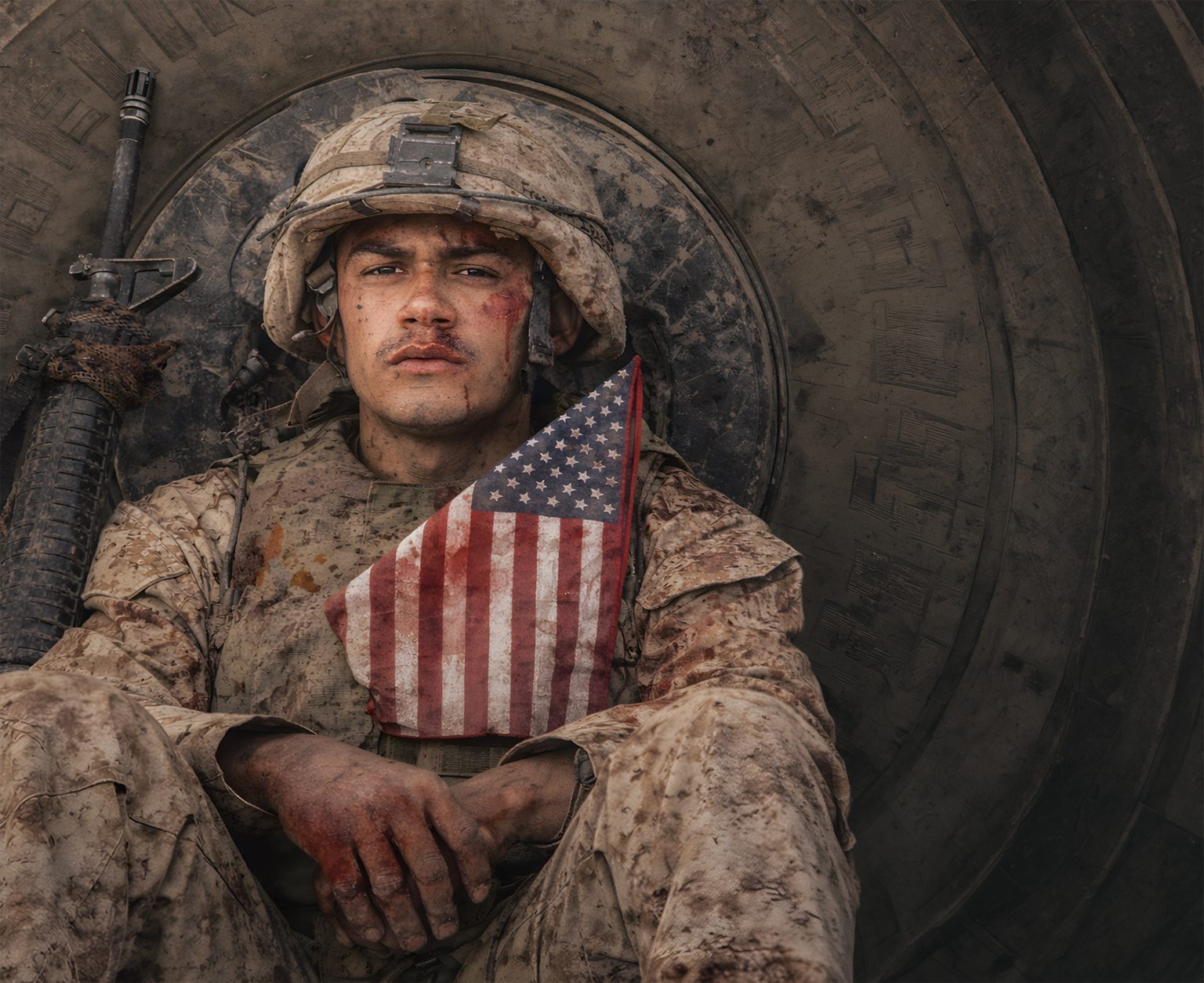
Among the concerns he reportedly raised were potential US casualties – a risk that has already materialised after six soldiers were killed in a drone attack on a US base in Kuwait.
According to Caine, the strain on US capabilities reflects years of support for Ukraine and the defence of Israeli airspace.
Trump rejected the reports, saying Caine was not opposed to war with Iran. ‘However, this report does not cite its sources and is 100% incorrect,’ he wrote on his Truth Social platform.
According to Trump, Caine believes that if the United States decides to attack Iran, ‘it will be an easy victory’. ‘He didn’t talk about not attacking Iran, or the fake limited attacks I’ve read about. He only knows one thing, how to WIN, and if he gets that order, he will lead the attack,’ the president added.

The news outlet Axios reported in a similar vein. Barak Ravid, a veteran of Israel’s military intelligence Unit 8200, cited two anonymous participants in national security discussions who likewise described Caine as cautious regarding a war with Iran.
In public, however, the general has largely aligned himself with the position of the US security leadership. At a joint press conference with Hegseth on 2 March he said that victory over Iran and the achievement of US strategic goals, including regime change, would not happen ‘overnight’.
‘Achieving the military objectives entrusted to Central Command and the joint force will take some time and, in some cases, will be challenging and difficult work,’ he added, noting that the Pentagon ‘expects further losses’ which it is attempting to minimise.
More immediate concerns include the reported shortage of munitions, particularly for air-defence systems such as Patriot and THAAD, which the United States uses to defend Israel and the airspace of several Arab countries.
On 1 March the Wall Street Journal published an article with the headline: ‘The US is rushing to complete its mission in Iran before it runs out of ammunition.’
Can Iran win?
Since the beginning of the war, US and Israeli officials have faced a central question: ‘What constitutes victory?’ From Tel Aviv’s perspective the answer is relatively clear. Israel’s objectives go beyond regime change from a Shiite theocracy. They include ending Iran’s nuclear programme, seen as a form of ‘nuclear hedging’, weakening its ballistic capabilities and stopping support for militant groups.
An even more far-reaching outcome would be internal fragmentation within Iran, similar to developments in Iraq or Syria. A break-up into smaller ethnic entities that would pose less of a threat is seen by some Israeli strategists as a possible path to lasting regional dominance. Several Israeli academics have also proposed the ‘Emirates model’ for a future Palestinian state.
For Tehran, by contrast, victory would essentially mean repelling the attacks and preserving the authority of the ayatollahs and the country’s religious-political institutions. According to analyst Daniel DePetris, the likelihood of such an outcome increases the longer the conflict continues.
The Defence Priorities analyst, who regularly contributes to outlets such as the Chicago Tribune, Newsweek and the American Conservative, wrote in the British newspaper The Telegraph that a strategy of withstanding air strikes ‘could work’.
According to DePetris, Tehran is counting on the United States and Israel exhausting their offensive capabilities while the Islamic Republic continues drone attacks against bases in the Middle East and oil infrastructure in Arab countries.
Saudi Arabia, the United Arab Emirates and Qatar would face a worsening security situation – as would Iran itself – and might eventually be among the first to call for a ceasefire.
What the ‘Chinese Nostradamus’ predicts
Tehran may also aim to trigger a financial shock in global fossil-fuel markets, pushing up energy prices in the West. Higher electricity costs could undermine the competitiveness of artificial-intelligence development and erode the United States’ lead in the sector.
That is the prediction of a commentator sometimes referred to on social media as the ‘Chinese Nostradamus’. Professor Xueqin Jiang studied philosophy and history at Yale University and now lives and works in Canada. In May 2024 he published a video on the YouTube channel Predictive History outlining three predictions concerning Trump.
First, he said the Republican would defeat then vice-president Kamala Harris. His second prediction was that ‘geopolitical pressures’ would push him into a conflict with Iran – both of which, he argues, have come to pass.
Jiang’s third prediction, however, was that the United States would lose such a war. ‘They are currently waging a war of attrition… and Iran has been preparing for this for 20 years,’ he said on the Breaking Points podcast.
The Iranians also have ‘a pretty good strategy for weakening or even destroying the American empire’, Jiang added. In his view, Tehran is not targeting US forces directly but the global economic system by closing the Strait of Hormuz and striking Arab oil refineries, some of which have American ownership stakes.
‘Eventually they will target desalination plants, which are vital for Gulf countries because they lack freshwater supplies,’ he predicted, arguing that Tehran is ‘in fact threatening the very existence of Saudi Arabia, the United Arab Emirates and Qatar’.
Jiang also argued that the states of the Gulf Cooperation Council (GCC) form an important pillar of the US financial system. Revenues from oil exports, the so-called petrodollars, are reinvested in American equities and artificial-intelligence ventures.
‘We now know that the entire market economy is supported by investments in AI data centres,’ he said.
‘If the Gulf states cannot sell oil and finance this AI bubble in the United States, the bubble will burst – and with it the entire US economy, which is currently a financial Ponzi scheme.’
Next steps
The window of opportunity for the United States to overthrow Iran’s theocratic regime may therefore be narrowing. Washington may consequently seek to resolve the ‘Iranian question’ as quickly as possible, although some estimates extend the timeframe to September.
Sources at the State Department told Politico that the Trump administration had not been fully prepared for the president’s decision to launch the war, which had initially been expected to last four weeks. US Central Command (CENTCOM), responsible for operations in the Middle East, has also requested at least 100 intelligence officers for a deployment of up to 100 days – potentially until September.
According to Politico, the Pentagon plans to move these personnel to CENTCOM headquarters in Tampa, Florida. The request may indicate that existing structures were not fully prepared for a joint Israeli-American campaign against Iran.
‘It is also a sign that the Pentagon is allocating funds for operations that could last much longer than the original four-week timeframe,’ the publication noted.
Contrary to earlier campaign pledges, the United States may also move closer to involvement in ground operations. So far, the indications remain indirect, including reports of pro-American militias being organised in Iraqi Kurdistan and speculation about possible Azerbaijani military involvement.
The dismemberment of Iran?
In the final week of February representatives of five Kurdish militant groups from Iran met in exile in Iraq and established the Coalition of Political Forces of Iranian Kurdistan. Their objective appears to be at least autonomy. According to Axios, militants have begun moving towards positions along the Iranian border.
An Israeli source told Ravid that Kurdish groups near the northern border were being coordinated by the CIA and Israel’s Mossad. ‘The war began with a kinetic phase by US and Israeli armed forces, but as the war continues Mossad and the CIA are taking further steps,’ the source said.
‘We are not arming the Kurds. But with the Israelis, you never know,’ Rubio reportedly said during a meeting with members of Congress. CNN first reported statements by anonymous US officials regarding the alleged involvement of American intelligence services.
Fox News reported on Wednesday that ‘thousands of Kurds’ had crossed the Iraqi-Iranian border and attacked positions of the Iranian army and the Revolutionary Guards. Aziz Ahmad, deputy prime minister of the Kurdish autonomous region, denied the claim.
He did acknowledge, however, that Iranian Kurdish groups were organising across the border with the aim of destabilising Iranian security structures. Neighbouring Azerbaijan has also introduced strict security measures and effectively sealed its border with Iran.
At least 12 million ethnic Azeris live in Iran, while slightly more than eight million live in Azerbaijan itself.
US and Israeli strategy may therefore partly rely on existing ethnic tensions. Kurdish groups could pursue autonomy or even statehood, while Azerbaijani nationalists might seek to extend their state southwards to ‘liberate’ ethnic kin living in Iran. Other groups might pursue similar ambitions.
Training and coordinating such ground operations would likely require military advisers, effectively amounting to ‘boots on the ground’ and thus a direct military presence.
Just as Russia condemns the presence of Western instructors in Ukraine, American advisers could themselves become targets of Iranian retaliation. Any response by the White House or the Pentagon would likely expand the scope of operations and further escalate the conflict.
The road to a possible defeat in the midterm elections
The situation also creates domestic political risks. The Republican Party won the 2024 election partly on promises of peace and avoiding new wars. A prolonged conflict could complicate that message ahead of the midterm elections.
Elections to both chambers of Congress are scheduled for November, and Democrats are widely expected to gain control of at least one chamber.
In such a scenario, Trump’s domestic agenda could face major obstacles. Legislation proposed by the White House might stall in the House of Representatives, congressional investigations into migration policy could intensify and executive orders on issues such as gender policy or religious freedom might be reversed by a future administration. Another impeachment attempt could not be ruled out.
The American version of a ‘special military operation’, which did not receive congressional authorisation after the Senate rejected a War Powers resolution by 53 to 47, could therefore also have political repercussions at home.