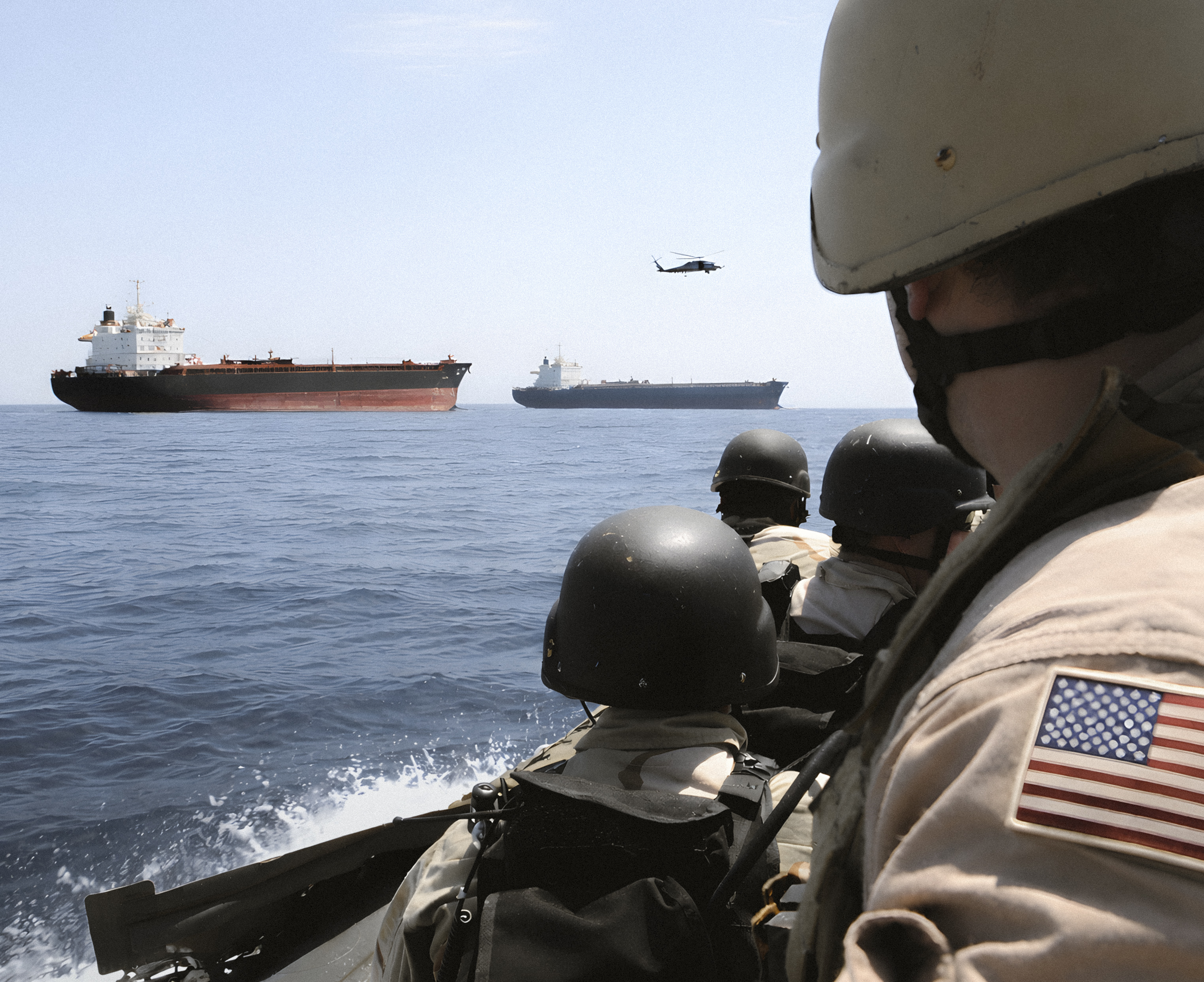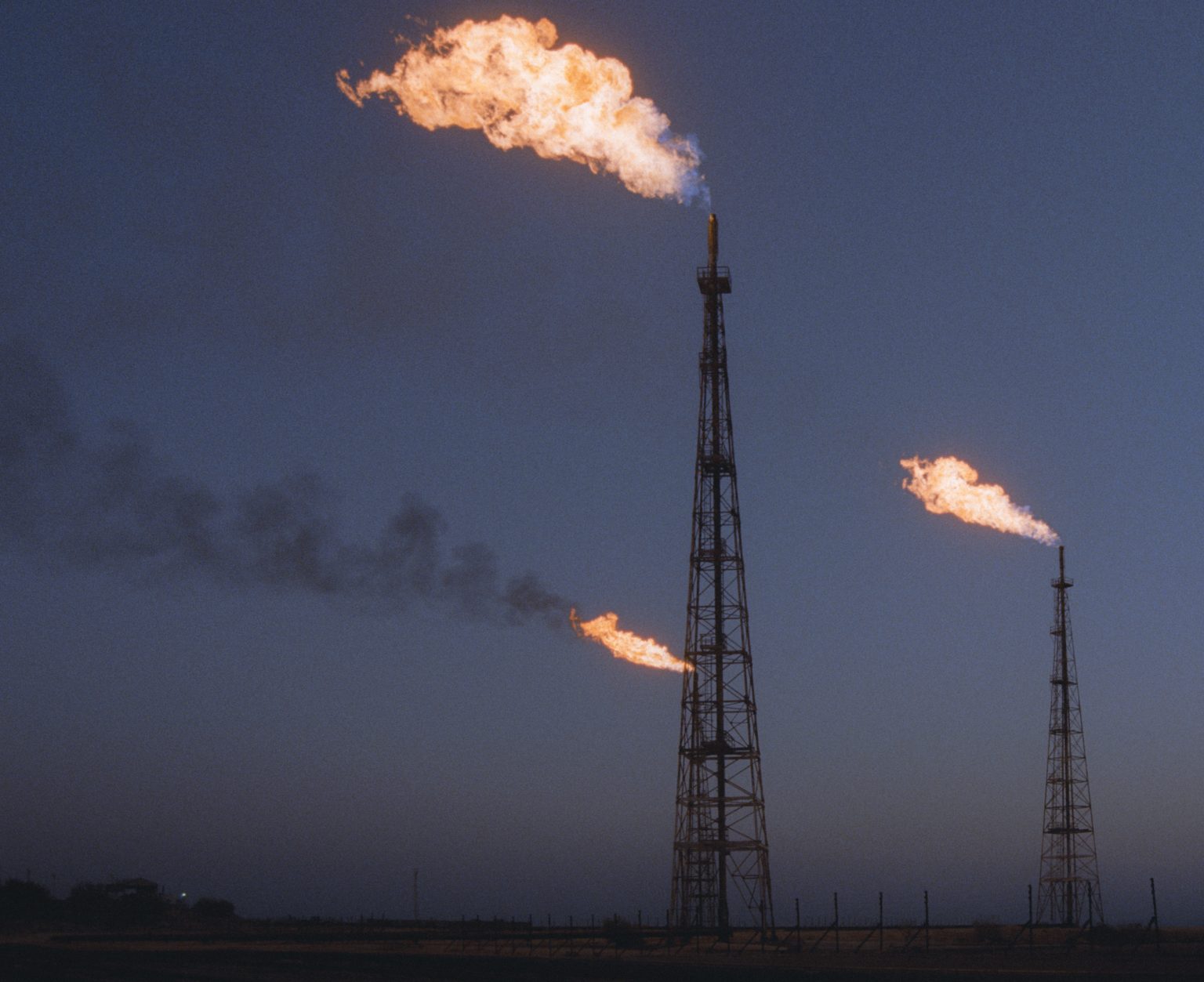
The war in Iran is not only being fought in the airspace above Tehran, but also on the financial markets. Iran’s strategy appears to be based on the assumption that the greater the damage to the global economy, the stronger the pressure will be on the United States and Israel to halt their military operation.
The complexity of the situation lies in the fact that it is not only about oil, but also about many other commodities and the wider economic consequences. It is already clear that the wealthy Arab states could suffer significant losses in the real estate sector or from a decline in tourism. Tourism had been expected to serve as an economic substitute in the future, at a time when the world is becoming less dependent on oil because of the transition to electromobility.
Little now remains of these plans. The petro-monarchies do not rely solely on oil revenues but also on income from investments. They may now have to draw heavily on their reserves to cover the losses incurred. This could lead to large blocks of shares appearing on the market that would need to be sold quickly. And that is just one of many risks facing the global economy.
A tense end to the week
Unlike their European and Asian counterparts, US markets appear to be taking the current developments relatively calmly. This is understandable. The United States does not have to worry about shortages of oil or natural gas. On the contrary, it exports these energy resources.
Thanks to the dominance of technology companies, US stock markets are also not particularly sensitive to oil prices. In this respect, the current situation has largely played into the hands of US markets.
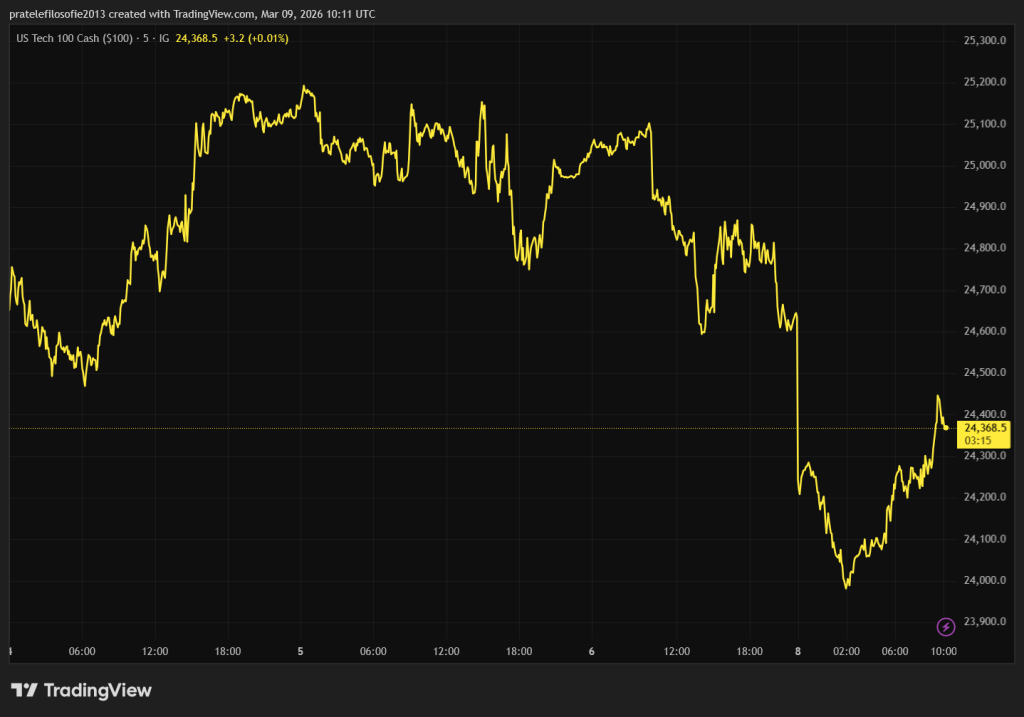
On Friday, panic appeared on the markets for the first time for several reasons. The first was that the White House began to say the operation could last four to six weeks instead of the originally announced four. Markets were also unsettled by the fact that a different military objective seemed to be announced almost every day.
One day it was the fall of the regime, the next the destruction of the Iranian military’s combat capability or the entire nuclear programme. This series of uncertainties pushed the price of oil above $90 a barrel for the first time at the end of the week.
Such a sharp rise in oil prices increases dissatisfaction among American consumers. There is a risk they will cut spending in other areas because of fears about high costs at petrol stations.
This could slow the US economy, which is largely driven by consumption. High energy prices are also strongly inflationary. As a result, it now appears almost certain that the two per cent inflation target will be postponed.
How the US central bank will respond to the situation remains a major unknown. At the same time, the monetary policy of the new Fed chair, who has not yet taken office, remains unclear. It is therefore unsurprising that this accumulation of uncertainty is weighing on the markets.
Moreover, if oil prices remain high over a longer period, the economy could face recession as well as inflation. Naturally, no one wants that.
The end of the week therefore served as a warning signal for US markets, indicating that if the war in Iran does not end soon, the global economy could take a very long time to recover.
The hidden threat of non-bank loans
The price of oil was not the only factor that unsettled US markets. Problems are also emerging in funds that specialise in providing non-bank loans to companies. Difficulties in this sector have been discussed for some time, but financial markets had been waiting to see how the situation would develop.
This emerging crisis could threaten the entire system. The problems attracted wider attention after Blue Owl shares fell and the company restricted client withdrawals from one of its funds. The situation was further complicated by the fact that one of its least liquid loans, worth $4 billion, had been provided to CoreWeave for the construction of a new data centre.
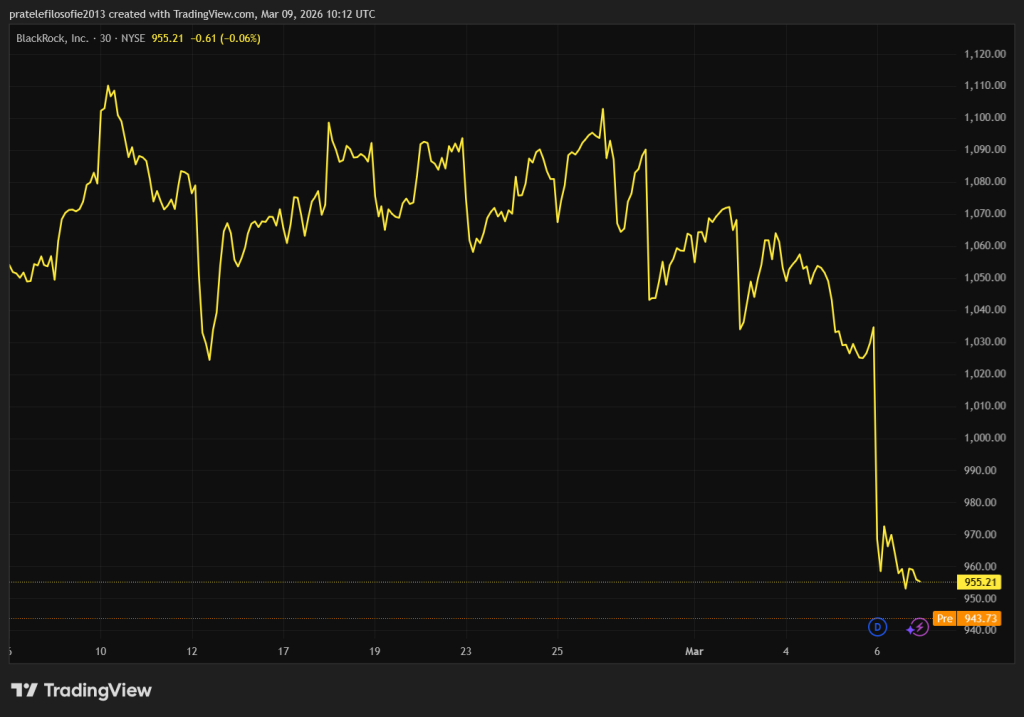
Although Blue Owl is not a small company, it is not among the best known. More prominent names have also faced problems in their private lending divisions, which significantly unsettled the markets. These included BlackRock and Blackstone.
The former faced withdrawal requests exceeding nine per cent for the HLEND fund, but firmly capped them at the standard five per cent for clients within this private debt fund. Few had expected such a move.
Blackstone, by contrast, raised the withdrawal limit from five to seven per cent for its BCRED fund, where requests reached almost eight per cent. Even so, this appears to be more a matter of crisis communication than proof that the fund is managed in a fundamentally different way from its competitors. The fall in the shares of these giants therefore came at a particularly inopportune time.
Oil prices anger Donald Trump
Over the weekend, Israel attacked Iranian oil storage facilities. The move could provoke retaliation, with Iran targeting not only Israeli reserves but also storage facilities in neighbouring countries.
Such a development would be a major shock for the oil market and could trigger a severe economic crisis. On Sunday evening, when Asian markets opened for the first time, the price of oil briefly jumped to $120 per barrel. Panic spread across the markets, hitting the Japanese stock exchange particularly hard.
Such a rapid and uncontrolled rise in oil prices would be a problem for everyone. Donald Trump reacted strongly to the issue on social media. He said high oil prices were temporary and claimed they would fall again as soon as the Iranian threat was removed. Anyone who thinks otherwise is, in his view, ‘crazy’.
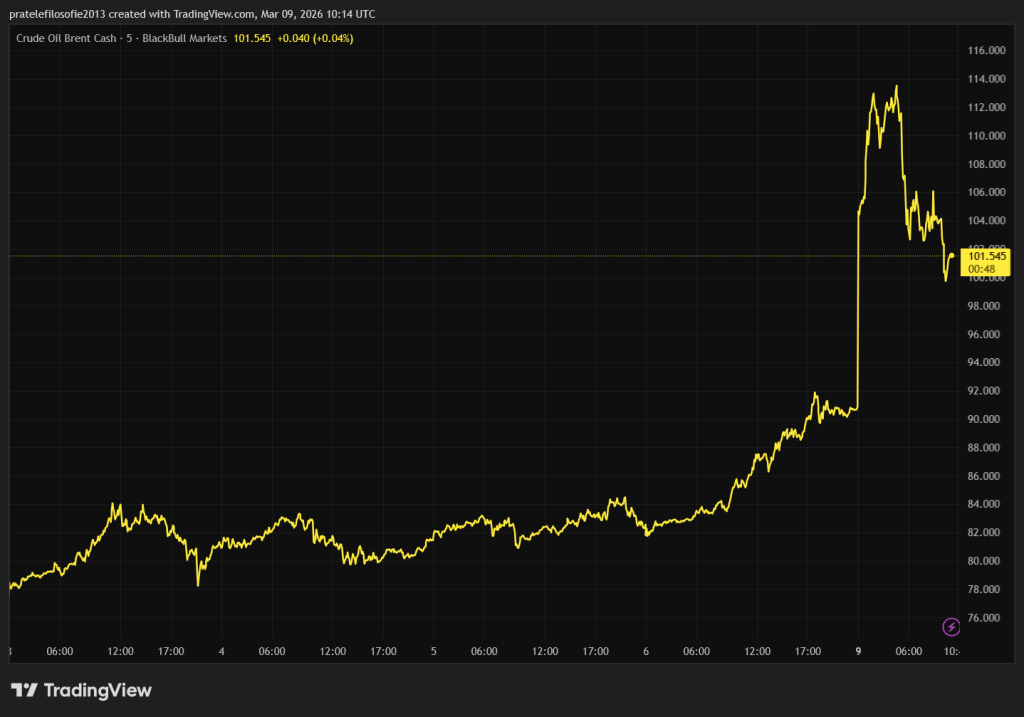
It did not stop at words. On Monday morning the Financial Times reported that the G7 countries would discuss releasing strategic reserves to prevent a rapid rise in oil prices. The volume could reach up to 400 million barrels. The effect of the announcement was immediate, with the rise in oil prices stopping.
It then returned to $100 per barrel, which means it rose by ‘only’ 10 per cent compared with Friday’s level. Yet this measure is effective only in the short term. If the conflict drags on or if Iran begins to systematically attack oil facilities, the price of oil could continue to rise.
Let us end on a more positive note. Investors are currently counting on Trump declaring, if he finds himself in a real dead end and economic pressure mounts, as is his custom, that a deal is close and that it will be the best deal in US history. According to some market participants, this turning point may be approaching quickly. We can only hope these investors are not mistaken.