For decades, Germany’s industrial sector was regarded as the unshakeable foundation of the European economy. That model is now beginning to crumble. Volkswagen’s sharp profit decline reveals how deep the structural problems have become.
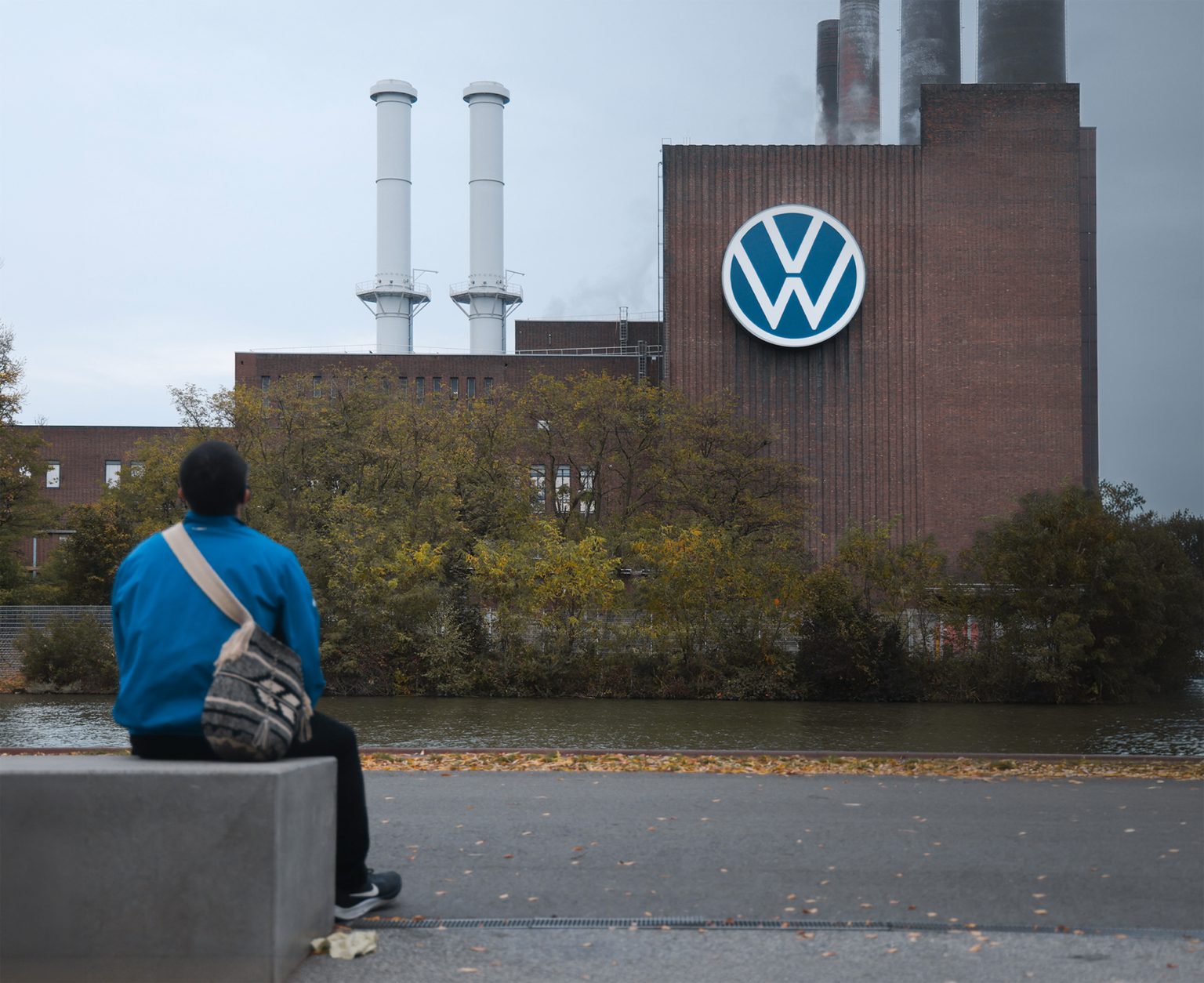
Volkswagen factory in Wolfsburg, Germany. Photo: Sean Gallup / Getty Images
|
The Volkswagen Group has reported a dramatic decline in profits. Operating profit halved in 2025 to €8.9 billion, while the operating margin fell to just 2.8 per cent – a level last seen during the diesel emissions crisis. Yet the problems facing Europe’s largest carmaker go far beyond an internal corporate setback. They reflect the structural condition of German industry as a whole: high energy costs, geopolitical risks, a difficult transition to electric mobility and weakening global demand. In that sense, Volkswagen has become a kind of seismograph for the economic health of an industrial nation whose business model was long regarded as almost unassailable.
The focus on Wolfsburg therefore goes far beyond a story about a balance sheet. The company’s difficulties illustrate the growing pressure on the industrial heart of the German economy. What once appeared to be a temporary cyclical downturn increasingly looks like a structural shift.
Volkswagen: From Profit Engine to Crisis Indicator
With revenue of €322 billion, the Volkswagen Group’s sales in 2025 remained broadly in line with the previous year. Yet that stability itself conveys the real message of the results: despite steady revenues, profitability has collapsed. The operating margin fell to 2.8 per cent. Put differently, a vehicle worth €40,000 now yields an operating profit of just €1,120. For an industrial group of Volkswagen’s scale, that represents a dangerously thin margin.
A glance at the past underlines the change. In stronger economic periods, margins were significantly higher. Premium manufacturers such as BMW and Mercedes regularly achieve operating returns of between eight and ten per cent. Volkswagen itself long remained well above the level now reported. That the company has fallen back to figures last seen during the diesel crisis is therefore a clear warning signal.
The reasons are numerous and reflect the wider challenges facing the industry. The shift to electric mobility is placing a heavy burden on cost structures. Electric vehicles remain considerably more expensive to produce than cars powered by combustion engines. At the same time, the sale prices of many models are not high enough to offset those additional costs fully. The result for manufacturers is rising investment combined with declining profitability.
Geopolitical risks add further pressure. New US import tariffs have cost Volkswagen around €3 billion, according to the company. For a globally integrated group, trade conflicts have therefore ceased to be an abstract risk and have become a direct burden on the balance sheet.
Developments in China are particularly problematic. For many years the market served as the main growth engine of Germany’s car industry. Local manufacturers are now rapidly gaining market share, particularly in the electric vehicle segment. International brands are coming under growing pressure.
Porsche, Audi and the Costly Restructuring of the Group
The crisis is particularly visible at the subsidiary Porsche. Operating profit at the sports car manufacturer collapsed from €5.3 billion to just €90 million. The main reason lies in billions of euros in write-downs after the company was forced to revise its electric strategy. Volkswagen is therefore losing a crucial source of profitability precisely in its most lucrative brand.
At the same time, the group is investing vast sums in its strategic transformation. Restructuring programmes at the core Volkswagen brand, at Audi and at the software subsidiary Cariad are consuming billions. Those programmes alone amount to more than €1 billion.
Behind them lies a fundamental reorganisation of the entire company. Volkswagen is attempting to redefine its technological foundations: greater software capability, new platforms for electric vehicles and more closely integrated digital systems. Yet that transformation is costly, complex and taking longer than originally planned.
The management team led by chief executive Oliver Blume and chief financial officer Arno Antlitz has therefore revised its long-term expectations downwards. For 2026 Volkswagen now expects an operating margin of between four and 5.5 per cent. By 2030 the figure is expected to rise to between eight and ten per cent. What is striking, however, is that those targets already fall below the company’s earlier forecasts.
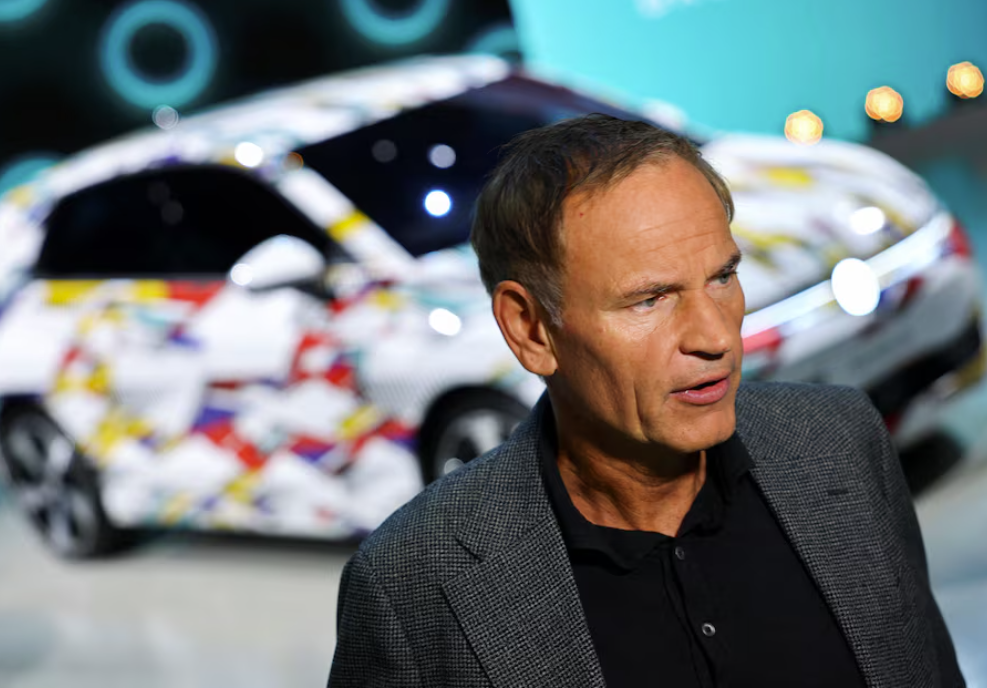
Volkswagen Group chief executive Oliver Blume speaks to journalists on the press and media day of the IAA motor show in Munich on 8 September 2025. Photo: Kai Pfaffenbach/Reuters
Unexpectedly Strong Cash Flow – But How Sustainable Is It?
One figure in the latest results has nevertheless attracted particular attention: Volkswagen reported net cash flow of €6.4 billion in its automotive division. That figure is well above expectations. At the beginning of the year management had assumed that the value would be roughly around the break-even level.
For investors, the figure is of central importance. Cash flow determines a company’s creditworthiness, influences financing costs and forms the basis for dividend payments. In a period of heavy investment, a strong liquidity position is therefore particularly important.
Many analysts, however, remain sceptical. Pal Skirta, automotive analyst at Bankhaus Metzler, suspects that a large part of the inflow stems from changes in working capital – temporary effects linked to inventories or shifts in payment timing. If that assessment proves correct, the effect could reverse during the current year.
The unexpectedly strong cash flow is also creating tensions within the company. Labour representatives argue that the workforce should benefit more directly. At the same time, management is pursuing a strict programme of cost reductions. How the available funds will be distributed is therefore likely to become a central conflict within the group.
Volkswagen’s difficulties are by no means unique. Recent economic data show that German industry as a whole is coming under increasing strain. In January industrial orders fell by 11.1 per cent compared with the previous month. Economists had expected a decline of only 4.5 per cent. It marks the sharpest drop in two years.
Domestic demand declined particularly strongly, falling by 16.2 per cent. Yet orders from abroad also weakened. Demand from the eurozone fell by 7.3 per cent, while orders from other parts of the world declined by 7.1 per cent. Statistical effects linked to large individual contracts play a role. Even so, the development illustrates how sensitive industrial production has become to economic fluctuations. Uncertainty is now emerging even in sectors that traditionally enjoyed stable demand.
At the same time, industry is losing jobs. More than 120,000 positions disappeared in the sector last year alone. The very part of the economy that served for decades as the backbone of German prosperity is therefore shrinking.
Energy Prices and Geopolitical Risks
Geopolitical developments are adding further pressure. The war in the Middle East has pushed the oil price above the $100-per-barrel mark for the first time in several years. Gas prices have also risen significantly. For an energy-intensive economy such as Germany’s, that represents a substantial risk.
Rising energy costs increase production expenses and weaken industrial competitiveness. Many companies are responding by postponing investment or relocating production. Energy-intensive sectors such as chemicals and metal processing in particular face difficult strategic decisions.
Economists therefore warn that the already fragile economic recovery could stall again. Sebastian Dullien, director of the Institute for Macroeconomics and Economic Research (IMK), sees developments in the Middle East and energy prices as decisive factors for the economic outlook in the coming months.
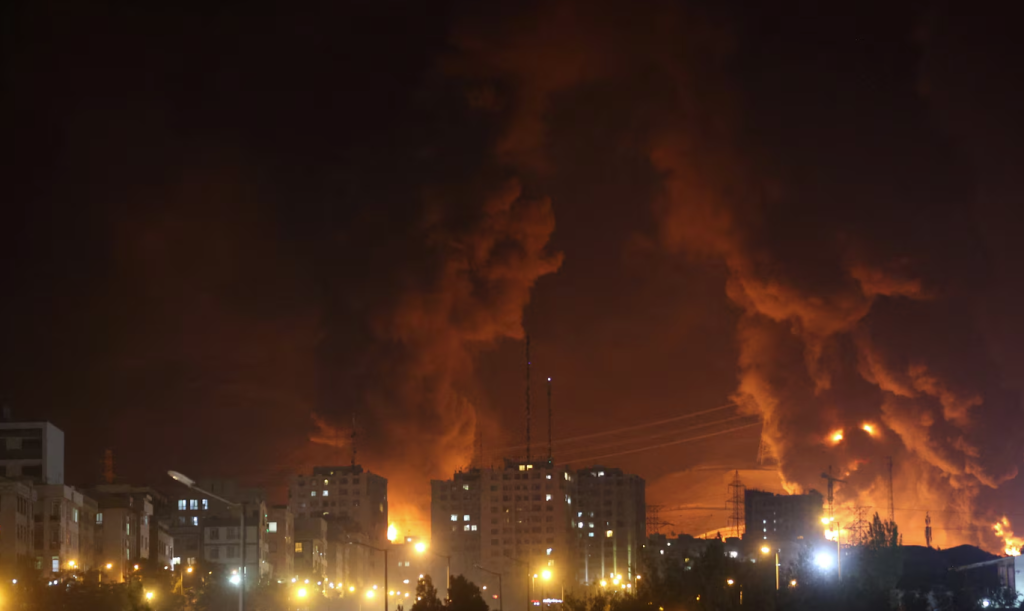
Flames rise from the Sharan oil depot in Tehran after Israeli strikes on Iran. Photo: Majid Asgaripour/WANA/Reuters
The Structural Transformation of an Industrial Nation
Volkswagen’s crisis ultimately points to a deeper problem. Germany’s economy is undergoing a historic structural transformation. For decades the country’s prosperity rested on a clear model: industrial production, export strength and technological leadership in mechanical engineering and the automotive industry.
That model is now under growing strain. New competitors from China are pushing into global markets. Trade conflicts are reshaping supply chains and investment decisions. At the same time, the political and technological shift towards electric mobility is forcing entire industries to reinvent themselves.
The transformation is costing billions and is taking place at a moment when economic conditions are more difficult than they have been for many years. Volkswagen therefore represents more than a corporate crisis. The group has become a barometer of the health of Europe’s largest economy. If even the industrial core of Germany is visibly losing strength, a fundamental question arises: how resilient is the country’s economic model – and how long can it maintain its role as Europe’s industrial engine?