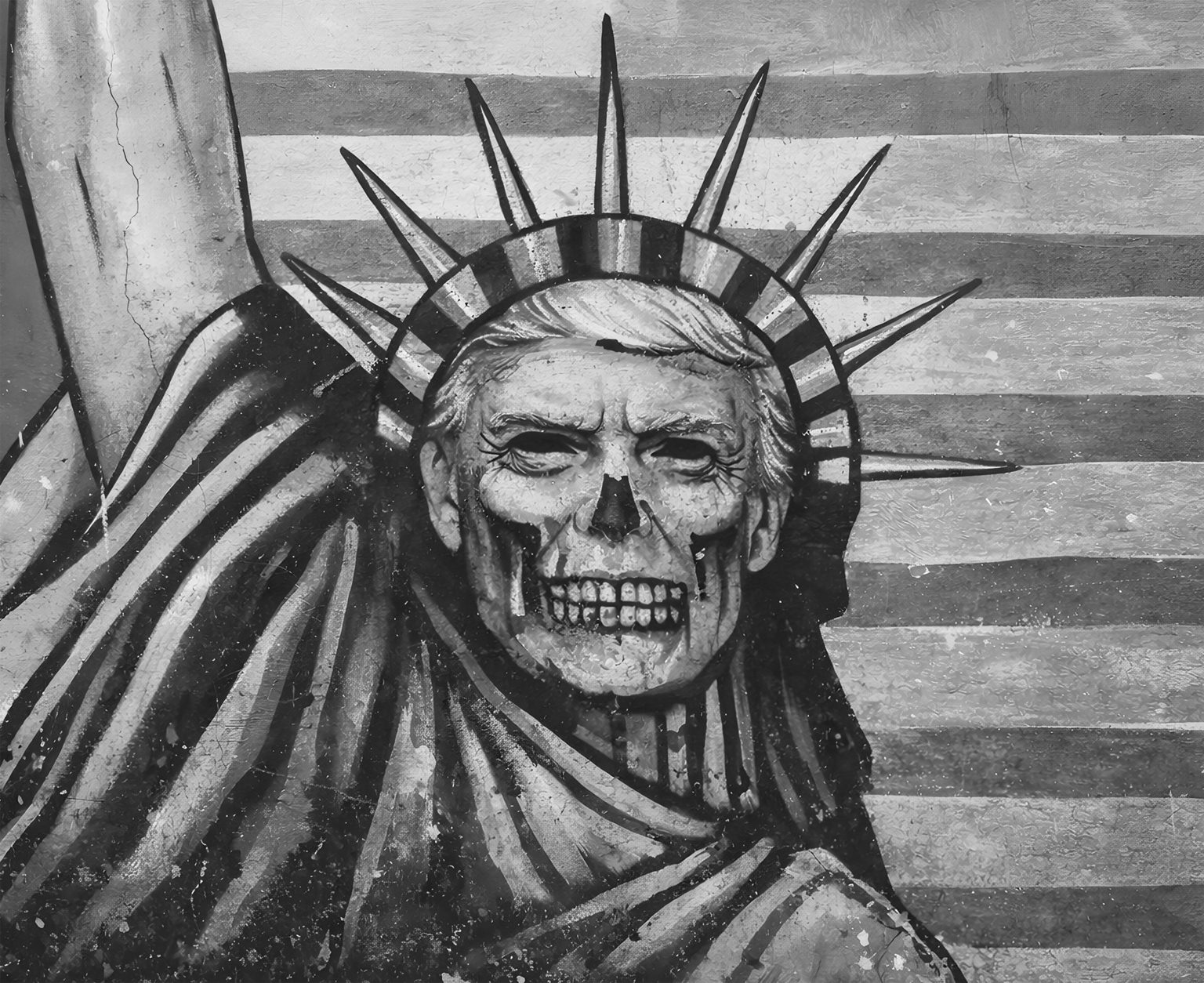
The illustrative photo was edited using artificial intelligence. Photo: Majid Saeedi/Getty Images/AI
Iran's 47-year war against the West
Wars do not start overnight. The US strike on Iran is the culmination of decades of escalating tensions and will probably deepen instability rather than resolve it.
The invasion of Ukraine in February 2022 and today’s debates about a possible war with Iran have one thing in common. Both were long anticipated and at the same time widely considered unlikely. Politicians, analysts and the public knew that the possibility of an attack existed, yet the prevailing belief was that it would not ultimately happen.
Still, when an invasion does occur, there is a strong temptation to see it as a turning point, a dividing line that separates history into ‘before’ and ‘after’. In reality, it is almost always the opposite.
Wars do not start in a single day. They are the culmination of a long chain of decisions, strategic calculations and geopolitical shifts. Wars rarely begin as a surprise. Yet much of the world later claims it did not see them coming.
In this sense there is no point zero for an invasion. What appears to be a sudden outbreak of violence is in fact the final link in a process that often began many years earlier. In the case of Iran, that process stretches back decades.
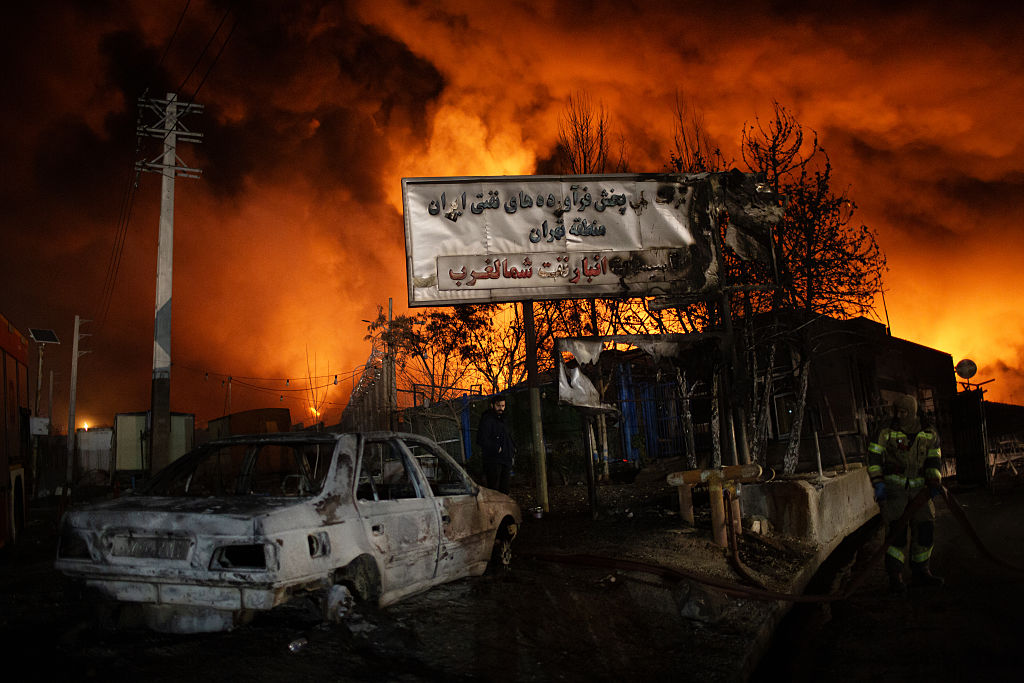
Fire breaks out at the Shahran oil depot after US and Israeli attacks, leaving numerous fuel tankers and vehicles in the area unusable in Tehran, Iran on March 8, 2026. Photo by Hassan Ghaedi/Anadolu via Getty Images
The long road to boiling point
The roots of the current conflict do not lie in the past few weeks but almost half a century ago. After the Islamic revolution in 1979 and the storming of the US embassy in Tehran, Washington made no secret of its efforts to isolate or overthrow the theocratic and strongly anti-American Iranian regime.
During the 1980s the United States pragmatically armed and supported the Iraqi leader Saddam Hussein in a devastating war against Iran, intending to exhaust the young Islamic republic.
That this prominent client of Washington became the target of an American invasion two decades later, ending his life on the executioner’s scaffold in Baghdad, is a reminder of the kind of American ‘friendship’ from which today’s allies in the region, especially the Kurds, might draw a lesson.
Since the late 1980s this effort has been accompanied by persistent pressure from Israel. Tel Aviv initially argued that Iran was supporting international terrorism. Over time the focus shifted to a threat that could fundamentally reshape the Middle East: Iran’s nuclear programme.
These Israeli and American concerns did not arise in a vacuum. They reflected Tehran’s real asymmetric strategy. Fully aware of its conventional military weakness and international isolation, Iran has spent decades building what it calls the ‘Axis of Resistance’. This network of proxy militias and armed groups stretches from Lebanon’s Hezbollah to Hamas in Gaza, armed factions in Iraq and the Houthis in Yemen. It has been an expensive strategy.
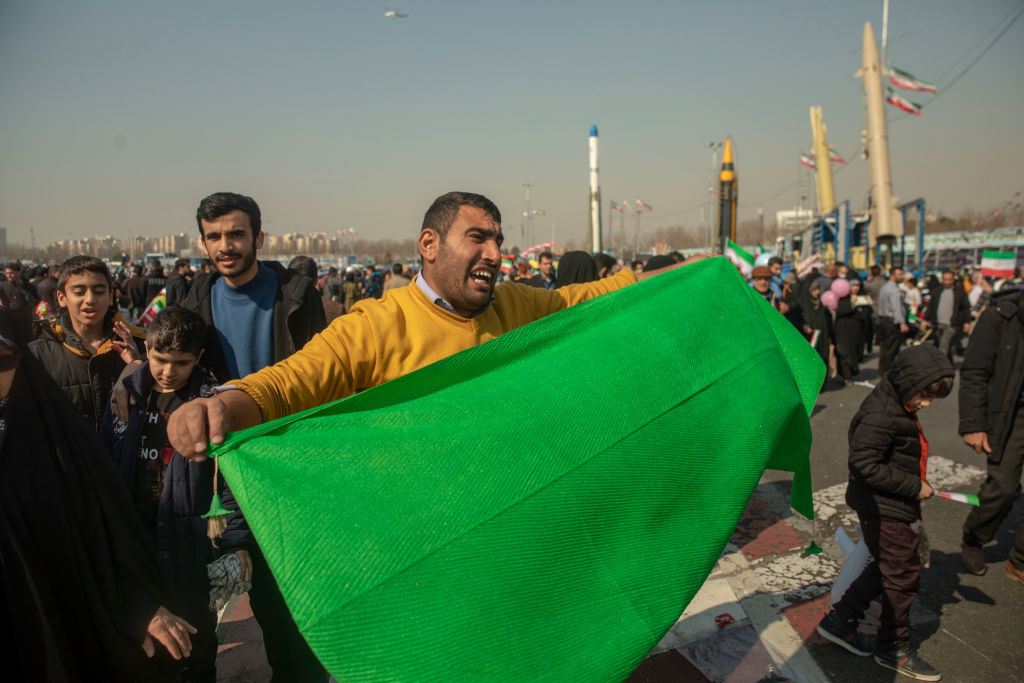
Iranians attend the annual rally commemorating the 1979 Islamic Revolution at the Azadi on February 11, 2024 in Tehran, Iran. Photo by Majid Saeedi/Getty Images
According to estimates by the US State Department in 2020, Iran sent approximately $700 million a year to Hezbollah alone. Annual support for Palestinian groups, including Hamas and Islamic Jihad, amounted to another $100 million.
Through massive funding and arms supplies, Tehran created a forward defence network that projected its influence far beyond its borders. At the same time it undermined its own internal stability.
For Iranian citizens, already hit hard by economic sanctions, the opaque and often corrupt transfer of vast sums to foreign militias became a major source of frustration.
The diversion of state resources to these proxy wars was one of the motives that repeatedly drove demonstrators onto the streets in recent years. For the leadership in Tehran this strategy was a pragmatic tool designed to keep conflict away from Iranian territory. For Israel and for Sunni powers in the Middle East it represented a permanent structural security threat.
In Israeli strategic thinking this threat justified the idea of striking directly at what officials sometimes describe as the ‘head of the octopus’.
Nevertheless, an unwritten rule of restraint prevailed for decades. US presidents before Donald Trump, from George H W Bush to Barack Obama to Joe Biden, resisted repeated calls for direct military confrontation.
The reason was not sympathy for the Iranian regime but pragmatic calculation and close attention to the assessments of intelligence and military leaders.
Both the Pentagon and the CIA understood that Iran is not Iraq and that an invasion could unleash regional chaos. The intelligence services themselves played an important role in shaping this caution. Early assessments in the mid-2000s suggested that Tehran was actively seeking nuclear weapons. However, a landmark report by the National Intelligence Estimate in December 2007 entitled Iran: Nuclear Intentions and Capabilities revised that judgement.
The report concluded with high confidence that Iran had halted its secret programme to develop a nuclear weapon in the autumn of 2003. This conclusion, which was reaffirmed internally in later assessments, provided successive administrations with an argument against preventive military action.
There was also another pragmatic reason to avoid a devastating invasion of Iran. The Middle East has long been a geopolitical powder keg. Its relative stability has depended on a delicate balance of power.
If one actor were to gain overwhelming dominance in this regional system, it would inevitably use that position to pursue its maximum objectives. A dramatic weakening of Iran would significantly strengthen Israel’s regional position.
In such a geopolitical vacuum, maximalist territorial visions that occasionally surface in parts of the Israeli political landscape could gain renewed momentum. At the end of February this idea received public support from Donald Trump’s ambassador to Israel, Mike Huckabee.
He expressed support for the concept of a ‘Greater Israel’ extending across biblical borders from the Nile to the Euphrates. ‘It would be okay if Israel took it all,’ he said. For Washington’s Arab partners such rhetoric raises questions about what the region might look like without Iran as a counterweight.
Keeping Iran contained, combined with occasional attempts to ease sanctions, therefore provided earlier US administrations with a strategic escape route. It allowed Washington to respond cautiously to Israeli calls for war.
Openly rejecting Israel or publicly questioning the close alliance between Washington and Tel Aviv would have carried serious domestic political risks for any US president.
Donald Trump’s arrival in the White House disrupted this status quo. He openly aligned himself with Israel. During his first term he made a historic decision to move the US embassy from Tel Aviv to Jerusalem.
A major turning point in relations between Washington and Tehran came in 2018 when Trump withdrew unilaterally from the international nuclear agreement known as the JCPOA.
Trump accused Iran of deceiving the international community about its nuclear programme. He argued that even after signing the agreement the country continued developing ballistic missiles capable of carrying nuclear warheads. ‘We have definitive proof that Iran’s promise was a lie,’ he said.
This decision triggered a spiral of tensions that culminated in January 2020 with a US drone strike that killed the influential Iranian commander Qasem Soleimani.
During his second term Trump launched Operation Epic Fury. The president, who had long criticised America’s ‘endless wars’ and hoped to win the Nobel Peace Prize, thus found himself in the paradoxical position of another US leader who, rather than ending conflicts, opened a new one
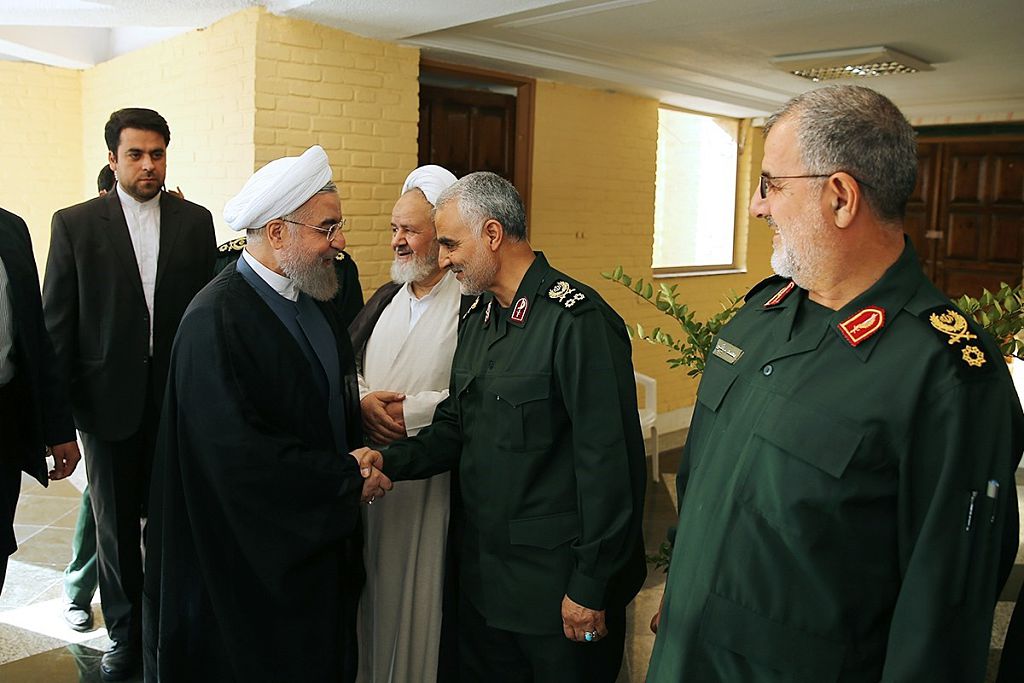
Iranian President Hassan Rouhani (L-2) shakes hands with Iranian Quds Force commander Qassem Soleimani (R-2) as Revolutionary Guards' ground forces commander Mohammad Pakpour (R) looks on during the 21st Nationwide Assembly of the Islamic Revolution Guards Corps (IRGC) Commanders in Tehran, Iran on September 15, 2015. Photo by Pool/Iranian Presidency Press Office/Anadolu Agency/Getty Images
Time and again, American interventions follow a similar pattern. An initial display of overwhelming force produces a dramatic opening, yet the deeper weakness soon becomes apparent: there is rarely a credible plan for the long-term political stabilisation of the country involved. The result is a chain of contradictions and strategic miscalculations.
The justification for the current strike on Iran illustrates this dilemma. Washington has revived the argument that Tehran’s potential nuclear weapons programme represents the central reason for military action. Yet Iran’s Supreme Leader, Ayatollah Ali Khamenei, has previously issued a religious ruling prohibiting the development and use of nuclear weapons as incompatible with Islam. Western intelligence agencies and earlier US administrations often cited this ruling when assessing Iran’s intentions, even though experts still dispute both its existence and its binding force.
Whether a future Iranian leadership would feel constrained by such a principle in an existential struggle for survival remains uncertain. What is clear, however, is the paradox at the heart of the current strategy: an attempt to eliminate Iran’s nuclear threat through military force could ultimately be the very step that brings that threat into existence.
Here is placeholder for Article excerpt Here is placeholder for Article excerpt Here is placeholder for Article excerpt Here is placeholder for Article excerpt
Here is placeholder for Article excerpt Here is placeholder for Article excerpt Here is placeholder for Article excerpt Here is placeholder for Article excerpt
Here is placeholder for Article excerpt Here is placeholder for Article excerpt Here is placeholder for Article excerpt Here is placeholder for Article excerpt
Welcome to the comments section of the Štandard daily. Please take note of our guidelines, comments are moderated by us. You can contact the moderators at [email protected].
Participate in the discussion
Comments are available to subscribers only. If you'd like to join the discussion, choose a subscription starting at €6.72 per month.
All comments 0
Register
Comments are available to registered users only. If you'd like to join the discussion, register here.