The collapse of Yugoslavia and the NATO bombing of Serbia
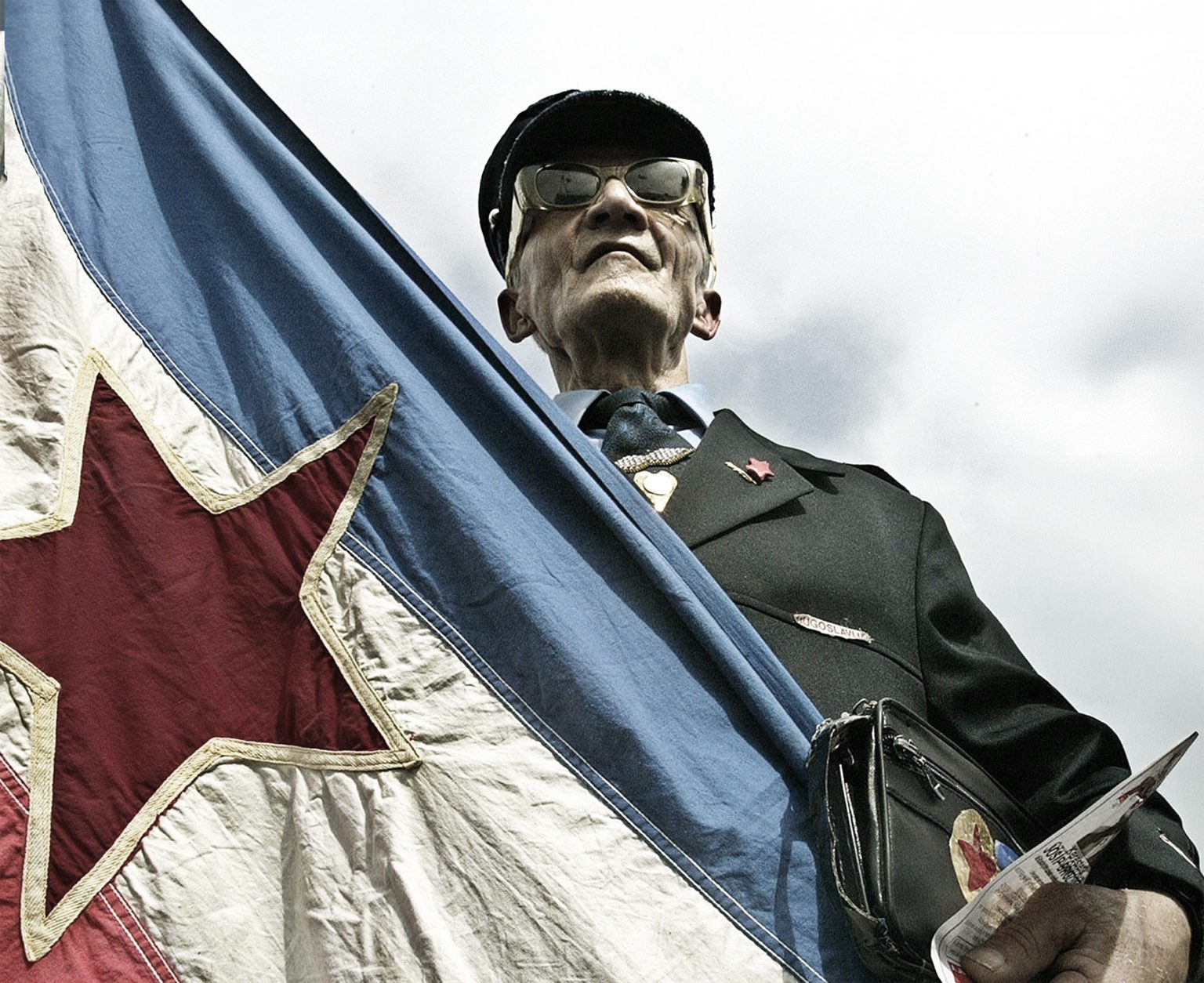
Even decades later, many Serbs still see the Kosovo saga as a historic injustice. The collapse of Yugoslavia, the NATO bombing of Serbia and the unresolved status of Kosovo continue to shape how the wars of the 1990s are remembered in the country.
In December 1990, almost 90 per cent of eligible voters in a Slovenian referendum voted for independence, that is, for separation from the Socialist Federal Republic of Yugoslavia (SFRY). In May of the following year, Croatia repeated the referendum result, and both countries declared independence on 25 June 1991. Despite the weakening power of the Communist Party and the demonstrations in Belgrade in March 1991, the regime was determined to keep the republics under Belgrade’s control by force.
Unlike administrative borders, Yugoslavia had no clear ethnic boundaries. The problem became most evident during the war in Bosnia, where Catholic Croats, Muslim Bosniaks and Orthodox Serbs fought one another, with the latter enjoying the support of the Yugoslav People’s Army. What is often referred to as the civil war in Yugoslavia was seen by Slovenians, Croats and Bosnians as a war for national liberation and independence, fought with only limited support from NATO and the UN.
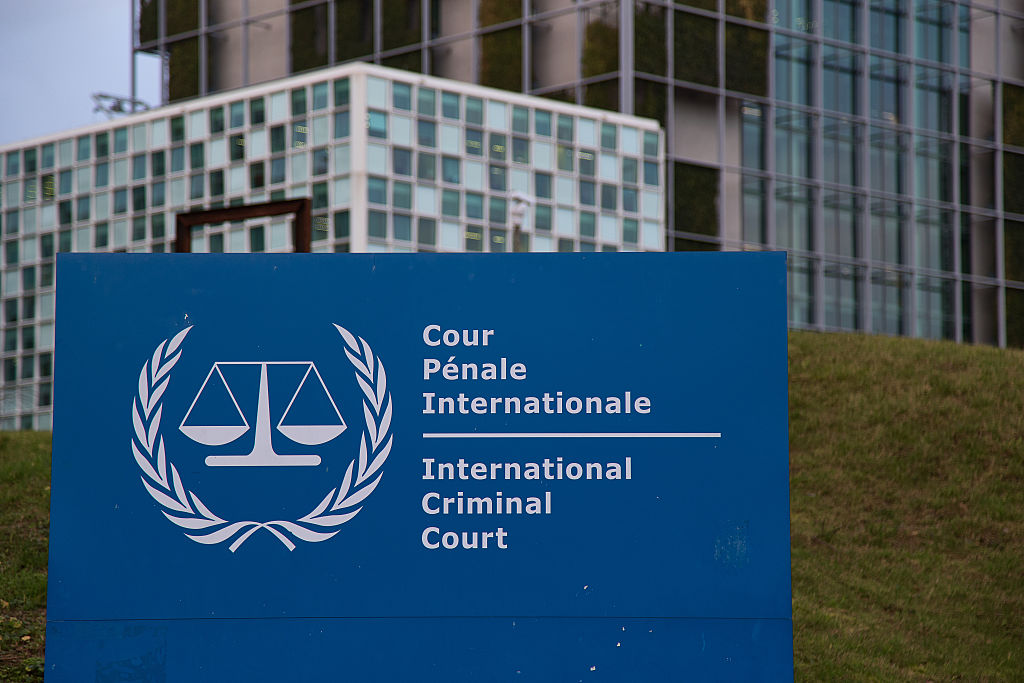
The exterior of the International Criminal Court (ICC). Photo by Pierre Crom/Getty Images
Testimony from The Hague
The Serbs regarded the war in the disintegrating Yugoslavia as a proxy conflict ‘planned and unleashed by the evil forces of the West’ or even as an invasion directed against ‘the SFRY to break it up, tear it apart and enslave and colonise Serbia’s ancestral lands’, as Bosnian Serb army commander General Ratko Mladić wrote to Statement from his prison cell in The Hague.
In the last Yugoslav census before the war, he described himself as a Yugoslav rather than a Serb, in the hope that many others would do the same and that civil war might be averted. Today, he and four other Bosnian Serbs are serving life sentences for war crimes against their non-Serb fellow citizens.
Along with them, the International Criminal Tribunal for the former Yugoslavia (ICTY) sentenced a further 89 people to shorter prison terms: 62 Serbs, 18 Croats, five Bosniaks, two Montenegrins, one Macedonian and one Albanian. Nationalist war fever also reached multi-ethnic regions such as Vojvodina, where minorities including Hungarians and Slovaks faced intimidation.
The land of thrushes
In April 1992, a month after Bosnia and Herzegovina declared independence, fighting began. The secession of Bosnia and Herzegovina led not only to war but also to the final collapse of the SFRY. In April 1992, the Federal Republic of Yugoslavia was formed, comprising only Serbia and Montenegro, a country ethnically and culturally very close to Serbia. While the Slovenian war of independence lasted only 10 days, the Croatian War of Independence (Domovinski rat) and the war in Bosnia and Herzegovina did not end until late 1995.
By that time, Yugoslavia had already been significantly weakened economically, partly as a result of internal turmoil and international sanctions. As early as 1996, the first armed clashes occurred between the Yugoslav police and the Kosovo Liberation Army (UÇK).
Kosovo, whose name in Serbian means ‘the land of thrushes’, had for centuries been inhabited by the descendants of Slavic tribes such as the Serbs and Bulgarians and of Illyrian tribes such as the Albanians. Relations between the two groups varied throughout history. Major upheavals came in the 20th century, when Serbs and Albanians were alternately disadvantaged in Kosovo.
High Albanian and low Serbian birth rates significantly weakened the Serbian presence in Kosovo even before the 1990s. In February 1998, attacks by the KLA on Yugoslav authorities led to the deployment of the army and Serbian paramilitary groups in Kosovo, triggering a war that soon drew international attention. As Serbian forces moved into Kosovo, the KLA was reinforced by a growing number of local Albanians.
The fighting on both sides claimed several hundred fallen fighters, more than 10,000 murdered civilians and hundreds of thousands of Serbian and Albanian civilians expelled from their homes during and after the war.
On 24 March 1999, the North Atlantic Alliance began bombing military and civilian targets in the country as part of Operation Allied Force. According to Human Rights Watch, the alliance’s air campaign killed between 489 and 528 civilians, the vast majority of them in Kosovo, though there were also casualties in Montenegro and Vojvodina. A third of the victims were killed in ‘attacks on targets in densely populated urban areas’.
In addition to cluster bombs, depleted uranium munitions were also used. The bombing, which caused severe damage to infrastructure, schools, hospitals and historic landmarks, ended on 10 June 1999, when then-president Slobodan Milošević agreed to withdraw his army from Kosovo. It was replaced by the Kosovo Force (KFOR).
On the day the war ended, a United Nations Security Council resolution established the United Nations Mission in Kosovo (UNMIK) as a civil administration for the devastated Serbian province. The mission continues to operate there today. In 2006, Amnesty International accused UNMIK of crimes against humanity and of failing to investigate known atrocities in its report ‘The UN in Kosovo: A Legacy of Impunity’.
According to the Amnesty International report, the UN also ignored or minimised victims’ complaints, failed to investigate hundreds of cases of abductions, disappearances and murders after 1999, did not adequately protect Serbs and tolerated rape and trafficking of women and girls, which increased during the presence of international forces.
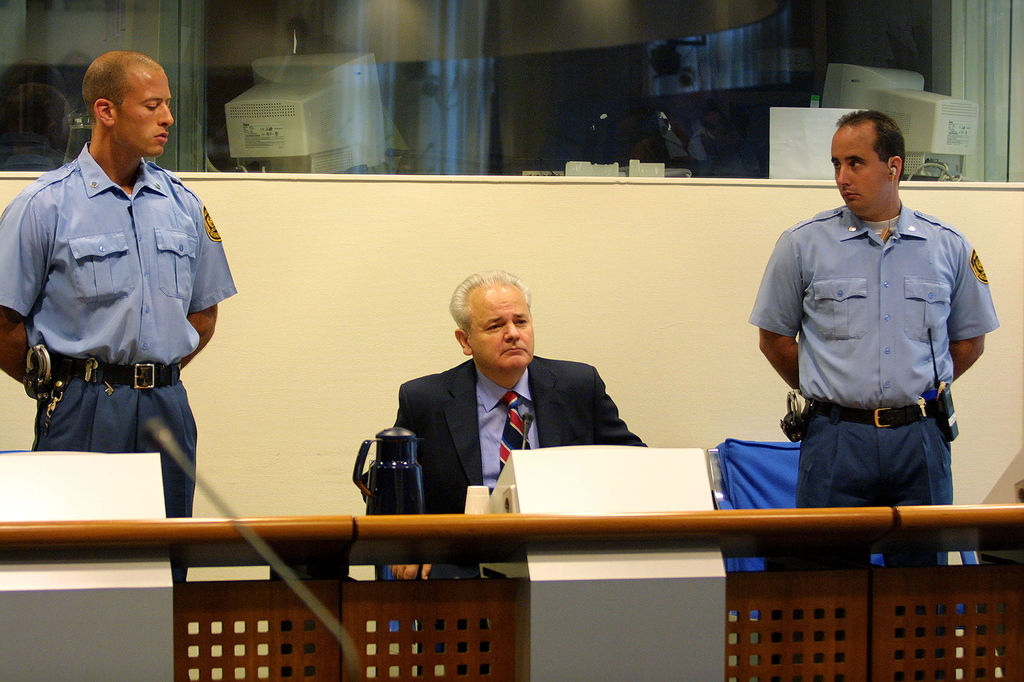
Former Yugoslav strongman Slobodan Milosevic appears for the second time before the Yugoslav war crimes tribunal August 30, 2001 in The Hague, the Netherlands. Photo by Michel Porro/Getty Images
Kosovo as a topic
In the autumn of 2000, Serbs overthrew Slobodan Milošević. Three years later the country was transformed into the State Union of Serbia and Montenegro, a short-lived arrangement that collapsed after a Montenegrin referendum three years later. In February 2008 the parliament in Pristina declared Kosovo’s independence – a step still rejected by many countries, including Serbia, Slovakia, Spain, Romania, Ukraine, the Vatican, Russia, Belarus and Brazil. Almost three decades after the NATO bombing, about half of Serbia’s citizens support joining the European Union, while only three to ten per cent favour NATO membership.
Radmilo Tomić, a Belgrade university student, says in an interview with Statement: ‘Although most citizens would describe Milošević’s policies as misguided and destructive, the NATO bombing remains in Serbia’s collective memory as a great injustice. It was a turning point that left a bitter taste even among the most ardent opponents of Milošević’s policies. The North Atlantic Alliance bombed Serbia, not its president. And even after almost 30 years, the feeling remains the same.’
The Democratic Party, led by Boris Tadić, did little to raise awareness of Serbian war crimes. At the same time, Western leaders and the media often failed to distinguish clearly between Milošević’s Serbia and democratic Serbia in the eyes of the Serbian public, instead treating all Serbs as a single collective and demonising them.
The Serbian Progressive Party (SNS), led by Aleksandar Vučić, exploited the situation skilfully. In speeches to the domestic audience, he presents Serbia as an eternal and innocent victim of foreign interests, while reassuring Western diplomats – whom he demonises at home – of Serbia’s European path.
‘Vučić is portrayed as a defender of Kosovo in the compliant media, including Informer, Srpski Telegraf, Blic, Večernje Novosti and even the once independent daily Politika,’ Tomić explains. ‘This is despite the fact that it was during the SNS government that Kosovo licence plates and passports allowing Kosovo citizens to travel freely were recognised and that Kosovo institutions assumed several additional powers. The pro-regime media either remain silent about the actual situation or present it in such a way that, although it may not be ideal, who knows what might have happened without Vučić.’
Even today, many Serbs view the entire Kosovo saga as a historical injustice. Support for NATO membership therefore remains low, as Serbian claims to Kosovo have never disappeared and the bombing of their country is still remembered as a humiliation. ‘At the same time, populist rhetoric denying Serbian crimes persists and is encouraged by both the government and the opposition,’ concludes Tomić.
However, the crimes of the Kosovo Liberation Army have also come under scrutiny. In 2020, the Kosovo Specialist Chambers indicted former Kosovo prime minister and president Hashim Thaçi, who had commanded the KLA in 1998 and 1999, along with three other members of the organisation, on charges of war crimes in Kosovo.
Among other things, the indictment accuses Thaçi of attempting to influence witnesses. Prosecutors are seeking a 45-year prison sentence for him and his former comrades-in-arms.
Here is placeholder for Article excerpt Here is placeholder for Article excerpt Here is placeholder for Article excerpt Here is placeholder for Article excerpt
Here is placeholder for Article excerpt Here is placeholder for Article excerpt Here is placeholder for Article excerpt Here is placeholder for Article excerpt
Here is placeholder for Article excerpt Here is placeholder for Article excerpt Here is placeholder for Article excerpt Here is placeholder for Article excerpt
Welcome to the comments section of the Štandard daily. Please take note of our guidelines, comments are moderated by us. You can contact the moderators at [email protected].
Participate in the discussion
Comments are available to subscribers only. If you'd like to join the discussion, choose a subscription starting at €6.72 per month.
All comments 0
Register
Comments are available to registered users only. If you'd like to join the discussion, register here.