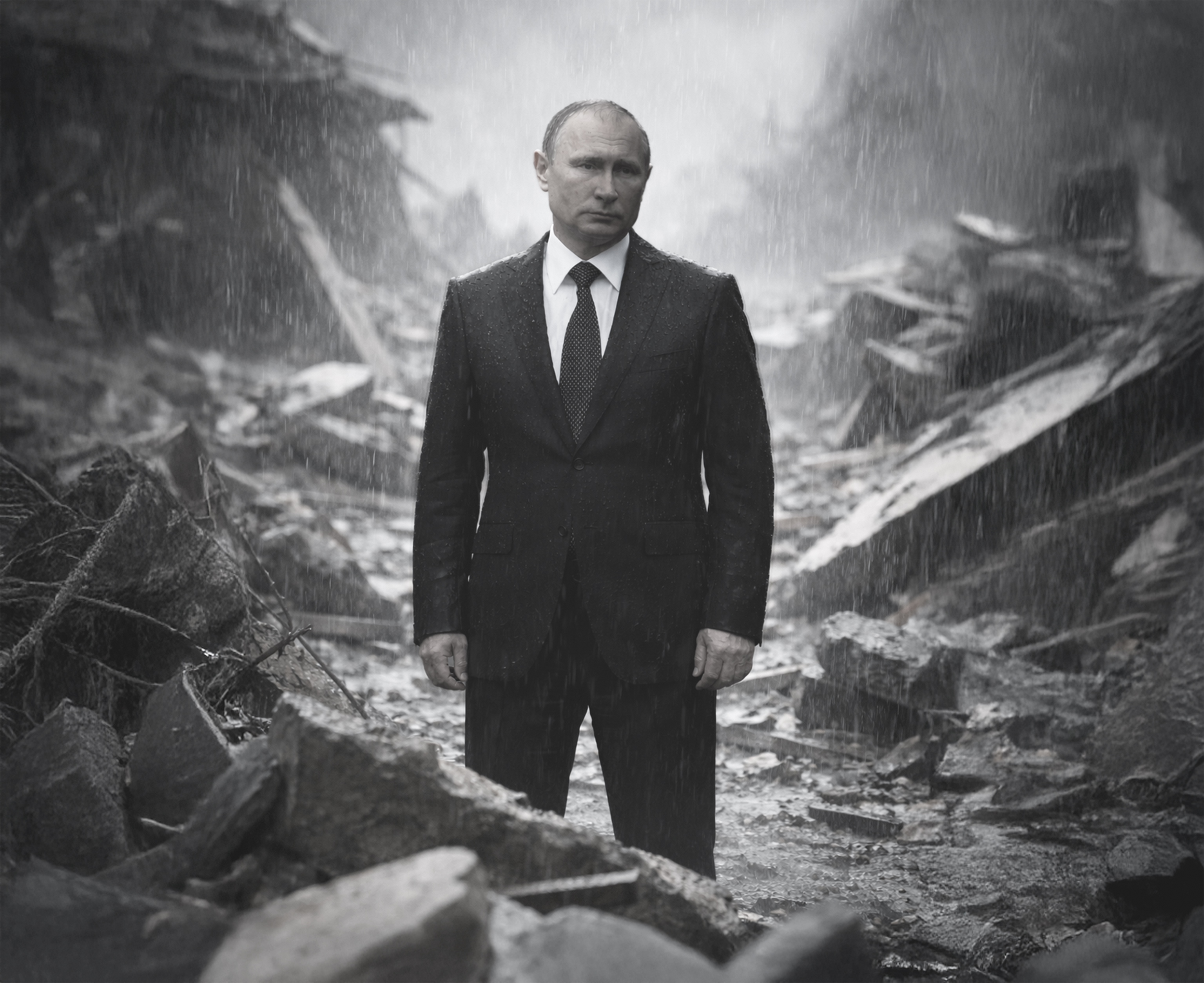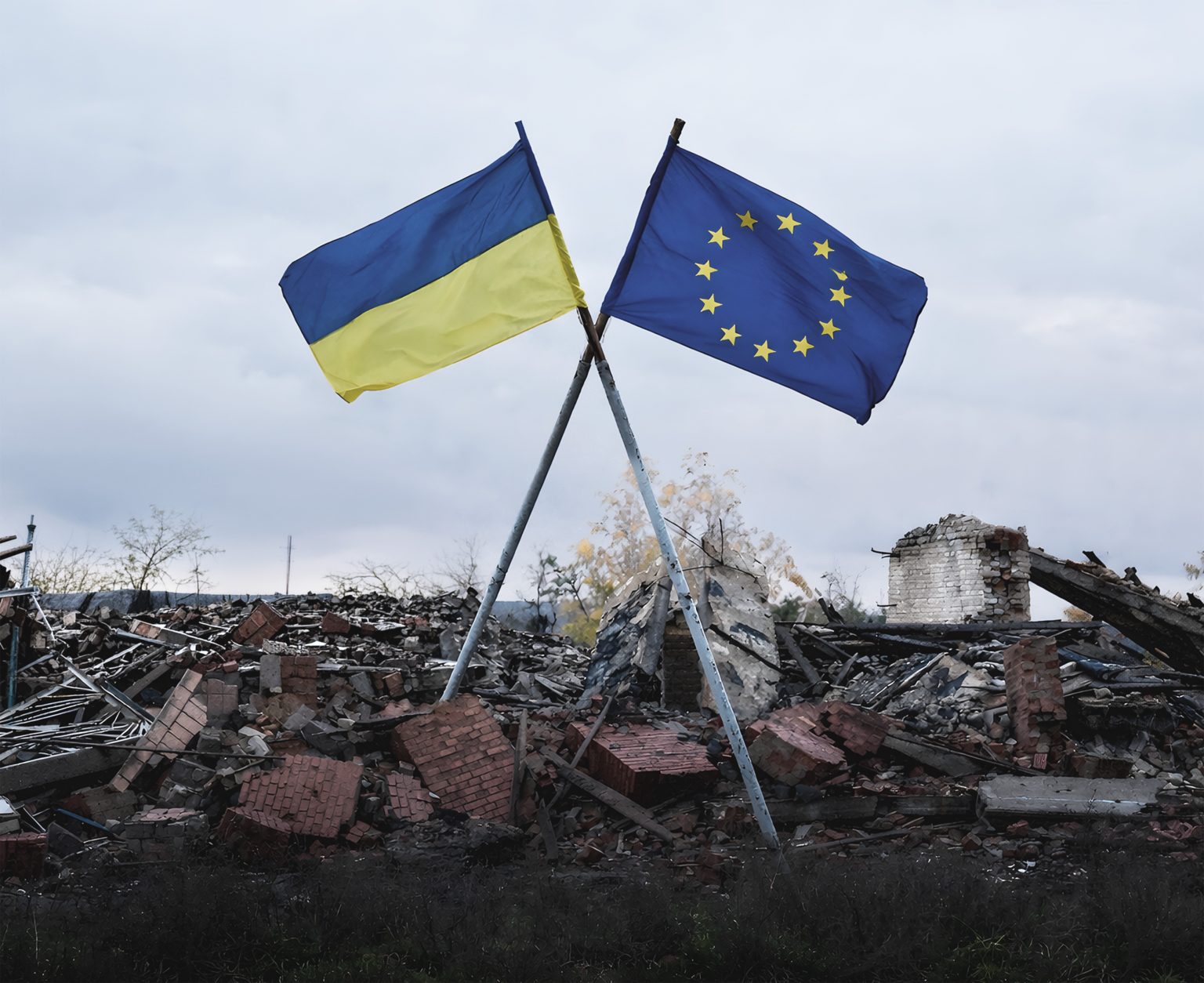
Wars have two beginnings: the official one, when an openly hostile incident occurs, and the unspoken one, which can stretch across decades of geopolitical context. Nor did the war in Ukraine begin on 24 February 2022, when Vladimir Putin ordered 190,000 men to carry out what the Kremlin calls a ‘special military operation’.
This was preceded by years during which, in the words of Professor John Mearsheimer, the United States ‘sought to make Ukraine a Western foothold on Russia’s borders’.
This strategy was launched at the NATO summit in Bucharest in April 2008, when the alliance announced that Ukraine and Georgia ‘would become (its) members’. Putin subsequently warned that ‘if Ukraine joins NATO, it will do so without Crimea and the eastern regions. It will simply fall apart’.
When, in February 2014, a US-backed uprising forced the pro-Russian Ukrainian president Viktor Yanukovych to flee the country, Russia seized Crimea from Ukraine and contributed to the outbreak of a civil war in the Donbas between pro-Russian separatists and the Ukrainian government.
This process gained new momentum during the Joe Biden administration. A commitment that Ukraine would become a member of the alliance reappeared in the communiqué from the NATO summit in Brussels on 14 June 2021. A few months later, on 10 November 2021, the United States and Ukraine signed a strategic partnership charter reaffirming Washington’s support for Kyiv’s future NATO membership.
Calls by Russian officials to prevent the alliance’s eastward expansion went unheeded.
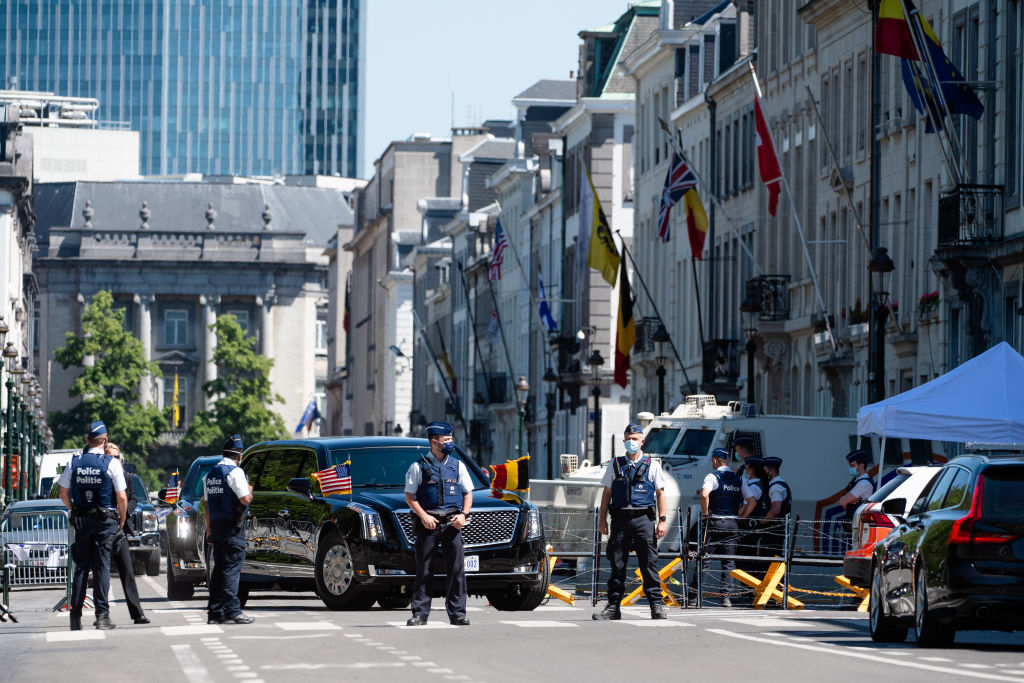
Europe supported the continuation of the war
Tensions between Moscow and the West gradually escalated until February 2022, when Russia launched a full-scale invasion.
However, as early as the spring of 2022, negotiations between Moscow and Kyiv were intended to lead to peace. According to media reports, this was prevented at the time by the then British Prime Minister Boris Johnson, who travelled to Kyiv to explain to local officials that Putin is a war criminal with whom one does not negotiate, and that there would be no agreement.
Incidentally, he was accompanied by investor Christopher Harborne, who holds stakes in arms companies, supplies drones and robotic systems to the Ukrainian army, and sent Johnson a million pounds after he left office.
The consequence of the West’s willingness to support continued fighting with the prospect of Russia’s defeat is today a war of attrition in which Ukraine, even with military support from its allies, is coming up short. Enemy forces control a fifth of its territory, and a return to the pre-2014 borders appears an increasingly unrealistic scenario.
This trend began to manifest fully after the United States withdrew its support for the war. First symbolically, as Ukraine’s membership was gradually omitted from the final statements of NATO summits. Later financially, when under Donald Trump’s leadership, it was concluded that Ukraine’s desired victory would not materialise and that supporting it was unprofitable, so the supply of free weapons stopped. The current war with Iran has also forced the United States to shift its attention to the Middle East.
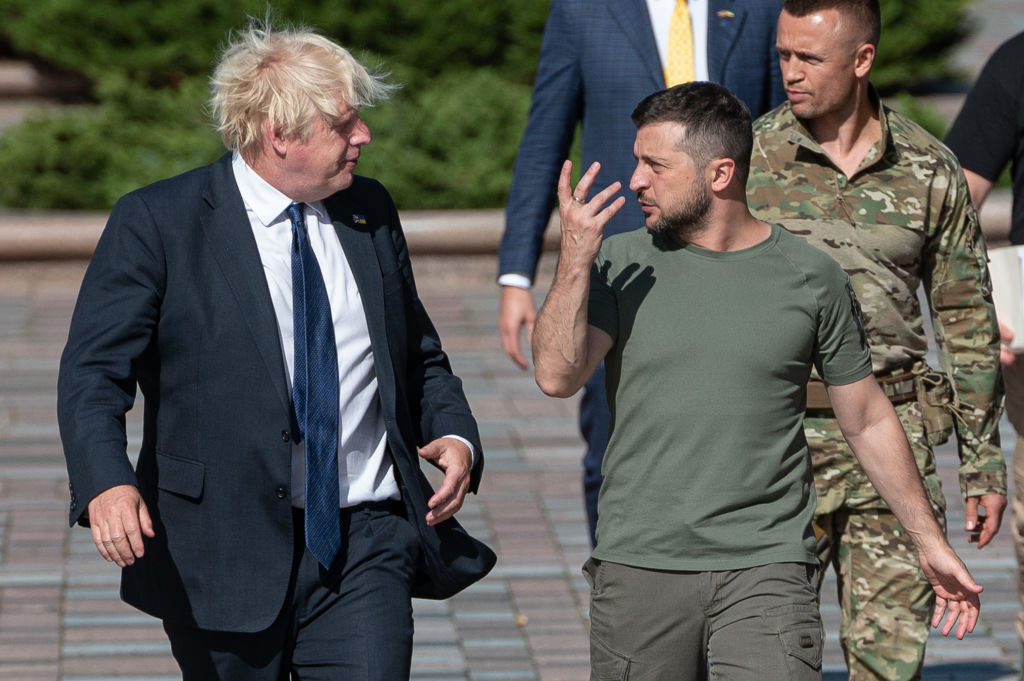
European states did the opposite and assumed greater commitments. Through the PURL initiative they pay the United States for military equipment, which Washington then supplies to Ukraine.
We have also seen the West’s dual strategy regarding Ukraine in recent months, when US president Donald Trump actively attempted to negotiate peace. He stated on several occasions that Ukraine was getting the short end of the stick and should cede a certain portion of its territory.
In contrast, Europe insists on the territorial integrity of the attacked state, which remains the biggest obstacle to an agreement. Matters went so far that politicians from the Old Continent were not invited to the negotiations and demanded parallel meetings instead. However, none have yielded results so far.
The difference in approach is gradually becoming apparent not only between the United States and Europe but also increasingly within the European Union itself.
A divided EU
Following the United States’ withdrawal, the Old Continent must cover Ukraine’s growing budgetary needs. European military aid rose last year by 67 per cent above the average for 2022 to 2024, while non-military aid increased by 59 per cent. However, this still does not fully compensate for the halted support from the United States.
Member states are gradually making clear that some forms of support already represent a red line. Belgium, Slovakia and Hungary, for example, vetoed the use of roughly 90 billion euros from frozen Russian assets to aid Ukraine.
Hungary is currently blocking a similar package – this time involving European funds – because of the non-functional Druzhba pipeline. Europeans are seeking a way to circumvent this veto and are urging Slovakia not to join this strategy.
President Volodymyr Zelenskyy’s reluctance to allow an inspection mission to the pipeline means that, in addition to NATO membership, Ukraine is also drifting away from EU integration. Slovak Prime Minister Robert Fico is toying with the idea of halting the bloc’s expansion because of the non-functional oil pipeline.
Hunger, debt and security threats
Cracks are appearing in the West’s strategy to integrate Ukraine into political and security blocs.
While Europe is pouring money into the embattled country and going into debt, Ukraine is misusing hundreds of millions of euros of those funds, according to findings by the anti-corruption agencies NABU and SAPO – ranging from scandals in the state energy sector to corruption schemes in the purchase of drones for the Ukrainian army.
The war’s impact on Ukraine and its allies is not merely economic. With shipping through the Black Sea blocked, the Visegrad Four countries face imports of cheaper Ukrainian agricultural products that are devastating local farmers.
That is, from the agricultural capacity that Ukraine still has left. It is in fact the most heavily mined country in the world. Following the destruction of the Kakhovka dam it lost Europe’s largest irrigation system, and fighting is taking place on roughly 40 per cent of its total agricultural land.
Carbon dioxide emissions from military activities, soil degradation, water pollution, fires and illegal deforestation are causing further major environmental damage in Ukraine. Recovery may take decades.
Equally serious consequences are affecting Ukrainian society, which is becoming a ‘land of widows and orphans’. Since the start of the war with Russia, Ukraine has lost roughly ten million people, and the birth rate has fallen below one child per woman. Young people under 35 now make up 56 per cent of refugees.
The longer the war lasts, the less they want to return. Even now, in a pessimistic scenario, only 23 per cent of refugees plan to return. This could significantly weaken the country’s future recovery and exacerbate the labour shortage.
Although peace would help Ukraine and the country should work towards it, the end of the fighting will not usher in much easier times. Rebuilding a nation with a weakened economy, demographics and infrastructure will be far from simple.