
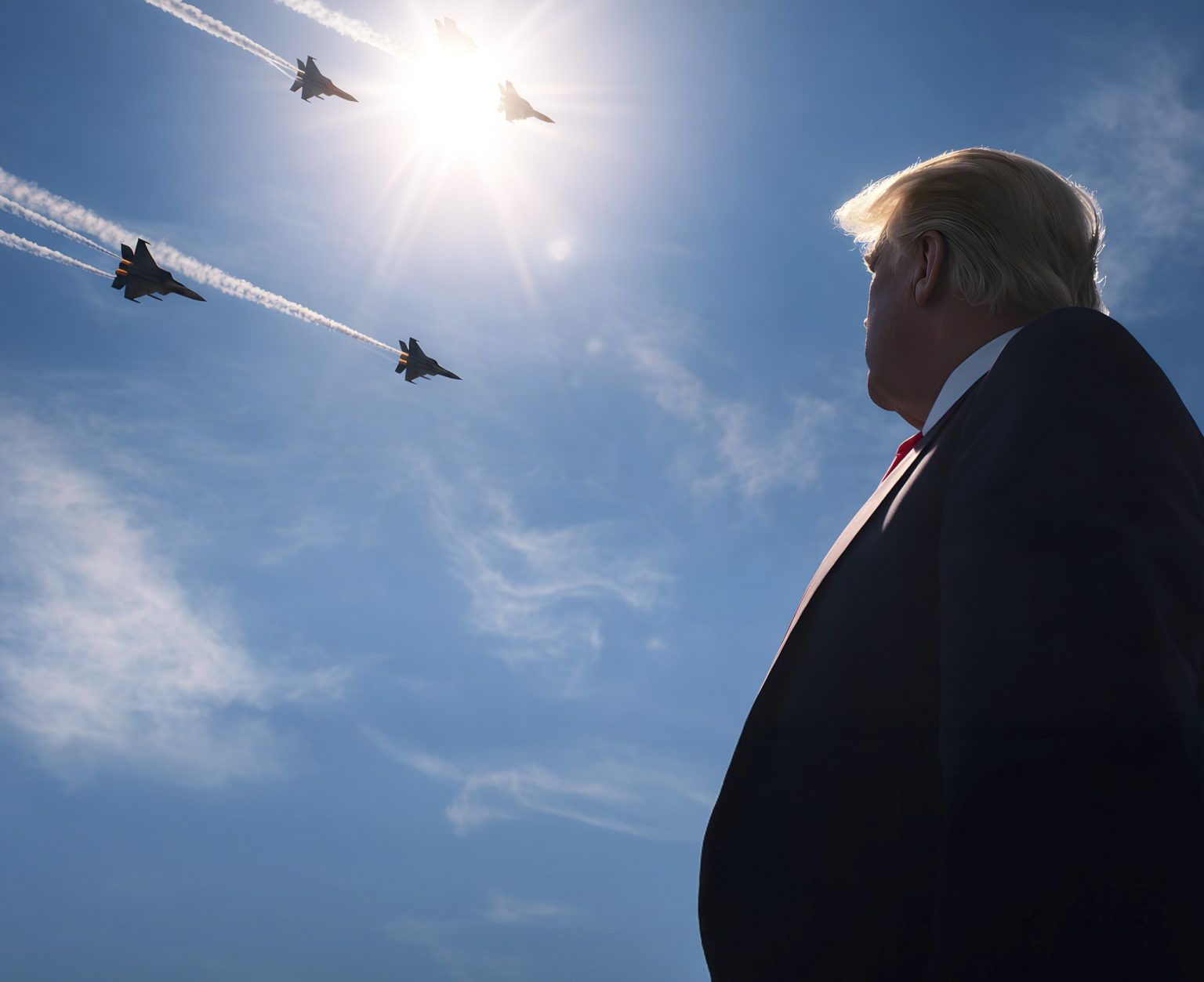
The Strait of Hormuz has once again become one of the most sensitive choke points in global trade. The waterway now lies at the centre of the war between the United States, Israel and Iran. Tehran has already moved beyond threats, attacking vessels and effectively choking off traffic through the narrow passage connecting the Persian Gulf with the Gulf of Oman.
The potential consequences are considerable. Roughly one fifth of the world’s seaborne oil trade passes through the strait each year. Any prolonged disruption – whether through attacks on tankers, mining operations or the withdrawal of commercial shipping – would quickly affect global energy markets and the wider economy.
Attacks on commercial vessels have already been reported in the Strait of Hormuz and the wider Gulf. Several ships have been struck by drones, projectiles or explosive-laden boats, and the deteriorating security situation has sharply reduced maritime traffic in the region. Major shipping companies, including Maersk and Hapag-Lloyd, have warned clients of potential force-majeure situations and are closely monitoring developments in the region.
Plans to protect shipping in the Strait of Hormuz
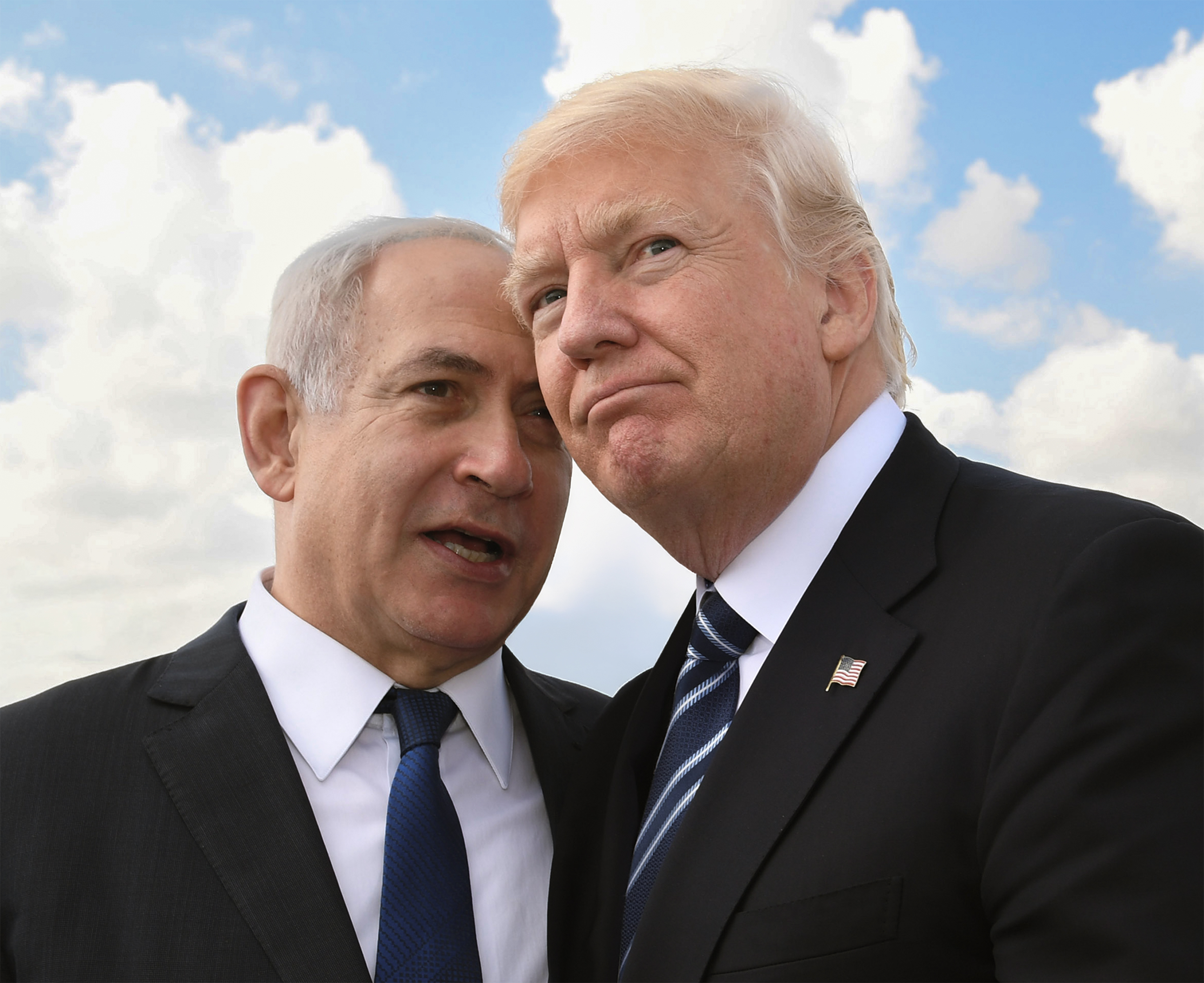
US President Donald Trump has therefore suggested forming another ‘coalition of the willing’ to help secure maritime traffic through the strait. According to The Wall Street Journal, Washington is exploring the creation of an ad hoc maritime security effort involving partners that rely heavily on the route.
Trump has also called on countries such as China, Japan and South Korea to help protect tanker traffic, since their economies depend heavily on energy imports from the Persian Gulf.
China could play a significant role if it chose to take part. According to the Global Firepower Index (GFI), the People’s Liberation Army Navy operates three aircraft carriers, 50 destroyers, 46 frigates, 50 corvettes and 36 mine-warfare vessels, supported by roughly 384,000 naval personnel. Such forces would in principle be capable of protecting tanker traffic in the Persian Gulf.
However, Beijing maintains close relations with Tehran and has strong incentives to avoid direct involvement in a Western-led maritime operation.
In comparison, the United States relies primarily on the striking power of large warships. According to the same GFI dataset, the U.S. Navy operates 11 aircraft carriers, 83 destroyers and nine mine-warfare vessels.
Pressure on NATO allies
The US president has criticised European NATO allies for what he sees as insufficient support. He warned that European countries could face a ‘very bleak future’ if the Alliance fails to take responsibility for safeguarding shipping through the strait.
The issue has already reached European diplomatic circles. EU foreign ministers recently discussed maritime security and the possibility of expanding the EU naval mission Aspides. The operation, led by Greece, was originally designed to protect commercial shipping in the Red Sea from attacks by Yemen’s Houthi movement.
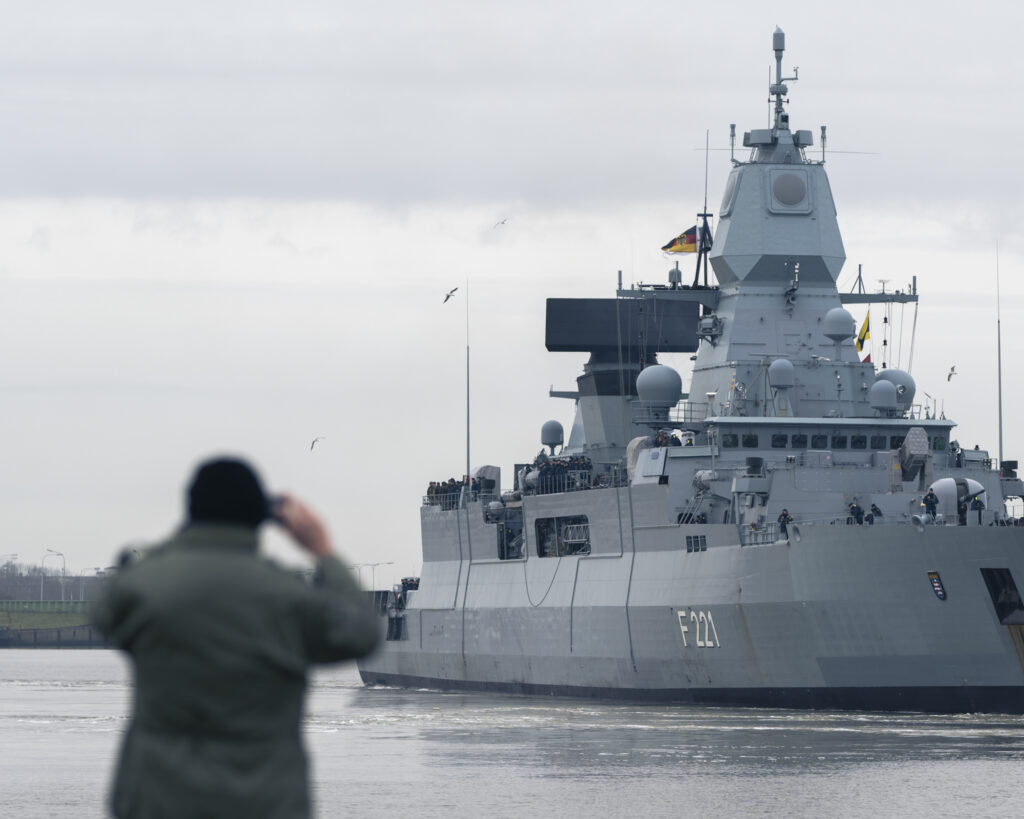
While Aspides monitors developments in the wider region, it is not currently mandated to operate in the Strait of Hormuz. Expanding the mission would require the agreement of all EU member states.
How many ships do the Europeans have?
Among European allies, Trump specifically mentioned Britain and France. It remains unclear how many vessels European states could realistically deploy to the Gulf without weakening their own defence capabilities.
The United Kingdom remains one of Europe’s most capable naval powers. According to the GFI, the Royal Navy operates two aircraft carriers, six destroyers, seven frigates, ten submarines and eight mine-warfare vessels.
In the overall Global Firepower ranking Britain currently occupies eighth place, reflecting its ability to deploy both large capital ships and smaller specialised vessels.
Mine-countermeasure forces could be particularly important in the Strait of Hormuz. At its narrowest point the waterway is only about 54 kilometres wide, which makes the deployment of naval mines a serious threat to commercial shipping.
France ranks sixth in the GFI and remains one of Europe’s few states capable of sustained naval operations far from home waters. Its fleet includes one aircraft carrier, 11 destroyers, five frigates and nine submarines.
Several smaller European navies possess assets that could also be relevant in the specific environment of the Strait of Hormuz. Poland, ranked 21st in the Global Firepower Index, operates as many as 29 mine-warfare vessels. Greece fields 14 frigates and three mine-warfare ships.
The Netherlands could contribute six frigates and three submarines, while Norway operates four frigates, six corvettes and five mine-warfare vessels. Denmark fields nine frigates and six mine-warfare vessels, Finland 18 mine-warfare vessels, Sweden eight mine-warfare vessels and seven corvettes, and Romania a number of smaller surface combatants.
Yet even if these assets exist on paper, they cannot simply be redeployed wholesale to the Persian Gulf. European navies must also defend their own maritime approaches and fulfil commitments within NATO.
European reactions
Germany has expressed particular scepticism about deploying European naval forces in the Gulf. Foreign Minister Johann Wadephul questioned whether such a move would significantly improve security in the region.
‘I am very sceptical that extending the Aspides mission to the Strait of Hormuz would bring greater security,’ he said in an interview with ARD television.
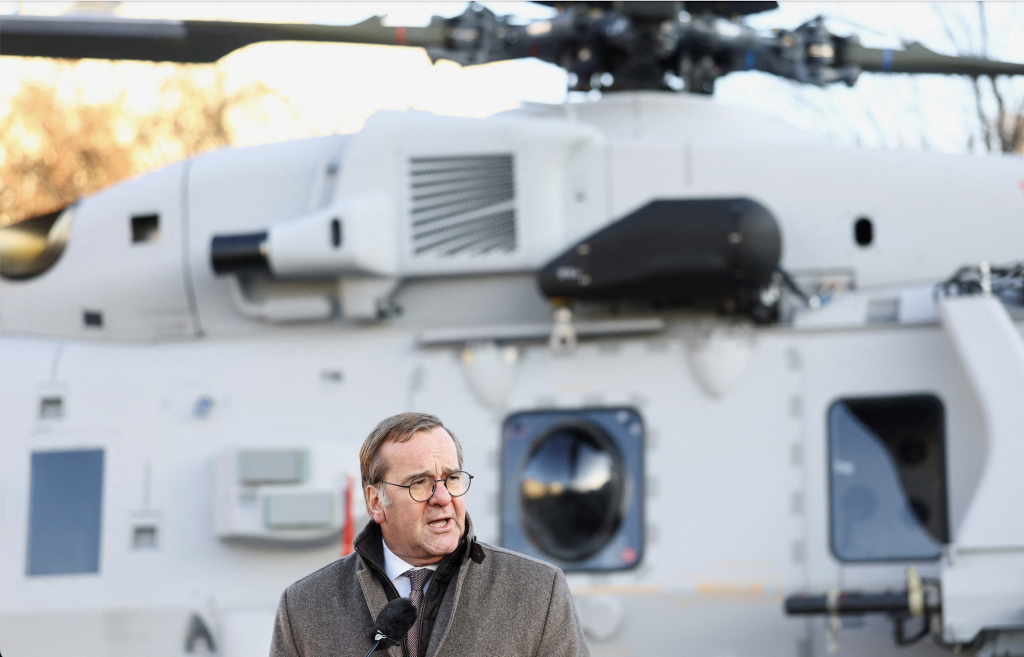
Defence Minister Boris Pistorius has voiced similar doubts about the usefulness of sending European warships into the crisis zone. He questioned what difference a small European naval contingent could realistically make in a region already dominated by the United States Navy.
‘What does Donald Trump expect a handful of European frigates in the Strait of Hormuz to achieve that even the powerful US Navy cannot manage on its own?’ Pistorius asked.
Several European governments have stressed that they were not involved in the decisions that led to the current escalation. Government spokesman Stefan Kornelius noted in Berlin that neither the United States nor Israel had consulted European allies before the war began.
Italy has likewise warned against steps that could be interpreted as entering the conflict. Deputy Prime Minister Matteo Salvini has argued that sending naval forces to the region could be seen as direct involvement.
It remains unclear what ‘bleak future’ Trump envisions for European countries that decline to participate. The US president has previously used tariffs and defence-industrial pressure to push allies towards greater military contributions.
The debate nevertheless highlights a deeper structural problem. European governments have pledged to increase defence spending in recent years, yet the continent’s armed forces still struggle to project meaningful military power beyond their immediate neighbourhood.