
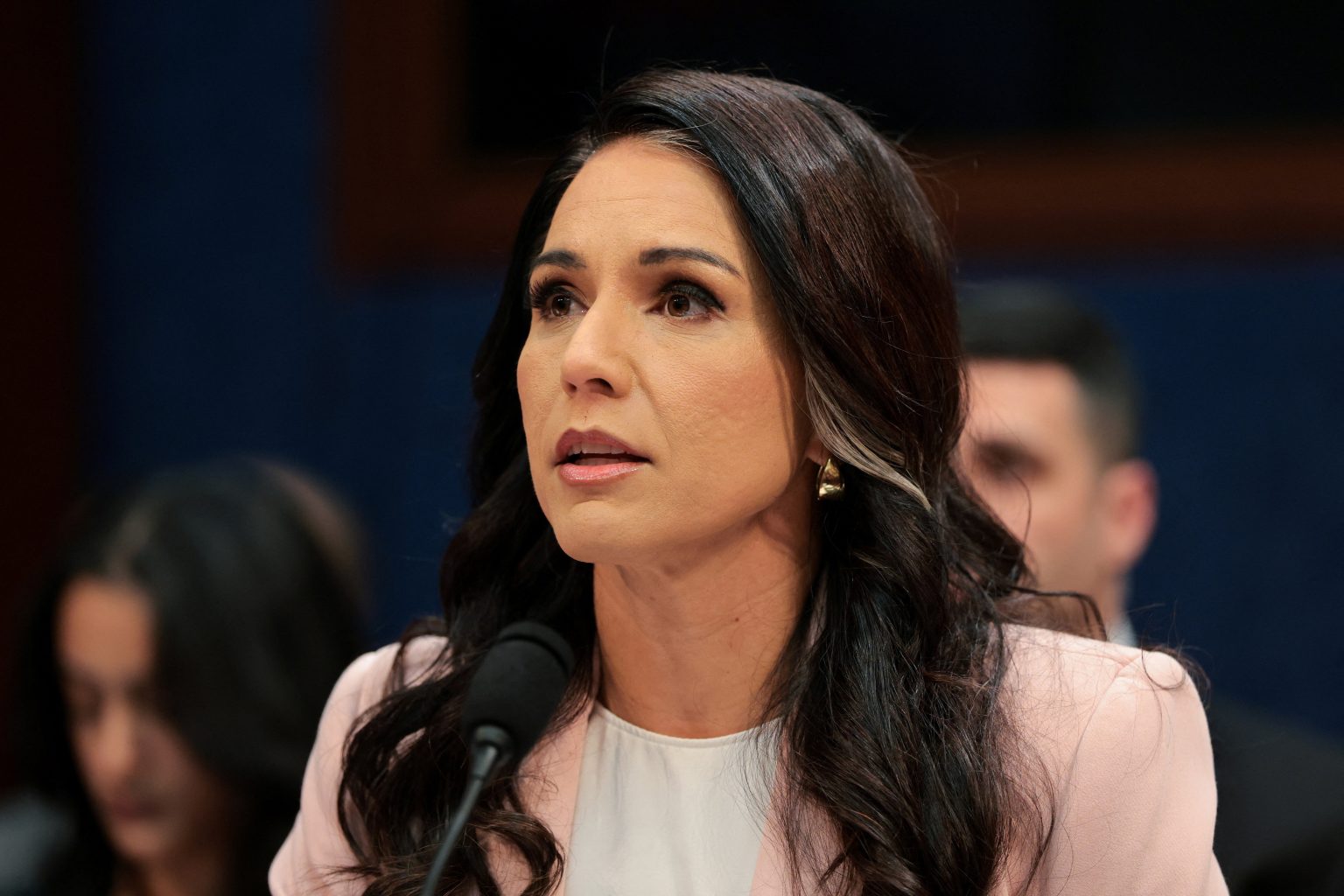
On Tuesday, war veteran Joseph Kent resigned as director of the centre, citing a conscientious objection to the Iran war. In his resignation letter, written on ODNI letterhead according to the Wall Street Journal, he stated that Tehran did not pose a threat and that the US had entered the war under pressure from Israel.
Kent’s superior, former congresswoman for Hawaii and fellow veteran Tulsi Gabbard, declined to comment directly on the threat posed to the United States by the Islamic Republic of Iran at Wednesday’s regular Senate hearing. ‘It’s up to President (Donald) Trump what he defines as an ‘imminent threat’,’ she told senators.
But the report issued by her office, which coordinates the so-called ‘letter’ agencies such as the CIA, FBI and NSA, and oversees some 80,000 staff, speaks volumes. The first chapter, focused on ‘threats to the homeland’, is largely devoted to drug cartels and the Arctic.
Narco-Terrorism and Migration
In addition to the White House, these intelligence agencies are coordinated through the National Intelligence Council, which also reports to Gabbard. This complex system enables security agencies to share information and issue joint reports on a regular basis.
The agencies operate under the umbrella of the ‘Intelligence Community’, abbreviated to IC. The report praised the Trump administration for curbing what it described as the most pressing national security threat, the ‘leaky’ border with Mexico.
‘However, transnational criminal organisations continue to threaten our citizens, particularly through the production and smuggling of illegal drugs, which are responsible for the deaths of tens of thousands of Americans, as well as by supporting the smuggling of undocumented migrants into the US,’ the office noted.
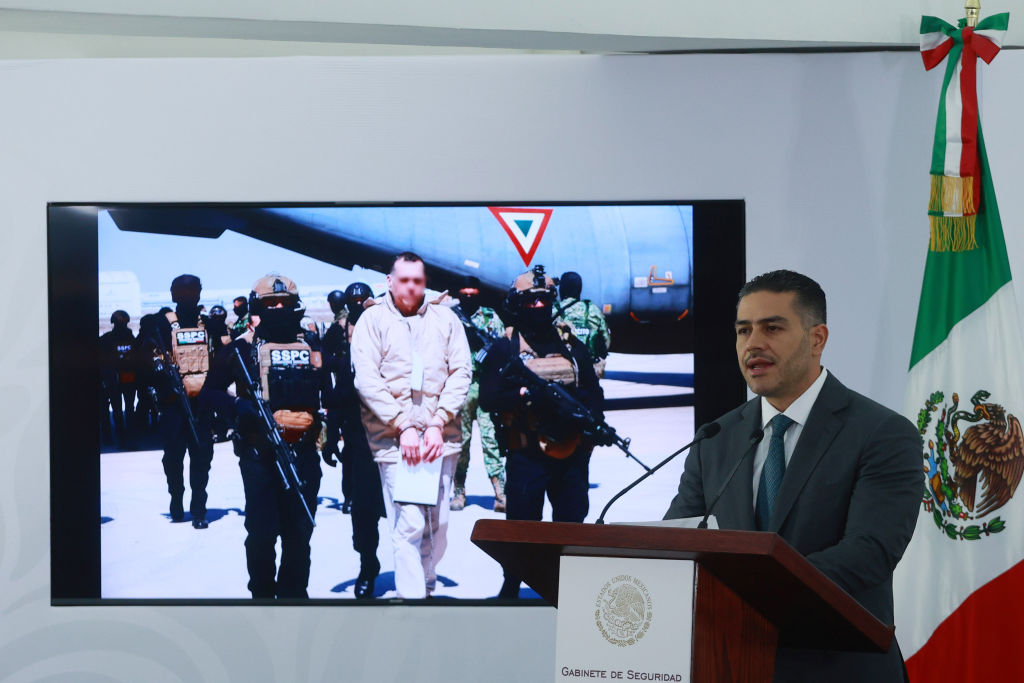
The ODNI devoted its opening chapters, ‘Homeland’ and ‘Border Security’, to drug cartels and Latin American criminal organisations. According to US intelligence, the greatest threat comes from Mexican cartels such as Sinaloa and Jalisco Nueva Generación, particularly in drug trafficking, illegal immigration and money laundering.

Ironically, these cartels are reducing their own threat level by becoming embroiled in internal conflicts, yet they remain the largest importers of fentanyl, heroin, methamphetamine and cocaine from South America. Some have adapted to the new border regime, according to intelligence assessments.
Colombia’s left-wing militias, the FARC and ELN, also pose a threat. In addition to destabilising neighbouring countries, they are involved in the production and smuggling of cocaine into the US and Europe. Unlike the Mexican cartels, they are expanding cooperation with gangs in Brazil and Ecuador, where President Daniel Noboa deployed the army against them as recently as last year.
Among lower-level threats, Gabbard’s office lists Venezuela’s Tren de Aragua, El Salvador’s MS 13, and Haitian and Jamaican criminal gangs, many of which operate within immigrant communities in the United States. The ODNI expects their membership and activity to increase, particularly amid ongoing instability in Haiti and Cuba and extreme weather events in Central America.
These developments are expected to drive further migration, although Border Patrol reported an 83.8 per cent year-on-year drop in entries in January. For 2025 as a whole, the number of migrants apprehended is also down by 79 per cent compared with 2024.
Other Major Global Powers Are Arming Themselves
The substances used to produce illicit opioids are not manufactured in Latin America. Cartels import them mainly from China and India, according to the ODNI. The report notes that since last October both Indian Prime Minister Narendra Modi and Chinese President Xi Jinping have pledged tighter controls on exports of these substances to the Western Hemisphere.
India is not listed among countries challenging US security. The report says that China, Russia, Iran, North Korea and Pakistan are developing ballistic capabilities and ‘new ways of delivering warheads’, both nuclear and conventional.
US intelligence estimates that by 2035 more than 16,000 missiles worldwide will be capable of reaching the United States, up from around 3,000 today. The ODNI also noted that North Korea has possessed such capabilities for several years, while Iran, despite claims made at the outset of the war, does not.
These powers are also increasingly deploying small unmanned systems to exhaust US air defence, as seen in Russia’s war against Ukraine and Iran’s actions against US allies in the Gulf.
On Arctic security, the ODNI noted that Russia controls roughly half of the Arctic Ocean coastline and is expanding its strategic capabilities, largely concentrated on the Kola Peninsula east of Finland. The region, which includes Murmansk, hosts a significant portion of Russia’s nuclear arsenal.
Russia’s Arctic fleet is the largest in the world, comprising 42 icebreakers and support vessels. China, though not an Arctic state, is also entering the region through joint exercises and investment.
Beijing is expanding its Belt and Road Initiative into the polar region under the name ‘Polar Silk Road’.
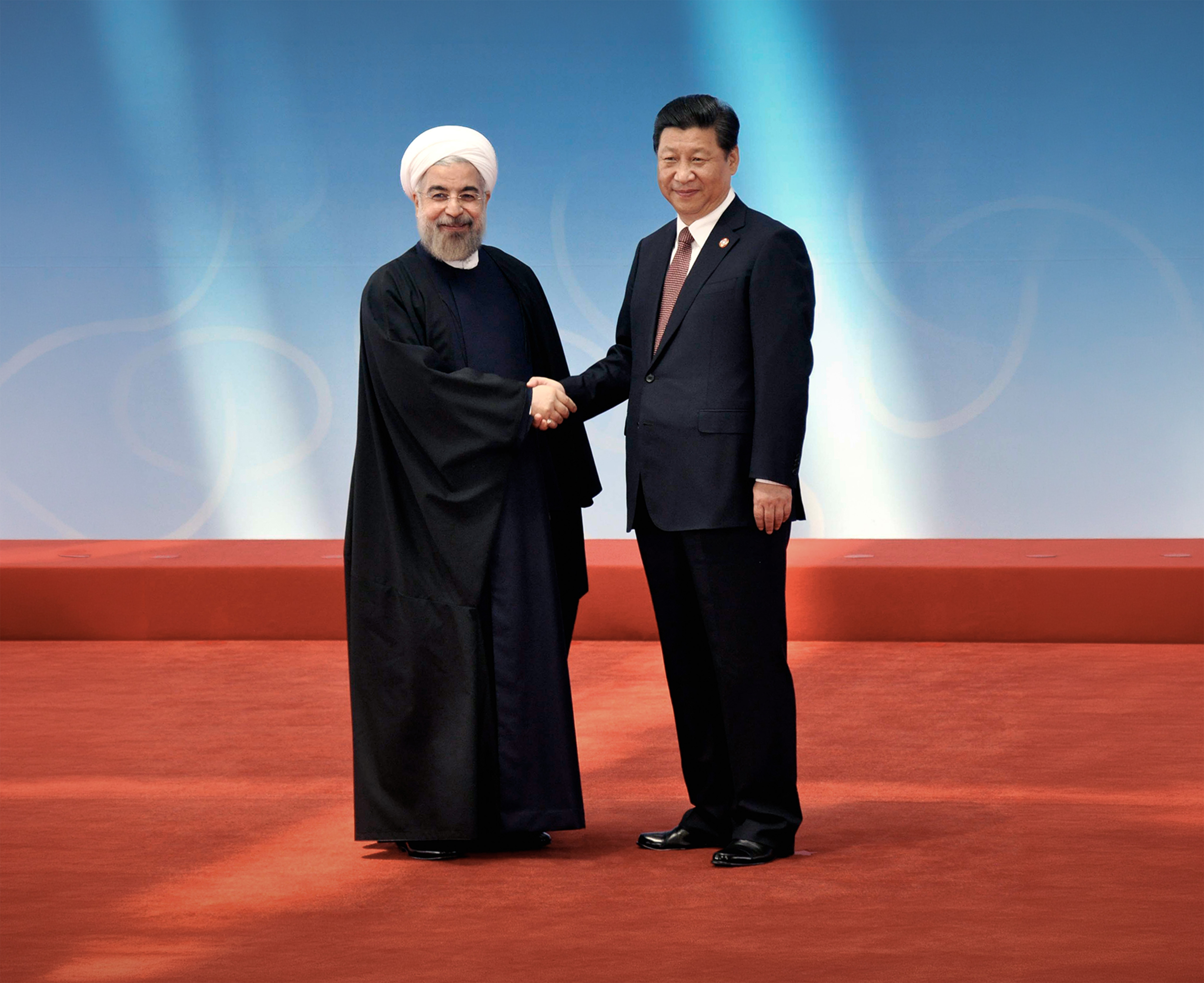
‘Selective cooperation among China, Russia, Iran, and North Korea, motivated by the shared goal of counterbalancing US efforts and actions and furthering their own strategies, reinforces the threat each of these countries poses to the US,’ the ODNI noted, adding that the notion of an ‘alliance of adversaries’ overstates the depth of their cooperation.
China’s support has helped Russia and Iran withstand sanctions, while North Korean and Iranian military assistance has aided Moscow in its war against Ukraine. ‘The four countries are likely to continue to seek opportunities to strengthen their cooperation, although persistent divergent interests, as well as concerns about direct confrontation with the US, will limit the actual scope of their relationship,’ the office said.
Islamic Terrorism
So far the United States has not been directly threatened by Sunni extremists, although they could pose a threat in the future. The Trump administration has deported many suspects labelled as a ‘national security threat’.
‘However, we still face the challenge of recognising individuals who may attempt a terrorist attack in the US only after they enter the country, which includes the tens of thousands of Afghan asylum seekers who have arrived in the US in recent years,’ the report noted, referring to the special asylum route for refugees from Afghanistan.
The ODNI further warned that both al-Qaeda and the Islamic State have changed tactics in recent years and are recruiting US residents. These ‘lone wolves’ are being exposed to Islamist propaganda, which the office said is being fuelled by several global events, particularly the war in Gaza.
The New Year’s Day attack in New Orleans in 2025 was claimed by the so-called ‘caliphate’ of Islamic State, as was the March attack in the state of New Jersey and the 8 June attack on a Jewish festival in Boulder, Colorado, the ODNI said in its threat assessment.
In Syria itself, the government of Ahmad Sha’ar is seeking unification, even at the cost of violent operations, as is the case with the Kurds in the north-east. US intelligence agencies anticipate that Sha’ar will focus on unifying the Druze in the south-west of the country during the rest of the year.
The office noted that jihadist ideology continues to be a major motive for terrorist attacks, although these are mainly a threat to ‘US interests abroad’. While traditional terrorist organisations such as al-Qaeda and the Islamic State are weakening, pro-Iranian Shia militant groups in Iraq and Lebanon, including Hezbollah are gaining strength.
Shia militias in Iraq, after calling for revenge for the killing of Supreme Leader Ali Khamenei, have carried out attacks on US targets and forced Washington to evacuate its embassy in Baghdad, a site covering some 42 hectares, larger than Vatican City. According to the ODNI, despite US-Israeli operations since 28 February, these groups still have the capacity to carry out ‘asymmetric’ attacks.
Ironically, US intelligence agencies have praised the Afghan Taliban movement for consolidating its security framework, thereby weakening the Islamic State’s offshoot in Khorasan. But the latter continues to pose a threat to US interests in South Asia.
The security situation is also strained by recent shootings between Afghanistan and Pakistan, as well as high tensions between Pakistan and India that led to clashes last year.
The Middle East chapter also singles out Iran and Israel, with the Islamic Republic, according to the ODNI, attempting to avenge the killing of Ayatollah Ali Khamenei, the former supreme leader, but only if the regime endures, while Tel Aviv has ‘lost patience’ with the asymmetric actions of Hamas and Hezbollah after October 2023.
However, the stability of the theocratic government is threatened by renewed protests, fuelled by a weak economy, a lack of potable water and widespread corruption in the administration. In the eyes of allied militant and terrorist groups, it has also lost its reputation, according to the ODNI, having so far failed to avenge the deaths of Revolutionary Guards commander Qassem Soleimani and Hezbollah chief Hassan Nasrallah.
Even after the ‘survival’ of the Iranian regime, Israel will seek to ensure that the Islamic Republic is unable to rebuild the nuclear and ballistic capabilities it lost during the so-called Twelve-Day War and the current Operation Epic Fury. The Israeli state will also ‘proactively’ destabilise the Shia government.
With New Global Threats the Sack Has Been Torn Open
Most of the US intelligence community consists of civilian agencies, meaning their focus extends beyond purely military threats. Economic and technological risks have therefore become an integral part of the overall threat assessment.
Among these non-military risks is ‘global economic fragmentation’, defined as the breakdown of global trade structures. This implies that future conflicts will not be confined to the battlefield, but will also unfold in trade, artificial intelligence and quantum technologies. The trend is driven by intensifying competition between major powers, their struggle over supply routes, emerging technological rivalries reminiscent of the Cold War space race, and a growing number of simmering and potential conflicts.

This assessment suggests that the range of identified threats has expanded significantly. The ODNI therefore noted that ‘not all global threats directly affect our homeland’.
The Intelligence Community placed Iran among the lesser threats, which made it all the more surprising when the Pentagon weakened the USS Iwo Jima and USS Gerald Ford carrier group by relocating the latter to the Mediterranean.
The move by the group with the largest aircraft carrier apparently took intelligence agencies by surprise, as its deployment to the Caribbean Sea was part of Operation Southern Spear aimed at countering the drug threat, which has the highest priority in the assessment.
The ODNI recorded 61 inter-state armed conflicts in 2024, with a total death toll of 129-thousand. The number of conflicts is the highest since the end of World War II, with the bloodiest years being 2021, 2022 and 2023.
While major powers remain restrained in their use of force, smaller states are increasingly resorting to coercion to advance their interests, the ODNI noted. ‘Countries such as Egypt, Israel, Pakistan, Turkey and the United Arab Emirates use a combination of lethal aid, proxy forces or their own military assets to provoke or weaken their rivals or to influence neighbouring conflicts to their advantage,’ the report continues.
‘Many countries are now more willing to use deniable, coercive or violent approaches that do not reach the threshold of war. This includes sabotage, assassination, detention, non lethal attacks and the use of migration as a weapon,’ the office specified.
Another potential front, according to the intelligence community, is space. While officials noted that Beijing has overtaken Moscow among Washington’s leading space challengers, they also pointed to Kyiv as an example of how a country without its own space programme can use commercial technology, such as Starlink, to defend itself against a far larger and more capable opponent.
Russia is not yet developing a satellite capable of placing nuclear weapons into orbit. Other US strategic adversaries are also targeting American space technology, although so far only through the use of jammers.
Weapons of Mass Destruction
The ODNI devoted a separate chapter to nuclear and ballistic missile capabilities, and also addressed ‘weapons of mass destruction’. These are categorised under the acronym CBW, meaning chemical and biological weapons, for which intelligence services foresee further proliferation. The reason, they argue, is the deteriorating security environment, which is prompting smaller powers to stock up on military ‘jokers’.
On nuclear capabilities, US intelligence agencies are also observing developments that are causing concern and increasing uncertainty. China is rapidly modernising its nuclear launch systems, while other states possessing chemical or biological weapons are expanding their arsenals.
China, North Korea, Pakistan and Russia are also modernising facilities for the ‘transport’ of these unconventional weapons. India is likewise investing in long-range systems for nuclear warheads.
The ODNI acknowledges that Russia has the largest and most diverse nuclear arsenal, but has delayed upgrading its capabilities. Moscow continues to modernise despite several failed tests.
‘China continues to seek to modernise, diversify and expand its nuclear capability as part of its strategic rivalry with the US. Both countries continue to develop systems capable of carrying nuclear warheads designed to penetrate or bypass US missile defences,’ the office warned.
North Korea is ‘firmly committed’ to expanding its nuclear arsenal, according to the office, ‘as evidenced by the pace of its launch tests and its disclosed uranium enrichment capabilities’.
While it remains unclear whether Iran has pursued nuclear weapons, it has also developed chemical and biological weapons, which US intelligence agencies are closely monitoring. Russia has also upgraded its chemical arsenal, which intelligence agencies say has used Novichok at least twice in targeted tactical operations to eliminate specific individuals.

Europe Faces Mounting Migration, Economic and Security Strains
The American assessment of developments in Europe forms a separate chapter. Although the intelligence services have praised the reversal of ‘decades of underfunding’ in defence, ‘much of Europe faces challenges or capacity constraints that prevent intensive security cooperation in the near future’. ‘Several EU member states are facing rising sovereign debt coupled with meagre growth,’ the ODNI noted.
Several states on the continent are also grappling with the consequences of large-scale migration, according to Washington, ‘including Islamist radicalisation in some immigrant communities’. Demographics are also a particular problem for Germany and Italy, which will result in ‘serious fiscal challenges’ threatening their social systems.
‘Much of Europe has relied on low-skilled immigrants to ease labour shortages, especially as the median age on the continent exceeds 47. Nevertheless various factors, including a lack of effective assimilation, have limited the ability to absorb new immigrants and differing value systems have fueled social tensions,’ US intelligence officials noted.
The ODNI report stated that by 2024 there were already around 90 million migrants from abroad living in Europe. By comparison, Iran’s population is around 98 million.
‘More than six million Ukrainians registered for temporary protection and waves of asylum seekers and refugees, economic migrants and family members from Asia, the Middle East, Africa, Latin America and the Caribbean have contributed to the significant increase since 2020,’ the bureau noted.
According to the ODNI, the resulting lack of social integration has made some young immigrants more susceptible to political and religious radicalisation, ‘or arriving already radicalised’. As a result, phenomena such as terrorism, violence against women and antisemitism are on the rise, which in turn provokes a rejectionist reaction among local populations.
The war between Russia and Ukraine, which Gabbard’s office says has revived fears of ethnic conflict, is also contributing to the destabilisation of Europe. Russia supports Serbia’s position in relation to Kosovo, as well as Serb communities in neighbouring countries, especially the Serb Republic within Bosnia and Herzegovina.
Against the backdrop of the war in Ukraine, Russia ‘retains the ability to selectively threaten US interests around the world through both military and non military means’, while continuing to operate both conventional and nuclear forces. Despite the prolonged conflict, Moscow’s ground forces have expanded and its air force and navy remain ‘intact’ and better prepared for a major confrontation than before 2022.
‘Over the past year, Russia has maintained the upper hand in the war against Ukraine and sees no reason to stop fighting as long as its forces continue to gain territory,’ the intelligence community noted, pointing to a stalemate in diplomatic efforts since the start of the Iran war.
Yet Washington has not ruled out a shift in Moscow’s calculus. ‘A lasting settlement of the war in Ukraine could open the door to a warming of US-Russia relations and an improvement in bilateral geostrategic and trade relations,’ the ODNI suggested, leaving open the prospect that diplomacy could still reshape the trajectory of the conflict.