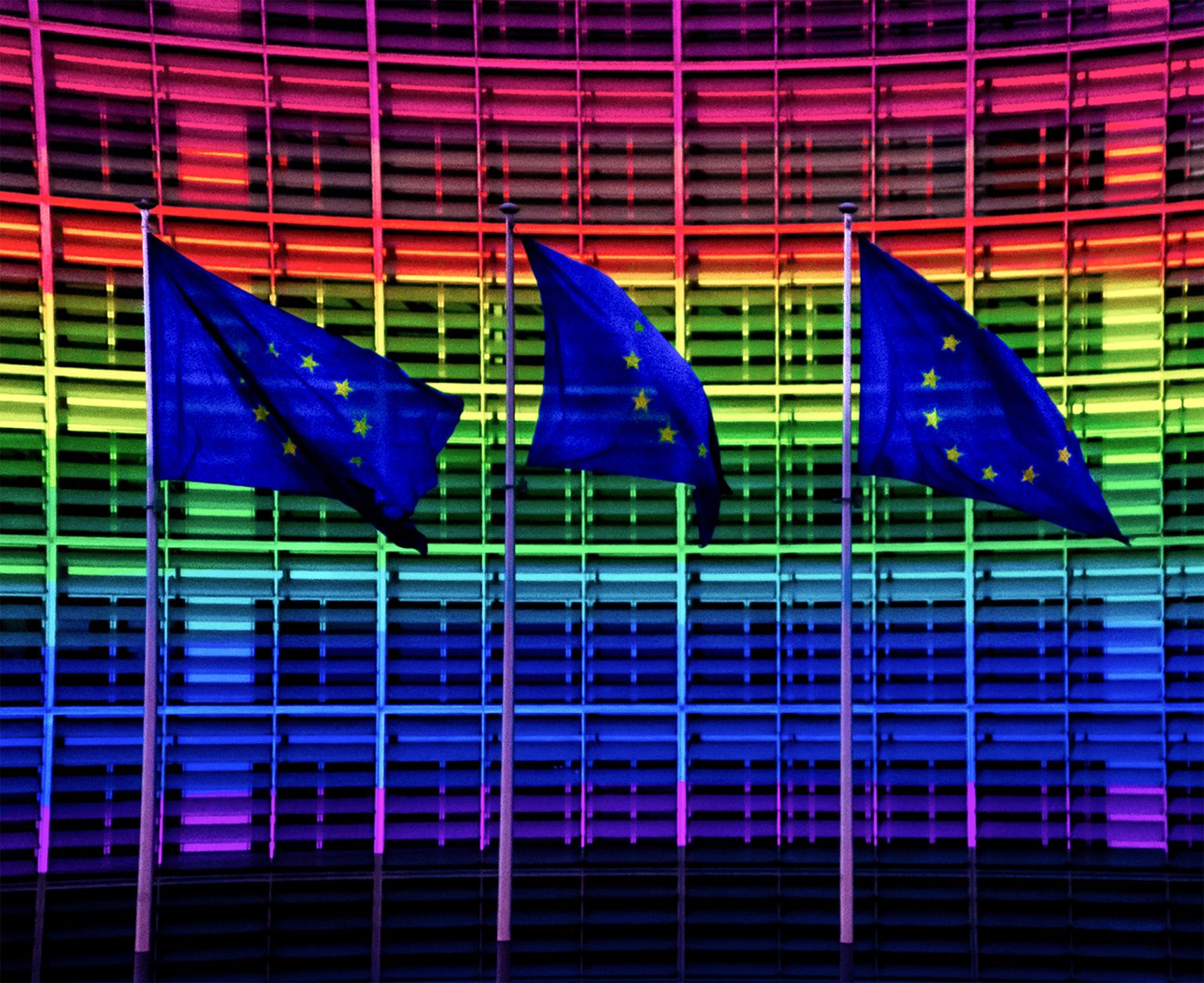
The European Commission has confirmed that it will examine a European citizens’ initiative calling for a ban on so-called conversion therapies, procedures intended to change or suppress a person’s sexual orientation or gender identity. The initiative has gathered around 1.25 million signatures and has already been the subject of a public hearing in the European Parliament.
Conversion therapies is a term used for a range of practices that seek to alter or suppress sexual orientation or gender identity. These can range from talk-based psychotherapy and counselling to historically documented cases of unethical intervention. For example, so-called aversive methods have been used in the past, in which individuals were subjected to unpleasant stimuli, including electric shocks, in an attempt to associate unwanted attraction with pain.
This diversity of approaches is one reason why their precise definition remains contested. Supporters of a ban argue that it constitutes a harmful practice that should be prohibited across the European Union. Critics, however, warn that overly broad legislation could interfere with legitimate psychological practice and with the right of individuals to seek help in line with their own convictions.
The debate has therefore reopened a sensitive question: where does the protection of individual rights end and interference with personal freedom of choice begin?
A long and uncertain legislative path and an unclear definition
At present, only eight EU member states have introduced a specific ban on conversion therapies. The adoption of uniform legislation at EU level is not straightforward, as the regulation of health and family policy largely remains within the competence of the member states.
The Commission has also acknowledged that any legislative proposal would require the support of member states. This support is uncertain in such a politically sensitive area.
One option would be the adoption of a specific directive. A more ambitious alternative would be to classify these practices as so-called ‘euro crimes’ under Article 83 of the Treaty on the Functioning of the European Union. However, even MEPs who support a ban concede that such a reform would take years.
According to experts within the institution, vague legislation risks linking historical cases of abuse, such as coercion or ill-treatment, with a much broader range of situations.
The proposal to be debated in the European Parliament does not refer only to ‘conversion therapy’ in the traditional sense, but instead uses the broader term ‘conversion practices’. This term has not yet been precisely defined, which opens the door to wide interpretation.
Some experts warn that the current proposals could also affect mainstream psychological support or even family conversations. The legislation could therefore be far broader than it initially appears. It may extend to therapeutic work with people experiencing uncertainty about sexuality or identity, as well as to parents’ concerns for their children.
MCC Brussels researcher Ashley Frawley warns that an overly broad definition could penalise legitimate therapeutic practice, careful clinical judgement or even parental responsibility.
Controversial scientific debate
The effectiveness and safety of conversion therapies have long been the subject of professional debate. A research review by Cornell University identified 47 scientific studies on the subject. Of the 13 studies containing primary data, most concluded that attempts to change sexual orientation are ineffective or potentially harmful.
At the same time, the authors themselves point to methodological limitations. Assessing sexual orientation is empirically difficult, and most studies rely on participants’ self-assessment. Many lack control groups or representative samples. In addition, some examine behavioural change rather than orientation itself, which may distort the findings.
The Committee of the Slovak Psychiatric Society states in its opinion that it does not support practices aimed at deliberately changing a person’s sexual orientation through therapeutic intervention. According to the Slovak Psychiatric Society, this is a complex aspect of the human psyche that cannot simply be modified by external means.
They therefore recommend an approach based on open conversation, self-discovery and psychological support to help individuals better understand their own experiences and manage internal conflict.
Who is playing what cards?
According to organisations advocating LGBT rights, so-called conversion therapy is a harmful practice that seeks to alter sexual orientation or gender identity and has been rejected by many professional bodies. They argue that it may be linked to psychological problems such as anxiety, depression and social isolation, with adolescents particularly vulnerable.
However, the personal experiences of individuals who have voluntarily sought this form of psychological or spiritual guidance also form part of the debate. The American sociologist and priest Donald Paul Sullins, author of several studies on family and faith, has previously told Standard that his research does not show an increased risk of suicide or other psychological harm as a result of conversion therapy.
There are also cases, he said, in which individuals have experienced a change in orientation or lifestyle. At the same time, he acknowledges that such a change is neither simple nor common.
‘Change is possible, but it is not easy. I also know many people who have tried to change their sexual orientation but failed,’ he said. Sullins, therefore, argues that access to therapy should not be prohibited, particularly when it is sought voluntarily.
Maltese Matthew Grech has spoken publicly about leaving a gay lifestyle following a religious experience, and his case has become the subject of a wider legal and social debate on the limits of freedom of expression. Similarly, the American psychologist Joseph Nicolosi has described cases in his practice in which clients, he says, experienced some form of change in behaviour or identity.
Voluntarism and the question of double standards
In many cases, such therapy takes the form of conversation-based psychotherapy or spiritual accompaniment, which is non-invasive and based on the client’s own decision. In this spirit, a professional conference held in Slovakia several years ago was entitled ‘Freedoms, Rights and Self-Determination. Counselling for men and women experiencing unwanted sexual attractions and gender insecurity’.
At the time, Mário Paroha, chairman of the civic association Space of Acceptance, said that the event aimed to provide both expert information and practical approaches to supporting people coming to terms with their sexuality or identity.
Clients seek such support on their own initiative, for example, when experiencing an internal conflict between their sexual feelings and their personal or religious beliefs, or their views on family life.
In this context, some observers point to what they describe as a double standard in the European debate. While psychological counselling related to sexuality could be restricted, medical interventions connected with gender reassignment, which are invasive and irreversible, are supported or funded by public health systems in some countries.
This raises the question of why a non-invasive form of psychological support should be restricted if it is sought voluntarily, while significantly more radical medical interventions remain permitted.