‘Wives should obey’ – Gen Z and the return of old gender roles
On International Women’s Day, a global study paints a contradictory picture: while support for equality remains high, traditional views of gender roles are regaining ground.
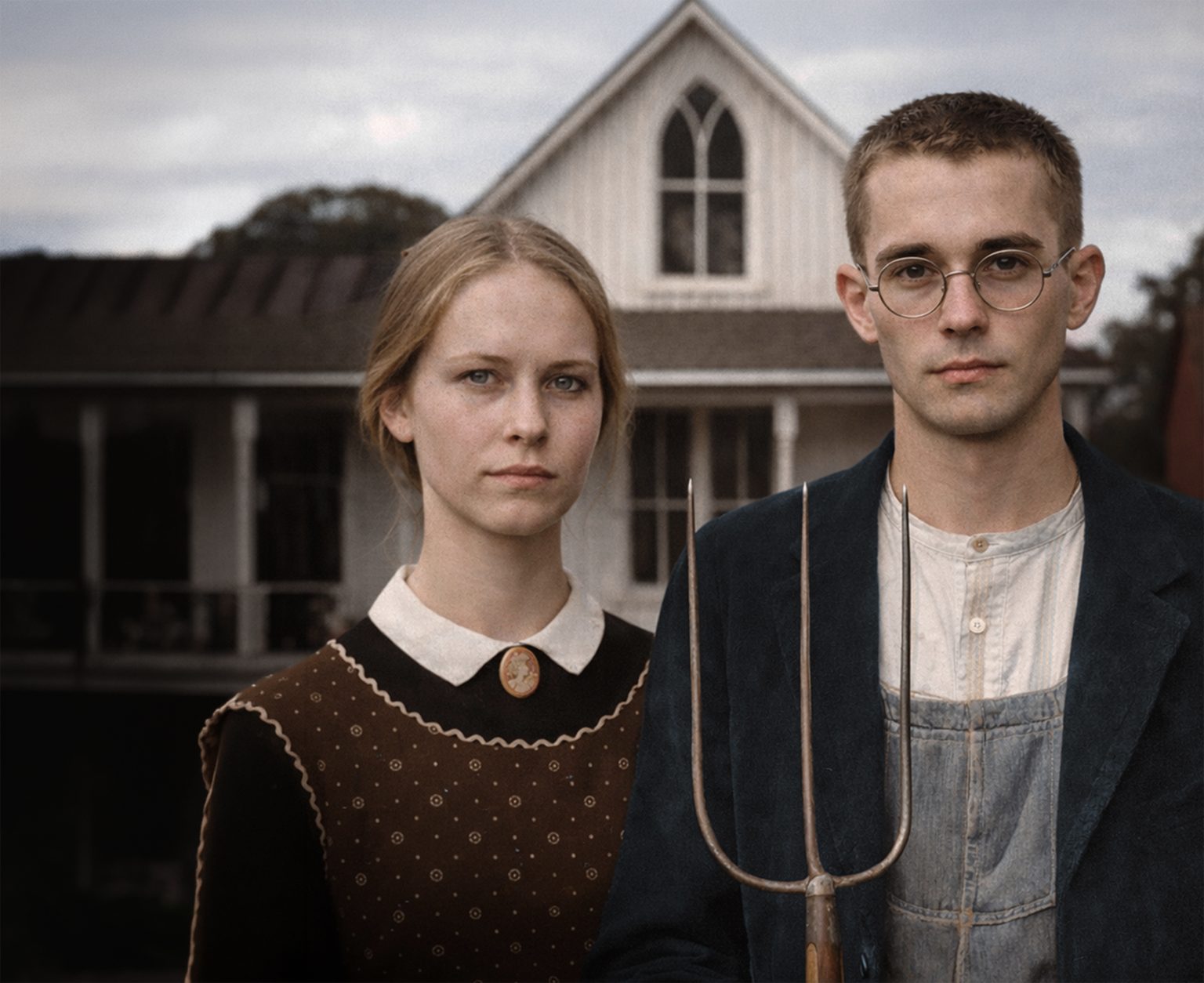
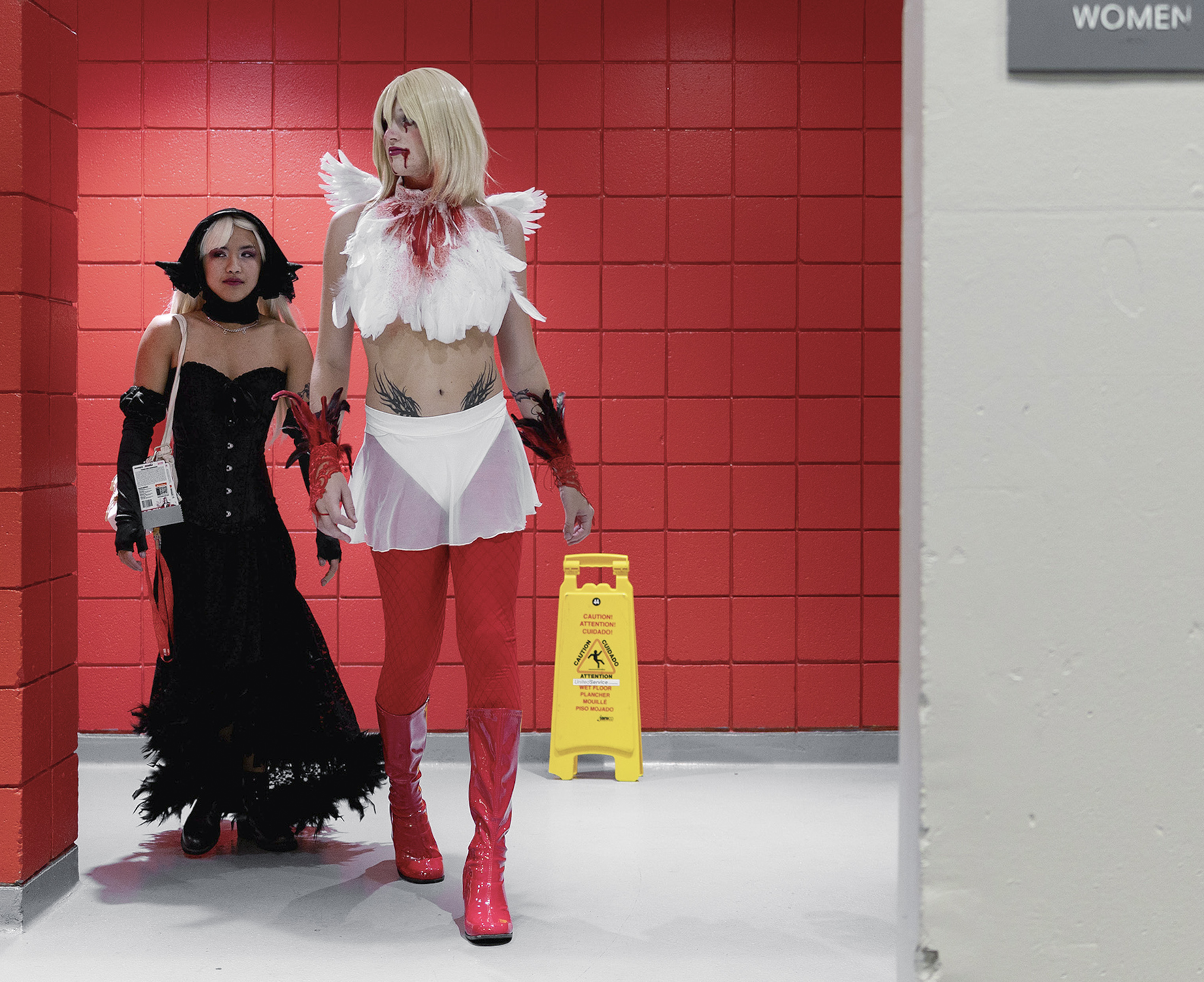
Women's push for equality seems to be taking a step back with Gen Z as more traditional values are on the rise. The was created using artificial intelligence. Photo: GraphicaArtis/Getty Images/AI
|
London. March 8 marks International Women’s Day. For more than a century the occasion has symbolised political rights, economic participation and social equality for women. Yet in 2026 a new international study reveals a strikingly contradictory picture. Support for gender equality remains strong – at the same time doubts, tensions and new conflicts between men and women are becoming more visible.
The global Ipsos study conducted for International Women’s Day is based on a survey of more than 23,000 people in 29 countries. At first glance the findings appear unsurprising. Two thirds of respondents say equality between men and women is personally important to them. Around 60 per cent also believe politics and business would function better if more women held leadership positions. More than half are convinced that women will achieve genuine equality only when more of them reach the top of companies and governments.
Behind that broad support, however, lies a notable stagnation. Key attitudes have changed little for years. At the same time, the belief that equality has already progressed far enough is growing in many countries. Across the countries surveyed, 52 per cent of respondents now say women have already achieved the same rights as men. Since 2019 that assessment has increased in almost every country included in the study.
The result is a paradox. On the one hand many people continue to see structural differences between men and women – in pay, career opportunities and political representation. On the other hand, the perception is spreading that the struggle for equality has largely been completed. Out of that tension a new political and social fault line is emerging.
The findings for Generation Z – those born between the mid-1990s and the early 2010s – are particularly striking. In public debate this generation is often portrayed as especially progressive. On issues such as diversity, identity and sexual self-determination it is widely considered more liberal than its parents. Yet the study reveals a more complex reality.
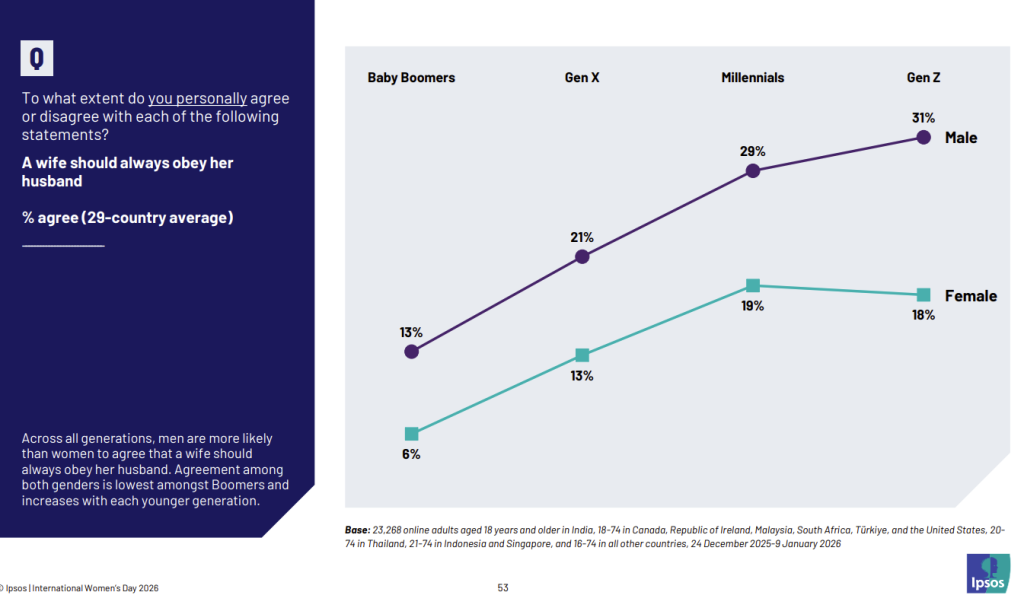
Among young men, traditional ideas about gender roles are now more common than among older generations. 31 per cent of male Gen Z respondents agree with the statement that a wife should ‘always obey’ her husband. Among men from the baby boomer generation the figure is only 13 per cent.
A similar pattern emerges when it comes to power within the family. Around a third of young men believe the man should have the final say in important decisions – a noticeably higher share than among older age groups.
The study also shows that traditional expectations of masculinity remain particularly strong within this age group. Many young men still believe a man should appear physically tough even if that does not reflect his natural personality. Emotional openness continues to be viewed with suspicion by part of the group. Around three in ten young men believe men should not say ‘I love you’ to their male friends.
Source: Ipsos
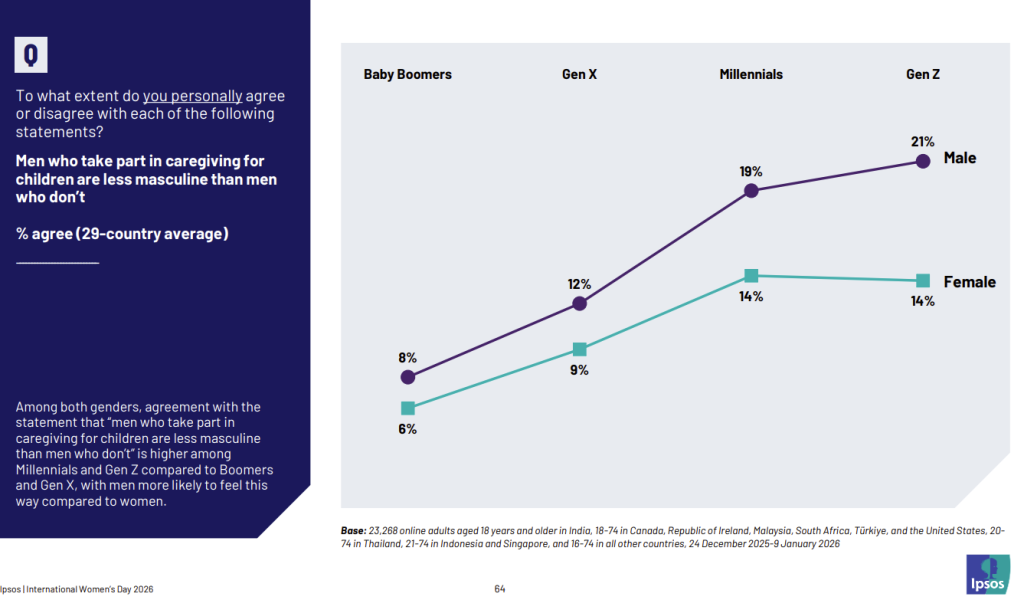
Even attitudes towards family life reveal a surprisingly traditional outlook. One in five young men believes men who are heavily involved in childcare are less masculine. These findings contrast sharply with the common perception of a uniformly more liberal younger generation. While social norms overall have become more open, traditional notions of masculinity appear to be experiencing something of a revival.
The conflict runs within the generation
The picture becomes even more revealing when young men and women within Generation Z are compared. The key divide no longer runs simply between young and old – it increasingly runs within the youngest generation itself.
While 31 per cent of Gen Z men say a wife should obey her husband, only 18 per cent of women of the same age agree with that statement. Differences are also clear in many other areas. 54 per cent of young women describe themselves as feminists, compared with just 36 per cent of young men.
A similar gap appears in perceptions of discrimination. 57 per cent of young men believe equality policies now disadvantage men. Among young women only a minority share that view.
The result is a remarkable perception gap within the same generation. While many young women continue to see structural inequality, young men increasingly feel disadvantaged themselves.
The study therefore speaks of a widening gender gap within Generation Z. The conflict does not run between age groups but between young men and young women who interpret social change in very different ways.
Source: Ipsos
Expectations of women persist
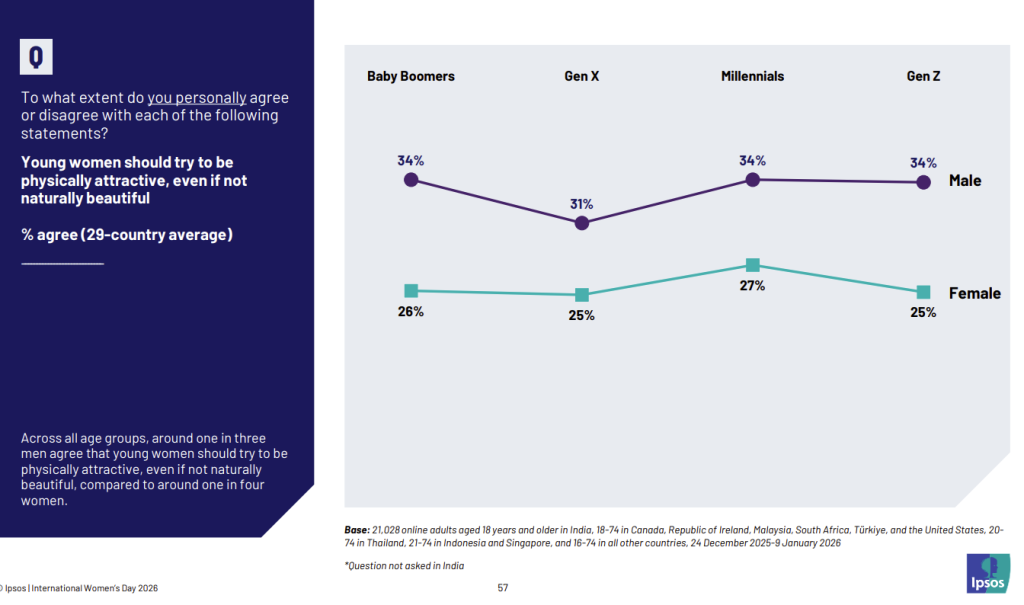
Alongside more conservative views of masculinity, traditional expectations of women also remain visible. A significant share of respondents believe women should make an effort to appear attractive. In the Ipsos study a substantial proportion of participants agree that women face stronger social pressure than men to maintain their appearance.
This expectation is particularly widespread among young men. Many respondents assume that attractiveness remains a central component of social recognition for women. At the same time the data show that many women also perceive this pressure – even if they personally reject it.
The results suggest that traditional role expectations affect both sexes. Men are still expected to display strength, assertiveness and emotional restraint, while women continue to face expectations related to appearance, attractiveness and social conformity.
Source: Ipsos
Equality as a zero-sum game
One reason for rising tensions may lie in how social change is perceived. Many people support equality in principle, yet increasingly view it as a competition between men and women.
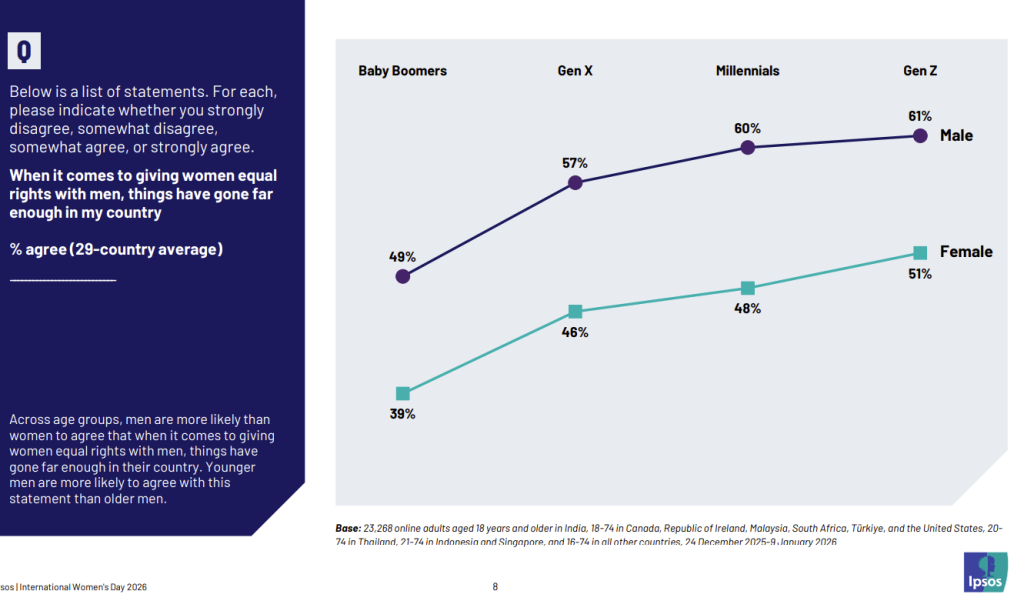
Almost half of respondents believe men are now expected to do ‘too much’ to support gender equality. 44 per cent even say the promotion of women has already gone so far that men are disadvantaged. This view is particularly widespread among young men. Within Generation Z, 57 per cent agree that equality policies now lead to discrimination against men.
That points to a shift in the political debate. For many years equality was presented as a shared social goal. For some it now appears more like a distributional conflict. In this perspective equality is no longer seen as an expansion of opportunities but as a redistribution of power.
Many researchers see an important cause of this development in digital communication spaces. Social networks tend to amplify extreme positions because their algorithms reward provocative and emotionally charged content. Influencers who promote polarising messages can therefore reach particularly large audiences.
Within that environment two counter-movements have emerged. On the one side stand feminist online communities that highlight structural discrimination and call for social change. On the other side so-called ‘manosphere’ networks are gaining influence – digital spaces in which traditional ideas of masculinity are promoted.
Prominent examples range from TikTok movements such as the ‘tradwives’ to influencers such as Andrew Tate, who promotes a particularly radical vision of male dominance. These digital subcultures shape the attitudes of many young people and contribute to the growing polarisation between men and women.
Between equality and traditional roles
Despite these tensions the study also points to another development. In many practical areas of life most people now hold broadly egalitarian views. Three quarters of respondents believe childcare should be shared equally between men and women. A similarly large share say the same about housework. Even when it comes to income – long a classic gender divide – two thirds believe both partners should contribute equally to supporting the household.
Yet traditional expectations persist at the same time. 35 per cent of respondents believe society still expects women to be primarily responsible for childcare. 40 per cent say men are still widely seen as the main breadwinners.
This creates a striking gap between personal conviction and perceived social norms. Many people hold egalitarian values themselves yet believe their societies as a whole remain more conservative than they are.
Source: Ispos
The future of equality
On International Women’s Day 2026 the result is therefore an ambivalent picture. A large majority of people still support gender equality. At the same time the study reveals growing uncertainty about what equality should look like in practice.
Generation Z in particular finds itself caught between modern ideas of freedom and a renewed interest in traditional gender roles. The development suggests that the debate over gender roles is far from settled. On the contrary, it may only just be entering a new phase.
Today the conflict no longer runs simply between men and women, but increasingly between competing ideas of what masculinity and femininity should mean in a modern society. That is precisely why International Women’s Day in 2026 remains more than a symbolic date. It marks a moment when the transformation of social roles becomes visible – and when the struggle over that change is intensifying.
Welcome to the comments section of the Štandard daily. Please take note of our guidelines, comments are moderated by us. You can contact the moderators at support@statement.com.
Participate in the discussion
Comments are available to subscribers only. If you'd like to join the discussion, choose a subscription starting at €6.72 per month.
All comments 0
Register
Comments are available to registered users only. If you'd like to join the discussion, register here.