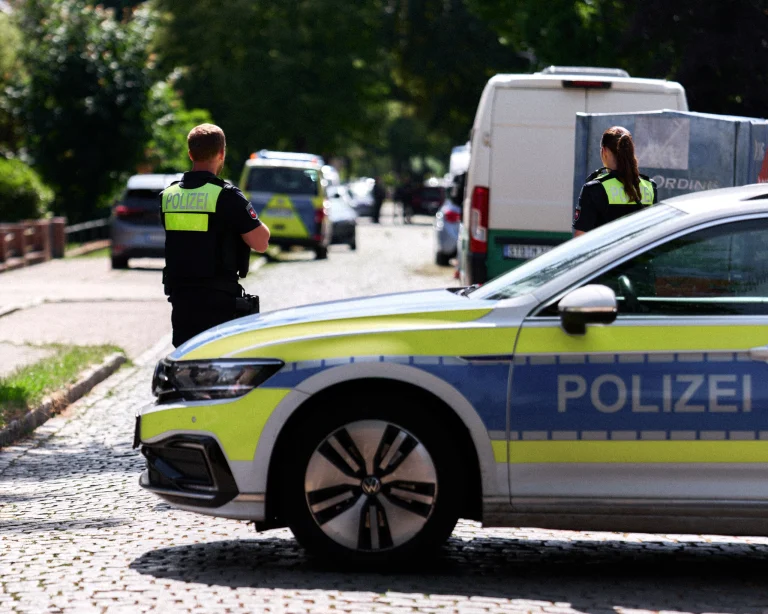
The most recent such case took place in France a few weeks ago. An Irish man got into a confrontation in a supermarket with a Jewish couple from Australia. According to the couple, the man told them he was sorry Hitler did not “finish the job”, an obvious reference to the Holocaust. He can then be seen on video telling the couple: “You get the fuck away from me before I put a fucking bullet in your head.”
He has since been arrested by the French authorities and is due to appear in court next month.
These incidents take place against a general background of anti-Israeli and sometimes antisemitic hysteria that also permeates politics, sport and music.
Is there a distinction to be made between anti-Zionism and antisemitism? Certainly there is, but attacks on Israel often blur or even erase this distinction entirely.
From Estrangement to Rupture
Down the years, quite a few Israeli diplomats who served in Ireland privately regarded it as the very worst posting they could get in Europe because anti-Israeli feeling runs so deep there. Relations between Ireland and Israel have always been frosty, and that is why the two countries did not establish resident embassies until 1996. Following the Hamas attack on Israel and the horrendous war in Gaza, things became so bad that Israel closed its embassy in Dublin altogether in December 2024.
An Israeli friend says that in Israel Ireland is now widely regarded as an antisemitic country and not simply as anti-Israeli. That does not mean the average Irish person is antisemitic, but the hatred of Israel that exists in Ireland is palpable, and the anti-Israeli lobby is very influential.
For example, Ireland must have been unique in Europe in that even when Hamas attacked Israel, slaughtering, raping, kidnapping and mutilating Israeli civilians, not a single Israeli flag was flown over a public building. Instead, many politicians began to wear Palestinian flag badges, and accusations of genocide started.
Anti-Israeli demonstrations kicked off and continued thereafter, often drawing big crowds. Hamas was rarely condemned. All the pressure was on Israel as though it, and it alone, could bring about peace. The words Iran and Hezbollah rarely appeared in the speeches denouncing Israel.
Most Irish politicians are anti-Israeli by instinct and principle anyway. There are almost none with whom an Israeli diplomat can ever work, and they sought to please the demonstrators. Despite US pressure not to do it, the Dáil (Ireland’s lower house) recently passed legislation to prohibit the import of goods from Israeli settlements in the West Bank. The gesture was mainly symbolic because the trade was almost non-existent anyway.
For example, Orli Degani, an Israeli citizen, had been due to run for the Social Democrats in Dublin in the 2024 local elections, but she was then deselected because the party decided her views on the war in Gaza were incompatible with party policy. From the start of that war, the Social Democrats accused Israel of war crimes and later of genocide.
A Fine Gael councilor, meanwhile, attacked America at a council meeting for not doing more to curb Israel and said this was because “the entire US economy is ruled by the Jews, is ruled by Israel”. That was classic Protocols of the Elders of Zion stuff.
Fine Gael is currently in government, and the party only lightly disciplined the councilor, suspending her from all party rights and privileges for 18 months.
Beyond the Political Arena
In sport, a concerted campaign was launched to force the Gaelic Athletic Association (GAA) to cut ties with its biggest sponsor, Allianz, the giant German insurance company, because it does business in Israel. This would have been a big financial blow for the GAA, which oversees Gaelic football and hurling, the two most popular sports in Ireland. The GAA just about fended off the campaign.
Meanwhile, the Football Association of Ireland is campaigning to have Israel expelled from European football. Ironically, Ireland and Israel are due to have two soccer matches soon, the first of them at the end of this month. Ireland’s home fixture cannot take place in Ireland because the atmosphere would be so hostile. It has been moved to Serbia and will be played behind closed doors, while Israel’s home fixture will take place in Hungary.
The world of music has also been infected. Ireland’s national broadcaster, RTÉ, wants Israel to be expelled from Eurovision, and because this has not happened, Ireland boycotted the competition instead, one of only a handful of countries to do so.
History Through an Irish Lens
Why is Ireland such an outlier in its detestation of the Jewish state? Antisemitism explains some of it, but while antisemitism definitely exists in Ireland, and is growing, the big driver of the hatred of Israel is politics. Most Irish people think the Palestinians are like the once badly oppressed Catholics of Northern Ireland, and the Israelis are like the British.
This is allied to a more generalized left-wing attitude which casts Israel as an oppressive settler-colonialist power allied to the United States and therefore part of an imperialist system that must be completely overthrown.
Combine Ireland’s own history with left-wing ideology and you begin to see why Israel is more despised in Ireland than in any other European country, why Israel closed its embassy in Dublin and why Ireland’s Jewish community finds this an increasingly cold house in which to live.
My late father was chairman of the Ireland-Israel Friendship League, and he campaigned for many years to have an Israeli embassy opened in Dublin. He would be heartbroken to see it has been closed down. In the present ultra-hostile climate, it is hard to see it reopening for years to come.