Britain's Gene-Edited Strawberries and Tomatoes Test an Old Fear
Gene-edited strawberries and vitamin D-rich tomatoes are coming to Britain. Could old fears and closer EU alignment hold back a farming revolution?
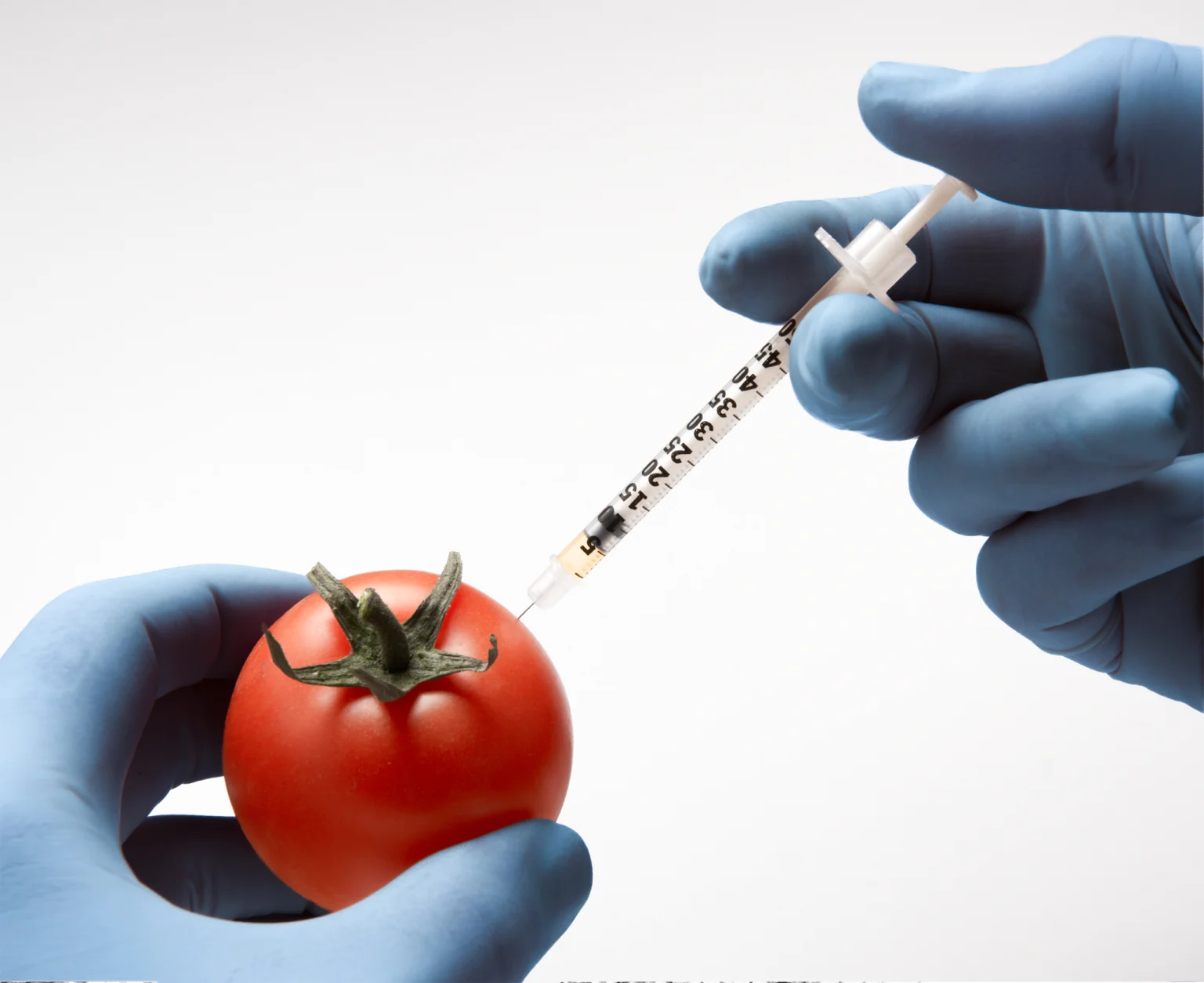
Gene-edited tomatoes are among the first crops moving through England’s new precision-breeding regime on their way to British supermarket shelves. Photo: Getty Images
|
For the first time, British shoppers could soon find gene-edited fruit and vegetables on supermarket shelves. And rather than producing some monstrous laboratory creation, scientists have begun with two rather practical ideas: strawberries that fruit for longer and tomatoes that could help tackle Britain’s persistent vitamin D problem.
Eight varieties of gene-edited strawberries have been developed with an altered flowering pattern that extends their harvest season. Scientists used CRISPR gene editing to disable versions of a gene called Tfl1, which controls flowering. The same remontant, or repeat-flowering, characteristic already occurs naturally in some wild and commercial strawberries. Gene editing allowed researchers to introduce it into an existing commercial variety without losing its other desirable characteristics.
The second innovation could be more consequential. Scientists have developed tomatoes containing increased levels of provitamin D3, again by using CRISPR to disable a particular gene.
The researchers behind the project reported in Nature Plants that after ultraviolet B (UVB) treatment, one edited tomato could contain as much vitamin D3 as two medium-sized eggs or 28g of tuna.
That is not an insignificant achievement in Britain. Government nutritional data for 2019 to 2023 found that 18% of adults aged 19 to 64 had low vitamin D levels, rising to 34% among adults in the most deprived group. The government recommends that everyone aged four and above receive 10 micrograms of vitamin D a day.
These products are not yet sitting between the cucumbers and carrots at Tesco. Further steps remain before food made from them can reach consumers. The government has now accepted marketing notices for the strawberries and tomato under England’s new precision-breeding regime.
The reason this has suddenly become possible is Brexit. England's Genetic Technology (Precision Breeding) Act 2023, followed by regulations introduced in 2025, created a separate regulatory category for organisms whose genetic changes could also have arisen naturally or through traditional breeding.
Traditional genetic modification can involve inserting genetic material from another species. Gene editing can instead make small, targeted alterations to DNA already present in an organism. CRISPR effectively allows scientists to change a particular genetic instruction rather than spending generations breeding plants and hoping that the desired combination of traits survives.
Britain's Food Standards Agency says current scientific evidence indicates that precision-bred organisms do not pose greater risks than conventionally bred organisms and notes that many are genetically indistinguishable from plants that could have been produced through traditional breeding.
The European Union took a much more restrictive approach for years, regulating newer gene-editing techniques under its GMO framework. That position is now changing. In June, the European Parliament and Council adopted new rules for plants produced using new genomic techniques. These entered into force in July but will not apply until July 2028.
That leaves Britain in an unusual position. It has moved ahead of the EU, but at the same time Prime Minister Andy Burnham's government is negotiating a sanitary and phytosanitary agreement with Brussels that would dynamically align significant parts of British food and agricultural regulation with EU rules. This could create a political problem.
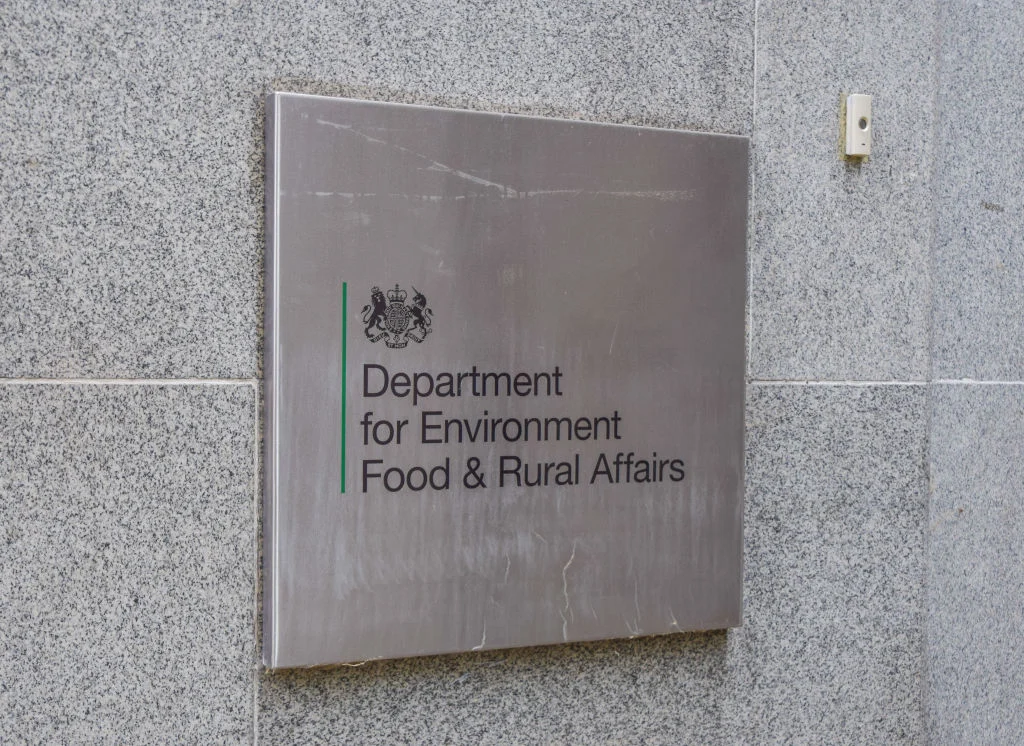
The Department for Environment, Food and Rural Affairs (Defra), which oversees England’s new regulatory system for precision-bred crops and has begun processing marketing notices for gene-edited plants, including strawberries and tomatoes. Photo: Vuk Valcic/SOPA Images/LightRocket via Getty Images
The Burnham Problem
Burnham wants closer economic relations with Europe without returning Britain to the single market or customs union. Agriculture is an important part of that reset.
Under the proposed UK-EU sanitary and phytosanitary agreement, Britain would align with certain EU rules governing food, plants and animals from mid-2027. Precision breeding, however, remains under negotiation.
The government insists that it wants to preserve Britain’s ability to regulate gene-edited crops independently. In a parliamentary answer in February, the Department for Environment, Food and Rural Affairs (Defra) said Britain and the EU had recognized that there would be areas where the UK retained its own rules.
The irony is that Britain is negotiating closer alignment just as its new biotechnology regime begins to bear fruit, while Brussels itself is liberalizing. The EU’s new rules for certain gene-edited plants will apply from 2028, but exactly how the two systems will interact remains unresolved.
Different rules could complicate exports and leave farmers uncertain about whether crops legal in Britain can be sold in the EU. There are also legitimate concerns about patents, seed ownership and biodiversity. Those are arguments for sensible regulation, not for abandoning the technology.
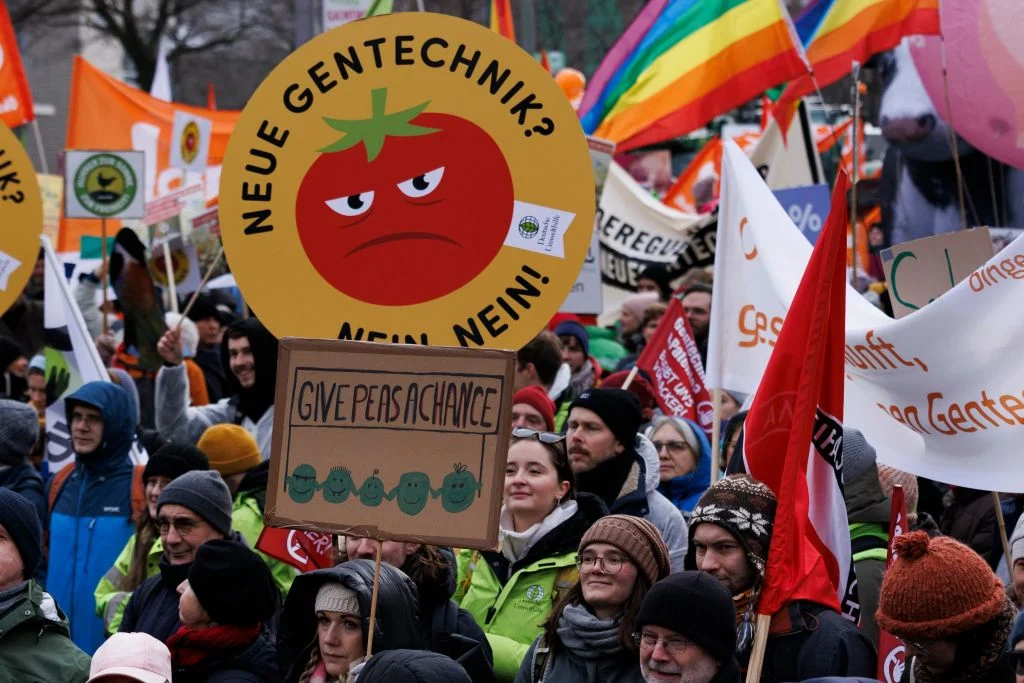
People protest against agricultural policy, including genetically modified crops, during a demonstration by the “We’re fed up” alliance in front of the Willy Brandt House in Germany in 2024. Photo: Carsten Koall/picture alliance via Getty Images
Have Attitudes Toward GMOs Changed?
Public attitudes have frequently been more suspicious than the scientific evidence would suggest. Europeans in particular have a long history of unease about genetically modified (GM) food. In a 2010 Eurobarometer survey, 61% of Europeans said GM food made them feel uneasy, while the same proportion disagreed that its development should be encouraged.
That hostility appears to have softened. In a 2022 EU-wide survey conducted for the European Food Safety Authority, 26% of respondents selected genetically modified ingredients as a food-safety concern. Just 8% selected new biotechnology in food production, including genome editing. The surveys asked different questions and cannot be directly compared, but they suggest that biotechnology is no longer the overriding food concern it once was.
Some skepticism is understandable. Food is uniquely intimate. People happily carry technologically sophisticated devices in their pockets and accept cutting-edge medicines when they become sick, but the suggestion that somebody has altered the DNA of tomatoes produces an instinctive reaction.
The history of GM crops did not help. The technology became associated with giant agricultural companies, patents, herbicide-resistant crops and fears that farmers would become dependent on a handful of seed manufacturers. Heavy reliance on herbicide-resistant crops also contributed in some places to the evolution of resistant weeds.
But that is an argument about how a technology is used, rather than proof that changing a plant’s genes is inherently dangerous. A major National Academies review found no substantiated evidence that currently commercialized genetically engineered crops presented greater risks to human health than conventionally bred crops.
A strawberry that fruits for longer or a tomato containing more vitamin D may not sound revolutionary. But the potential of gene editing goes far beyond either. Crops could be made more resistant to drought, heat, pests and disease, while requiring fewer chemical treatments and producing more nutritious food.
None of this removes the need for rigorous safety testing or scrutiny of patents, biodiversity and corporate control over seeds. But those are arguments for regulating the technology, not rejecting it.
For thousands of years, humans improved crops by selecting the mutations nature happened to provide. Gene editing allows us to make some of those changes deliberately and far more precisely. As agriculture confronts a changing climate and a growing demand for food, refusing to use that knowledge because of an old fear of “Frankenfoods” would be to strangle progress.
Welcome to the comments section of the Štandard daily. Please take note of our guidelines, comments are moderated by us. You can contact the moderators at support@statement.com.
Participate in the discussion
Comments are available to subscribers only. If you'd like to join the discussion, choose a subscription starting at €6.72 per month.
All comments 0
Register
Comments are available to registered users only. If you'd like to join the discussion, register here.