A sharp rise in energy prices pushed euro-zone inflation to 3.3% in August, leaving the ECB facing a tougher September rate decision as expectations of a hike build.
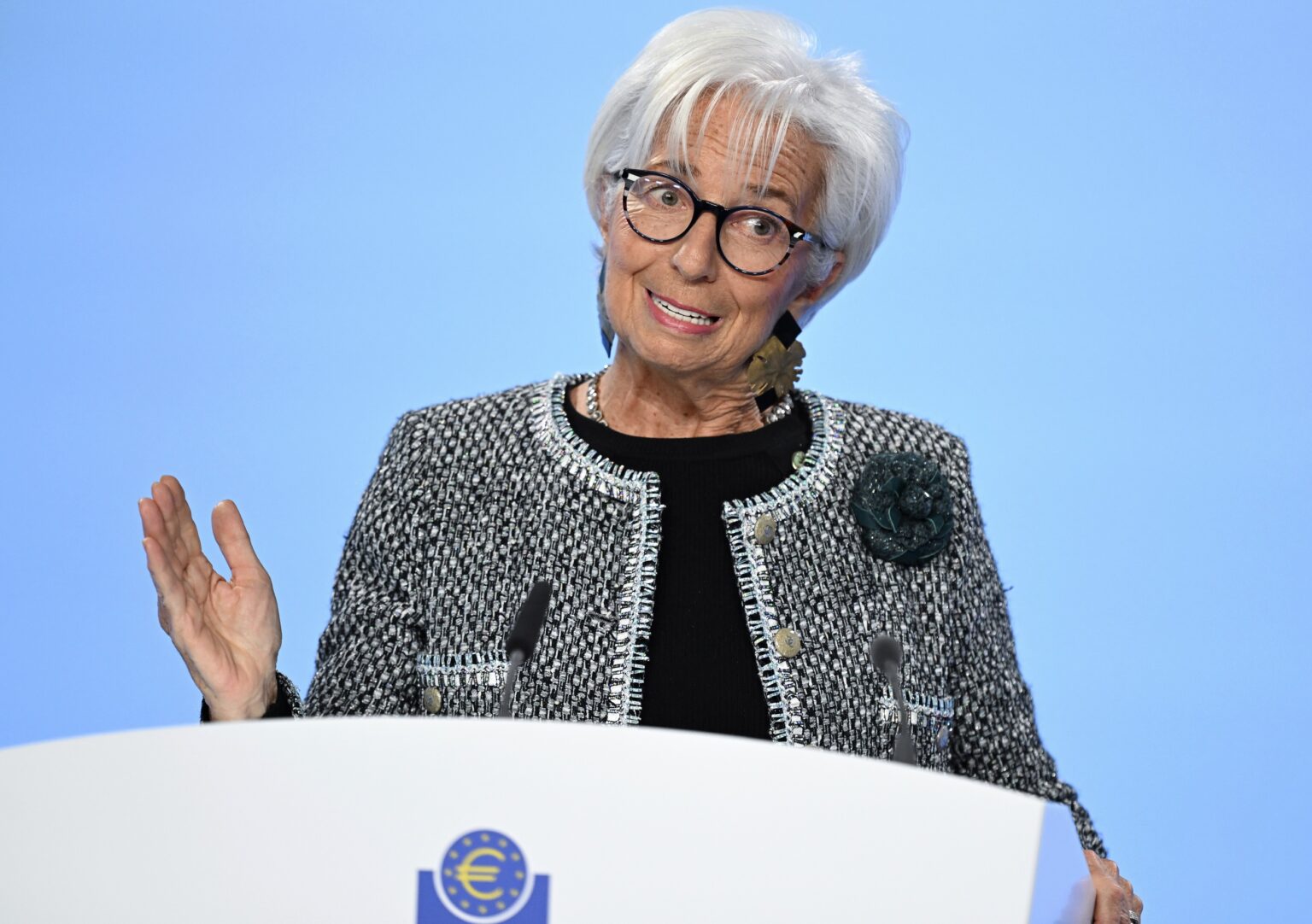
ECB President Christine Lagarde. The bank must now judge how effectively higher interest rates can tackle an inflation shock largely beyond its direct control. Photo: TASR/AP
|
On 1 September, Eurostat released its flash estimate of euro-zone inflation for the month of August. The annual rate of price increases was an estimated 3.3%, a notable uptick from 2.9% in July and 2.0% in August 2025.
Energy prices, which grew by an estimated 14.3%, are the main drivers behind the elevated inflation rate. In July, the rate was 10.3%, with an average rate of 10.1% for April–July.
As recently as February, energy prices were falling in the euro zone.
Prices on all items excluding energy increased by an estimated 2.2%. That rate has remained almost unchanged so far through 2026, which lends more credence to energy prices as the euro zone's main cause of inflation.
Energy Drives the Rebound
However, there was also a moderate push from non-energy industrial goods. The estimated August inflation rate for this product category was 1.2%, up from 0.9% in July. While modest compared to energy-price inflation, it is nevertheless noteworthy. Prices on non-energy industrial goods are the most stable in Eurostat’s HICP, normally increasing at 0.5%–0.8% per year.
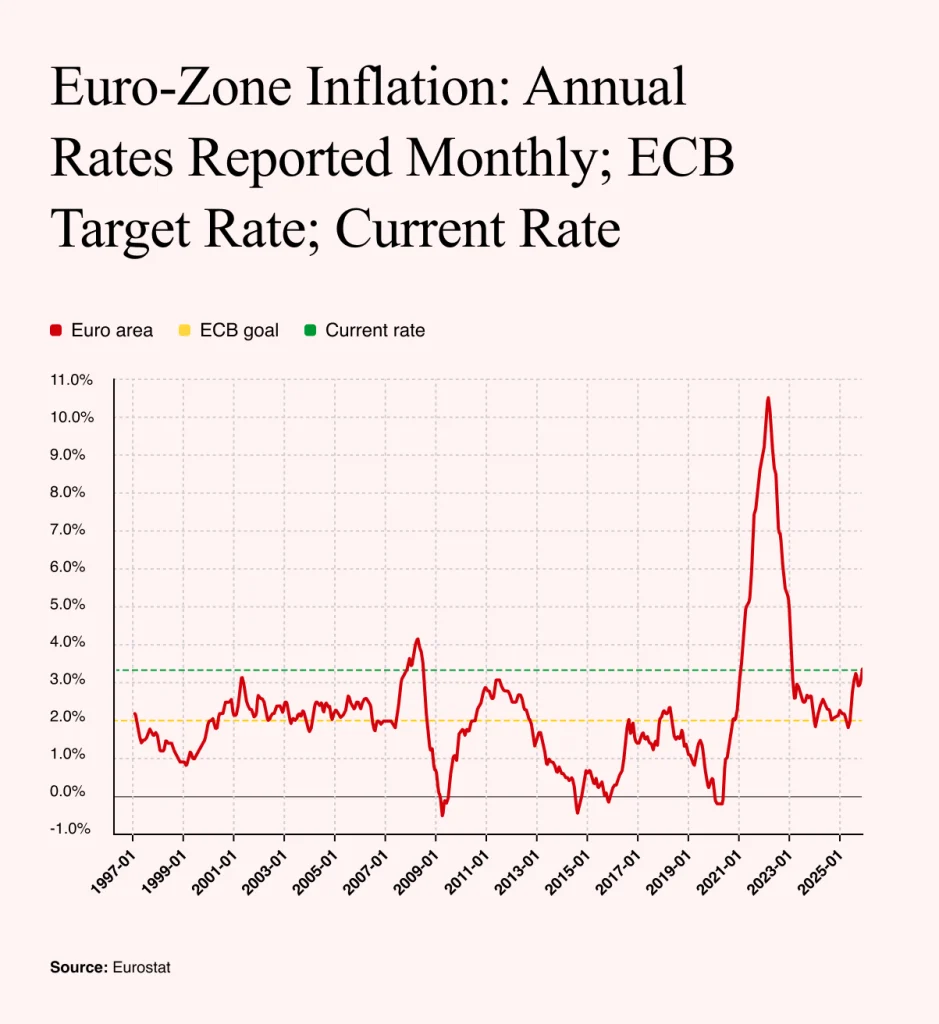
The current inflation rate is high by historical comparison. With the exception of the inflation spike in 2022–2023, the last time euro-zone inflation persistently exceeded 3% was from November 2007 to October 2008.
Source: Eurostat
Up until the rapid surge in inflation in 2022, the ECB was largely successful at keeping the currency area's inflation rate in the vicinity of its goal. After topping out at 10.6% in October 2022, inflation was trending down toward the ECB target rate. The decline continued through 2025.
Six months ago, that trend came to an abrupt end following the US-Israel war on Iran and its influence on the world's energy markets. Since monetary policy exercises decisive long-term influence over inflation, it is reasonable to expect that the ECB will respond to the elevated inflation rate with some measure of monetary tightening.
A Deep Divide Between Member States
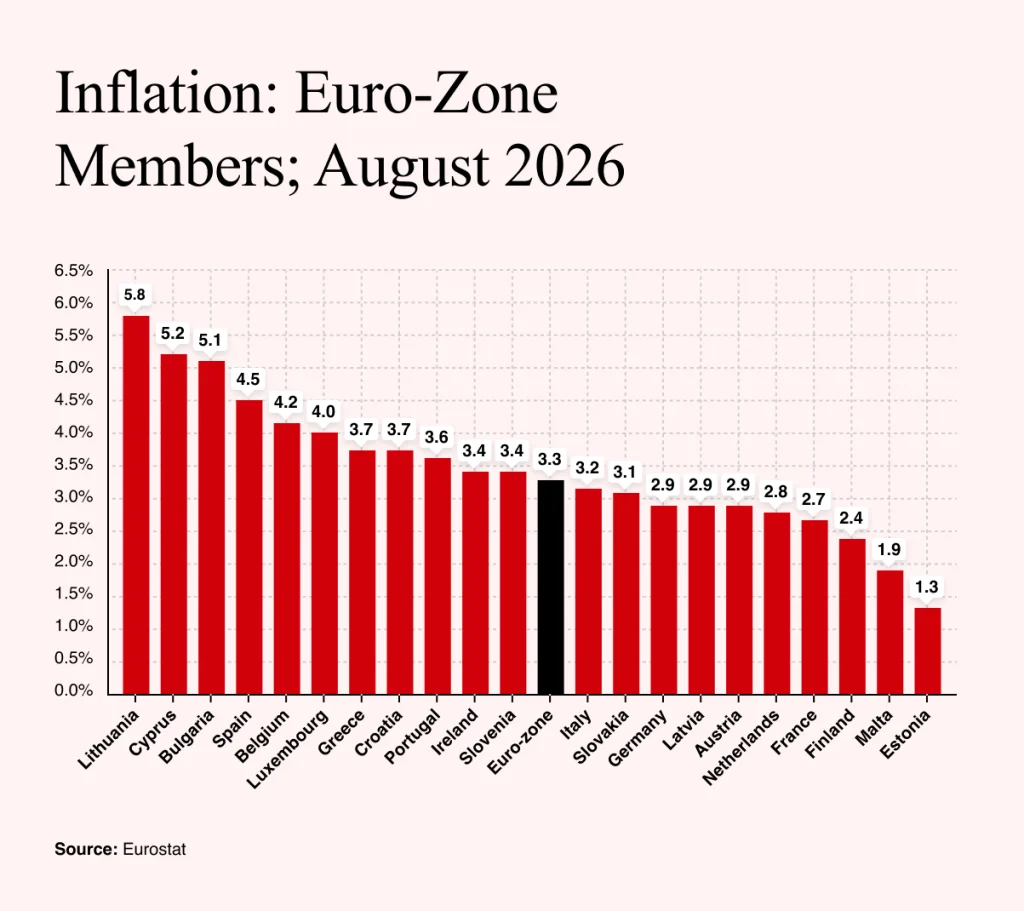
At the same time, in gauging any anti-inflationary response, the ECB has to take into account the widely different inflation rates in the member states. On the one hand, 19 of the 21 euro-zone members have an inflation rate above the 2% ECB target; on the other hand, the spread is significant, ranging from higher than 5% in Lithuania, Cyprus and Bulgaria to lower than 2.5% in Finland, Malta and Estonia.
Source: Eurostat
A wide spread of inflation per se is not a problem. Ten years ago, in August 2016, the euro zone had an annual inflation rate of 0.2%. Of the current euro-zone members back then, Belgium had the highest inflation rate at 2% while Cyprus had the lowest rate at -0.6%.
The current inflation figures were released just over a week before the ECB Governing Council's next monetary policy meeting. Expectations are building of a rate hike at that meeting.
The Limits of Monetary Tightening
The theory behind an inflation-fighting rate hike is straightforward. When a central bank raises its policy-setting interest rates, it tightens the supply of liquidity in the economy. This makes credit more expensive, which in turn increases the cost of credit-financed private-sector spending. As a result, inflation declines.
In practice, it is never that simple for a central bank to raise interest rates. One complicating factor is the root cause of inflation. To guarantee an effective outcome of a central-bank rate hike, the cause of inflation has to be responsive to higher rates. If inflation has a cause that lies beyond the influence of the central bank, such a move may not be effective.
As the Eurostat numbers indicate, the current inflation episode in the euro zone originates in an energy price shock. This puts the cause of inflation beyond the ECB's direct sphere of influence. However, a higher interest rate can still indirectly reduce energy-price inflation by causing the euro to appreciate. When it takes fewer euros to buy a barrel of oil, imported inflation declines or disappears entirely.
In addition to addressing the inflation problem as directly as possible, the ECB also has two other variables to consider: real interest rates and government debt costs.
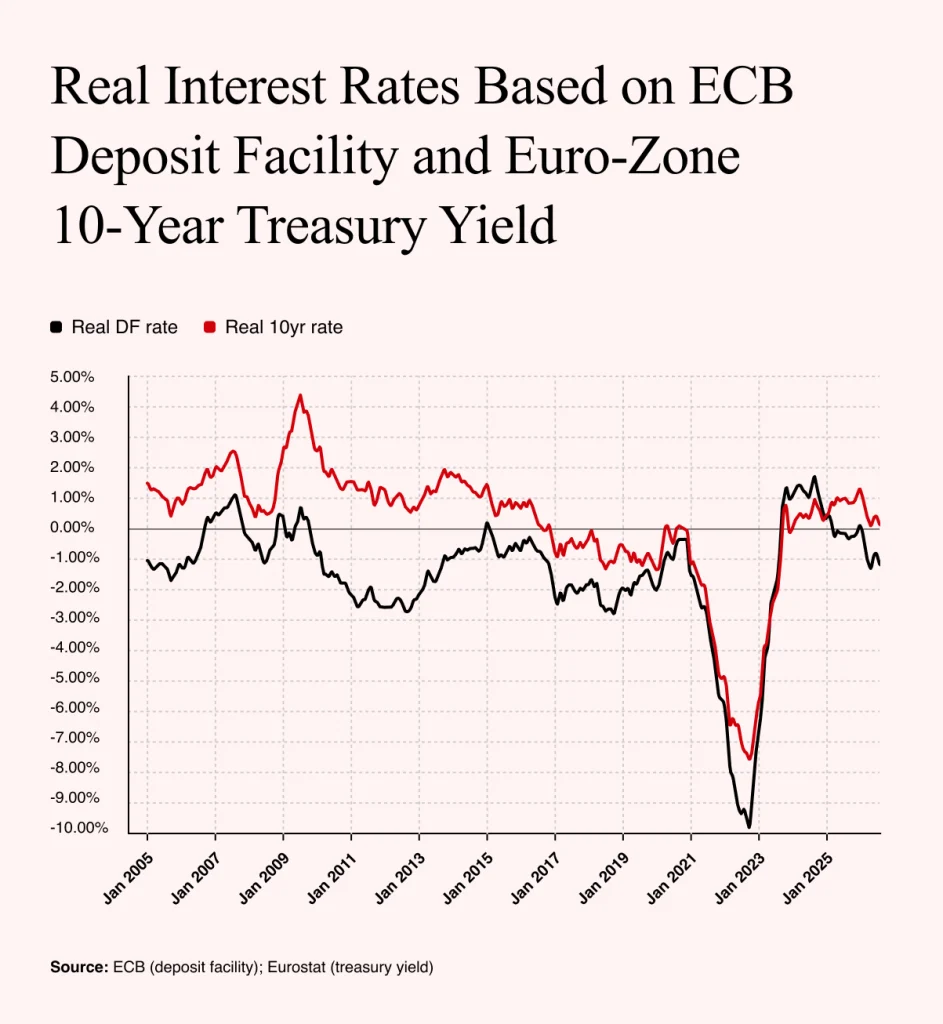
Real interest rates – in other words, nominal interest rates less inflation – influence household saving and borrowing decisions as well as business decisions to finance investments with credit. A higher real interest rate leads to less spending upfront but more saving and capital formation over the long run. A lower real interest rate has the opposite effect, especially when the real interest rate is negative.
Over the past ten years, real interest rates have been low or even negative in the euro zone. Although the situation varies from country to country, the overall trend has been that inflation exceeds interest rates. This holds regardless of whether inflation is compared with the ECB's deposit facility rate or the average yield on euro-denominated treasury securities.
In terms of government debt costs, which go up with higher interest rates, a rate hike by the ECB incentivizes deficit-reducing fiscal policy measures or combinations of lower spending and higher taxes. Such policy measures have a short-term depressing effect on overall economic activity.
Indirectly, higher interest rates influence government revenue through the progressive income tax system. When tax brackets are not sufficiently indexed to inflation and workers seek compensation for inflation through higher wages, they are pushed into higher tax brackets. This increases tax revenue.
If the ECB is successful in lowering inflation by means of higher interest rates, the effect is reversed, leaving government with less revenue.
Although the effect varies between euro-zone members, it is prevalent in Germany. Known as cold progression, it has been debated both in the past and in the present.
Statutorily, the ECB has only one primary policy goal, namely to maintain price stability. However, its past policies suggest that the central bank readily considers other variables as well. With influential analysts predicting a rate hike, the question is how high that increase will be and exactly how it will affect the euro-zone economy.
Welcome to the comments section of the Štandard daily. Please take note of our guidelines, comments are moderated by us. You can contact the moderators at support@statement.com.
Participate in the discussion
Comments are available to subscribers only. If you'd like to join the discussion, choose a subscription starting at €6.72 per month.
All comments 0
Register
Comments are available to registered users only. If you'd like to join the discussion, register here.