Siemens Shifts Core Industrial AI Development to the US
Siemens is choosing Seattle over Europe to develop the model that will underpin its industrial AI applications. CEO Roland Busch cites tighter regulation in Europe, the faster pace of development in the US and better access to top talent.
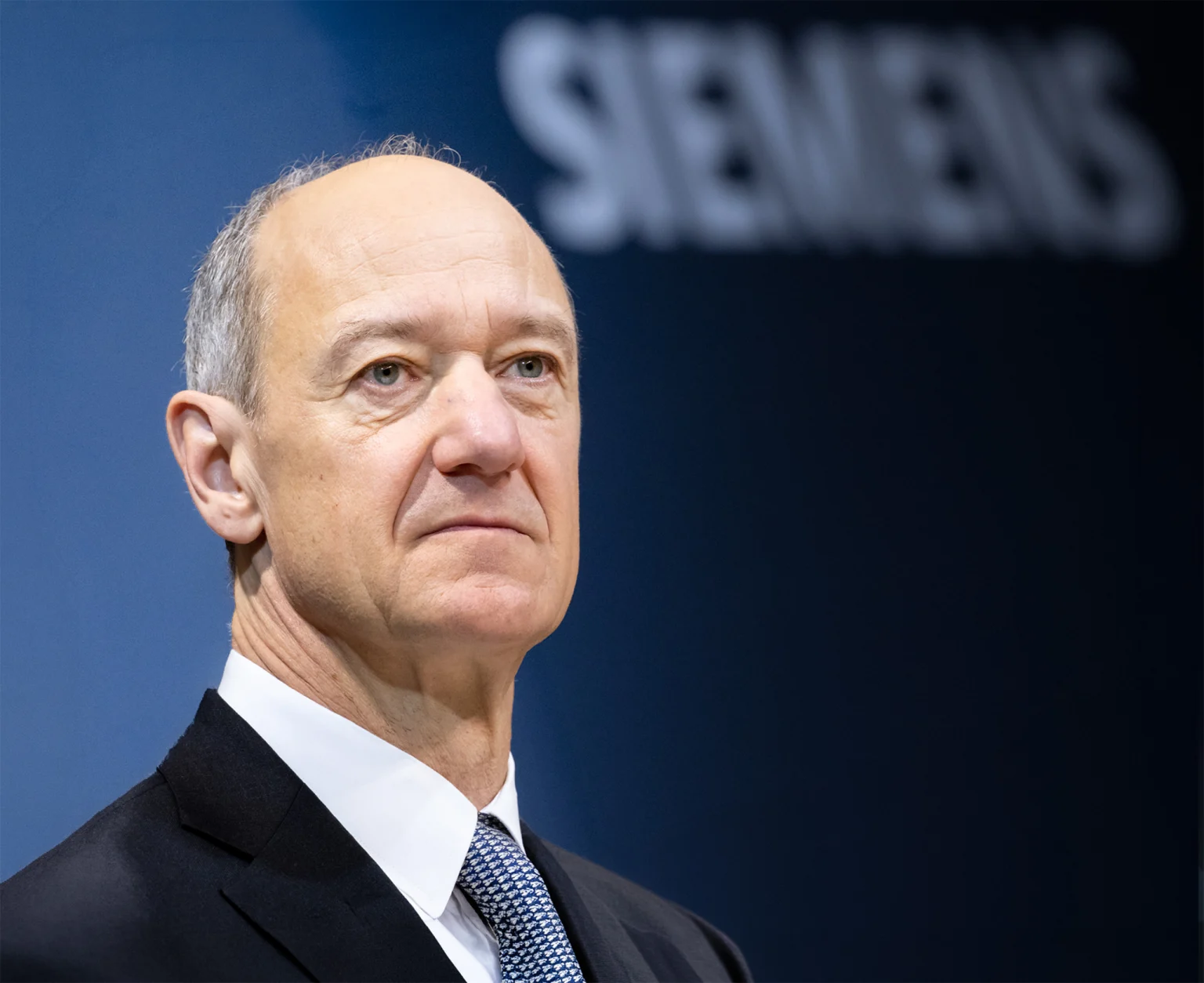
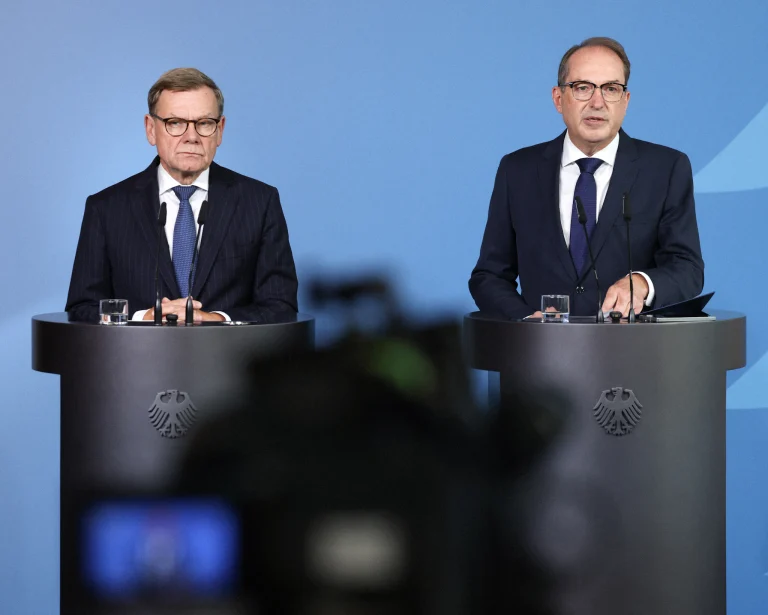
Roland Busch says Europe still has a narrow window to compete in industrial AI. Photo: Sven Hoppe/picture alliance via Getty Images
|
Siemens has announced that the core of its future industrial AI development will be based in the United States. In Seattle, the Munich-based technology group is establishing the main development hub for its industrial foundation models. Applications will continue to be developed in Germany and elsewhere in Europe.
Siemens CEO Roland Busch attributes the decision to strict regulation in Europe, better access to talent in the US and the American technology ecosystem. Germany’s high energy prices are also a problem for particularly energy-intensive applications, including large AI data centers. The technology itself will still be deployed in Europe.
When it comes to regulation, Busch points in particular to the European Artificial Intelligence Act (AI Act) and the Data Act. In his view, both sets of rules treat industrial applications too much like consumer AI. Referring to Germany, Busch says: “The successful model of the past 10 or 20 years no longer works.” The country still has strong companies and a solid industrial base, but businesses need to move faster, innovate more and adopt AI much more quickly.
A Warning Becomes a Decision
As early as April, Busch warned that Europe could miss out on planned investment. Most of the €1bn ($1.16bn) earmarked for industrial AI would probably go to the United States because of the regulatory burden, Bloomberg reported after speaking to Busch at the Hannover Messe, one of the world’s largest industrial trade shows. Siemens has now followed through with a decision to base the work in the US.
The decision concerns a field in which Siemens plans to invest heavily. In November 2025, the company announced that it would spend the €1bn over three years to expand its AI capabilities. At the same time, revenue from its digital business is expected to roughly double by 2030. The program forms part of the corporate transformation known as ONE Tech Company.
“The core of our AI development, in other words our industrial foundation model, which forms the basis for the applications, is being developed on the West Coast of the United States”, Busch said in an interview with the German daily WELT and the Spanish newspaper El País.
Europe’s Second AI Race
Busch sees Europe as already facing two distinct races in AI. At the end of August, after a German government retreat in Neuhardenberg, he reiterated his view. The first race, for chips, data centers and consumer AI, has already been decided. “Others are in the lead there!” The second, for industrial AI, is only just beginning. Europe has the machinery, process expertise and, above all, industrial data. But the window of opportunity is narrow.
Busch wrote that Germany and Europe needed to move faster and create more innovation-friendly conditions. Siemens is working to make data from different industrial systems usable for AI models and AI agents. According to Busch, work on the underlying model is already under way in Seattle.
Siemens does not intend to develop another language model there. Instead, it is working on what it calls an Industrial Foundation Model, an AI model designed for industrial applications. The aim is to combine large AI models with specialist knowledge and data from factories, machinery and industrial equipment. These include design data, measurement data, manufacturing data and images used in industrial quality control.
The Language of Engineers
The model is intended, in a sense, to understand the language of engineers and process a wide range of industrial data. A partnership struck in June with US company HighByte will bring together data from operational technology and information technology systems and prepare it for AI applications. Here, too, Siemens aims to make industrial data usable for AI models, agents and applications.
Siemens also has a development site in China, where Busch says acceptance of new technologies is particularly high. He warns against attributing the success of Chinese companies solely to government subsidies. In China, Siemens encounters capable competitors, skilled engineers and teams that are quick to adopt new technologies, including AI.
For Busch, this is where the problem with European regulation becomes clear. The Data Act has applied since September 2025. The EU law gives buyers, renters or lessees of connected devices and machines the right to access certain data generated through their use and, under certain conditions, share it with third parties.
Who Controls Industrial Data?
This applies not only to smartwatches and cars, but expressly to industrial machinery as well. The European Commission wants to use the legislation to create a European data market and enable new data-driven services. Busch sees this as a risk to Siemens’s industrial know-how.
According to Busch, the data made available under EU law includes more than simple measurements. It could reveal how machines are designed, controlled or optimized for efficiency. He argues that the Data Act forces companies to disclose know-how and pass it on to third parties. “That is completely absurd”, the Siemens CEO says.
The regulation does include safeguards for trade secrets, but Siemens considers them inadequate. On 24 August, a submission by Siemens on proposed changes to the Data Act was published in the lobbying register of the German Bundestag, Germany’s federal parliament.
In the submission, Siemens calls for stronger protection of trade secrets and greater scope to use industrial product data for innovation and AI. The document was sent to the Federal Chancellery, the office of the German chancellor, at the end of June. Its publication in the register shows that the political dispute over the legislation is ongoing.
Europe’s Regulatory Lag
Busch considers the other major piece of legislation, the AI Act, too slow and too detailed. A European legislative process can take two years. In that same period, AI models could go through six or eight iterations. By the time a rule finally takes effect, the technology may already have moved in a different direction. “We are always lagging behind”, Busch says.
Europe should therefore rely more heavily on guardrails and distinguish between industrial applications and products aimed at consumers when regulating AI. The EU has since relaxed some of its AI rules and extended deadlines. Key requirements for high-risk AI in machinery, robots and other physical products will now apply only from August 2028.
The scope for testing has also been expanded and some administrative requirements reduced. The European Commission describes the changes as supporting innovation and competitiveness.
Siemens Is Not Leaving Germany
Busch’s decision does not signal a broader retreat by Siemens from Germany. He reaffirms the company’s commitment to the country. Siemens needs advanced technology, skilled workers and the right environment. On those counts, Germany remains an attractive place to invest.
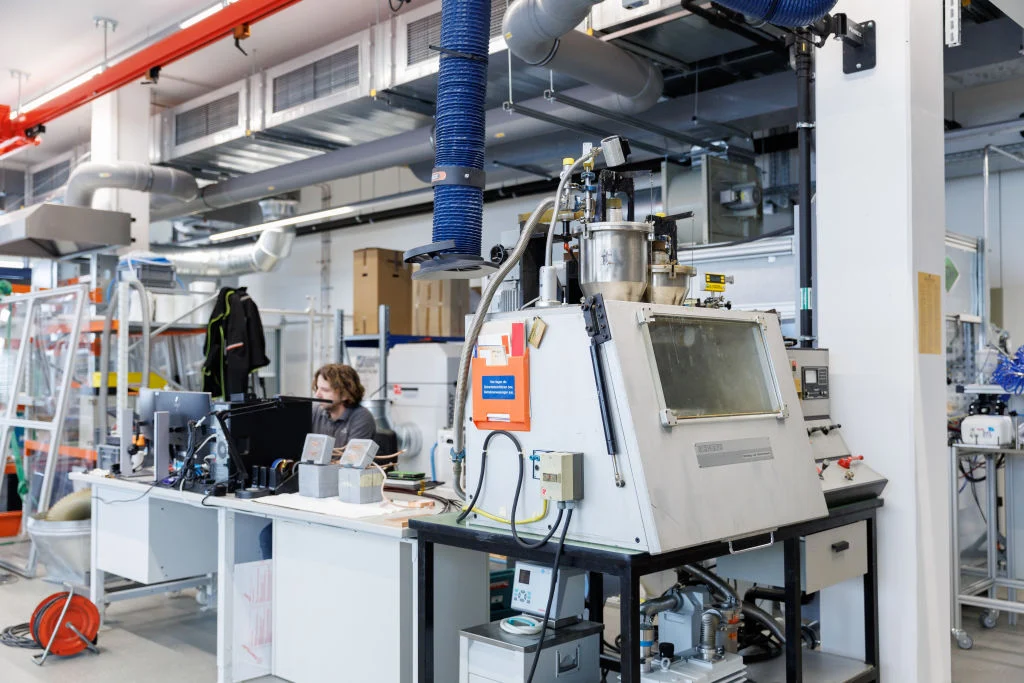
Siemens’s research and laboratory building in Erlangen, where the company has invested around €1bn since 2014. Photo: Daniel Karmann/dpa/picture alliance via Getty Images
The company has recently backed that commitment with substantial investment. In early July, Siemens announced €300m ($348m) for Frankfurt and Offenbach. It has also continued to invest in Erlangen. Since 2014, around €1bn ($1.16bn) has gone into the campus there.
Busch describes the current wave of AI investment as “the biggest bet on technology in history”. The eventual returns are not yet certain. He does not, however, see a classic debt-financed bubble. A large share of the investment comes from companies with strong cash flows.
Siemens is therefore betting on both sides of the boom. On one side is the infrastructure that supplies AI data centers with power and automation. On the other is industrial AI, which is only just beginning to take shape.
The German company will develop the technological core of that future business primarily in Seattle.
Welcome to the comments section of the Štandard daily. Please take note of our guidelines, comments are moderated by us. You can contact the moderators at support@statement.com.
Participate in the discussion
Comments are available to subscribers only. If you'd like to join the discussion, choose a subscription starting at €6.72 per month.
All comments 0
Register
Comments are available to registered users only. If you'd like to join the discussion, register here.