German Economy Ministry Challenges Merz over Tax Policy Ahead of Saxony-Anhalt Vote
A letter from a senior official in Economy Minister Katherina Reiche’s department has reignited tensions with Finance Minister Lars Klingbeil over tax policy. Days before a crucial state election in Saxony-Anhalt, the dispute has exposed divisions within Chancellor Friedrich Merz’s coalition.
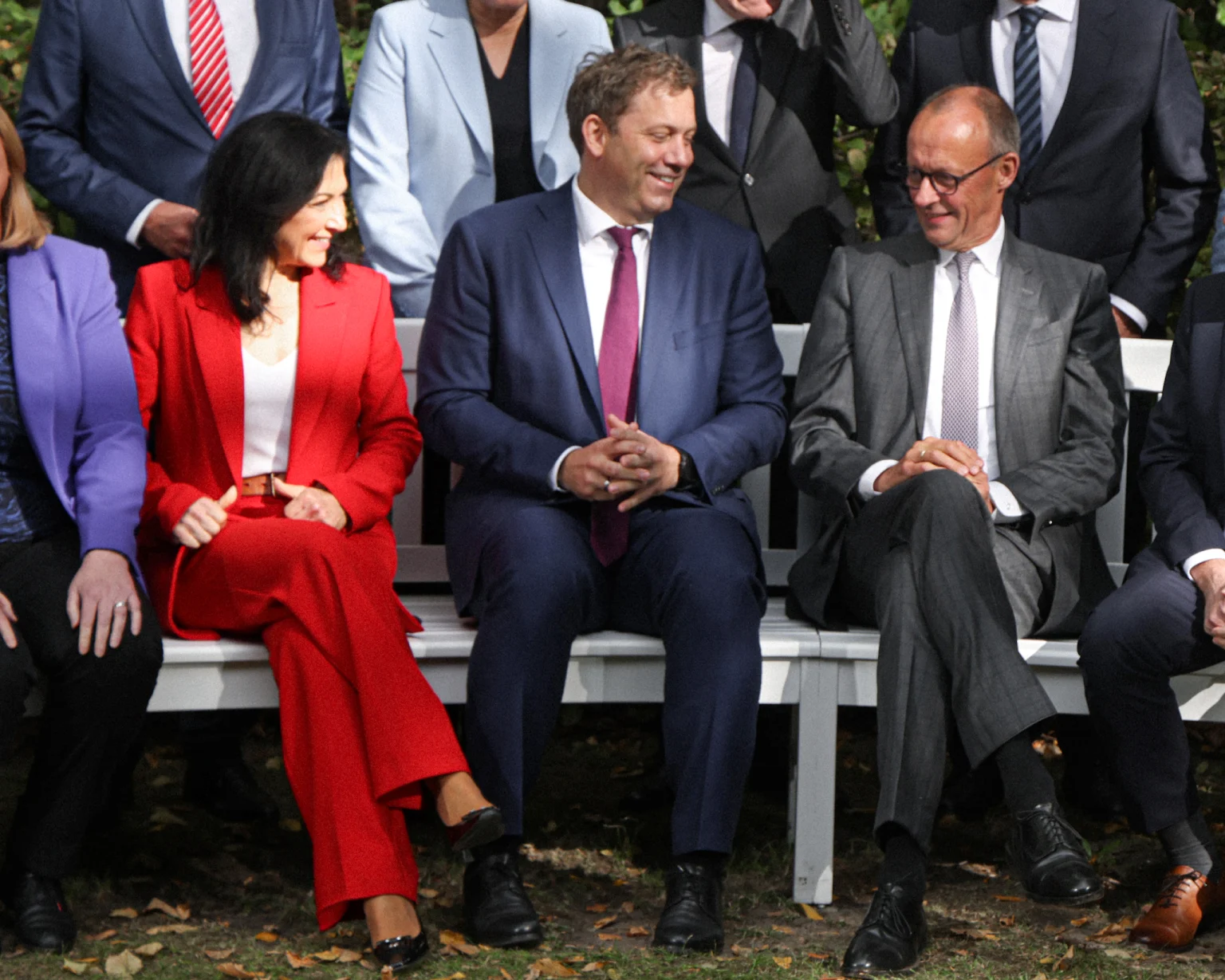
Chancellor Friedrich Merz, right, with Finance Minister and Vice-Chancellor Lars Klingbeil, center, and Economy Minister Katherina Reiche. A renewed dispute over tax policy has put relations within the coalition under strain. Photo: Sean Gallup/Getty Images
|
Germany’s Economy Ministry has questioned a tax compromise backed by Chancellor Friedrich Merz just days before the state election in Saxony-Anhalt in eastern Germany. In a letter from one of its senior officials, the department headed by Economy Minister Katherina Reiche warns that the proposed changes would amount to an “inflation-driven hidden tax increase” and calls for further relief.
The compromise was agreed by the three parties in Merz’s governing coalition: his conservative Christian Democratic Union (CDU), its Bavarian sister party the Christian Social Union (CSU) and the center-left Social Democratic Party (SPD).
Finance Minister Lars Klingbeil, who is also vice-chancellor and SPD leader, told Deutschlandfunk that the letter from the Economy Ministry was also “criticism of the chancellor”. The coalition committee, the senior body through which the governing parties settle political disputes, had jointly approved the reform. This kind of communication was “not good for the government”, Klingbeil said, “especially not shortly before the election in Saxony-Anhalt”.
Klingbeil called on Merz to step in. On Tuesday, he had already accused Reiche of behaving like an “opposition within the government”. Decisions had to be taken jointly and then supported by all sides, he said. The cabinet is due to approve the income tax reform on Wednesday. Reiche’s ministry nevertheless said it would support the bill.
The dispute was triggered by a 31 August letter from Economy Ministry State Secretary Thomas Steffen, one of Reiche’s senior officials, to his counterpart Rolf Bösinger at the Finance Ministry. In it, Steffen calls for full compensation for fiscal drag, which occurs when inflation-driven pay rises push taxpayers into higher tax brackets even though their purchasing power has barely increased.
The government would otherwise be the first since 2015 not to offset the effect in full. Steffen also wants tax bracket thresholds to be adjusted automatically for inflation in future.
He is also calling for a higher income threshold at which the top tax rate applies and the complete abolition of the remaining solidarity surcharge, a supplementary levy on income and corporate taxes originally introduced to help finance German reunification. Handelsblatt was the first to report on the letter in detail.
Tax Relief Fails to Offset New Burdens
The tax compromise was agreed by the coalition committee on 1 July and backed by Merz. The package is due to take effect in January 2027 and provide around €10bn ($11.6bn) in annual relief from 2028. According to the federal government, the main beneficiaries will be families and people on low and middle incomes. A middle-income family with two children is expected to save more than €600 ($695) a year. The highest earners, by contrast, will pay more.
The package has also drawn criticism on other grounds. Some new laws, including the health care reform, impose additional costs on families that in some cases exceed the relief offered by the planned tax changes.
Merz has publicly defended the decision to ask more of top earners. In a government statement in July, he described their greater contribution as a “contribution to social justice in our country”. The Economy Ministry takes a different view, arguing that additional burdens from higher direct taxes should be avoided, particularly through higher marginal tax rates on top earners.
Reiche’s ministry rejects suggestions that she is trying to block cabinet approval. After the letter became public, the ministry said it had backed the reform during consultations between government departments. The draft largely reflects the coalition committee’s decisions, which Reiche continues to support. The letter, it said, was intended to set out the ministry’s “fundamental economic policy stance on taxation for the coming years”.
Reiche’s demands for full compensation for fiscal drag, lower burdens on higher incomes and further relief for companies remain unchanged. She is also seeking changes for business owners. The issue stems from the already approved gradual reduction in corporate tax, which applies to the profits of corporations such as joint-stock companies and limited liability companies.
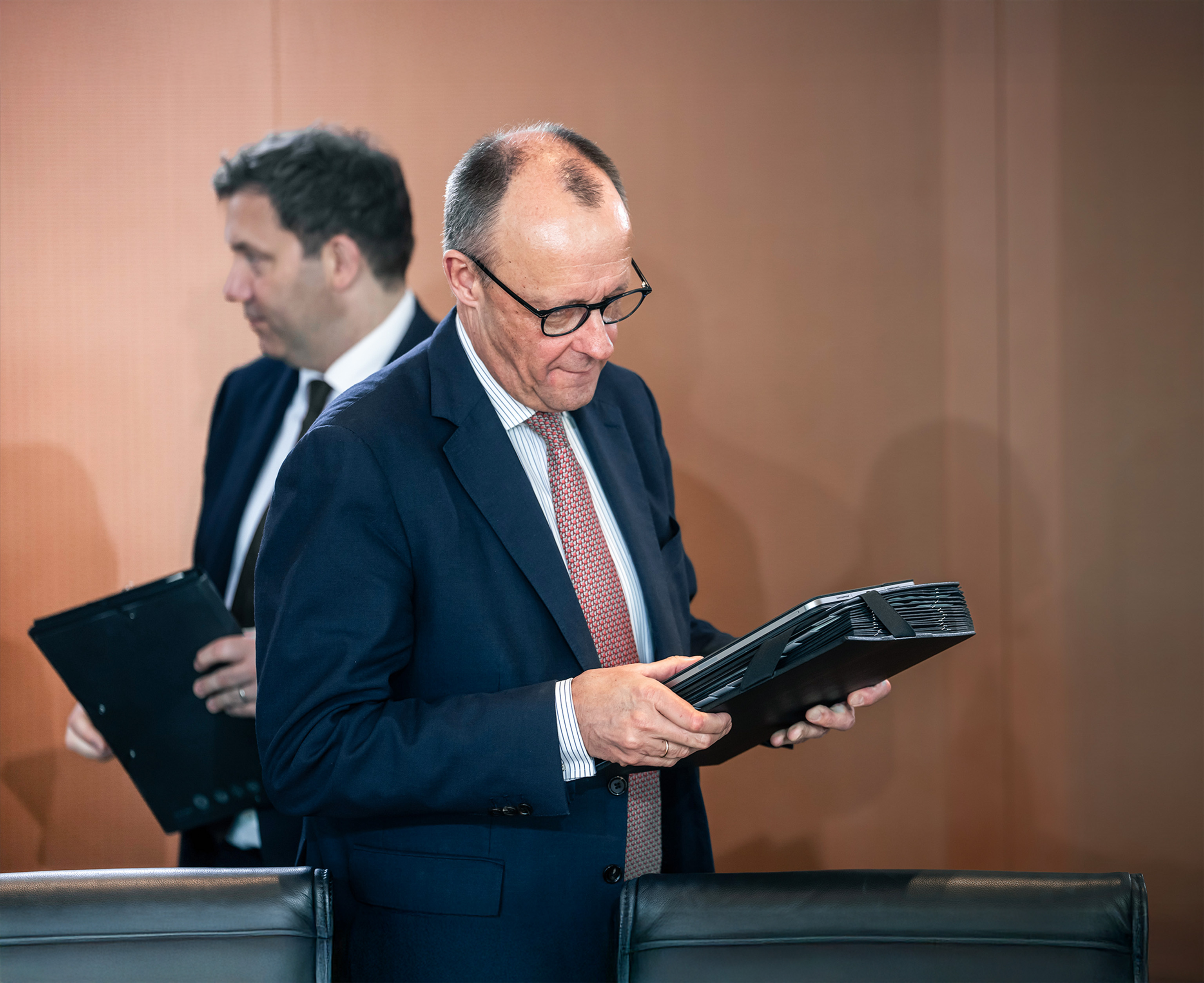
Notably absent from the latest cabinet meeting was Economy Minister Katherina Reiche, now at the center of the coalition’s tax dispute. Photo: Michael Kappeler/dpa/picture alliance via Getty Images
Many small and medium-sized businesses, however, operate as sole proprietorships or partnerships and are subject to income tax. Steffen’s letter therefore calls for more favorable tax treatment of retained profits and a simpler option for partnerships to be taxed like corporations.
Cabinet Tensions Are Nothing New
It is not the first public clash between Reiche and the chancellor. In April, Merz had already urged his economy minister to show restraint. At the time, Reiche and Klingbeil were at odds over government intervention following sharp rises in energy and fuel prices. Merz had asked both ministers to draw up joint proposals. Reiche nevertheless spoke to reporters and described SPD proposals as “expensive, ineffective and constitutionally questionable”.
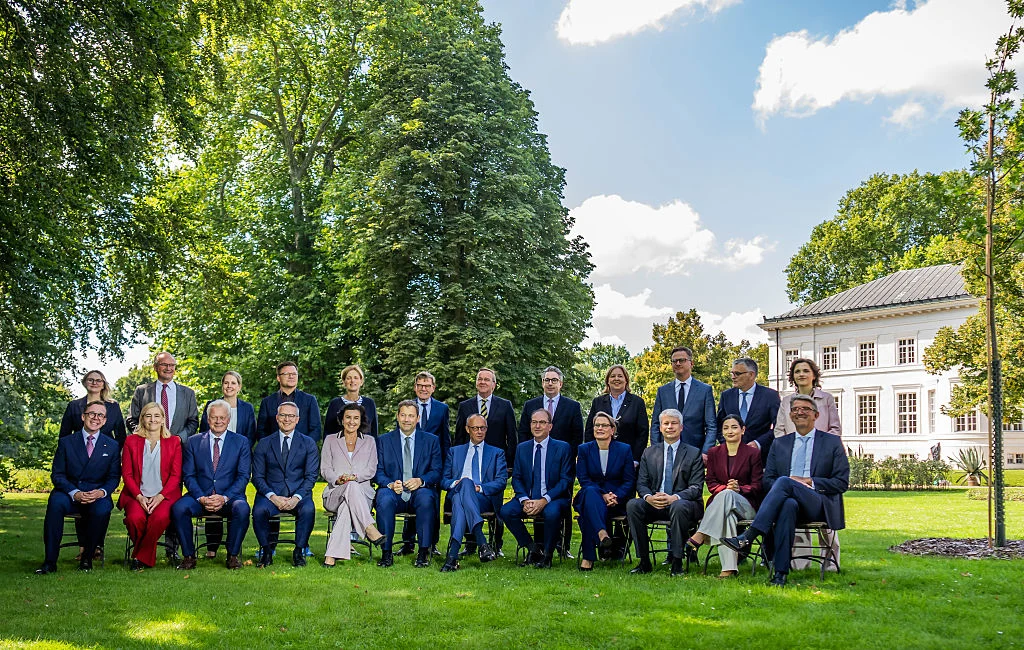
Reiche also missed the two-day cabinet retreat in Neuhardenberg on 25 and 26 August, where competitiveness and growth were among the main topics. She was still recovering from a routine operation and was represented by Parliamentary State Secretary Stefan Rouenhoff.
The latest dispute comes in the final days of a difficult state election campaign for Merz’s CDU.
High-Stakes Vote on Sunday
On Sunday, voters in Saxony-Anhalt will elect a new state parliament. The latest pre-election poll for German public broadcaster ARD puts the Alternative for Germany (AfD) at 42%. The CDU, led by State Premier Sven Schulze, is on 22%, followed by the Left party on 11%, the SPD on 8% and the Greens on 6%. The AfD could thus, for the first time, become the largest party in a German state by such a wide margin.
Merz traveled to the state on Monday to support Schulze. Appearing alongside him in Quedlinburg, the chancellor warned against an AfD victory. Saxony-Anhalt must not become “a testing ground for angry citizens”, he said. Two days later, the cabinet is due to vote on a tax reform that Reiche’s ministry says does not go far enough.
Welcome to the comments section of the Štandard daily. Please take note of our guidelines, comments are moderated by us. You can contact the moderators at support@statement.com.
Participate in the discussion
Comments are available to subscribers only. If you'd like to join the discussion, choose a subscription starting at €6.72 per month.
All comments 0
Register
Comments are available to registered users only. If you'd like to join the discussion, register here.