A growing number of voices in the CDU are calling for a rethink of the party's relationship with the AfD. Officially, its incompatibility resolution rules out coalitions and similar forms of cooperation. Now the CDU's youth wing in eastern Germany is joining the debate.
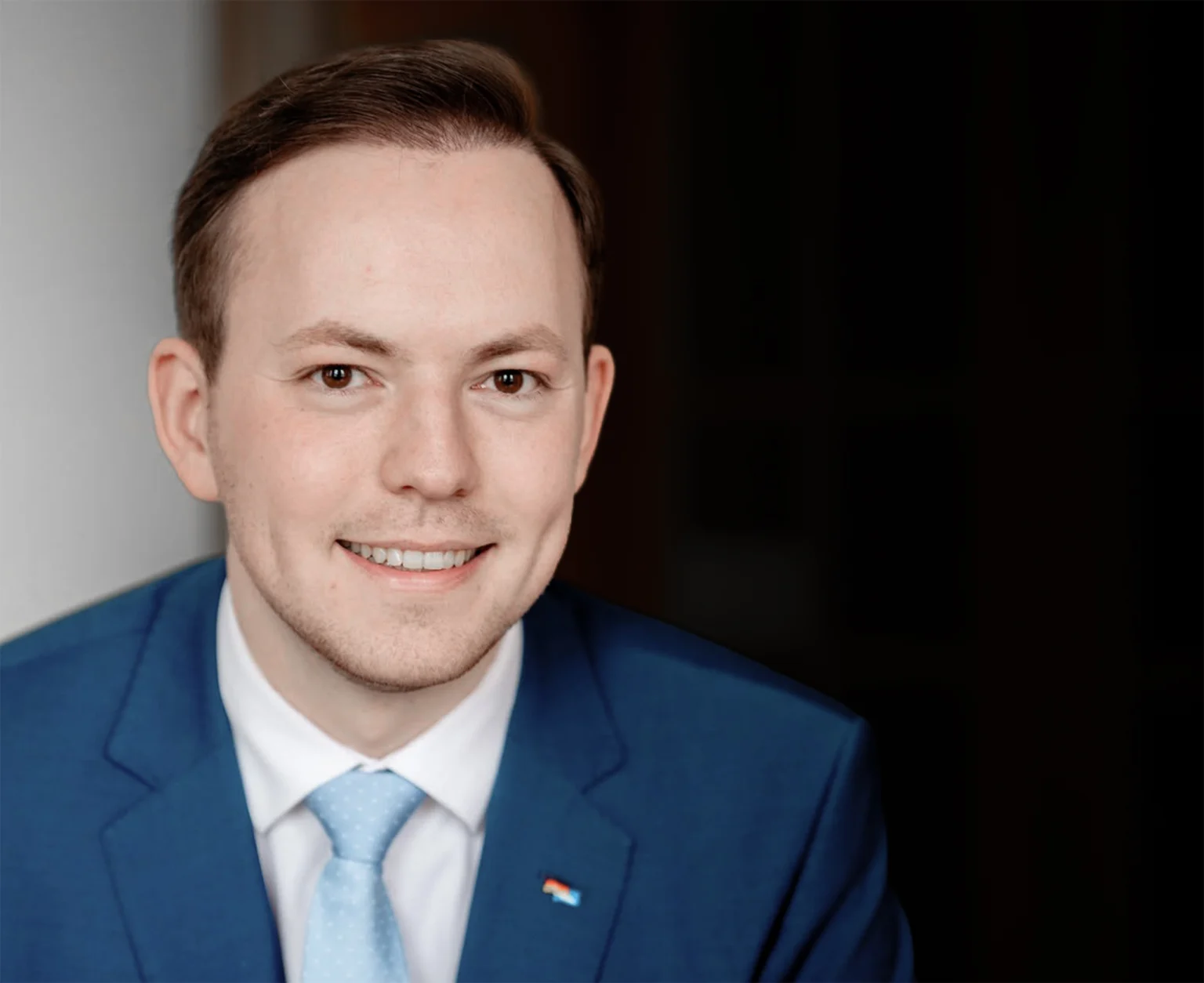
Nico Elsner, head of the Junge Union in Saxony-Anhalt, argues that the CDU should accept parliamentary majorities secured with AfD votes while continuing to rule out a coalition. Photo: Nico Elsner/Facebook
|
Nico Elsner, head of the Junge Union (JU) in Saxony-Anhalt, has questioned the CDU's policy of strict separation from the AfD just days before the state election. He continues to rule out a coalition with the party but considers parliamentary cooperation, including majorities secured with AfD votes, legitimate.
Elsner thus joins other CDU politicians seeking to dismantle at least parts of the Brandmauer, the firewall intended to prevent cooperation with the AfD. He has led the JU in Saxony-Anhalt since 2025 and is standing for election to the state parliament in the Wittenberg-Zahna-Elster constituency.
The federal party's resolution rules out any form of cooperation. In practice, CDU politicians or parliamentary groups sometimes refrain from introducing motions if they fear they could pass with AfD votes.
On the FAZ Frühdenker podcast, Elsner said a party that tolerates extremists in its ranks could not be a coalition partner. In parliament, however, elected representatives still had to deal with one another. In many local councils across eastern Germany, that has long been routine.
When the Wrong People Agree
“Something that is right does not become wrong just because the wrong people agree with it”, Elsner said, capturing a dilemma facing the CDU in many local councils: should politicians refuse to support a good law simply because it was proposed by the AfD?
Elsner considers a firewall that also extends to voting behavior to be wrong. Such an approach, he said, could “break the CDU's neck”. In practice, this gives parties on the left an advantage. As long as conservative CDU and AfD lawmakers do not vote together, they cannot defeat left-wing policies in parliament.
Elsner's argument echoes that of historian Andreas Rödder, founder of the Republik 21 think tank and former chairman of the CDU's commission on fundamental values. In dealing with the AfD, Rödder argues for red lines that must not be crossed but also advocates pragmatic, case-by-case cooperation to advance important issues.
Such remarks carry particular weight just days before the crucial election in Saxony-Anhalt. In the latest Infratest dimap poll, the AfD stands at 42%, while Minister-President Sven Schulze's CDU is at just 22%. The Left, the Social Democratic Party (SPD) and the Greens are at 11%, 8% and 6% respectively.
On those figures, the AfD would fall short of an absolute majority. Whether a government could be formed without it or a CDU-led minority government could emerge after the election is pure speculation. What is clear is that the AfD is expected to become the largest party in the state parliament.
Party Leadership Holds the Line
Officially, the CDU's position remains unchanged. The party's 2018 resolution rules out “coalitions and similar forms of cooperation” with the AfD and the Left.
After FDP politician Thomas Kemmerich was elected Minister-President of Thuringia with votes from the CDU and AfD, the CDU presidium tightened the wording in 2020. It declared that there would be no cooperation with the AfD “either directly or indirectly”. At the same time, the party acknowledged that points of contact in day-to-day parliamentary business could not be entirely avoided.
Saxony-Anhalt's CDU Minister-President Sven Schulze has so far held firmly to that line. In May, he rejected cooperation with extremist parties on either the right or the left.
Chancellor Friedrich Merz also reaffirmed the party's position at the weekend. He warned that an AfD government could harm Saxony-Anhalt's economy. Even so, speculation persists that the firewall could fall after 6 September.
Pressure Builds
The opposing view within the CDU is not new, but until recently it remained marginal. In recent weeks, however, critics of the firewall have become more vocal.
Saxony's CDU Minister-President Michael Kretschmer said in July that anyone still talking about firewalls had “failed to read” the signs of the times. Politicians had to talk to anyone willing to talk, he said. Kretschmer governs Saxony without his own parliamentary majority and currently relies on votes from parties on the left.
The same argument is being made in western Germany. Baden-Württemberg CDU lawmaker Wolfgang Reinhart described the firewall as a failure in June. “Hiding behind” the firewall had not weakened the AfD, he said. The CDU needed to challenge the party on substance.
Parts of the CDU grassroots in eastern Germany have held this view for some time. The party's Harz district branch in Saxony-Anhalt called for the incompatibility resolution to be scrapped as early as April 2025. Its chairman, state lawmaker Ulrich Thomas, argued as early as 2019 that a coalition with the AfD should not be ruled out categorically.
In eastern Germany, the AfD has long since become a major electoral force and is the largest party in many areas, while the CDU continues to lose ground and has effectively ceded that position.
A Precedent in Parliament
In July this year, the debate also reached the Brandenburg CDU's business wing. Two board members of the Mittelstands- und Wirtschaftsunion (MIT) called for the incompatibility resolution to be scrapped or fundamentally revised. Co-author Frank Goral said at the time: “The firewall is wrong.”
Even critics of the firewall disagree over what counts as cooperation. The approach Elsner describes has already been employed by the CDU/CSU at federal level. In January 2025, the then CDU/CSU opposition put its five-point migration plan to the Bundestag even though it could pass with AfD votes.
The motion passed by 348 votes to 344, with 187 votes in favor from the CDU and CSU, 80 from the FDP and 75 from the AfD. Merz denied at the time that this amounted to cooperation with the AfD. The Bundestag vote documents the result.
Only the ensuing media-driven wave of outrage gave the firewall a new lease on life.
The AfD Keeps Gaining Ground
The approaching election in Saxony-Anhalt has once again put the debate in the international spotlight. For the first time, an AfD politician could become minister-president of a German state.
Elsner therefore draws the line not at parliamentary majorities but at governing together. “Cooperation, yes, but no governing coalition”, the moderator summarized his position on the podcast. Elsner replied: “Exactly.”
After the election on 6 September, the balance of power will shape the terms of the CDU's internal debate. Critics have long argued that the firewall is making the AfD ever stronger.
The reasoning is straightforward: behind the firewall, the AfD never comes under pressure to practice realpolitik. It can adopt whatever positions it likes without having to test its views against reality.
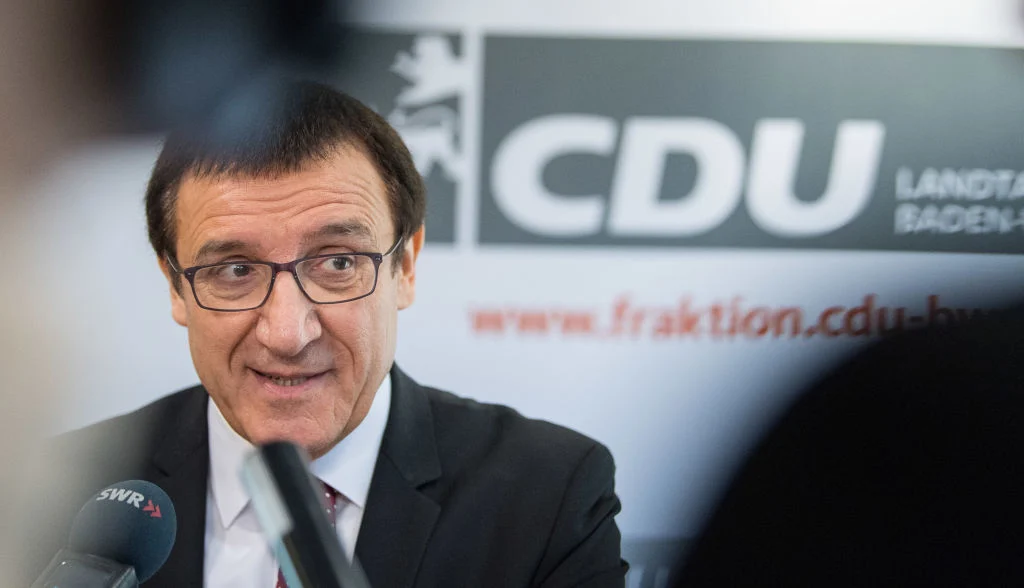
Wolfgang Reinhart, chairman of the CDU parliamentary group in the Baden-Württemberg state parliament, has described the firewall against the AfD as a failure. Photo: Sebastian Gollnow/dpa/picture alliance via Getty Images
Wolfgang Reinhart said in June 2026 that hiding behind the firewall had caused the AfD to triple in size. Andreas Rödder put it succinctly: “The higher the firewall was built, the stronger the AfD became.”
In eastern Germany, the issue has long since become existential for the CDU.
Placeholder For Topreaded Placeholder For Topreaded
Placeholder
Placeholder
Placeholder For Topreaded Placeholder For Topreaded
Placeholder
Placeholder
Placeholder For Topreaded Placeholder For Topreaded
Placeholder
Placeholder
Placeholder For Topreaded Placeholder For Topreaded
Placeholder
Placeholder
Placeholder For Topreaded Placeholder For Topreaded
Here is placeholder for Article excerpt Here is placeholder for Article excerpt Here is placeholder for Article excerpt Here is placeholder for Article excerpt
Here is placeholder for Article excerpt Here is placeholder for Article excerpt Here is placeholder for Article excerpt Here is placeholder for Article excerpt
Here is placeholder for Article excerpt Here is placeholder for Article excerpt Here is placeholder for Article excerpt Here is placeholder for Article excerpt
Welcome to the comments section of the Štandard daily. Please take note of our guidelines, comments are moderated by us. You can contact the moderators at [email protected].
Participate in the discussion
Comments are available to subscribers only. If you'd like to join the discussion, choose a subscription starting at €6.72 per month.
All comments 0
Register
Comments are available to registered users only. If you'd like to join the discussion, register here.