Volkswagen Sets End Dates for Vehicle Production at Four German Plants
Under a new Volkswagen plan, four German sites employing around 40,000 people are due to stop building vehicles over the next eight years. Two were retooled for electric cars only a few years ago at a cost of billions of euros.
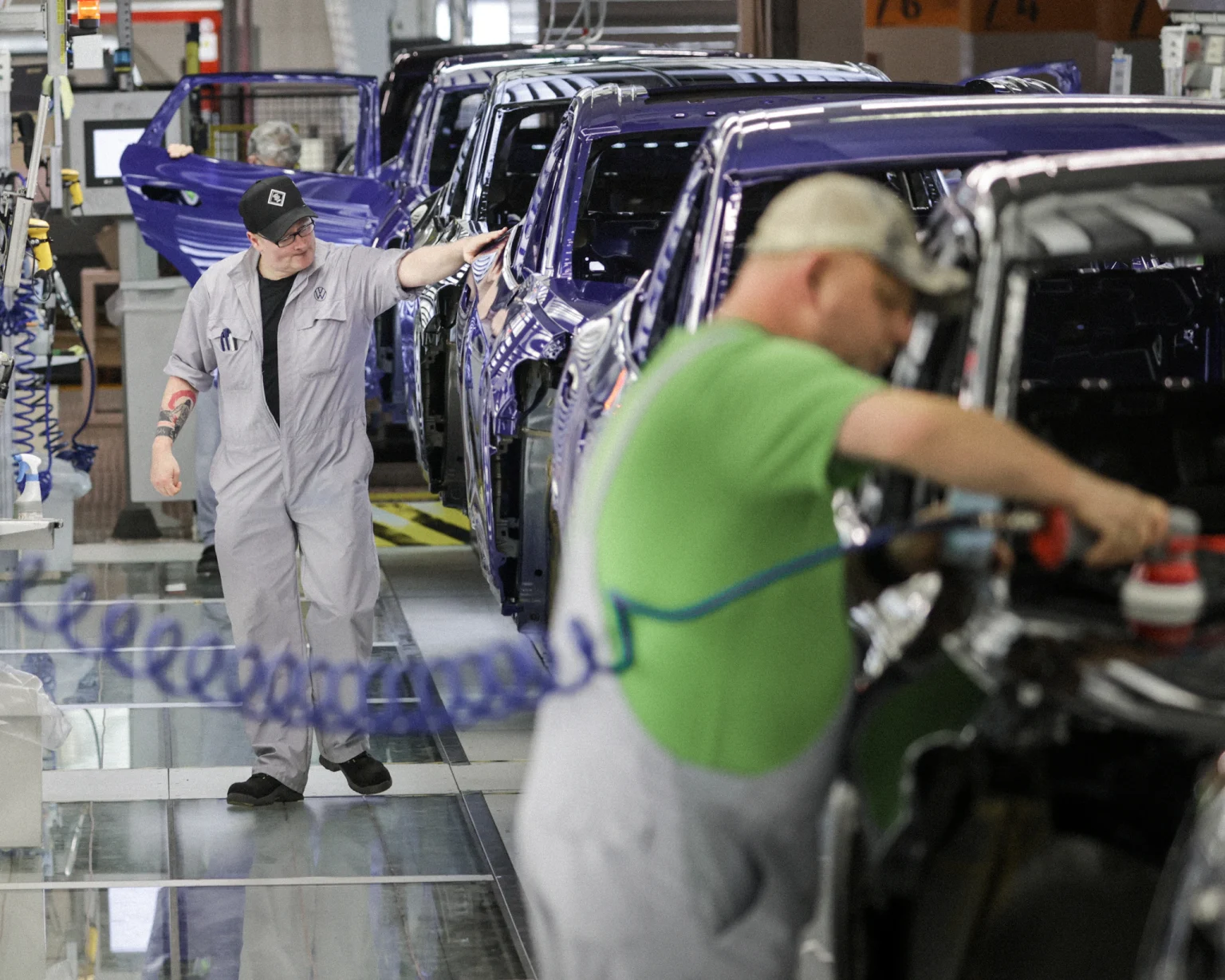
Volkswagen workers carry out final checks on ID electric cars at the company’s Emden plant, where vehicle production is scheduled to end in 2031. Photo: Focke Strangmann/Getty Images
|
Volkswagen’s management board has drawn up a concrete timetable for phasing out vehicle production at four German plants. At recent meetings, management told employees that there were no plans to close any factories. According to an internal paper that has since emerged, vehicle manufacturing is to end in Emden and Zwickau in 2031, Hanover in 2032 and at Audi’s Neckarsulm plant in 2034. Audi is part of Volkswagen Group.
The plan brings the scale of the crisis into sharper focus. Around 40,000 people work at the four sites, and their future is now at stake. The supervisory board, the group’s oversight body, will discuss the proposal on Thursday and Friday. The management board unanimously approved the overall concept. Volkswagen itself does not comment on the contents of supervisory board documents.
The prospect of production ending at the four sites now has firm dates attached to it. Only days ago, Volkswagen Group CEO Oliver Blume said the company could not identify models that would allow Emden, Hanover, Zwickau and Neckarsulm to operate competitively in the 2030s. He stressed, however, that no decision to close any of the plants had been taken.
Blume said Volkswagen would develop options within six to 12 months. The process has moved far faster than his comments suggested.
Production Shifts East
The paper sets out not only when production is to end at each site but also where planned successor models are to be built. The successor to the ID.4 currently made in Emden is to be produced in Mlada Boleslav in the Czech Republic. Production of the next-generation Audi Q4 e-tron is to move from Zwickau to Bratislava in Slovakia. Hanover’s next van family is slated for production in Poznan in Poland, while the model replacing the Audi A8 built in Neckarsulm is to be made in Leipzig.
The affected plants would not close in the short term. Instead, their current models would be phased out without enough new vehicles being assigned to keep the production lines running. For employees, an end to vehicle production would not automatically mean closure of the entire plant.
Volkswagen could repurpose parts of the sites, sell them or seek new partners. The Osnabrück plant, where the group is looking for alternative industrial uses after car production ends, including defense technology, shows one possible route. For vehicle manufacturing, however, the paper sets out firm end dates for the first time.
Cost Cuts Could Keep Production Going
The plan leaves open a slim chance of keeping vehicle manufacturing at the affected sites. Volkswagen says it will consider doing so if the plants can cut factory costs to a competitive level by the end of June 2027. The group has already pointed to substantial cost gaps between its German plants and other European sites.
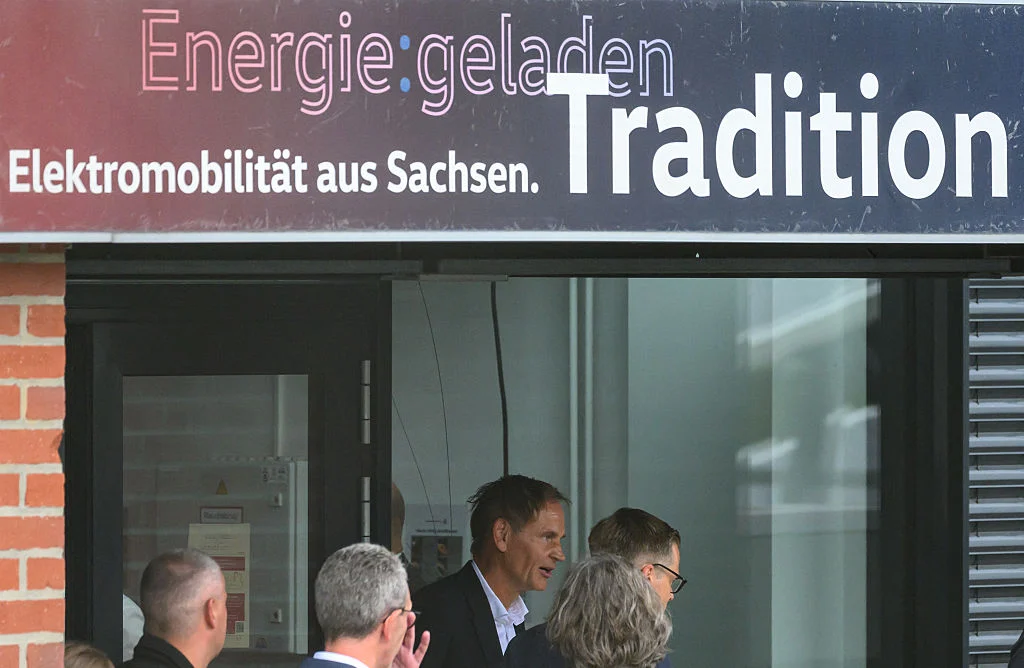
Volkswagen Group CEO Oliver Blume visits the Zwickau plant, which was converted entirely to electric-vehicle production but is now due to stop making cars in 2031. Photo: Hendrik Schmidt/dpa/picture alliance via Getty Images
The implications are particularly stark for Emden and Zwickau. Both were converted for electric-vehicle production at considerable expense. Volkswagen invested around €1.2bn ($1.4bn) in Zwickau, turning it into its first plant devoted entirely to electric vehicles. More than €1bn ($1.2bn) was spent on converting Emden.
Both plants have since been operating well below planned capacity because electric cars have not sold in the volumes needed.
Supervisory Board Weighs Plan
The plans face resistance from employee representatives. IG Metall, Germany’s largest industrial union, accuses the management board of calling existing agreements into question. Union leader Christiane Benner says employees have already made concessions and that entire regions depend on the plants.
The supervisory board is due to discuss the transformation plan on 3 and 4 September. According to media reports, however, management could begin gradually shifting production of individual models even without formal supervisory board approval.
By the end of June 2027, it should become clear whether the plants can cut costs enough to preserve vehicle manufacturing or whether the end dates will stand.
Welcome to the comments section of the Štandard daily. Please take note of our guidelines, comments are moderated by us. You can contact the moderators at support@statement.com.
Participate in the discussion
Comments are available to subscribers only. If you'd like to join the discussion, choose a subscription starting at €6.72 per month.
All comments 0
Register
Comments are available to registered users only. If you'd like to join the discussion, register here.