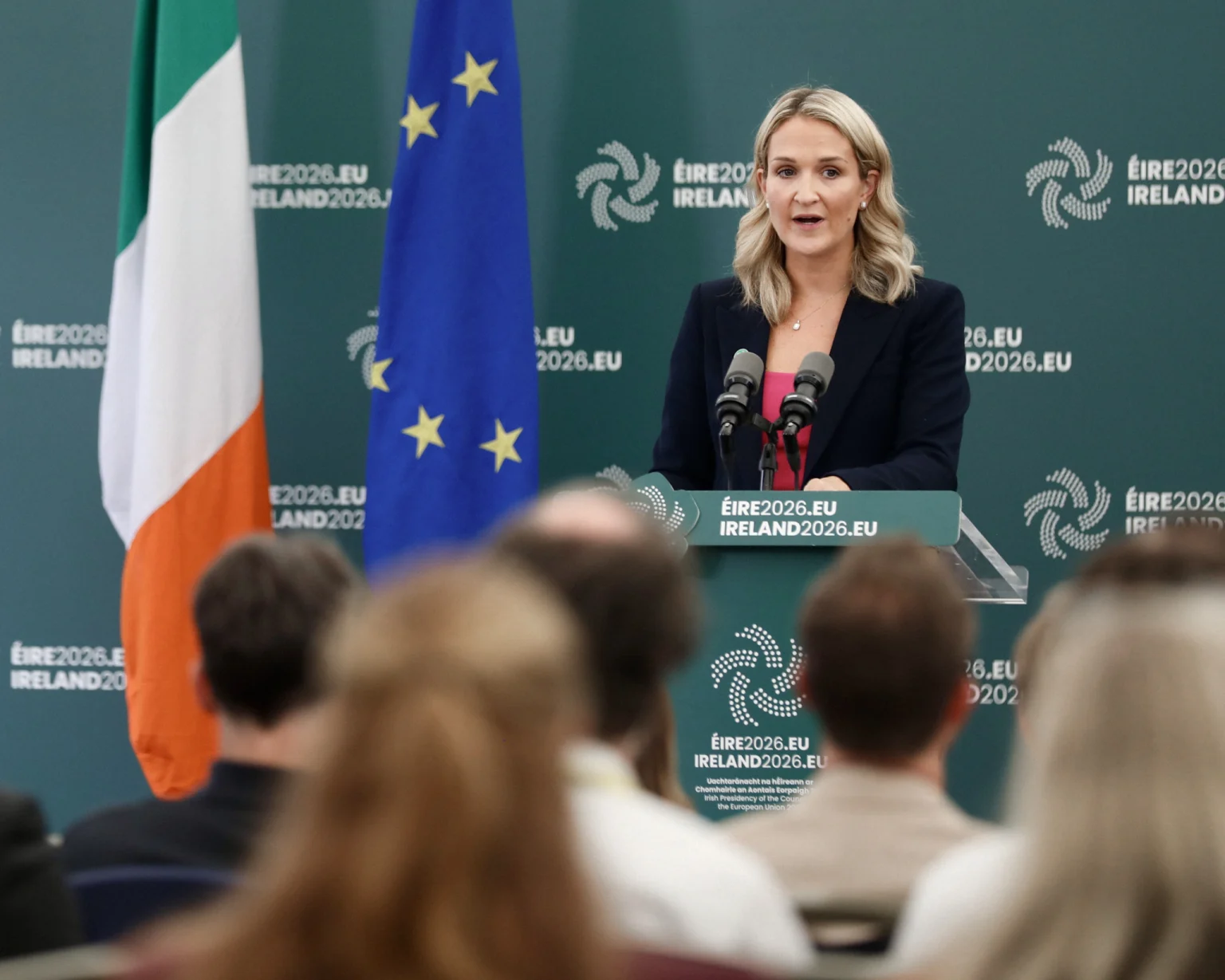
Ireland’s EU presidency began on 1 July this year and will continue through to 31 December, 2026. During these six months, it is playing host to political leaders from across the EU for a range of meetings and discussions, including those related to foreign policy and defense.
This week saw EU defense ministers, as well as senior representatives of European and international institutions, descend on Druids Glen, County Wicklow, for talks on support for Ukraine, maritime security and space. The logistics involved in securing the site for the meeting were themselves a source of contention in Ireland.
A British Warship off the Irish Coast
Irish media reported that a British warship and submarine-hunting helicopter were deployed off the coast of County Wicklow as part of the security operation surrounding the meetings, one of which was also attended by the UK’s Foreign Secretary Ed Miliband.
The Royal Navy ship’s presence was required to compensate for the Irish Defence Forces' lack of long-range air defense capabilities, the same report revealed.
Despite being there at the behest of the Irish state, the warship was required to remain outside of Ireland’s territorial waters as a result of legal advice received by the government.
This development came alongside a separate report that high-level talks between British and Irish defense officials were underway regarding Ireland’s involvement in a British-led multinational military framework whose activities include countering Russia in the waters north of the UK and Ireland, toward the Arctic Circle.
Sinn Féin foreign affairs spokesperson Donnchadh Ó Laoghaire TD called on the Irish government to “come clean” about its plans regarding cooperation with the British military.
Ó Laoghaire criticized the deployment of the British warship off the Irish coast, saying that it raised “serious questions”. However, he added that the reports on potential Irish participation in the Joint Expeditionary Force put the cooperation in a “much more concerning context”.
“This can no longer be presented simply as a one-off arrangement to provide security for an EU Presidency meeting”, Ó Laoghaire said, claiming that it was a “clear direction of travel towards deeper military alignment with Britain and other NATO states”.
“The government needs to be upfront about where this policy is going.”
Ó Laoghaire’s statements were echoed by other opposition figures, including the leader of the socially conservative, economically liberal party Aontú, Peadar Tóibín TD. Tóibín accused the government of seeking to abandon Irish neutrality as closer ties develop between Ireland and NATO nations.
Meanwhile, Paul Murphy TD of the left-wing People Before Profit-Solidarity party asked how the developments were “in any way” compatible with neutrality.
Ireland’s policy of neutrality has its origins in the country’s gaining independence from Britain in the early 20th century. During the First World War, Ireland was part of the United Kingdom of Great Britain and Ireland, which resulted in the involvement of hundreds of thousands of Irishmen in the British armed forces.
After securing independence, neutrality became a core component of Irish sovereignty to reinforce the country’s identity apart from Britain. It was partly this reasoning that led the country to adopt neutrality during the Second World War, when Britain declared war on Nazi Germany. As a result, military alignment with great powers, but especially with Britain, remains highly charged in 21st-century Irish politics.
Irish Support for Ukraine
Ireland’s commitment to Ukraine has also proven divisive, with senior Ukrainian figures attending some of the engagements in Wicklow in recent days.
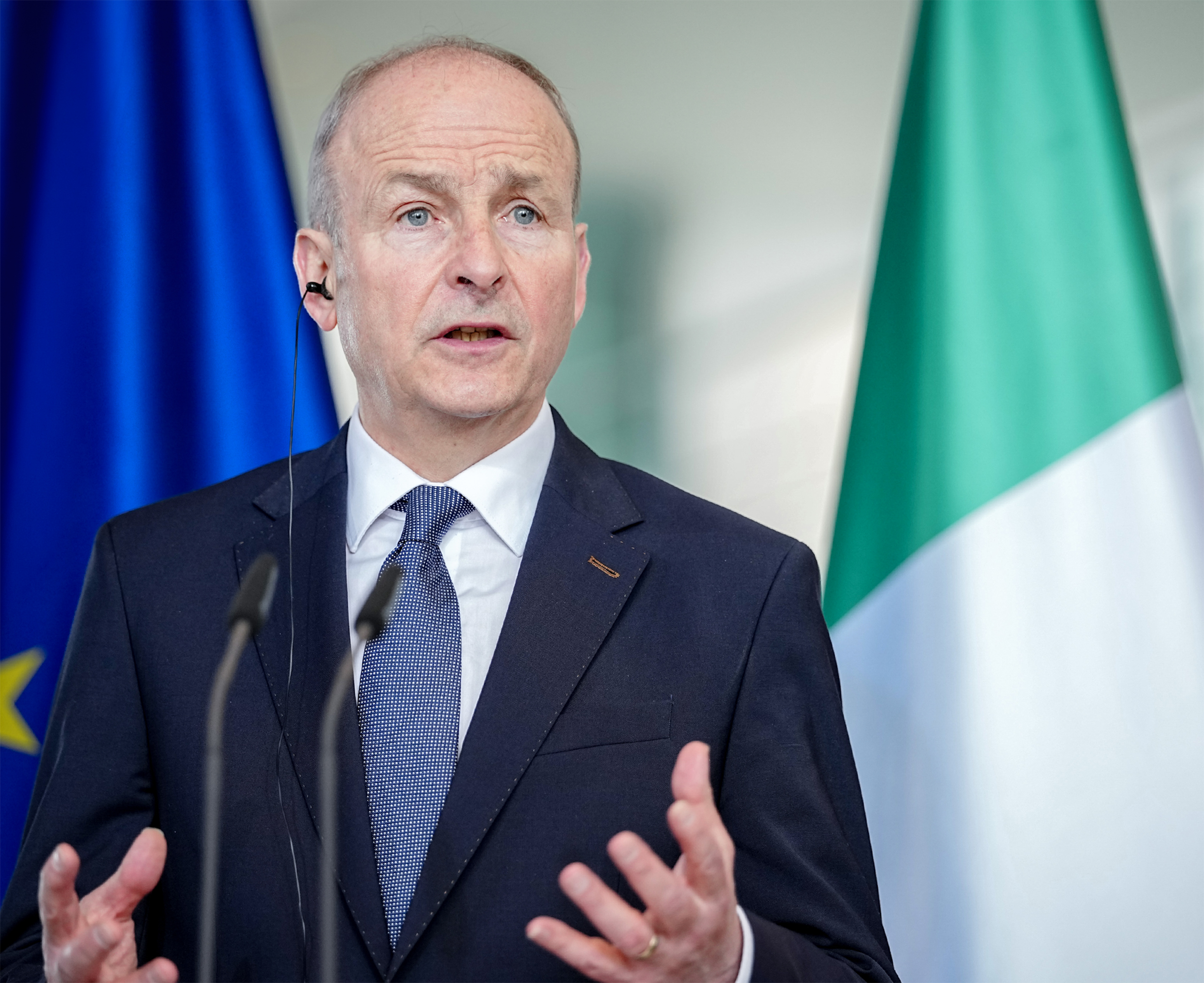
Taoiseach (Prime Minister) Micheál Martin announced in July a €125m (about $145m) funding package for Ukraine, with Defense Minister Helen McEntee confirming in recent days that Ireland will provide €10m ($11.6m) for training centers in the country as part of that package.
Subsequent reporting indicates that the funding will go to military training facilities.
Irish Defence Forces personnel have already provided training to the Ukrainian military, although Dublin has previously drawn the line at providing offensive supplies such as weapons and ammunition.
McEntee justified the investment by saying that the facilities would constitute critical pieces of infrastructure for Ukraine's combat and training capacities. Government figures have previously defended the country’s support for Ukraine by arguing that military neutrality does not mean political neutrality, and that Ireland therefore reserves the right to offer support to a particular side in a conflict.
Neutrality remains popular among a broad swath of the Irish public, with recent polling indicating a widespread desire to maintain the status quo. A February 2026 survey found that 77% of those polled supported the existing policy of neutrality, compared to 78% in 2024 and 76% in 2022.