Lindsay Clancy: Why Is the World Addicted to American Justice?
Why has the Lindsay Clancy case suddenly become - as so many US cases before it - a cultural touchstone? The nature of the US justice system itself may explain it.
Supporters of Lindsay Clancy gather outside of Plymouth Superior Court on August 20, 2026. Photo: John Tlumacki/The Boston Globe via Getty Images
|
The cultural dominance of the United States over the rest of the Western world expresses itself in many ways, but few are more constant than the way in which its courtroom dramas often underpin conversations far beyond its borders.
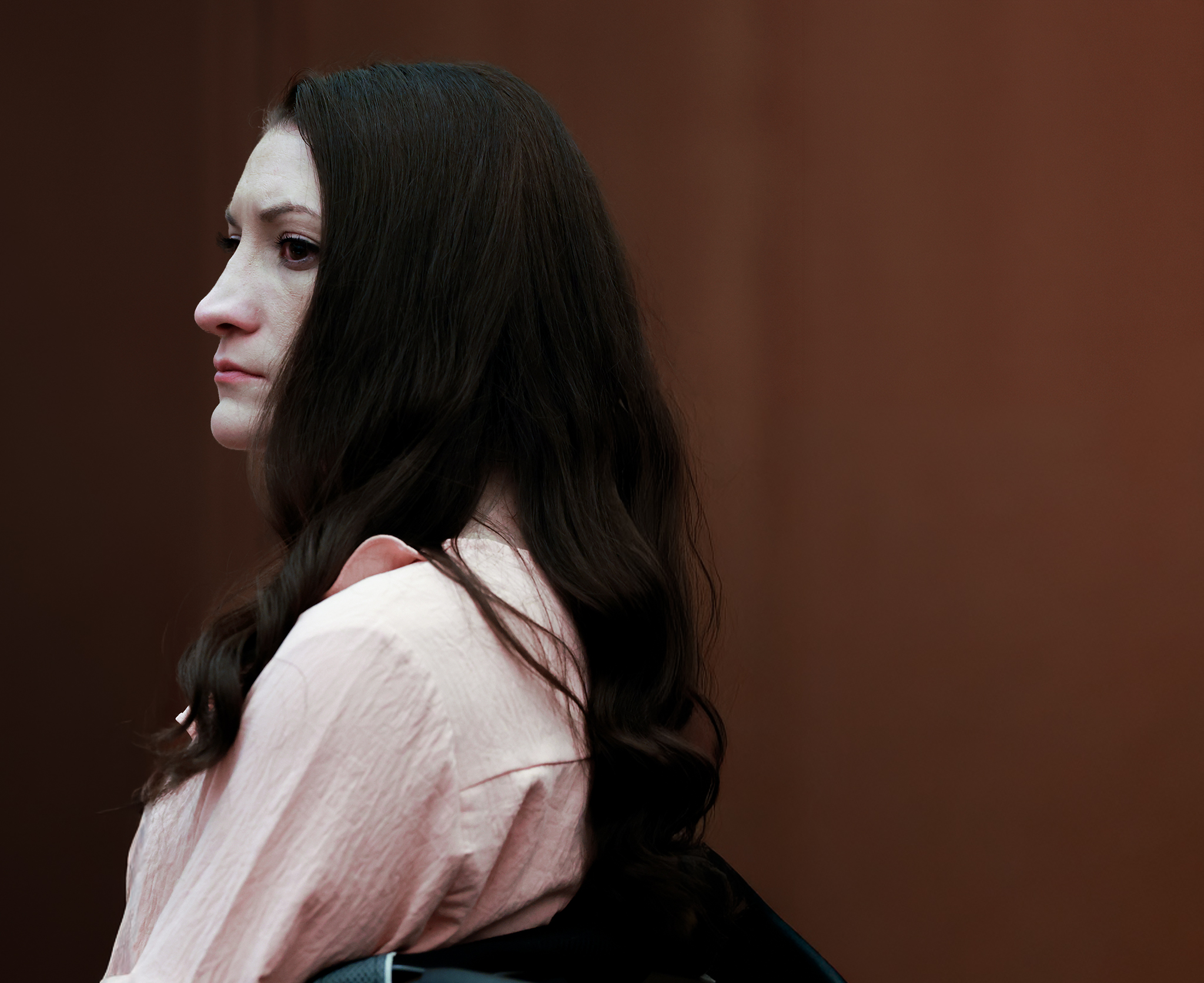
The latest such example, of course, is the Lindsay Clancy case. At the time of writing, a Massachusetts jury is in its fifth day of deliberations on the question of whether Clancy, who killed her three children, is guilty of first-degree premeditated murder or of some lesser charge, or indeed whether, as some bizarrely claim, she is entirely innocent.
The case appears to have unearthed something buried deep in the public psyche and brought a simmering conflict about motherhood, femininity and gender roles to the surface of public discussion in a remarkably sudden and violent way.
Was Clancy a selfish woman who took three innocent lives because she could not bear her own? Or is she a victim of patriarchal ignorance about the struggles faced by outwardly ordinary women who are asked to be 15 different versions of themselves at once and to do it with a smile while looking sexy for their husbands?
Such “big” questions are a hallmark of the US legal system and its influence on the West in general. Consider, for example, the cases of OJ Simpson and George Floyd, where what would in most countries be perfectly banal murder cases became instead avatars of racial injustice.
Consider also the case of Kyle Rittenhouse, the right-wing activist who, in the midst of the George Floyd riots, fired a gun – he says in self-defense – killing two protesters and wounding a third. After a politically charged trial, Rittenhouse was acquitted and now makes a presumably healthy living on America’s right-wing conference circuit as a comic-book-villain advocate for gun rights.
The same process is already visible in newer cases. Luigi Mangione, who killed a health-insurance executive – apparently out of socialist political conviction – has spurred a bizarre cult around the murderer, both on account of his good looks and on account of a certain far-left instinct that his actions were a form of collective self-defense against capitalism.
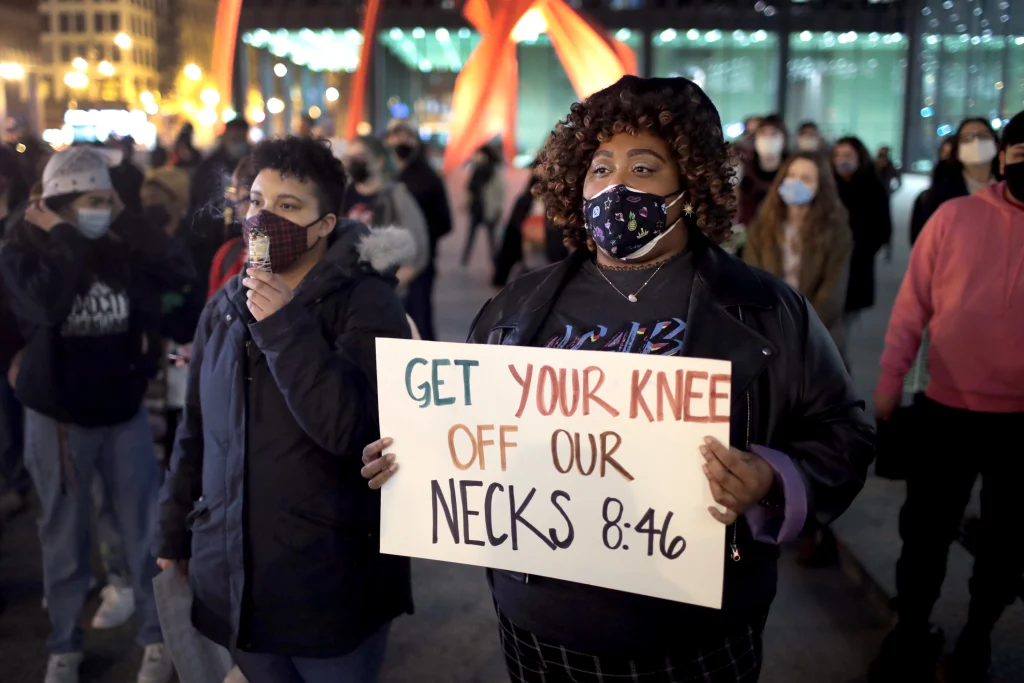
In each case, the trials affected the discourse – and in some cases even the politics – of countries far outside US borders. The George Floyd killing, for example, spurred protests in Europe at the height of Covid lockdowns. In parts of London or Paris where grungy left-wing culture prevails, one can see iconic drawings of Mangione postered on walls. And on social media, European voices are as engaged in the Lindsay Clancy debate as any American voice is.
The killing of George Floyd sparked massive protests around the world, showing how American criminal cases can resonate far beyond US borders. Photo: Scott Olson/Getty Images
America's Addictive Legal System
What explains it? In part, it is America’s very different legal culture.
The largest part, arguably, is the vastly greater access that country offers to its courtrooms. A great many cases are covered live on television, granting an enormous audience access to each witness and their testimony, footage of the defendant throughout the trial and an affinity with each order or intervention made by the presiding judge.
This, more than any other factor, likely has the effect of turning US trials into a form of reality television.
Interestingly, one court which does not permit cameras inside is the nation’s highest: the US Supreme Court has persistently refused televised access because, per the chief justice, of a fear that lawyers and even judges would start performing for the camera rather than for the Court. His concerns on that front, at least, appear valid.
Puritanical Instincts
Another factor may be the inherently puritanical nature of US justice on a number of fronts.
Several years ago, in Ireland, a woman called Deirdre Morley made the headlines when she brutally murdered her three children. She told the police that she had planned the murder for days. Doctors and her husband testified that she had been in a state of severe mental illness for a period of time and that mistakes had been made with her care. Morley stood trial but was found not guilty by reason of insanity. She was subsequently committed to the Central Mental Hospital, where she remains, albeit with occasional release.
The fact is that in many European jurisdictions, a case with agreed evidence of severe mental illness would be far less likely to become a televised, first-degree murder spectacle of this kind. The very fact that Clancy is facing first-degree murder charges when there is agreed evidence of mental illness is unusual.
This odd combination of enhanced media access and a much more punitive justice system, which carries sentences unheard of in most of the rest of the Western world, dramatically increases the stakes. In America, it is possible – though not in Clancy’s case – that convicted killers might be executed. In that sense, many courtrooms feature people literally fighting for their lives. In a world addicted to drama, those kinds of stakes outdo much of what modern Hollywood produces.
In America, Everything Is Political
Yet those are the practical factors behind the phenomenon. There is another matter to consider also: in this case, America’s particularly vicious gender wars are on full display.
The US is a country whose politics, for almost three decades now, has been unusually gender-based. Single women, in particular, vote Democratic by enormous margins. Married men skew Republican at similar rates. Media outlets that serve each audience have little to lose by upping the partisan stakes at every opportunity, and thus the Clancy trial has predictably featured the kind of politically charged commentary that we might come to expect. On the right, figures such as Matt Walsh have led the charge for her prosecution. On the left, feminist voices yell that the murderer is herself a victim of patriarchy. The trial itself is a proxy fight in a much larger battle.
Is there justice in any of this? The American form of justice is both particularly brutal and particularly open. The idea behind both is the same: to democratize punishments, ensure fairness and conform to the foundational common-law principle that justice should be seen to be done in public and should be considered rather than the result of mob rule.
Does the system meet those goals? Or does it, perhaps, encourage the very kind of mob justice that it was designed to prevent?
Either way, Lindsay Clancy is much more famous today than she would be had she simply committed her crime in Slovenia or Bulgaria. Such is the media monster that the American justice system has become.
Welcome to the comments section of the Štandard daily. Please take note of our guidelines, comments are moderated by us. You can contact the moderators at support@statement.com.
Participate in the discussion
Comments are available to subscribers only. If you'd like to join the discussion, choose a subscription starting at €6.72 per month.
All comments 0
Register
Comments are available to registered users only. If you'd like to join the discussion, register here.