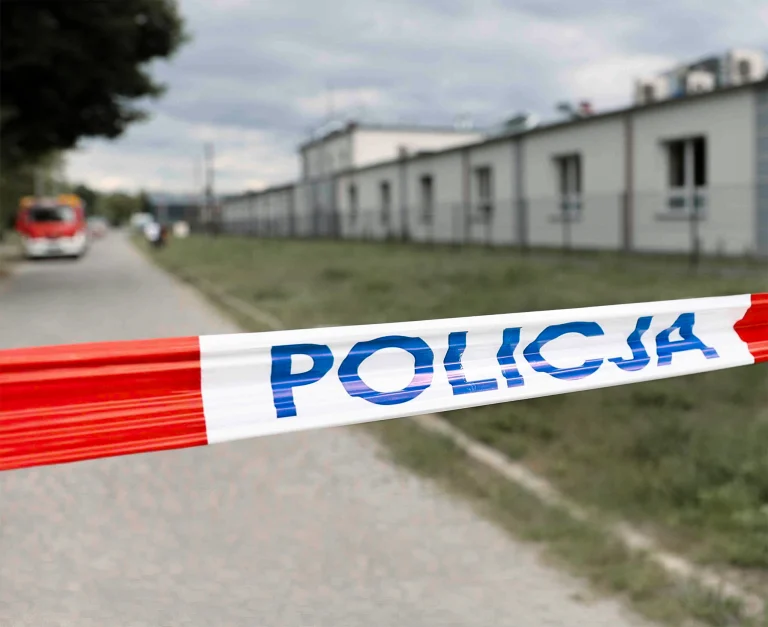
A number of documented plots have involved recruits from Eastern Europe, including Belarusians, Ukrainians, Latvians, Russians and other nationals. Research by the Royal United Services Institute (RUSI) notes that Ukrainians and Belarusians have featured frequently among recruits in Polish cases and that encrypted platforms such as Telegram have become central to recruitment and tasking.
Moscow has made similar accusations against Kyiv. In 2024, Russia’s Federal Security Service claimed that Ukrainian and NATO intelligence services were recruiting migrant workers to carry out sabotage and terrorist attacks inside Russia.
Poland Steps Up Preparations
Poland and the three Baltic states have tightened security around dams, power plants and natural gas infrastructure amid warnings that Moscow could stage a false-flag attack using Ukrainian drones.
Recent NATO exercises have also underscored the challenge of preparing troops for warfare increasingly shaped by tactical drones. Their rapid development has transformed combat in Ukraine and forced allied armies to rethink both training and equipment.
One sign of that shift emerged in Germany in late August. The Associated Press reported that Poland had become the first NATO ally to take part in a new US Green Beret exercise built around lessons from the Russia-Ukraine war and involving extensive use of drones.
Poland was also the scene of numerous suspected sabotage operations last year. Repeated warnings about possible Russian attempts to raise tensions on NATO’s eastern flank therefore carry particular weight in Warsaw.
The government is also trying to prepare the public. At the start of this year, nearly 17 million copies of a Safety Guide were sent to Polish households, offering advice on air raids, prolonged blackouts, evacuation, shelters and biological and nuclear threats.
The voluntary wGotowości defense training initiative was expanded after a pilot phase drew more than 16,000 participants in late 2025. The Polish Defense Ministry said it planned for around 400,000 people to receive some form of military or defense training in 2026 through a range of programs, including individual and group courses, reserve training and voluntary basic military service.
How Imminent Is the Threat?
NATO Secretary General Mark Rutte struck an alarmed note following Germany’s attribution of the Leipzig drone incident to Russia in early September, saying that Russia had become “increasingly reckless” as the threat spread beyond Ukraine into European and NATO territory. He said the danger posed by Russia was clear.
Yet an anonymous NATO official told Reuters on 30 August that, although Russia was stepping up hybrid activity across Europe, the alliance saw “no imminent threat of attack”.
Recent official analysis reflects the same tension. On 11 August, the nonpartisan Congressional Research Service (CRS) released a report titled Russian Hybrid Warfare Activities in Europe: Considerations for Congress. The paper was also covered by USNI News.
According to the CRS analysis, both the number and severity of Russian hybrid operations in Europe have increased. It also describes how Russian intelligence services have adapted their methods in response to sanctions, expulsions of intelligence officers, heightened scrutiny and other European countermeasures.
Political leaders remain divided over how seriously to take the prospect of a direct Russian attack. Former Hungarian Prime Minister Viktor Orban declared in February that Brussels, rather than Moscow, posed the real threat to Hungary.
US President Donald Trump likewise told Axios on 27 August that he was not concerned that Russia would attack NATO.
Russia has nevertheless continued to expand its long-range strike infrastructure. The Telegraph reported in August that at least 10 sites in western Russia had newly built or expanded infrastructure for long-range drones, increasing Moscow’s ability to launch such weapons within range of NATO territory.
Several security analysts across Europe – including Liana Fix, Kinga Redlowska, Maksym Beznosiuk, Tom Keatinge and Carlo Masala – have argued in recent months that Europe needs a stronger response to Moscow’s hybrid campaign.
Mobilization Fears Return
Lieutenant Colonel Maxym Zhorin, deputy commander of Ukraine’s 3rd Army Corps, has publicly criticized what he regards as an inadequate European response to the Russian threat, accusing some allies of preferring to ignore the danger rather than confront it.
A direct Russian attack on NATO, whether limited in scope or conducted as a false-flag operation, remains speculative. A more immediate question is whether Moscow is planning a new wave of mobilization after Russia’s parliamentary elections later this month.
Ukrainian officials say Moscow plans to mobilize hundreds of thousands of additional troops after the vote. Russia denies this. On 1 September, President Vladimir Putin called reports that a new mobilization was imminent “utter nonsense”.
Ukrainian intelligence assessments, along with continuing Russian efforts to broaden recruitment and improve the authorities’ ability to identify and call up reservists, have nevertheless kept the issue alive. Whether those measures point to another major push in Ukraine or something broader remains uncertain – but Warsaw is clearly unwilling to wait for the answer before strengthening its defenses.