"Nobody knows what really happens at 6:01 p.m." So says Saxony-Anhalt's Interior Minister Tamara Zieschang of Sunday evening, and she does not mean the first exit poll.
Saxony-Anhalt's state election on 6 September is one of five German state votes in 2026, following Baden-Württemberg and Rhineland-Palatinate in March, and preceding Berlin and Mecklenburg-Vorpommern later in September. It carries outsized significance nonetheless: polls put the Alternative für Deutschland (AfD) on course to become the first far-right party since the Second World War to win a governing majority in a German state parliament, a milestone that would test the country's decades-old consensus against cooperating with the far right and could reshape the political calculus ahead of future state and federal contests.
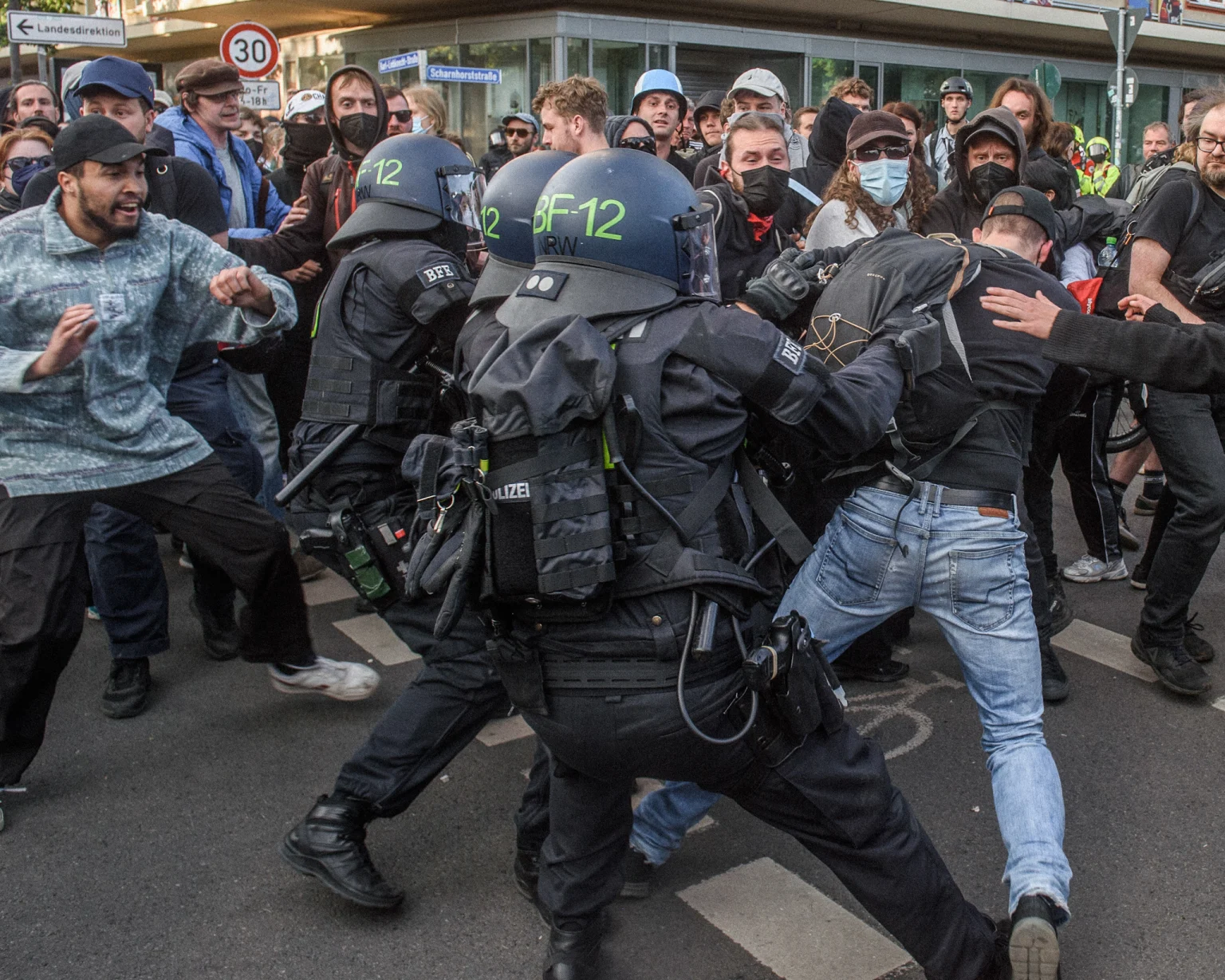
Left-wing extremists have openly threatened attacks on the state parliament in Magdeburg, the capital city of Saxony-Anhalt, should the AfD take power. On the German-language platform de.indymedia, a post states that antifascists from across Germany plan to storm the parliament, while a second text, attributed to a self-proclaimed Berlin Antifa affinity group, announces a mass attack and explicitly commits to militancy. Security authorities are preparing accordingly: all available state police forces will be deployed over the weekend, reinforcements from other federal states have been requested, and streets around the parliament will be closed.
According to the latest INSA poll, the AfD stands at 43%, with the Christian Democratic Union (CDU) at 22%. The Sahra Wagenknecht Alliance (BSW) and the Free Democratic Party (FDP) are below the 5% threshold, and the Greens are exactly on it. If several smaller parties fail to enter parliament, 43% could be enough to secure more than half the seats. This would give the AfD control of a state government for the first time ever. In 2024, it had already become the strongest party in Thuringia, but remained in opposition there.