The journalist is not an unknown figure who has suddenly been dropped into the media landscape overnight. Having worked at Le Figaro, Le Parisien and L’Opinion, he joined Le Point in 2022, where he worked on the politics desk, covering right-wing movements in France and Europe. He has built his career as a political journalist specializing in conservative and nationalist movements.
His appointment as deputy editor-in-chief of Valeurs actuelles has nevertheless sparked a veritable outcry. The National Union of Journalists – Confederation General du Travail (SNJ-CGT) has called the decision to give Sapin a weekly segment an “unacceptable red line”. The Society of Journalists at France Inter has expressed its “firm opposition”. The objections, however, are not really about Sapin’s qualifications but about the publication he works for.
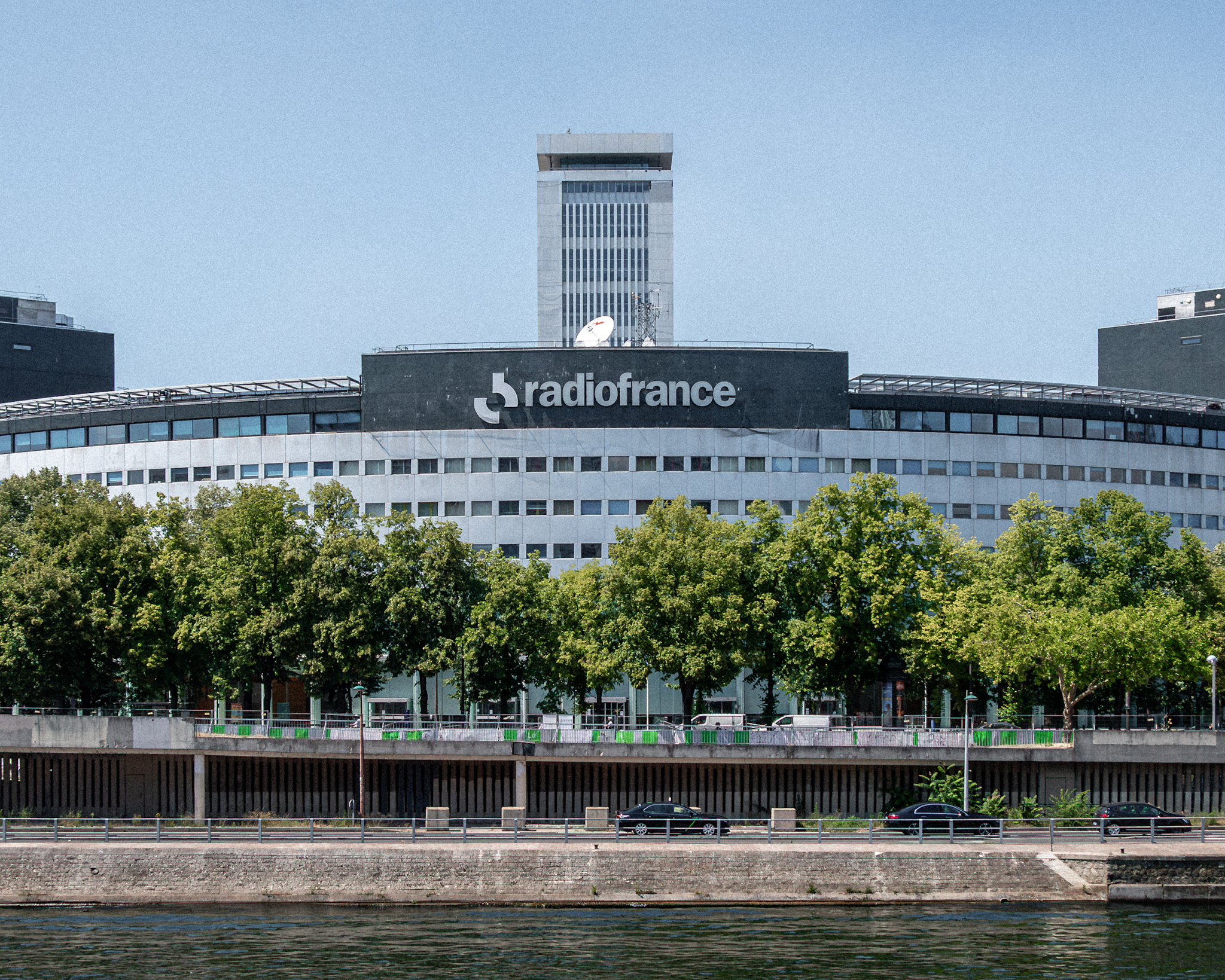
Pigalle, for her part, stands by her decision. The director invokes what should be the cardinal principle of public radio: pluralism. Management says that, with the presidential election approaching, France Inter intends to “facilitate dialogue among all viewpoints” and “listen to our differences”. Charles Sapin's addition to the schedule is part of a broader effort to diversify the range of political and economic voices on the air.
The internal reaction is all the more significant in that context. On Wednesday 2 September, a general assembly of Radio France staff unanimously adopted a motion demanding the cancellation of Charles Sapin’s segment. If it is not canceled, the inter-union committee has been authorized to file a strike notice “as soon as possible”.
Even though strikes are a fairly common form of protest in France, the move is nonetheless drastic: a public radio station is facing a strike because a journalist from a right-wing publication has been given a weekly political segment.
Some Opinions Are More Equal Than Others
The contrast would be less striking if France Inter were, as a matter of principle, reluctant to feature politically engaged journalists and commentators. But that is clearly not the case. Political commentary is not necessarily neutral: the expression of an opinion is its hallmark. Humor and editorial commentary are inherently subjective, but it appears that at France Inter, only certain forms of subjectivity are considered legitimate.
Salomé Saqué provides a particularly telling example. The journalist from Blast, a far-left media outlet, now appears regularly on France Inter, notably on a program titled La Terre au carré. France Inter itself presents this collaboration as a cultural segment in partnership with Blast, thereby lending the outlet institutional legitimacy. Her contributions give prominence to causes championed by her political camp, ranging from environmentalism to feminism.
No one disputes Salomé Saqué’s right to hold her own convictions or even to appear as a contributor to France Inter. But it becomes difficult to understand why the presence of a journalist from a radical left-wing media outlet would be compatible with “public service values”, while that of a journalist working for Valeurs actuelles would cross a “red line”.
This is especially striking because Charles Sapin does not go on the air to defend the positions of Valeurs actuelles: he is there to provide political commentary. His first segment, in fact, focused on the public debt. The debate, therefore, is less about whether France Inter believes in pluralism than about where it draws its boundaries – which appear to be political.
The situation is all the more paradoxical given that Arcom, the media regulatory authority, had reminded Radio France just a few months earlier of its obligations regarding pluralism. In June, the regulator noted that nearly 60% of RN airtime on France Inter was broadcast between midnight and 5:59 a.m., and issued a formal notice to Radio France to better comply with its obligations.
Arcom had warned that the RN was underrepresented. The outcry over giving airtime to a journalist from a right-wing publication appears to prove its point.
When Political Criticism Turns Personal
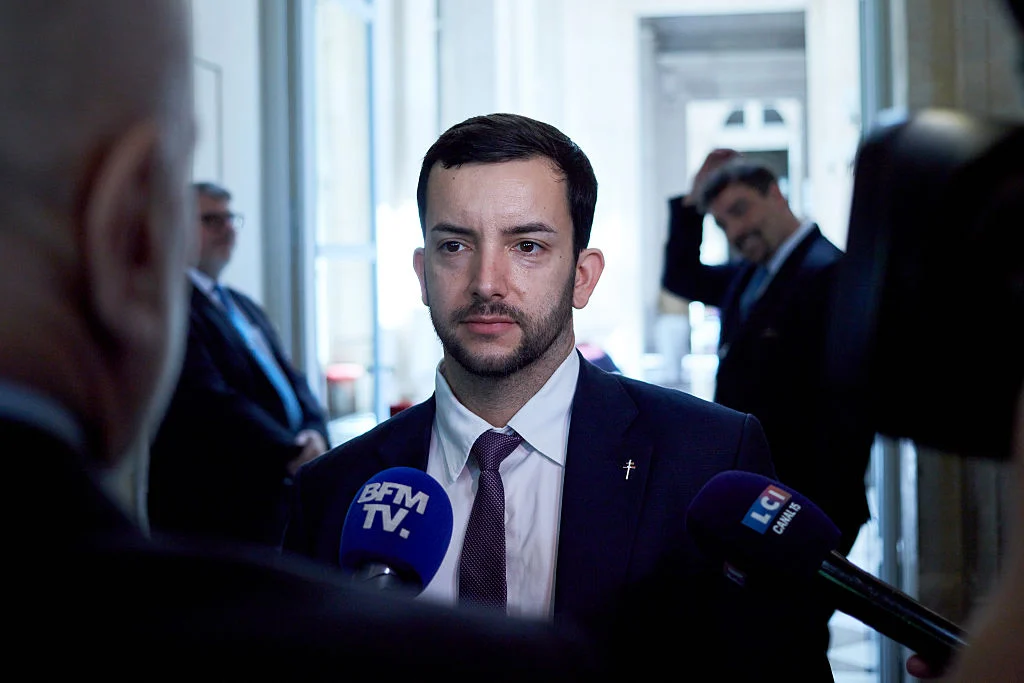
Amid this controversy, another incident revealed a far uglier side of the problem. On Monday 31 August, on the show Zoom Zoom Zen, comedian Ameziane devoted a segment to Jean-Philippe Tanguy after the RN lawmaker commented on his party’s proposal on the wearing of the Islamic veil.
On air, the comedian asked whether Tanguy had “the face of a rat” that had turned into a human, before bringing up his homosexuality. He said the lawmaker annoyed him because he is gay while belonging to a party that, in his view, “constantly votes against LGBT rights”. He went on to explain that Tanguy could have used his “rat-like side” to sense the trap.
The lawmaker responded by denouncing a “despicable segment”, attacks on his physical appearance and “animalization” – which he described as tactics worthy of the “worst hateful ideologies”. He also lamented that no member of the public service intervened, while those present on the air reportedly snickered instead. He announced his intention to file a complaint with Arcom.
Tanguy’s membership of the RN appears to have made his physical appearance and sexual orientation fair game. The political response has come mainly from the RN and other parties on the right. MPs Philippe Juvin and Nicolas Dupont-Aignan expressed their support for Tanguy; Éric Ciotti, president of the Union of the Right for the Republic and mayor of Nice, denounced the “vile insults” and called it a “disgrace to public broadcasting”. Jordan Bardella also strongly criticized France Inter.
So far, support from the political left has been notably muted. When political humor takes aim at a right-wing figure, demands for decency, respect and opposition to discrimination do not always seem to be voiced with the same vigor.
France Inter is not a private activist radio station. With approximately seven million daily listeners, it is France’s leading radio station and one of the most prominent outlets in public broadcasting.
As such, its duty is not to provide commentary stripped of all opinion but to allow the French public to hear different opinions, including those that its journalists find objectionable. Pluralism does not mean allowing only shades of the same ideology to coexist; it means making room for opposing views.
As the 2027 presidential election approaches, no one is asking France Inter to become right-wing. Recognizing the existence of opinions outside the left would already be a first step.